Compare commits
1 Commits
| Author | SHA1 | Date | |
|---|---|---|---|
 刘鑫 刘鑫
|
81467f649f |
+1
-4
@@ -1,7 +1,4 @@
|
||||
launch.json
|
||||
.venv/
|
||||
__pycache__
|
||||
voxcpm.egg-info
|
||||
.DS_Store
|
||||
./pretrained_models/
|
||||
app_local.py
|
||||
.DS_Store
|
||||
@@ -1,692 +1,280 @@
|
||||
<h2 align="center">VoxCPM2: Tokenizer-Free TTS for Multilingual Speech Generation, Creative Voice Design, and True-to-Life Cloning</h2>
|
||||
## 🎙️ VoxCPM: Tokenizer-Free TTS for Context-Aware Speech Generation and True-to-Life Voice Cloning
|
||||
|
||||
|
||||
[](https://github.com/OpenBMB/VoxCPM/) [](https://arxiv.org/abs/2509.24650)[](https://huggingface.co/spaces/OpenBMB/VoxCPM-Demo) [](https://openbmb.github.io/VoxCPM-demopage)
|
||||
|
||||
#### VoxCPM1.5 Model Weights
|
||||
|
||||
[](https://huggingface.co/openbmb/VoxCPM1.5) [](https://modelscope.cn/models/OpenBMB/VoxCPM1.5)
|
||||
|
||||
<p align="center">
|
||||
<b>English</b> | <a href="./README_zh.md">中文</a>
|
||||
</p>
|
||||
|
||||
<p align="center">
|
||||
<a href="https://github.com/OpenBMB/VoxCPM/"><img src="https://img.shields.io/badge/Project%20Page-GitHub-blue" alt="Project Page"></a>
|
||||
<a href="https://huggingface.co/spaces/OpenBMB/VoxCPM-Demo"><img src="https://img.shields.io/badge/Live%20Playground-Demo-orange" alt="Live Playground"></a>
|
||||
<a href="https://voxcpm.readthedocs.io/en/latest/"><img src="https://img.shields.io/badge/Docs-ReadTheDocs-8CA1AF" alt="Documentation"></a>
|
||||
<a href="https://huggingface.co/openbmb/VoxCPM2"><img src="https://img.shields.io/badge/%F0%9F%A4%97%20Hugging%20Face-VoxCPM2-yellow" alt="Hugging Face"></a>
|
||||
<a href="https://modelscope.cn/models/OpenBMB/VoxCPM2"><img src="https://img.shields.io/badge/ModelScope-VoxCPM2-purple" alt="ModelScope"></a>
|
||||
<a href="https://openbmb.github.io/voxcpm2-demopage/"><img src="https://img.shields.io/badge/DemoPage-Audio Samples-red" alt="DemoPage"></a>
|
||||
<a href="https://arxiv.org/abs/2606.06928"><img src="https://img.shields.io/badge/arXiv-VoxCPM2%20Technical%20Report-red" alt="VoxCPM2 Technical Report"></a>
|
||||
</p>
|
||||
|
||||
<div align="center">
|
||||
<img src="assets/voxcpm_logo.png" alt="VoxCPM Logo" width="35%">
|
||||
<br><br>
|
||||
<a href="https://trendshift.io/repositories/17704" target="_blank"><img src="https://trendshift.io/api/badge/repositories/17704" alt="OpenBMB%2FVoxCPM | Trendshift" style="width: 250px; height: 55px;" width="250" height="55"/></a>
|
||||
<img src="assets/voxcpm_logo.png" alt="VoxCPM Logo" width="40%">
|
||||
</div>
|
||||
|
||||
<br>
|
||||
<div align="center">
|
||||
|
||||
<p align="center">
|
||||
👋 Join our community for discussion and support!
|
||||
<br>
|
||||
<a href="./assets/feishu-group.png" style="display:inline-block;vertical-align:middle; margin-left: 10px;">
|
||||
<img src="./assets/feishu-logo.png" width="16" height="16" style="vertical-align:middle;"> Feishu
|
||||
</a>
|
||||
|
|
||||
<a href="https://discord.gg/KZUx7tVNwz" style="display:inline-block;vertical-align:middle;">
|
||||
<img src="./assets/discord-logo.png" width="16" height="16" style="vertical-align:middle;"> Discord
|
||||
</a>
|
||||
</p>
|
||||
👋 Contact us on [WeChat](assets/wechat.png)
|
||||
|
||||
VoxCPM is a **tokenizer-free** Text-to-Speech system that directly generates continuous speech representations via an end-to-end **diffusion autoregressive architecture**, bypassing discrete tokenization to achieve highly natural and expressive synthesis.
|
||||
</div>
|
||||
|
||||
**VoxCPM2** is the latest major release — a **2B** parameter model trained on **over 2 million hours** of multilingual speech data, now supporting **30 languages**, **Voice Design**, **Controllable Voice Cloning**, and **48kHz** studio-quality audio output. Built on a [MiniCPM-4](https://github.com/OpenBMB/MiniCPM) backbone.
|
||||
## News
|
||||
* [2025.12.05] 🎉 🎉 🎉 We Open Source the VoxCPM1.5 [weights](https://huggingface.co/openbmb/VoxCPM1.5)! The model now supports both full-parameter fine-tuning and efficient LoRA fine-tuning, empowering you to create your own tailored version. See [Release Notes](docs/release_note.md) for details.
|
||||
* [2025.09.30] 🔥 🔥 🔥 We Release VoxCPM [Technical Report](https://arxiv.org/abs/2509.24650)!
|
||||
* [2025.09.16] 🔥 🔥 🔥 We Open Source the VoxCPM-0.5B [weights](https://huggingface.co/openbmb/VoxCPM-0.5B)!
|
||||
* [2025.09.16] 🎉 🎉 🎉 We Provide the [Gradio PlayGround](https://huggingface.co/spaces/OpenBMB/VoxCPM-Demo) for VoxCPM-0.5B, try it now!
|
||||
|
||||
### ✨ Highlights
|
||||
## Overview
|
||||
|
||||
- 🌍 **30-Language Multilingual** — Input text in any of the 30 supported languages and synthesize directly, no language tag needed
|
||||
- 🎨 **Voice Design** — Create a brand-new voice from a natural-language description alone (gender, age, tone, emotion, pace …), no reference audio required
|
||||
- 🎛️ **Controllable Cloning** — Clone any voice from a short reference clip, with optional style guidance to steer emotion, pace, and expression while preserving the original timbre
|
||||
- 🎙️ **Ultimate Cloning** — Reproduce every vocal nuance: provide both reference audio and its transcript, and the model continues seamlessly from the reference, faithfully preserving every vocal detail — timbre, rhythm, emotion, and style (same as VoxCPM1.5)
|
||||
- 🔊 **48kHz High-Quality Audio** — Accepts 16kHz reference audio and directly outputs 48kHz studio-quality audio via AudioVAE V2's asymmetric encode/decode design, with built-in super-resolution — no external upsampler needed
|
||||
- 🧠 **Context-Aware Synthesis** — Automatically infers appropriate prosody and expressiveness from text content
|
||||
- ⚡ **Real-Time Streaming** — RTF as low as ~0.3 on NVIDIA RTX 4090, and ~0.13 accelerated by [Nano-vLLM](https://github.com/a710128/nanovllm-voxcpm) or [vLLM-Omni](https://github.com/vllm-project/vllm-omni) — official vLLM omni-modal serving for VoxCPM2 with PagedAttention and an OpenAI-compatible API
|
||||
- 📜 **Fully Open-Source & Commercial-Ready** — Weights and code released under the [Apache-2.0](LICENSE) license, free for commercial use
|
||||
VoxCPM is a novel tokenizer-free Text-to-Speech (TTS) system that redefines realism in speech synthesis. By modeling speech in a continuous space, it overcomes the limitations of discrete tokenization and enables two flagship capabilities: context-aware speech generation and true-to-life zero-shot voice cloning.
|
||||
|
||||
**🌍 Supported Languages (30)**
|
||||
Arabic, Burmese, Chinese, Danish, Dutch, English, Finnish, French, German, Greek, Hebrew, Hindi, Indonesian, Italian, Japanese, Khmer, Korean, Lao, Malay, Norwegian, Polish, Portuguese, Russian, Spanish, Swahili, Swedish, Tagalog, Thai, Turkish, Vietnamese
|
||||
Unlike mainstream approaches that convert speech to discrete tokens, VoxCPM uses an end-to-end diffusion autoregressive architecture that directly generates continuous speech representations from text. Built on [MiniCPM-4](https://huggingface.co/openbmb/MiniCPM4-0.5B) backbone, it achieves implicit semantic-acoustic decoupling through hierachical language modeling and FSQ constraints, greatly enhancing both expressiveness and generation stability.
|
||||
|
||||
Chinese Dialect: 四川话, 粤语, 吴语, 东北话, 河南话, 陕西话, 山东话, 天津话, 闽南话
|
||||
<div align="center">
|
||||
<img src="assets/voxcpm_model.png" alt="VoxCPM Model Architecture" width="90%">
|
||||
</div>
|
||||
|
||||
### News
|
||||
|
||||
- **[2026.04]** 🔥 We release **VoxCPM2** — 2B, 30 languages, Voice Design & Controllable Voice Cloning, 48kHz audio output! [Weights](https://huggingface.co/openbmb/VoxCPM2) | [Docs](https://voxcpm.readthedocs.io/en/latest/) | [Playground](https://huggingface.co/spaces/OpenBMB/VoxCPM-Demo) | [Technical Report](https://arxiv.org/abs/2606.06928)
|
||||
- **[2025.12]** 🎉 Open-source **VoxCPM1.5** [weights](https://huggingface.co/openbmb/VoxCPM1.5) with SFT & LoRA fine-tuning. (**🏆 #1 GitHub Trending**)
|
||||
- **[2025.09]** 🔥 Release VoxCPM [Technical Report](https://arxiv.org/abs/2509.24650).
|
||||
- **[2025.09]** 🎉 Open-source **VoxCPM-0.5B** [weights](https://huggingface.co/openbmb/VoxCPM-0.5B) (**🏆 #1 HuggingFace Trending**)
|
||||
### 🚀 Key Features
|
||||
- **Context-Aware, Expressive Speech Generation** - VoxCPM comprehends text to infer and generate appropriate prosody, delivering speech with remarkable expressiveness and natural flow. It spontaneously adapts speaking style based on content, producing highly fitting vocal expression trained on a massive 1.8 million-hour bilingual corpus.
|
||||
- **True-to-Life Voice Cloning** - With only a short reference audio clip, VoxCPM performs accurate zero-shot voice cloning, capturing not only the speaker's timbre but also fine-grained characteristics such as accent, emotional tone, rhythm, and pacing to create a faithful and natural replica.
|
||||
- **High-Efficiency Synthesis** - VoxCPM supports streaming synthesis with a Real-Time Factor (RTF) as low as 0.17 on a consumer-grade NVIDIA RTX 4090 GPU, making it possible for real-time applications.
|
||||
|
||||
---
|
||||
### 📦 Model Versions
|
||||
See [Release Notes](docs/release_note.md) for details
|
||||
- **VoxCPM1.5** (Latest):
|
||||
- Model Params: 750M
|
||||
- Sampling rate of AudioVAE: 44100
|
||||
- Token rate in LM Backbone: 6.25Hz (patch-size=4)
|
||||
- RTF in a single NVIDIA-RTX 4090 GPU: ~0.15
|
||||
|
||||
## Contents
|
||||
- **VoxCPM-0.5B** (Original):
|
||||
- Model Params: 600M
|
||||
- Sampling rate of AudioVAE: 16000
|
||||
- Token rate in LM Backbone: 12.5Hz (patch-size=2)
|
||||
- RTF in a single NVIDIA-RTX 4090 GPU: 0.17
|
||||
|
||||
- [Quick Start](#-quick-start)
|
||||
- [Installation](#installation)
|
||||
- [Python API](#python-api)
|
||||
- [CLI Usage](#cli-usage)
|
||||
- [Web Demo](#web-demo)
|
||||
- [Production Deployment](#-production-deployment-nano-vllm)
|
||||
- [On-Device Inference (llama.cpp-omni)](#-on-device-inference-llamacpp-omni)
|
||||
- [Models & Versions](#-models--versions)
|
||||
- [Performance](#-performance)
|
||||
- [Fine-tuning](#%EF%B8%8F-fine-tuning)
|
||||
- [Documentation](#-documentation)
|
||||
- [Ecosystem & Community](#-ecosystem--community)
|
||||
- [Risks and Limitations](#%EF%B8%8F-risks-and-limitations)
|
||||
- [Citation](#-citation)
|
||||
|
||||
---
|
||||
|
||||
## 🚀 Quick Start
|
||||
## Quick Start
|
||||
|
||||
### Installation
|
||||
|
||||
```sh
|
||||
### 🔧 Install from PyPI
|
||||
``` sh
|
||||
pip install voxcpm
|
||||
```
|
||||
### 1. Model Download (Optional)
|
||||
By default, when you first run the script, the model will be downloaded automatically, but you can also download the model in advance.
|
||||
- Download VoxCPM1.5
|
||||
```
|
||||
from huggingface_hub import snapshot_download
|
||||
snapshot_download("openbmb/VoxCPM1.5")
|
||||
```
|
||||
|
||||
> **Requirements:** Python ≥ 3.10 (<3.13), PyTorch ≥ 2.5.0, CUDA ≥ 12.0. See [Quick Start Docs](https://voxcpm.readthedocs.io/en/latest/quickstart.html) for details.
|
||||
|
||||
### Python API
|
||||
|
||||
#### 🗣️ Text-to-Speech
|
||||
- Or Download VoxCPM-0.5B
|
||||
```
|
||||
from huggingface_hub import snapshot_download
|
||||
snapshot_download("openbmb/VoxCPM-0.5B")
|
||||
```
|
||||
- Download ZipEnhancer and SenseVoice-Small. We use ZipEnhancer to enhance speech prompts and SenseVoice-Small for speech prompt ASR in the web demo.
|
||||
```
|
||||
from modelscope import snapshot_download
|
||||
snapshot_download('iic/speech_zipenhancer_ans_multiloss_16k_base')
|
||||
snapshot_download('iic/SenseVoiceSmall')
|
||||
```
|
||||
|
||||
### 2. Basic Usage
|
||||
```python
|
||||
from voxcpm import VoxCPM
|
||||
import soundfile as sf
|
||||
|
||||
model = VoxCPM.from_pretrained(
|
||||
"openbmb/VoxCPM2",
|
||||
load_denoiser=False,
|
||||
)
|
||||
|
||||
wav = model.generate(
|
||||
text="VoxCPM2 is the current recommended release for realistic multilingual speech synthesis.",
|
||||
cfg_value=2.0,
|
||||
inference_timesteps=10,
|
||||
seed=42,
|
||||
)
|
||||
sf.write("demo.wav", wav, model.tts_model.sample_rate)
|
||||
print("saved: demo.wav")
|
||||
```
|
||||
|
||||
If you prefer downloading from ModelScope first, you can use:
|
||||
|
||||
```bash
|
||||
pip install modelscope
|
||||
```
|
||||
|
||||
```python
|
||||
from modelscope import snapshot_download
|
||||
snapshot_download("OpenBMB/VoxCPM2", local_dir='./pretrained_models/VoxCPM2') # specify the local directory to save the model
|
||||
|
||||
from voxcpm import VoxCPM
|
||||
import soundfile as sf
|
||||
model = VoxCPM.from_pretrained("./pretrained_models/VoxCPM2", load_denoiser=False)
|
||||
|
||||
wav = model.generate(
|
||||
text="VoxCPM2 is the current recommended release for realistic multilingual speech synthesis.",
|
||||
cfg_value=2.0,
|
||||
inference_timesteps=10,
|
||||
seed=42,
|
||||
)
|
||||
sf.write("demo.wav", wav, model.tts_model.sample_rate)
|
||||
```
|
||||
|
||||
#### 🎨 Voice Design
|
||||
|
||||
Create a voice from a natural-language description — no reference audio needed. **Format:** put the description in parentheses at the start of `text`(e.g. `"(your voice description)The text to synthesize."`):
|
||||
|
||||
```python
|
||||
wav = model.generate(
|
||||
text="(A young woman, gentle and sweet voice)Hello, welcome to VoxCPM2!",
|
||||
cfg_value=2.0,
|
||||
inference_timesteps=10,
|
||||
seed=42,
|
||||
)
|
||||
sf.write("voice_design.wav", wav, model.tts_model.sample_rate)
|
||||
```
|
||||
|
||||
#### 🎛️ Controllable Voice Cloning
|
||||
|
||||
Upload a reference audio. The model clones the timbre, and you can still use control instructions to adjust speed, emotion, or style.
|
||||
|
||||
```python
|
||||
wav = model.generate(
|
||||
text="This is a cloned voice generated by VoxCPM2.",
|
||||
reference_wav_path="path/to/voice.wav",
|
||||
)
|
||||
sf.write("clone.wav", wav, model.tts_model.sample_rate)
|
||||
|
||||
wav = model.generate(
|
||||
text="(slightly faster, cheerful tone)This is a cloned voice with style control.",
|
||||
reference_wav_path="path/to/voice.wav",
|
||||
cfg_value=2.0,
|
||||
inference_timesteps=10,
|
||||
seed=42,
|
||||
)
|
||||
sf.write("controllable_clone.wav", wav, model.tts_model.sample_rate)
|
||||
```
|
||||
|
||||
#### 🎙️ Ultimate Cloning
|
||||
|
||||
Provide both the reference audio and its exact transcript for audio-continuation-based cloning with every vocal nuance reproduced. For maximum cloning similarity, pass the same reference clip to both `reference_wav_path` and `prompt_wav_path` as shown below:
|
||||
|
||||
```python
|
||||
wav = model.generate(
|
||||
text="This is an ultimate cloning demonstration using VoxCPM2.",
|
||||
prompt_wav_path="path/to/voice.wav",
|
||||
prompt_text="The transcript of the reference audio.",
|
||||
reference_wav_path="path/to/voice.wav", # optional, for better simliarity
|
||||
)
|
||||
sf.write("hifi_clone.wav", wav, model.tts_model.sample_rate)
|
||||
```
|
||||
|
||||
**🔄 Streaming API**
|
||||
|
||||
```python
|
||||
import numpy as np
|
||||
from voxcpm import VoxCPM
|
||||
|
||||
model = VoxCPM.from_pretrained("openbmb/VoxCPM1.5")
|
||||
|
||||
# Non-streaming
|
||||
wav = model.generate(
|
||||
text="VoxCPM is an innovative end-to-end TTS model from ModelBest, designed to generate highly expressive speech.",
|
||||
prompt_wav_path=None, # optional: path to a prompt speech for voice cloning
|
||||
prompt_text=None, # optional: reference text
|
||||
cfg_value=2.0, # LM guidance on LocDiT, higher for better adherence to the prompt, but maybe worse
|
||||
inference_timesteps=10, # LocDiT inference timesteps, higher for better result, lower for fast speed
|
||||
normalize=False, # enable external TN tool, but will disable native raw text support
|
||||
denoise=False, # enable external Denoise tool, but it may cause some distortion and restrict the sampling rate to 16kHz
|
||||
retry_badcase=True, # enable retrying mode for some bad cases (unstoppable)
|
||||
retry_badcase_max_times=3, # maximum retrying times
|
||||
retry_badcase_ratio_threshold=6.0, # maximum length restriction for bad case detection (simple but effective), it could be adjusted for slow pace speech
|
||||
)
|
||||
|
||||
sf.write("output.wav", wav, model.tts_model.sample_rate)
|
||||
print("saved: output.wav")
|
||||
|
||||
# Streaming
|
||||
chunks = []
|
||||
for chunk in model.generate_streaming(
|
||||
text="Streaming text to speech is easy with VoxCPM!",
|
||||
text = "Streaming text to speech is easy with VoxCPM!",
|
||||
# supports same args as above
|
||||
):
|
||||
chunks.append(chunk)
|
||||
wav = np.concatenate(chunks)
|
||||
sf.write("streaming.wav", wav, model.tts_model.sample_rate)
|
||||
|
||||
sf.write("output_streaming.wav", wav, model.tts_model.sample_rate)
|
||||
print("saved: output_streaming.wav")
|
||||
```
|
||||
|
||||
### 3. CLI Usage
|
||||
|
||||
|
||||
### CLI Usage
|
||||
After installation, the entry point is `voxcpm` (or use `python -m voxcpm.cli`).
|
||||
|
||||
```bash
|
||||
# Voice design (no reference audio needed)
|
||||
voxcpm design \
|
||||
--text "VoxCPM2 brings studio-quality multilingual speech synthesis." \
|
||||
--output out.wav
|
||||
# 1) Direct synthesis (single text)
|
||||
voxcpm --text "VoxCPM is an innovative end-to-end TTS model from ModelBest, designed to generate highly expressive speech." --output out.wav
|
||||
|
||||
# Controllable voice cloning with style control
|
||||
voxcpm design \
|
||||
--text "VoxCPM2 brings studio-quality multilingual speech synthesis." \
|
||||
--control "Young female voice, warm and gentle, slightly smiling" \
|
||||
--seed 42 \
|
||||
--output out.wav
|
||||
|
||||
# Voice cloning (reference audio)
|
||||
voxcpm clone \
|
||||
--text "This is a voice cloning demo." \
|
||||
--reference-audio path/to/voice.wav \
|
||||
--output out.wav
|
||||
|
||||
# Ultimate cloning (prompt audio + transcript)
|
||||
voxcpm clone \
|
||||
--text "This is a voice cloning demo." \
|
||||
# 2) Voice cloning (reference audio + transcript)
|
||||
voxcpm --text "VoxCPM is an innovative end-to-end TTS model from ModelBest, designed to generate highly expressive speech." \
|
||||
--prompt-audio path/to/voice.wav \
|
||||
--prompt-text "reference transcript" \
|
||||
--reference-audio path/to/voice.wav \ # optional, for better simliarity
|
||||
--output out.wav
|
||||
|
||||
# Batch processing
|
||||
voxcpm batch --input examples/input.txt --output-dir outs
|
||||
|
||||
# Optional post-generation timestamps with stable-ts
|
||||
pip install "voxcpm[timestamps]"
|
||||
voxcpm design \
|
||||
--text "VoxCPM2 brings studio-quality multilingual speech synthesis." \
|
||||
--output out.wav \
|
||||
--timestamps \
|
||||
--timestamp-level word \
|
||||
--timestamp-language en
|
||||
# --denoise
|
||||
|
||||
# Character timestamps are best-effort and are derived from word alignment
|
||||
voxcpm design \
|
||||
--text "欢迎使用 VoxCPM2。" \
|
||||
# (Optinal) Voice cloning (reference audio + transcript file)
|
||||
voxcpm --text "VoxCPM is an innovative end-to-end TTS model from ModelBest, designed to generate highly expressive speech." \
|
||||
--prompt-audio path/to/voice.wav \
|
||||
--prompt-file "/path/to/text-file" \
|
||||
--output out.wav \
|
||||
--timestamps \
|
||||
--timestamp-level char \
|
||||
--timestamp-language zh
|
||||
# --denoise
|
||||
|
||||
# Help
|
||||
# 3) Batch processing (one text per line)
|
||||
voxcpm --input examples/input.txt --output-dir outs
|
||||
# (optional) Batch + cloning
|
||||
voxcpm --input examples/input.txt --output-dir outs \
|
||||
--prompt-audio path/to/voice.wav \
|
||||
--prompt-text "reference transcript" \
|
||||
# --denoise
|
||||
|
||||
# 4) Inference parameters (quality/speed)
|
||||
voxcpm --text "..." --output out.wav \
|
||||
--cfg-value 2.0 --inference-timesteps 10 --normalize
|
||||
|
||||
# 5) Model loading
|
||||
# Prefer local path
|
||||
voxcpm --text "..." --output out.wav --model-path /path/to/VoxCPM_model_dir
|
||||
# Or from Hugging Face (auto download/cache)
|
||||
voxcpm --text "..." --output out.wav \
|
||||
--hf-model-id openbmb/VoxCPM1.5 --cache-dir ~/.cache/huggingface --local-files-only
|
||||
|
||||
# 6) Denoiser control
|
||||
voxcpm --text "..." --output out.wav \
|
||||
--no-denoiser --zipenhancer-path iic/speech_zipenhancer_ans_multiloss_16k_base
|
||||
|
||||
# 7) Help
|
||||
voxcpm --help
|
||||
python -m voxcpm.cli --help
|
||||
```
|
||||
|
||||
### Web Demo
|
||||
### 4. Start web demo
|
||||
|
||||
You can start the UI interface by running `python app.py`, which allows you to perform Voice Cloning and Voice Creation.
|
||||
|
||||
### 5. Fine-tuning
|
||||
|
||||
VoxCPM1.5 supports both full fine-tuning (SFT) and LoRA fine-tuning, allowing you to train personalized voice models on your own data. See the [Fine-tuning Guide](docs/finetune.md) for detailed instructions.
|
||||
|
||||
**Quick Start:**
|
||||
```bash
|
||||
python app.py --port 8808 # then open in browser: http://localhost:8808
|
||||
```
|
||||
|
||||
Use `--device` to choose the runtime device:
|
||||
|
||||
```bash
|
||||
python app.py --device auto
|
||||
```
|
||||
|
||||
Supported values are `auto`, `cpu`, `mps`, `cuda`, and `cuda:N`. On Apple Silicon Macs, `auto` uses MPS when available.
|
||||
|
||||
### 🚢 Production Deployment (Nano-vLLM)
|
||||
|
||||
For high-throughput serving, use **[Nano-vLLM-VoxCPM](https://github.com/a710128/nanovllm-voxcpm)** — a dedicated inference engine built on Nano-vLLM with concurrent request support and an async API.
|
||||
|
||||
```bash
|
||||
pip install nano-vllm-voxcpm
|
||||
```
|
||||
|
||||
```python
|
||||
from nanovllm_voxcpm import VoxCPM
|
||||
import numpy as np, soundfile as sf
|
||||
|
||||
server = VoxCPM.from_pretrained(model="/path/to/VoxCPM", devices=[0])
|
||||
chunks = list(server.generate(target_text="Hello from VoxCPM!"))
|
||||
sf.write("out.wav", np.concatenate(chunks), 48000)
|
||||
server.stop()
|
||||
```
|
||||
|
||||
> **RTF as low as ~0.13 on NVIDIA RTX 4090** (vs ~0.3 with the standard PyTorch implementation), with support for batched concurrent requests and a FastAPI HTTP server. See the [Nano-vLLM-VoxCPM repo](https://github.com/a710128/nanovllm-voxcpm) for deployment details.
|
||||
|
||||
### 🏭 Production Serving (vLLM-Omni)
|
||||
|
||||
For production multi-tenant deployments, use **[vLLM-Omni](https://github.com/vllm-project/vllm-omni)** — the official vLLM project's omni-modal extension with native **VoxCPM2** support. PagedAttention KV cache, continuous batching, and a drop-in **OpenAI-compatible** `/v1/audio/speech` endpoint.
|
||||
|
||||
```bash
|
||||
# Install from source (latest main — vllm-omni is rapidly evolving)
|
||||
uv pip install vllm==0.19.0 --torch-backend=auto
|
||||
git clone https://github.com/vllm-project/vllm-omni.git && cd vllm-omni
|
||||
uv pip install -e .
|
||||
```
|
||||
|
||||
See the [vLLM-Omni installation guide](https://vllm-omni.readthedocs.io/en/latest/getting_started/installation/) for other platforms (ROCm, XPU, MUSA, NPU) and Docker images.
|
||||
|
||||
```bash
|
||||
# Launch an OpenAI-compatible TTS server (--omni enables omni-modal serving)
|
||||
vllm serve openbmb/VoxCPM2 --omni --port 8000
|
||||
|
||||
# Call it from any OpenAI client
|
||||
curl http://localhost:8000/v1/audio/speech \
|
||||
-H "Content-Type: application/json" \
|
||||
-d '{"model":"openbmb/VoxCPM2","input":"Hello from VoxCPM2 on vLLM-Omni!","voice":"default"}' \
|
||||
--output out.wav
|
||||
```
|
||||
|
||||
> Built on the upstream vLLM scheduler, with batched concurrent requests, streaming chunk delivery, and multi-GPU deployment out of the box. See the [VoxCPM2 example](https://github.com/vllm-project/vllm-omni/tree/main/examples/online_serving/voxcpm2) for full deployment recipes.
|
||||
|
||||
### 📱 On-Device Inference (llama.cpp-omni)
|
||||
|
||||
For on-device / edge deployment without Python, use **[llama.cpp-omni](https://github.com/tc-mb/llama.cpp-omni)** — a high-performance C++ inference engine built on llama.cpp, with native VoxCPM2 GGUF support on **CPU / Metal / CUDA / Vulkan**.
|
||||
|
||||
**1. Download GGUF weights** from [HuggingFace](https://huggingface.co/DennisHuang648/VoxCPM2-GGUF) | [ModelScope](https://modelscope.cn/models/DennisHuang/VoxCPM2-GGUF) — you need one **BaseLM** (F16 or Q8_0) + the **Acoustic** file. Q8_0 halves the download with negligible quality loss.
|
||||
|
||||
**2. Build**
|
||||
|
||||
```bash
|
||||
git clone https://github.com/tc-mb/llama.cpp-omni.git && cd llama.cpp-omni
|
||||
cmake -B build -DCMAKE_BUILD_TYPE=Release
|
||||
cmake --build build --target voxcpm2-cli -j
|
||||
```
|
||||
|
||||
> CMake auto-detects Metal (macOS) or CUDA (Linux with NVIDIA GPU).
|
||||
|
||||
**3. Run**
|
||||
|
||||
```bash
|
||||
# Basic TTS
|
||||
./build/bin/voxcpm2-cli \
|
||||
-t "Hello, this is VoxCPM2 running through llama.cpp-omni." \
|
||||
-o output.wav VoxCPM2-BaseLM-Q8_0.gguf VoxCPM2-Acoustic-F16.gguf
|
||||
|
||||
# Voice cloning (reference audio)
|
||||
./build/bin/voxcpm2-cli \
|
||||
-t "Cloned voice." -r speaker.wav -o clone.wav \
|
||||
VoxCPM2-BaseLM-Q8_0.gguf VoxCPM2-Acoustic-F16.gguf
|
||||
|
||||
# Ultimate cloning (reference audio + transcript)
|
||||
./build/bin/voxcpm2-cli \
|
||||
-t "Target text." --prompt-wav speaker.wav --prompt-text "transcript of speaker.wav" \
|
||||
-o clone.wav VoxCPM2-BaseLM-Q8_0.gguf VoxCPM2-Acoustic-F16.gguf
|
||||
```
|
||||
|
||||
> **RTF ~1.76 (Q8_0) on Apple M4 Pro / Metal.** Key flags: `--cfg` (guidance scale), `--timesteps` (CFM steps), `--seed`, `--temperature`, `--stream`. See the [llama.cpp-omni repo](https://github.com/tc-mb/llama.cpp-omni) and [GGUF weights page](https://huggingface.co/DennisHuang648/VoxCPM2-GGUF) for full details.
|
||||
|
||||
> **Full parameter reference, multi-scenario examples, and voice cloning tips →** [Quick Start Guide](https://voxcpm.readthedocs.io/en/latest/quickstart.html) | [Usage Guide](https://voxcpm.readthedocs.io/en/latest/usage_guide.html) | [Cookbook](https://voxcpm.readthedocs.io/en/latest/cookbook.html)
|
||||
|
||||
---
|
||||
|
||||
## 📦 Models & Versions
|
||||
|
||||
|
||||
| | **VoxCPM2** | **VoxCPM1.5** | **VoxCPM-0.5B** |
|
||||
| ------------------------------- | ---------------------------------------------------------------------------------------------------- | -------------------------------------------------------------------------------------------------------- | ------------------------------------------------------------------------------------------------------------ |
|
||||
| **Status** | 🟢 Latest | Stable | Legacy |
|
||||
| **Backbone Parameters** | 2B | 0.6B | 0.5B |
|
||||
| **Audio Sample Rate** | 48kHz | 44.1kHz | 16kHz |
|
||||
| **LM Token Rate** | 6.25Hz | 6.25Hz | 12.5Hz |
|
||||
| **Languages** | 30 | 2 (zh, en) | 2 (zh, en) |
|
||||
| **Cloning Mode** | Isolated Reference & Continuation | Continuation only | Continuation only |
|
||||
| **Voice Design** | ✅ | — | — |
|
||||
| **Controllable Voice Cloning** | ✅ | — | — |
|
||||
| **SFT / LoRA** | ✅ | ✅ | ✅ |
|
||||
| **RTF (RTX 4090)** | ~0.30 | ~0.15 | ~0.17 |
|
||||
| **RTF in Nano-VLLM (RTX 4090)** | ~0.13 | ~0.08 | ~0.10 |
|
||||
| **VRAM** | ~8 GB | ~6 GB | ~5 GB |
|
||||
| **Weights** | [🤗 HF](https://huggingface.co/openbmb/VoxCPM2) / [MS](https://modelscope.cn/models/OpenBMB/VoxCPM2) | [🤗 HF](https://huggingface.co/openbmb/VoxCPM1.5) / [MS](https://modelscope.cn/models/OpenBMB/VoxCPM1.5) | [🤗 HF](https://huggingface.co/openbmb/VoxCPM-0.5B) / [MS](https://modelscope.cn/models/OpenBMB/VoxCPM-0.5B) |
|
||||
| **Technical Report** | [arXiv](https://arxiv.org/abs/2606.06928) | — | [arXiv](https://arxiv.org/abs/2509.24650) [ICLR 2026](https://openreview.net/forum?id=h5KLpGoqzC) |
|
||||
| **Demo Page** | [Audio Samples](https://openbmb.github.io/voxcpm2-demopage) | — | [Audio Samples](https://openbmb.github.io/VoxCPM-demopage) |
|
||||
|
||||
|
||||
VoxCPM2 is built on a **tokenizer-free, diffusion autoregressive** paradigm. The model operates entirely in the latent space of **AudioVAE V2**, following a four-stage pipeline: **LocEnc → TSLM → RALM → LocDiT**, enabling rich expressiveness and 48kHz native audio output.
|
||||
|
||||
<div align="center">
|
||||
<img src="assets/voxcpm2_model.png" alt="VoxCPM2 Model Architecture" width="90%">
|
||||
</div>
|
||||
|
||||
> For full architectural details, VoxCPM2-specific upgrades, and a model comparison table, see the [Architecture Design](https://voxcpm.readthedocs.io/en/latest/models/architecture.html).
|
||||
|
||||
---
|
||||
|
||||
## 📊 Performance
|
||||
|
||||
VoxCPM2 achieves state-of-the-art or comparable results on public zero-shot and controllable TTS benchmarks.
|
||||
|
||||
### Seed-TTS-eval
|
||||
|
||||
**Seed-TTS-eval WER(⬇)&SIM(⬆) Results (click to expand)**
|
||||
|
||||
|
||||
| Model | Parameters | Open-Source | test-EN | | test-ZH | | test-Hard | |
|
||||
| ----------------- | ---------- | ----------- | ------- | ------ | ------- | ------ | --------- | ------ |
|
||||
| | | | WER/%⬇ | SIM/%⬆ | CER/%⬇ | SIM/%⬆ | CER/%⬇ | SIM/%⬆ |
|
||||
| MegaTTS3 | 0.5B | ❌ | 2.79 | 77.1 | 1.52 | 79.0 | - | - |
|
||||
| DiTAR | 0.6B | ❌ | 1.69 | 73.5 | 1.02 | 75.3 | - | - |
|
||||
| CosyVoice3 | 0.5B | ❌ | 2.02 | 71.8 | 1.16 | 78.0 | 6.08 | 75.8 |
|
||||
| CosyVoice3 | 1.5B | ❌ | 2.22 | 72.0 | 1.12 | 78.1 | 5.83 | 75.8 |
|
||||
| Seed-TTS | - | ❌ | 2.25 | 76.2 | 1.12 | 79.6 | 7.59 | 77.6 |
|
||||
| MiniMax-Speech | - | ❌ | 1.65 | 69.2 | 0.83 | 78.3 | - | - |
|
||||
| F5-TTS | 0.3B | ✅ | 2.00 | 67.0 | 1.53 | 76.0 | 8.67 | 71.3 |
|
||||
| MaskGCT | 1B | ✅ | 2.62 | 71.7 | 2.27 | 77.4 | - | - |
|
||||
| CosyVoice | 0.3B | ✅ | 4.29 | 60.9 | 3.63 | 72.3 | 11.75 | 70.9 |
|
||||
| CosyVoice2 | 0.5B | ✅ | 3.09 | 65.9 | 1.38 | 75.7 | 6.83 | 72.4 |
|
||||
| SparkTTS | 0.5B | ✅ | 3.14 | 57.3 | 1.54 | 66.0 | - | - |
|
||||
| FireRedTTS | 0.5B | ✅ | 3.82 | 46.0 | 1.51 | 63.5 | 17.45 | 62.1 |
|
||||
| FireRedTTS-2 | 1.5B | ✅ | 1.95 | 66.5 | 1.14 | 73.6 | - | - |
|
||||
| Qwen2.5-Omni | 7B | ✅ | 2.72 | 63.2 | 1.70 | 75.2 | 7.97 | 74.7 |
|
||||
| Qwen3-Omni | 30B-A3B | ✅ | 1.39 | - | 1.07 | - | - | - |
|
||||
| OpenAudio-s1-mini | 0.5B | ✅ | 1.94 | 55.0 | 1.18 | 68.5 | 23.37 | 64.3 |
|
||||
| IndexTTS2 | 1.5B | ✅ | 2.23 | 70.6 | 1.03 | 76.5 | 7.12 | 75.5 |
|
||||
| VibeVoice | 1.5B | ✅ | 3.04 | 68.9 | 1.16 | 74.4 | - | - |
|
||||
| HiggsAudio-v2 | 3B | ✅ | 2.44 | 67.7 | 1.50 | 74.0 | 55.07 | 65.6 |
|
||||
| VoxCPM-0.5B | 0.6B | ✅ | 1.85 | 72.9 | 0.93 | 77.2 | 8.87 | 73.0 |
|
||||
| VoxCPM1.5 | 0.8B | ✅ | 2.12 | 71.4 | 1.18 | 77.0 | 7.74 | 73.1 |
|
||||
| MOSS-TTS | | ✅ | 1.85 | 73.4 | 1.20 | 78.8 | - | - |
|
||||
| Qwen3-TTS | 1.7B | ✅ | 1.23 | 71.7 | 1.22 | 77.0 | 6.76 | 74.8 |
|
||||
| FishAudio S2 | 4B | ✅ | 0.99 | - | 0.54 | - | 5.99 | - |
|
||||
| LongCat-Audio-DiT | 3.5B | ✅ | 1.50 | 78.6 | 1.09 | 81.8 | 6.04 | 79.7 |
|
||||
| **VoxCPM2** | 2B | ✅ | 1.84 | 75.3 | 0.97 | 79.5 | 8.13 | 75.3 |
|
||||
|
||||
|
||||
|
||||
|
||||
### CV3-eval
|
||||
|
||||
**CV3-eval Multilingual WER/CER(⬇) Results (click to expand)**
|
||||
|
||||
|
||||
| Model | zh | en | hard-zh | hard-en | ja | ko | de | es | fr | it | ru |
|
||||
| --------------- | ---- | ---- | ------- | ------- | ---- | ---- | ---- | ---- | ---- | ---- | ---- |
|
||||
| CosyVoice2 | 4.08 | 6.32 | 12.58 | 11.96 | 9.13 | 19.7 | - | - | - | - | - |
|
||||
| CosyVoice3-1.5B | 3.91 | 4.99 | 9.77 | 10.55 | 7.57 | 5.69 | 6.43 | 4.47 | 11.8 | 10.5 | 6.64 |
|
||||
| Fish Audio S2 | 2.65 | 2.43 | 9.10 | 4.40 | 3.96 | 2.76 | 2.22 | 2.00 | 6.26 | 2.04 | 2.78 |
|
||||
| **VoxCPM2** | 3.65 | 5.00 | 8.55 | 8.48 | 5.96 | 5.69 | 4.77 | 3.80 | 9.85 | 4.25 | 5.21 |
|
||||
|
||||
|
||||
|
||||
|
||||
### MiniMax-Multilingual-Test
|
||||
|
||||
**Minimax-MLS-test WER(⬇) Results (click to expand)**
|
||||
|
||||
|
||||
| Language | Minimax | ElevenLabs | Qwen3-TTS | FishAudio S2 | **VoxCPM2** |
|
||||
| ---------- | --------- | ---------- | --------- | ------------ | ----------- |
|
||||
| Arabic | **1.665** | 1.666 | – | 3.500 | 13.046 |
|
||||
| Cantonese | 34.111 | 51.513 | – | **30.670** | 38.584 |
|
||||
| Chinese | 2.252 | 16.026 | 0.928 | **0.730** | 1.136 |
|
||||
| Czech | 3.875 | **2.108** | – | 2.840 | 24.132 |
|
||||
| Dutch | 1.143 | **0.803** | – | 0.990 | 0.913 |
|
||||
| English | 2.164 | 2.339 | **0.934** | 1.620 | 2.289 |
|
||||
| Finnish | 4.666 | 2.964 | – | 3.330 | **2.632** |
|
||||
| French | 4.099 | 5.216 | **2.858** | 3.050 | 4.534 |
|
||||
| German | 1.906 | 0.572 | 1.235 | **0.550** | 0.679 |
|
||||
| Greek | 2.016 | **0.991** | – | 5.740 | 2.844 |
|
||||
| Hindi | 6.962 | **5.827** | – | 14.640 | 19.699 |
|
||||
| Indonesian | 1.237 | **1.059** | – | 1.460 | 1.084 |
|
||||
| Italian | 1.543 | 1.743 | **0.948** | 1.270 | 1.563 |
|
||||
| Japanese | 3.519 | 10.646 | 3.823 | **2.760** | 4.628 |
|
||||
| Korean | 1.747 | 1.865 | 1.755 | **1.180** | 1.962 |
|
||||
| Polish | 1.415 | **0.766** | – | 1.260 | 1.141 |
|
||||
| Portuguese | 1.877 | 1.331 | 1.526 | **1.140** | 1.938 |
|
||||
| Romanian | 2.878 | **1.347** | – | 10.740 | 21.577 |
|
||||
| Russian | 4.281 | 3.878 | 3.212 | **2.400** | 3.634 |
|
||||
| Spanish | 1.029 | 1.084 | 1.126 | **0.910** | 1.438 |
|
||||
| Thai | 2.701 | 73.936 | – | 4.230 | 2.961 |
|
||||
| Turkish | 1.52 | 0.699 | – | 0.870 | 0.817 |
|
||||
| Ukrainian | 1.082 | **0.997** | – | 2.300 | 6.316 |
|
||||
| Vietnamese | **0.88** | 73.415 | – | 7.410 | 3.307 |
|
||||
|
||||
|
||||
|
||||
|
||||
**Minimax-MLS-test SIM(⬆) Results (click to expand)**
|
||||
|
||||
|
||||
| Language | Minimax | ElevenLabs | Qwen3-TTS | FishAudio S2 | **VoxCPM2** |
|
||||
| ---------- | -------- | ---------- | --------- | ------------ | ----------- |
|
||||
| Arabic | 73.6 | 70.6 | – | 75.0 | **79.1** |
|
||||
| Cantonese | 77.8 | 67.0 | – | 80.5 | **83.5** |
|
||||
| Chinese | 78.0 | 67.7 | 79.9 | 81.6 | **82.5** |
|
||||
| Czech | 79.6 | 68.5 | – | **79.8** | 78.3 |
|
||||
| Dutch | 73.8 | 68.0 | – | 73.0 | **80.8** |
|
||||
| English | 75.6 | 61.3 | 77.5 | 79.7 | **85.4** |
|
||||
| Finnish | 83.5 | 75.9 | – | 81.9 | **89.0** |
|
||||
| French | 62.8 | 53.5 | 62.8 | 69.8 | **73.5** |
|
||||
| German | 73.3 | 61.4 | 77.5 | 76.7 | **80.3** |
|
||||
| Greek | 82.6 | 73.3 | – | 79.5 | **86.0** |
|
||||
| Hindi | 81.8 | 73.0 | – | 82.1 | **85.6** |
|
||||
| Indonesian | 72.9 | 66.0 | – | 76.3 | **80.0** |
|
||||
| Italian | 69.9 | 57.9 | 81.7 | 74.7 | **78.0** |
|
||||
| Japanese | 77.6 | 73.8 | 78.8 | 79.6 | **82.8** |
|
||||
| Korean | 77.6 | 70.0 | 79.9 | 81.7 | **83.3** |
|
||||
| Polish | 80.2 | 72.9 | – | 81.9 | **88.4** |
|
||||
| Portuguese | 80.5 | 71.1 | 81.7 | 78.1 | **83.7** |
|
||||
| Romanian | **80.9** | 69.9 | – | 73.3 | 79.7 |
|
||||
| Russian | 76.1 | 67.6 | 79.2 | 79.0 | **81.1** |
|
||||
| Spanish | 76.2 | 61.5 | 81.4 | 77.6 | **83.1** |
|
||||
| Thai | 80.0 | 58.8 | – | 78.6 | **84.0** |
|
||||
| Turkish | 77.9 | 59.6 | – | 83.5 | **87.1** |
|
||||
| Ukrainian | 73.0 | 64.7 | – | 74.7 | **79.8** |
|
||||
| Vietnamese | 74.3 | 36.9 | – | 74.0 | **80.6** |
|
||||
|
||||
|
||||
|
||||
|
||||
### Internal 30-Language ASR Benchmark
|
||||
|
||||
We additionally run an internal multilingual intelligibility benchmark with **30 languages × 500 samples**. ASR transcription is evaluated via **Gemini 3.1 Flash Lite API**.
|
||||
|
||||
**Internal 30-Language ASR Benchmark (click to expand)**
|
||||
|
||||
|
||||
| Language | Metric | VoxCPM2 | Fish S2-Pro |
|
||||
| ---------------------- | ------ | --------- | ----------- |
|
||||
| ar (Arabic) | CER | 1.23% | 0.30% |
|
||||
| da (Danish) | WER | 2.70% | 3.52% |
|
||||
| de (German) | WER | 0.96% | 0.64% |
|
||||
| el (Greek) | WER | 3.17% | 4.61% |
|
||||
| en (English) | WER | 0.42% | 1.03% |
|
||||
| es (Spanish) | WER | 1.33% | 0.64% |
|
||||
| fi (Finnish) | WER | 2.24% | 2.80% |
|
||||
| fr (French) | WER | 2.16% | 2.34% |
|
||||
| he (Hebrew) | CER | 2.98% | 15.27% |
|
||||
| hi (Hindi) | CER | 0.79% | 0.91% |
|
||||
| id (Indonesian) | WER | 1.36% | 1.68% |
|
||||
| it (Italian) | WER | 1.65% | 1.08% |
|
||||
| ja (Japanese) | CER | 2.40% | 1.82% |
|
||||
| km (Khmer) | CER | 2.05% | 75.15% |
|
||||
| ko (Korean) | CER | 0.95% | 0.29% |
|
||||
| lo (Lao) | CER | 1.90% | 87.40% |
|
||||
| ms (Malay) | WER | 1.75% | 1.41% |
|
||||
| my (Burmese) | CER | 1.42% | 85.27% |
|
||||
| nl (Dutch) | WER | 1.25% | 1.68% |
|
||||
| no (Norwegian) | WER | 2.49% | 3.76% |
|
||||
| pl (Polish) | WER | 1.90% | 1.65% |
|
||||
| pt (Portuguese) | WER | 1.48% | 1.49% |
|
||||
| ru (Russian) | WER | 0.90% | 0.86% |
|
||||
| sv (Swedish) | WER | 2.22% | 2.63% |
|
||||
| sw (Swahili) | CER | 1.07% | 2.02% |
|
||||
| th (Thai) | CER | 0.94% | 1.92% |
|
||||
| tl (Tagalog) | WER | 2.63% | 4.00% |
|
||||
| tr (Turkish) | WER | 1.65% | 1.65% |
|
||||
| vi (Vietnamese) | WER | 1.56% | 5.56% |
|
||||
| zh (Chinese) | CER | 0.92% | 1.02% |
|
||||
| Average (30 languages) | | **1.68%** | - |
|
||||
|
||||
|
||||
|
||||
|
||||
### InstructTTSEval
|
||||
|
||||
**Instruction-Guided Voice Design Results (click to expand)**
|
||||
|
||||
|
||||
| Model | InstructTTSEval-ZH | | | InstructTTSEval-EN | | |
|
||||
| ---------------------- | ------------------ | -------- | -------- | ------------------ | -------- | -------- |
|
||||
| | APS⬆ | DSD⬆ | RP⬆ | APS⬆ | DSD⬆ | RP⬆ |
|
||||
| Hume | – | – | – | 83.0 | 75.3 | 54.3 |
|
||||
| VoxInstruct | 47.5 | 52.3 | 42.6 | 54.9 | 57.0 | 39.3 |
|
||||
| Parler-tts-mini | – | – | – | 63.4 | 48.7 | 28.6 |
|
||||
| Parler-tts-large | – | – | – | 60.0 | 45.9 | 31.2 |
|
||||
| PromptTTS | – | – | – | 64.3 | 47.2 | 31.4 |
|
||||
| PromptStyle | – | – | – | 57.4 | 46.4 | 30.9 |
|
||||
| VoiceSculptor | 75.7 | 64.7 | 61.5 | – | – | – |
|
||||
| Mimo-Audio-7B-Instruct | 75.7 | 74.3 | 61.5 | 80.6 | 77.6 | 59.5 |
|
||||
| Qwen3TTS-12Hz-1.7B-VD | **85.2** | **81.1** | **65.1** | 82.9 | 82.4 | 68.4 |
|
||||
| **VoxCPM2** | **85.2** | 71.5 | 60.8 | **84.2** | **83.2** | **71.4** |
|
||||
|
||||
|
||||
|
||||
|
||||
---
|
||||
|
||||
## ⚙️ Fine-tuning
|
||||
|
||||
VoxCPM supports both **full fine-tuning (SFT)** and **LoRA fine-tuning**. With as little as **5–10 minutes** of audio, you can adapt to a specific speaker, language, or domain.
|
||||
|
||||
```bash
|
||||
# LoRA fine-tuning (parameter-efficient, recommended)
|
||||
python scripts/train_voxcpm_finetune.py \
|
||||
--config_path conf/voxcpm_v2/voxcpm_finetune_lora.yaml
|
||||
|
||||
# Full fine-tuning
|
||||
python scripts/train_voxcpm_finetune.py \
|
||||
--config_path conf/voxcpm_v2/voxcpm_finetune_all.yaml
|
||||
--config_path conf/voxcpm_v1.5/voxcpm_finetune_all.yaml
|
||||
|
||||
# WebUI for training & inference
|
||||
python lora_ft_webui.py # then open http://localhost:7860
|
||||
# LoRA fine-tuning
|
||||
python scripts/train_voxcpm_finetune.py \
|
||||
--config_path conf/voxcpm_v1.5/voxcpm_finetune_lora.yaml
|
||||
```
|
||||
|
||||
> **Full guide →** [Fine-tuning Guide](https://voxcpm.readthedocs.io/en/latest/finetuning/finetune.html) (data preparation, configuration, training, LoRA hot-swapping, FAQ)
|
||||
|
||||
---
|
||||
|
||||
## 📚 Documentation
|
||||
|
||||
Full documentation: **[voxcpm.readthedocs.io](https://voxcpm.readthedocs.io/en/latest/)**
|
||||
|
||||
|
||||
| Topic | Link |
|
||||
| -------------------------- | ------------------------------------------------------------------------------------- |
|
||||
| Quick Start & Installation | [Quick Start](https://voxcpm.readthedocs.io/en/latest/quickstart.html) |
|
||||
| Usage Guide & Cookbook | [User Guide](https://voxcpm.readthedocs.io/en/latest/usage_guide.html) |
|
||||
| VoxCPM Series | [Models](https://voxcpm.readthedocs.io/en/latest/models/version_history.html) |
|
||||
| Fine-tuning (SFT & LoRA) | [Fine-tuning Guide](https://voxcpm.readthedocs.io/en/latest/finetuning/finetune.html) |
|
||||
| FAQ & Troubleshooting | [FAQ](https://voxcpm.readthedocs.io/en/latest/faq.html) |
|
||||
|
||||
- **[Usage Guide](docs/usage_guide.md)** - Detailed guide on how to use VoxCPM effectively, including text input modes, voice cloning tips, and parameter tuning
|
||||
- **[Fine-tuning Guide](docs/finetune.md)** - Complete guide for fine-tuning VoxCPM models with SFT and LoRA
|
||||
- **[Release Notes](docs/release_note.md)** - Version history and updates
|
||||
- **[Performance Benchmarks](docs/performance.md)** - Detailed performance comparisons on public benchmarks
|
||||
|
||||
---
|
||||
|
||||
## 🌟 Ecosystem & Community
|
||||
## 📚 More Information
|
||||
|
||||
### 🌟 Community Projects
|
||||
We're excited to see the VoxCPM community growing! Here are some amazing projects and features built by our community:
|
||||
- **[ComfyUI-VoxCPM](https://github.com/wildminder/ComfyUI-VoxCPM)** A VoxCPM extension for ComfyUI.
|
||||
- **[ComfyUI-VoxCPMTTS](https://github.com/1038lab/ComfyUI-VoxCPMTTS)** A VoxCPM extension for ComfyUI.
|
||||
- **[WebUI-VoxCPM](https://github.com/rsxdalv/tts_webui_extension.vox_cpm)** A template extension for TTS WebUI.
|
||||
- **[PR: Streaming API Support (by AbrahamSanders)](https://github.com/OpenBMB/VoxCPM/pull/26)**
|
||||
- **[VoxCPM-NanoVLLM](https://github.com/a710128/nanovllm-voxcpm)** NanoVLLM integration for VoxCPM for faster, high-throughput inference on GPU.
|
||||
- **[VoxCPM-ONNX](https://github.com/bluryar/VoxCPM-ONNX)** ONNX export for VoxCPM supports faster CPU inference.
|
||||
- **[VoxCPMANE](https://github.com/0seba/VoxCPMANE)** VoxCPM TTS with Apple Neural Engine backend server.
|
||||
|
||||
*Note: The projects are not officially maintained by OpenBMB.*
|
||||
|
||||
|
||||
| Project | Description |
|
||||
| --------------------------------------------------------------------------- | ------------------------------------------------------------------------------------------------ |
|
||||
| **[Nano-vLLM](https://github.com/a710128/nanovllm-voxcpm)** | High-throughput and Fast GPU serving |
|
||||
| **[vLLM-Omni](https://github.com/vllm-project/vllm-omni)** | Official vLLM omni-modal serving for VoxCPM2 — PagedAttention, OpenAI-compatible API |
|
||||
| **[llama.cpp-omni](https://github.com/tc-mb/llama.cpp-omni)** | Full-duplex omni inference engine — VoxCPM2 GGUF on CPU / Metal / CUDA / Vulkan |
|
||||
| **[VoxCPM.cpp](https://github.com/bluryar/VoxCPM.cpp)** | GGML/GGUF: CPU, CUDA, Vulkan inference |
|
||||
| **[audio.cpp](https://github.com/0xShug0/audio.cpp)** | ggml-based unified C++ inference framework — CPU/CUDA/Vulkan/Metal, CLI & server, no Python |
|
||||
| **[VoxCPM-ONNX](https://github.com/bluryar/VoxCPM-ONNX)** | ONNX export for CPU inference |
|
||||
| **[VoxCPMANE](https://github.com/0seba/VoxCPMANE)** | Apple Neural Engine backend |
|
||||
| **[voxcpm_rs](https://github.com/madushan1000/voxcpm_rs)** | Rust re-implementation |
|
||||
| **[ComfyUI-VoxCPM](https://github.com/wildminder/ComfyUI-VoxCPM)** | ComfyUI node-based workflows |
|
||||
| **[ComfyUI_RH_VoxCPM](https://github.com/HM-RunningHub/ComfyUI_RH_VoxCPM)** | Feature-complete ComfyUI workflow for VoxCPM 2 with multi-speaker generation, LoRA, and auto-ASR |
|
||||
| **[ComfyUI-VoxCPMTTS](https://github.com/1038lab/ComfyUI-VoxCPMTTS)** | ComfyUI TTS extension |
|
||||
| **[TTS WebUI](https://github.com/rsxdalv/tts_webui_extension.vox_cpm)** | Browser-based TTS extension |
|
||||
|
||||
*Have you built something cool with VoxCPM? We'd love to feature it here! Please open an issue or pull request to add your project.*
|
||||
|
||||
### 📊 Performance Highlights
|
||||
|
||||
VoxCPM achieves competitive results on public zero-shot TTS benchmarks. See [Performance Benchmarks](docs/performance.md) for detailed comparison tables.
|
||||
|
||||
|
||||
> See the full [Ecosystem](https://voxcpm.readthedocs.io/en/latest/) in the docs. Community projects are not officially maintained by OpenBMB. Built something cool? [Open an issue or PR](https://github.com/OpenBMB/VoxCPM/issues) to add it!
|
||||
|
||||
## ⚠️ Risks and limitations
|
||||
- General Model Behavior: While VoxCPM has been trained on a large-scale dataset, it may still produce outputs that are unexpected, biased, or contain artifacts.
|
||||
- Potential for Misuse of Voice Cloning: VoxCPM's powerful zero-shot voice cloning capability can generate highly realistic synthetic speech. This technology could be misused for creating convincing deepfakes for purposes of impersonation, fraud, or spreading disinformation. Users of this model must not use it to create content that infringes upon the rights of individuals. It is strictly forbidden to use VoxCPM for any illegal or unethical purposes. We strongly recommend that any publicly shared content generated with this model be clearly marked as AI-generated.
|
||||
- Current Technical Limitations: Although generally stable, the model may occasionally exhibit instability, especially with very long or expressive inputs. Furthermore, the current version offers limited direct control over specific speech attributes like emotion or speaking style.
|
||||
- Bilingual Model: VoxCPM is trained primarily on Chinese and English data. Performance on other languages is not guaranteed and may result in unpredictable or low-quality audio.
|
||||
- This model is released for research and development purposes only. We do not recommend its use in production or commercial applications without rigorous testing and safety evaluations. Please use VoxCPM responsibly.
|
||||
|
||||
---
|
||||
|
||||
## ⚠️ Risks and Limitations
|
||||
## 📝 TO-DO List
|
||||
Please stay tuned for updates!
|
||||
- [x] Release the VoxCPM technical report.
|
||||
- [x] Support higher sampling rate (44.1kHz in VoxCPM-1.5).
|
||||
- [x] Support SFT and LoRA fine-tuning.
|
||||
- [] Multilingual Support (besides ZH/EN).
|
||||
- [] Controllable Speech Generation by Human Instruction.
|
||||
|
||||
- **Potential for Misuse:** VoxCPM's voice cloning can generate highly realistic synthetic speech. It is **strictly forbidden** to use VoxCPM for impersonation, fraud, or disinformation. We strongly recommend clearly marking any AI-generated content.
|
||||
- **Controllable Generation Stability:** Voice Design and Controllable Voice Cloning results can vary between runs — you may try to generate 1~3 times to obtain the desired voice or style. We are actively working on improving controllability consistency.
|
||||
- **Language Coverage:** VoxCPM2 officially supports 30 languages. For languages not on the list, you are welcome to test directly or try fine-tuning on your own data. We plan to expand language coverage in future releases.
|
||||
- **Usage:** This model is released under the Apache-2.0 license. For production deployments, we recommend conducting thorough testing and safety evaluation tailored to your use case.
|
||||
|
||||
---
|
||||
|
||||
## 📖 Citation
|
||||
|
||||
If you find VoxCPM helpful, please consider citing our work and starring ⭐ the repository!
|
||||
|
||||
```bib
|
||||
@article{zhou2026voxcpm2,
|
||||
title = {VoxCPM2 Technical Report},
|
||||
author = {Zhou, Yixuan and Zeng, Guoyang and Liu, Xin and Li, Xiang and Yu, Renjie and Gui, Jiancheng and Wu, Jiaheng and Wang, Ziyang and Shen, Xudong and Ye, Runchuan and Zhang, Zhisheng and Zhou, Jiuyang and Bai, Bingsong and Sun, Weiyue and Deng, Mengyuan and Shi, Qundong and Wu, Zhiyong and Liu, Zhiyuan},
|
||||
journal = {arXiv preprint arXiv:2606.06928},
|
||||
year = {2026},
|
||||
}
|
||||
|
||||
@article{zhou2025voxcpm,
|
||||
title = {Voxcpm: Tokenizer-free TTS for context-aware speech generation and true-to-life voice cloning},
|
||||
author = {Zhou, Yixuan and Zeng, Guoyang and Liu, Xin and Li, Xiang and Yu, Renjie and Wang, Ziyang and Ye, Runchuan and Sun, Weiyue and Gui, Jiancheng and Li, Kehan and Wu, Zhiyong and Liu, Zhiyuan},
|
||||
journal = {arXiv preprint arXiv:2509.24650},
|
||||
year = {2025}
|
||||
}
|
||||
```
|
||||
|
||||
## 📄 License
|
||||
|
||||
VoxCPM model weights and code are open-sourced under the [Apache-2.0](LICENSE) license.
|
||||
The VoxCPM model weights and code are open-sourced under the [Apache-2.0](LICENSE) license.
|
||||
|
||||
## 🙏 Acknowledgments
|
||||
|
||||
- [DiTAR](https://arxiv.org/abs/2502.03930) for the diffusion autoregressive backbone
|
||||
- [MiniCPM-4](https://github.com/OpenBMB/MiniCPM) for the language model foundation
|
||||
- [CosyVoice](https://github.com/FunAudioLLM/CosyVoice) for the Flow Matching-based LocDiT implementation
|
||||
- [DAC](https://github.com/descriptinc/descript-audio-codec) for the Audio VAE backbone
|
||||
- Our community users for trying VoxCPM, reporting issues, sharing ideas, and contributing—your support helps the project keep getting better
|
||||
We extend our sincere gratitude to the following works and resources for their inspiration and contributions:
|
||||
|
||||
- [DiTAR](https://arxiv.org/abs/2502.03930) for the diffusion autoregressive backbone used in speech generation
|
||||
- [MiniCPM-4](https://github.com/OpenBMB/MiniCPM) for serving as the language model foundation
|
||||
- [CosyVoice](https://github.com/FunAudioLLM/CosyVoice) for the implementation of Flow Matching-based LocDiT
|
||||
- [DAC](https://github.com/descriptinc/descript-audio-codec) for providing the Audio VAE backbone
|
||||
|
||||
## Institutions
|
||||
|
||||
[ModelBest](https://modelbest.cn/) [THUHCSI](https://github.com/thuhcsi)
|
||||
This project is developed by the following institutions:
|
||||
- <img src="assets/modelbest_logo.png" width="28px"> [ModelBest](https://modelbest.cn/)
|
||||
|
||||
- <img src="assets/thuhcsi_logo.png" width="28px"> [THUHCSI](https://github.com/thuhcsi)
|
||||
|
||||
|
||||
## ⭐ Star History
|
||||
[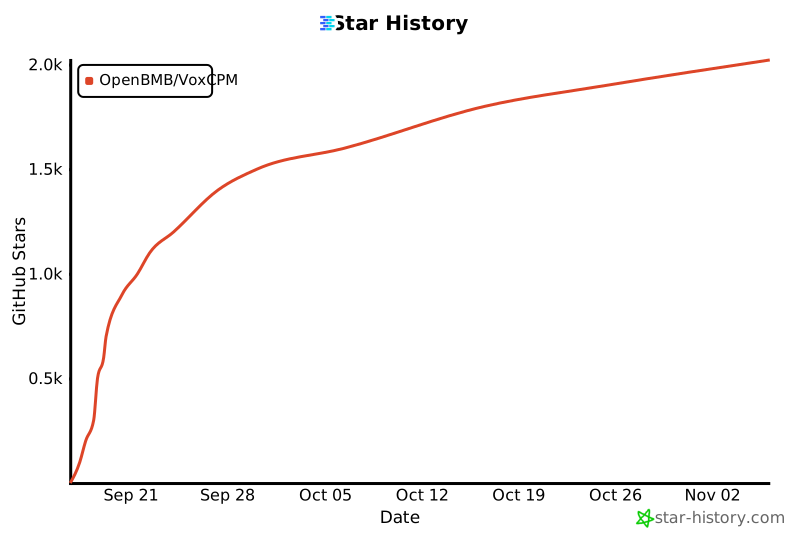](https://star-history.com/#OpenBMB/VoxCPM&Date)
|
||||
|
||||
[Star History Chart](https://star-history.com/#OpenBMB/VoxCPM&Date)
|
||||
|
||||
## 📚 Citation
|
||||
|
||||
If you find our model helpful, please consider citing our projects 📝 and staring us ⭐️!
|
||||
|
||||
```bib
|
||||
@article{voxcpm2025,
|
||||
title = {VoxCPM: Tokenizer-Free TTS for Context-Aware Speech Generation and True-to-Life Voice Cloning},
|
||||
author = {Zhou, Yixuan and Zeng, Guoyang and Liu, Xin and Li, Xiang and Yu, Renjie and Wang, Ziyang and Ye, Runchuan and Sun, Weiyue and Gui, Jiancheng and Li, Kehan and Wu, Zhiyong and Liu, Zhiyuan},
|
||||
journal = {arXiv preprint arXiv:2509.24650},
|
||||
year = {2025},
|
||||
}
|
||||
```
|
||||
|
||||
-685
@@ -1,685 +0,0 @@
|
||||
<h2 align="center">VoxCPM2:基于连续表征的多语言语音合成、创意音色设计与高保真声音克隆</h2>
|
||||
|
||||
<p align="center">
|
||||
<a href="./README.md">English</a> | <b>中文</b>
|
||||
</p>
|
||||
|
||||
<p align="center">
|
||||
<a href="https://github.com/OpenBMB/VoxCPM/"><img src="https://img.shields.io/badge/Project%20Page-GitHub-blue" alt="Project Page"></a>
|
||||
<a href="https://huggingface.co/spaces/OpenBMB/VoxCPM-Demo"><img src="https://img.shields.io/badge/Live%20Playground-Demo-orange" alt="Live Playground"></a>
|
||||
<a href="https://voxcpm.readthedocs.io/zh-cn/latest/"><img src="https://img.shields.io/badge/Docs-ReadTheDocs-8CA1AF" alt="Documentation"></a>
|
||||
<a href="https://huggingface.co/openbmb/VoxCPM2"><img src="https://img.shields.io/badge/%F0%9F%A4%97%20Hugging%20Face-VoxCPM2-yellow" alt="Hugging Face"></a>
|
||||
<a href="https://modelscope.cn/models/OpenBMB/VoxCPM2"><img src="https://img.shields.io/badge/ModelScope-VoxCPM2-purple" alt="ModelScope"></a>
|
||||
<a href="https://openbmb.github.io/voxcpm2-demopage/"><img src="https://img.shields.io/badge/DemoPage-Audio Samples-red" alt="DemoPage"></a>
|
||||
|
||||
</p>
|
||||
|
||||
<div align="center">
|
||||
<img src="assets/voxcpm_logo.png" alt="VoxCPM Logo" width="35%">
|
||||
<br><br>
|
||||
<a href="https://trendshift.io/repositories/17704" target="_blank"><img src="https://trendshift.io/api/badge/repositories/17704" alt="OpenBMB%2FVoxCPM | Trendshift" style="width: 250px; height: 55px;" width="250" height="55"/></a>
|
||||
</div>
|
||||
|
||||
<br>
|
||||
|
||||
<p align="center">
|
||||
👋 欢迎加入社区,参与讨论与交流!
|
||||
<br>
|
||||
<a href="./assets/feishu-group.png" style="display:inline-block;vertical-align:middle; margin-left: 10px;">
|
||||
<img src="./assets/feishu-logo.png" width="16" height="16" style="vertical-align:middle;"> 飞书群
|
||||
</a>
|
||||
|
|
||||
<a href="https://discord.gg/KZUx7tVNwz" style="display:inline-block;vertical-align:middle;">
|
||||
<img src="./assets/discord-logo.png" width="16" height="16" style="vertical-align:middle;"> Discord
|
||||
</a>
|
||||
</p>
|
||||
|
||||
VoxCPM 是一个**无离散音频分词器**(Tokenizer-Free)的语音合成系统,通过端到端的**扩散自回归架构**直接生成连续语音表征,绕过对音频的离散编码步骤,实现高度自然且富有表现力的语音合成。
|
||||
|
||||
**VoxCPM2** 是最新的版本 — 基于 [MiniCPM-4](https://github.com/OpenBMB/MiniCPM) 基座构建,总计 **20亿** 参数,在超过 **200万小时** 的多语种音频数据上训练,支持 **30种全球语言+9种中文方言**、**音色设计**、**可控声音克隆**,原生输出 **48kHz** 高质量音频。
|
||||
|
||||
### ✨ 核心特性
|
||||
|
||||
- 🌍 **30种语言语音合成** — 直接输入原始文本即可合成(支持语言详见下文),无需额外语言标签
|
||||
- 🎨 **音色设计** — 用自然语言描述(性别、年龄、音色、情绪、语速……)凭空创建全新音色,无需参考音频
|
||||
- 🎛️ **可控声音克隆** — 从参考音频片段克隆任意声音,可叠加风格指令控制情绪、语速和表现力,同时保持原始音色
|
||||
- 🎙️ **极致克隆** — 提供参考音频及其文本内容,模型接着参考音频进行无缝续写,从而精准还原声音细节特征(与 VoxCPM1.5 一致)
|
||||
- 🔊 **48kHz 高质量音频** — 输入 16kHz 参考音频,通过 AudioVAE V2 的非对称编解码设计直接输出 48kHz 高质量音频,内置超分能力
|
||||
- 🧠 **语境感知合成** — 根据文本内容自动推断合适的韵律和表现力
|
||||
- ⚡ **实时流式合成** — 在 NVIDIA RTX 4090 上 RTF 低至 ~0.3,通过 [Nano-vLLM](https://github.com/a710128/nanovllm-voxcpm) 或 [vLLM-Omni](https://github.com/vllm-project/vllm-omni)(官方 vLLM 全模态服务,原生支持 VoxCPM2,提供 PagedAttention 与 OpenAI 兼容 API)加速后可达 ~0.13
|
||||
- 📜 **完全开源,商用就绪** — 权重和代码基于 [Apache-2.0](LICENSE) 协议发布,免费商用
|
||||
|
||||
<summary><b>🌍 支持的语言(30种)</b></summary>
|
||||
<br>
|
||||
阿拉伯语、缅甸语、中文、丹麦语、荷兰语、英语、芬兰语、法语、德语、希腊语、希伯来语、印地语、印尼语、意大利语、日语、高棉语、韩语、老挝语、马来语、挪威语、波兰语、葡萄牙语、俄语、西班牙语、斯瓦希里语、瑞典语、菲律宾语、泰语、土耳其语、越南语
|
||||
|
||||
中国方言:四川话、粤语、吴语、东北话、河南话、陕西话、山东话、天津话、闽南话
|
||||
|
||||
|
||||
### 最新动态
|
||||
|
||||
* **[2026.04]** 🔥 发布 **VoxCPM2** — 20亿参数,30种语言,音色设计与可控声音克隆,48kHz 音频输出 | [使用文档](https://voxcpm.readthedocs.io/zh-cn/latest/) | [在线体验](https://huggingface.co/spaces/OpenBMB/VoxCPM-Demo) | [官网体验](https://voxcpm.modelbest.cn/) (适用国内访问) | [技术报告](https://arxiv.org/abs/2606.06928)
|
||||
* **[2025.12]** 🎉 开源 **VoxCPM1.5** [模型权重](https://huggingface.co/openbmb/VoxCPM1.5),支持 SFT 和 LoRA 微调。(**🏆 GitHub Trending #1**)
|
||||
* **[2025.09]** 🔥 发布 VoxCPM [技术报告](https://arxiv.org/abs/2509.24650)。
|
||||
* **[2025.09]** 🎉 开源 **VoxCPM-0.5B** [模型权重](https://huggingface.co/openbmb/VoxCPM-0.5B) (**🏆 HuggingFace Trending #1**)
|
||||
|
||||
---
|
||||
|
||||
## 目录
|
||||
|
||||
- [快速开始](#-快速开始)
|
||||
- [安装](#安装)
|
||||
- [Python API](#python-api)
|
||||
- [命令行使用](#命令行使用)
|
||||
- [Web Demo](#web-demo)
|
||||
- [生产部署](#-生产部署nano-vllm)
|
||||
- [端侧推理(llama.cpp-omni)](#-端侧推理llamacpp-omni)
|
||||
- [模型与版本](#-模型与版本)
|
||||
- [性能评测](#-性能评测)
|
||||
- [微调](#%EF%B8%8F-微调)
|
||||
- [文档](#-文档)
|
||||
- [生态与社区](#-生态与社区)
|
||||
- [风险与局限性](#%EF%B8%8F-风险与局限性)
|
||||
- [引用](#-引用)
|
||||
|
||||
---
|
||||
|
||||
## 🚀 快速开始
|
||||
|
||||
### 安装
|
||||
|
||||
```sh
|
||||
pip install voxcpm
|
||||
```
|
||||
|
||||
> **环境要求:** Python ≥ 3.10 (<3.13),PyTorch ≥ 2.5.0,CUDA ≥ 12.0。详见 [快速开始文档](https://voxcpm.readthedocs.io/zh-cn/latest/quickstart.html)。
|
||||
|
||||
### Python API
|
||||
|
||||
#### 🗣️ 文本转语音
|
||||
|
||||
```python
|
||||
from voxcpm import VoxCPM
|
||||
import soundfile as sf
|
||||
|
||||
model = VoxCPM.from_pretrained(
|
||||
"openbmb/VoxCPM2",
|
||||
load_denoiser=False,
|
||||
)
|
||||
|
||||
wav = model.generate(
|
||||
text="VoxCPM2 是目前推荐使用的多语言语音合成版本。",
|
||||
cfg_value=2.0,
|
||||
inference_timesteps=10,
|
||||
seed=42,
|
||||
)
|
||||
sf.write("demo.wav", wav, model.tts_model.sample_rate)
|
||||
print("已保存: demo.wav")
|
||||
```
|
||||
|
||||
如果你希望先从 ModelScope 下载模型到本地(适用于国内网络访问),可以使用:
|
||||
|
||||
```bash
|
||||
pip install modelscope
|
||||
```
|
||||
|
||||
```python
|
||||
from modelscope import snapshot_download
|
||||
snapshot_download("OpenBMB/VoxCPM2", local_dir='./pretrained_models/VoxCPM2') # 指定模型保存的本地路径
|
||||
|
||||
from voxcpm import VoxCPM
|
||||
import soundfile as sf
|
||||
model = VoxCPM.from_pretrained('./pretrained_models/VoxCPM2', load_denoiser=False)
|
||||
|
||||
wav = model.generate(
|
||||
text="VoxCPM2 是目前推荐使用的多语言语音合成版本。",
|
||||
cfg_value=2.0,
|
||||
inference_timesteps=10,
|
||||
seed=42,
|
||||
)
|
||||
sf.write("demo.wav", wav, model.tts_model.sample_rate)
|
||||
```
|
||||
|
||||
#### 🎨 音色设计
|
||||
|
||||
用自然语言描述创建全新音色,无需参考音频。**格式:** 在 `text` 开头用括号写入音色描述(如 `"(音色描述)要合成的文本。"`):
|
||||
|
||||
```python
|
||||
wav = model.generate(
|
||||
text="(年轻女性,声音温柔甜美)你好,欢迎使用VoxCPM2!",
|
||||
cfg_value=2.0,
|
||||
inference_timesteps=10,
|
||||
seed=42,
|
||||
)
|
||||
sf.write("voice_design.wav", wav, model.tts_model.sample_rate)
|
||||
```
|
||||
|
||||
#### 🎛️ 可控声音克隆
|
||||
|
||||
上传一段参考音频,模型克隆其音色,同时可以使用控制指令调节语速、情绪或风格。
|
||||
|
||||
```python
|
||||
wav = model.generate(
|
||||
text="这是VoxCPM2生成的克隆语音。",
|
||||
reference_wav_path="path/to/voice.wav",
|
||||
)
|
||||
sf.write("clone.wav", wav, model.tts_model.sample_rate)
|
||||
|
||||
wav = model.generate(
|
||||
text="(稍快一点,欢快的语气)这是带风格控制的克隆语音。",
|
||||
reference_wav_path="path/to/voice.wav",
|
||||
cfg_value=2.0,
|
||||
inference_timesteps=10,
|
||||
seed=42,
|
||||
)
|
||||
sf.write("controllable_clone.wav", wav, model.tts_model.sample_rate)
|
||||
```
|
||||
|
||||
#### 🎙️ 极致克隆
|
||||
|
||||
提供参考音频及其精确文本转录,实现基于音频续写的高保真克隆。为获得最高克隆相似度,可将同一音频同时传给 `reference_wav_path` 和 `prompt_wav_path`:
|
||||
|
||||
```python
|
||||
wav = model.generate(
|
||||
text="这是使用VoxCPM2的极致克隆演示。",
|
||||
prompt_wav_path="path/to/voice.wav",
|
||||
prompt_text="参考音频的文本转录。",
|
||||
reference_wav_path="path/to/voice.wav", # 可选,提升相似度
|
||||
)
|
||||
sf.write("hifi_clone.wav", wav, model.tts_model.sample_rate)
|
||||
```
|
||||
|
||||
<details>
|
||||
<summary><b>🔄 流式 API</b></summary>
|
||||
|
||||
```python
|
||||
import numpy as np
|
||||
|
||||
chunks = []
|
||||
for chunk in model.generate_streaming(
|
||||
text="使用VoxCPM进行流式语音合成非常简单!",
|
||||
):
|
||||
chunks.append(chunk)
|
||||
wav = np.concatenate(chunks)
|
||||
sf.write("streaming.wav", wav, model.tts_model.sample_rate)
|
||||
```
|
||||
</details>
|
||||
|
||||
### 命令行使用
|
||||
|
||||
```bash
|
||||
# 音色设计(无需参考音频)
|
||||
voxcpm design \
|
||||
--text "VoxCPM2带来全新语音合成体验。" \
|
||||
--output out.wav
|
||||
|
||||
# 可控声音克隆(带风格控制)
|
||||
voxcpm design \
|
||||
--text "VoxCPM2带来全新语音合成体验。" \
|
||||
--control "年轻女声,温暖温柔,略带微笑" \
|
||||
--seed 42 \
|
||||
--output out.wav
|
||||
|
||||
# 声音克隆(参考音频)
|
||||
voxcpm clone \
|
||||
--text "这是一个声音克隆的演示。" \
|
||||
--reference-audio path/to/voice.wav \
|
||||
--output out.wav
|
||||
|
||||
# 极致克隆(提示音频 + 转录文本)
|
||||
voxcpm clone \
|
||||
--text "这是一个声音克隆的演示。" \
|
||||
--prompt-audio path/to/voice.wav \
|
||||
--prompt-text "参考音频转录文本" \
|
||||
--reference-audio path/to/voice.wav \
|
||||
--output out.wav
|
||||
|
||||
# 批量处理
|
||||
voxcpm batch --input examples/input.txt --output-dir outs
|
||||
|
||||
# 可选的生成后时间戳对齐(基于 stable-ts)
|
||||
pip install "voxcpm[timestamps]"
|
||||
voxcpm design \
|
||||
--text "VoxCPM2带来全新语音合成体验。" \
|
||||
--output out.wav \
|
||||
--timestamps \
|
||||
--timestamp-level word \
|
||||
--timestamp-language zh
|
||||
|
||||
# 字级时间戳是 best-effort,会基于词级对齐结果拆分
|
||||
voxcpm design \
|
||||
--text "欢迎使用 VoxCPM2。" \
|
||||
--output out.wav \
|
||||
--timestamps \
|
||||
--timestamp-level char \
|
||||
--timestamp-language zh
|
||||
|
||||
# 帮助
|
||||
voxcpm --help
|
||||
```
|
||||
|
||||
### Web Demo
|
||||
|
||||
```bash
|
||||
python app.py --port 8808 # 然后在浏览器打开 http://localhost:8808
|
||||
```
|
||||
|
||||
使用 `--device` 选择运行设备:
|
||||
|
||||
```bash
|
||||
python app.py --device auto
|
||||
```
|
||||
|
||||
支持的取值包括 `auto`、`cpu`、`mps`、`cuda` 和 `cuda:N`。在 Apple Silicon Mac 上,`auto` 会在可用时使用 MPS。
|
||||
|
||||
### 🚢 生产部署(Nano-vLLM)
|
||||
|
||||
如需高吞吐量部署,使用 [**Nano-vLLM-VoxCPM**](https://github.com/a710128/nanovllm-voxcpm) — 基于 Nano-vLLM 构建的专用推理引擎,支持并发请求和异步 API。
|
||||
|
||||
```bash
|
||||
pip install nano-vllm-voxcpm
|
||||
```
|
||||
|
||||
```python
|
||||
from nanovllm_voxcpm import VoxCPM
|
||||
import numpy as np, soundfile as sf
|
||||
|
||||
server = VoxCPM.from_pretrained(model="/path/to/VoxCPM", devices=[0])
|
||||
chunks = list(server.generate(target_text="你好,我来自VoxCPM!"))
|
||||
sf.write("out.wav", np.concatenate(chunks), 48000)
|
||||
server.stop()
|
||||
```
|
||||
|
||||
> **在 NVIDIA RTX 4090 上 RTF 低至 ~0.13**(标准 PyTorch 实现约 ~0.3),支持批量并发请求和 FastAPI HTTP 服务。详见 [Nano-vLLM-VoxCPM 仓库](https://github.com/a710128/nanovllm-voxcpm)。
|
||||
|
||||
### 🏭 生产环境部署(vLLM-Omni)
|
||||
|
||||
如需生产级多租户部署,使用 [**vLLM-Omni**](https://github.com/vllm-project/vllm-omni) — 官方 vLLM 项目的全模态扩展,原生支持 **VoxCPM2**。具备 PagedAttention KV 缓存、连续批处理,以及与 OpenAI 完全兼容的 `/v1/audio/speech` 接口。
|
||||
|
||||
```bash
|
||||
# 从源码安装(最新 main 分支 —— vllm-omni 正在快速迭代)
|
||||
uv pip install vllm==0.19.0 --torch-backend=auto
|
||||
git clone https://github.com/vllm-project/vllm-omni.git && cd vllm-omni
|
||||
uv pip install -e .
|
||||
```
|
||||
|
||||
其他平台(ROCm、XPU、MUSA、NPU)与 Docker 镜像请参考 [vLLM-Omni 安装文档](https://vllm-omni.readthedocs.io/en/latest/getting_started/installation/)。
|
||||
|
||||
```bash
|
||||
# 启动 OpenAI 兼容的 TTS 服务(--omni 启用全模态服务)
|
||||
vllm serve openbmb/VoxCPM2 --omni --port 8000
|
||||
|
||||
# 任意 OpenAI 客户端均可调用
|
||||
curl http://localhost:8000/v1/audio/speech \
|
||||
-H "Content-Type: application/json" \
|
||||
-d '{"model":"openbmb/VoxCPM2","input":"你好,欢迎使用 VoxCPM2 on vLLM-Omni!","voice":"default"}' \
|
||||
--output out.wav
|
||||
```
|
||||
|
||||
> 基于上游 vLLM 调度器构建,开箱即用支持批量并发、流式分块输出和多 GPU 部署。完整示例见 [VoxCPM2 部署样例](https://github.com/vllm-project/vllm-omni/tree/main/examples/online_serving/voxcpm2)。
|
||||
|
||||
### 📱 端侧推理(llama.cpp-omni)
|
||||
|
||||
如需在端侧/消费级硬件上无 Python 运行,使用 **[llama.cpp-omni](https://github.com/tc-mb/llama.cpp-omni)** — 基于 llama.cpp 的高性能 C++ 推理引擎,原生支持 VoxCPM2 GGUF,可在 **CPU / Metal / CUDA / Vulkan** 上运行。
|
||||
|
||||
**1. 下载 GGUF 权重**:从 [HF下载](https://huggingface.co/DennisHuang648/VoxCPM2-GGUF) | [ModelScope](https://modelscope.cn/models/DennisHuang/VoxCPM2-GGUF),需要一个 **BaseLM**(F16 或 Q8_0)+ **Acoustic** 文件。Q8_0 体积减半,质量损失可忽略。
|
||||
|
||||
**2. 编译**
|
||||
|
||||
```bash
|
||||
git clone https://github.com/tc-mb/llama.cpp-omni.git && cd llama.cpp-omni
|
||||
cmake -B build -DCMAKE_BUILD_TYPE=Release
|
||||
cmake --build build --target voxcpm2-cli -j
|
||||
```
|
||||
|
||||
> CMake 会自动检测并启用 Metal(macOS)或 CUDA(Linux + NVIDIA GPU)。
|
||||
|
||||
**3. 运行**
|
||||
|
||||
```bash
|
||||
# 基础 TTS
|
||||
./build/bin/voxcpm2-cli \
|
||||
-t "你好,我是通过 llama.cpp-omni 运行的 VoxCPM2。" \
|
||||
-o output.wav VoxCPM2-BaseLM-Q8_0.gguf VoxCPM2-Acoustic-F16.gguf
|
||||
|
||||
# 声音克隆(参考音频)
|
||||
./build/bin/voxcpm2-cli \
|
||||
-t "克隆的声音。" -r speaker.wav -o clone.wav \
|
||||
VoxCPM2-BaseLM-Q8_0.gguf VoxCPM2-Acoustic-F16.gguf
|
||||
|
||||
# 精准克隆(参考音频 + 转写文本)
|
||||
./build/bin/voxcpm2-cli \
|
||||
-t "目标文本。" --prompt-wav speaker.wav --prompt-text "参考音频的转写文本" \
|
||||
-o clone.wav VoxCPM2-BaseLM-Q8_0.gguf VoxCPM2-Acoustic-F16.gguf
|
||||
```
|
||||
|
||||
> **在 Apple M4 Pro / Metal 上 RTF ~1.76(Q8_0)。** 主要参数:`--cfg`(引导尺度)、`--timesteps`(CFM 步数)、`--seed`、`--temperature`、`--stream`。详见 [llama.cpp-omni 仓库](https://github.com/tc-mb/llama.cpp-omni) 和 [GGUF 权重页面](https://huggingface.co/DennisHuang648/VoxCPM2-GGUF)。
|
||||
|
||||
> **完整参数说明、多场景示例与声音克隆技巧 →** [快速开始指南](https://voxcpm.readthedocs.io/zh-cn/latest/quickstart.html) | [使用指南](https://voxcpm.readthedocs.io/zh-cn/latest/usage_guide.html) | [Cookbook](https://voxcpm.readthedocs.io/zh-cn/latest/cookbook.html)
|
||||
|
||||
---
|
||||
|
||||
## 📦 模型与版本
|
||||
|
||||
| | **VoxCPM2** | **VoxCPM1.5** | **VoxCPM-0.5B** |
|
||||
|---|:---:|:---:|:---:|
|
||||
| **状态** | 🟢 最新版本 | 稳定版 | 旧版 |
|
||||
| **主模型参数量** | 2B | 0.6B | 0.5B |
|
||||
| **音频采样率** | 48kHz | 44.1kHz | 16kHz |
|
||||
| **LM处理码率** | 6.25Hz | 6.25Hz | 12.5Hz |
|
||||
| **语言支持数量** | 30 | 2(中文、英文) | 2(中文、英文) |
|
||||
| **克隆模式** | 隔离参考音频(无需文本) & 音频续写 | 仅音频续写 | 仅音频续写 |
|
||||
| **音色设计** | ✅ | — | — |
|
||||
| **可控声音克隆** | ✅ | — | — |
|
||||
| **SFT / LoRA** | ✅ | ✅ | ✅ |
|
||||
| **RTF (RTX 4090)** | ~0.30 | ~0.15 | ~0.17 |
|
||||
| **RTF Nano-VLLM (RTX 4090)** | ~0.13 | ~0.08 | ~0.10 |
|
||||
| **显存占用** | ~8 GB | ~6 GB | ~5 GB |
|
||||
| **模型权重** | [🤗 HF](https://huggingface.co/openbmb/VoxCPM2) / [MS](https://modelscope.cn/models/OpenBMB/VoxCPM2) | [🤗 HF](https://huggingface.co/openbmb/VoxCPM1.5) / [MS](https://modelscope.cn/models/OpenBMB/VoxCPM1.5) | [🤗 HF](https://huggingface.co/openbmb/VoxCPM-0.5B) / [MS](https://modelscope.cn/models/OpenBMB/VoxCPM-0.5B) |
|
||||
| **技术报告** | [arXiv](https://arxiv.org/abs/2606.06928) | — | [arXiv](https://arxiv.org/abs/2509.24650) [ICLR 2026](https://openreview.net/forum?id=h5KLpGoqzC) |
|
||||
| **Demo 页面** | [音频示例](https://openbmb.github.io/voxcpm2-demopage) | — | [音频示例](https://openbmb.github.io/VoxCPM-demopage) |
|
||||
|
||||
VoxCPM2 采用**连续音频表征、扩散自回归**范式,模型在 **AudioVAE** 的连续隐空间中通过四阶段处理:**LocEnc → TSLM → RALM → LocDiT**,实现丰富的表现力语音合成和 48kHz 原生音频输出。
|
||||
|
||||
<div align="center">
|
||||
<img src="assets/voxcpm2_model.png" alt="VoxCPM2 模型架构" width="90%">
|
||||
</div>
|
||||
|
||||
> 完整架构细节、VoxCPM2 升级内容和模型对比表见 [架构设计文档](https://voxcpm.readthedocs.io/zh-cn/latest/models/architecture.html)。
|
||||
|
||||
---
|
||||
|
||||
## 📊 性能评测
|
||||
|
||||
VoxCPM2 在公开的零样本和可控 TTS 基准测试中取得了 SOTA 或可比的结果。
|
||||
|
||||
### Seed-TTS-eval
|
||||
|
||||
<details>
|
||||
<summary><b>Seed-TTS-eval WER(⬇)&SIM(⬆) 结果(点击展开)</b></summary>
|
||||
|
||||
| Model | Parameters | Open-Source | test-EN | | test-ZH | | test-Hard | |
|
||||
|------|------|------|:------------:|:--:|:------------:|:--:|:-------------:|:--:|
|
||||
| | | | WER/%⬇ | SIM/%⬆| CER/%⬇| SIM/%⬆ | CER/%⬇ | SIM/%⬆ |
|
||||
| MegaTTS3 | 0.5B | ❌ | 2.79 | 77.1 | 1.52 | 79.0 | - | - |
|
||||
| DiTAR | 0.6B | ❌ | 1.69 | 73.5 | 1.02 | 75.3 | - | - |
|
||||
| CosyVoice3 | 0.5B | ❌ | 2.02 | 71.8 | 1.16 | 78.0 | 6.08 | 75.8 |
|
||||
| CosyVoice3 | 1.5B | ❌ | 2.22 | 72.0 | 1.12 | 78.1 | 5.83 | 75.8 |
|
||||
| Seed-TTS | - | ❌ | 2.25 | 76.2 | 1.12 | 79.6 | 7.59 | 77.6 |
|
||||
| MiniMax-Speech | - | ❌ | 1.65 | 69.2 | 0.83 | 78.3 | - | - |
|
||||
| F5-TTS | 0.3B | ✅ | 2.00 | 67.0 | 1.53 | 76.0 | 8.67 | 71.3 |
|
||||
| MaskGCT | 1B | ✅ | 2.62 | 71.7 | 2.27 | 77.4 | - | - |
|
||||
| CosyVoice | 0.3B | ✅ | 4.29 | 60.9 | 3.63 | 72.3 | 11.75 | 70.9 |
|
||||
| CosyVoice2 | 0.5B | ✅ | 3.09 | 65.9 | 1.38 | 75.7 | 6.83 | 72.4 |
|
||||
| SparkTTS | 0.5B | ✅ | 3.14 | 57.3 | 1.54 | 66.0 | - | - |
|
||||
| FireRedTTS | 0.5B | ✅ | 3.82 | 46.0 | 1.51 | 63.5 | 17.45 | 62.1 |
|
||||
| FireRedTTS-2 | 1.5B | ✅ | 1.95 | 66.5 | 1.14 | 73.6 | - | - |
|
||||
| Qwen2.5-Omni | 7B | ✅ | 2.72 | 63.2 | 1.70 | 75.2 | 7.97 | 74.7 |
|
||||
| Qwen3-Omni | 30B-A3B | ✅ | 1.39 | - | 1.07 | - | - | - |
|
||||
| OpenAudio-s1-mini | 0.5B | ✅ | 1.94 | 55.0 | 1.18 | 68.5 | 23.37 | 64.3 |
|
||||
| IndexTTS2 | 1.5B | ✅ | 2.23 | 70.6 | 1.03 | 76.5 | 7.12 | 75.5 |
|
||||
| VibeVoice | 1.5B | ✅ | 3.04 | 68.9 | 1.16 | 74.4 | - | - |
|
||||
| HiggsAudio-v2 | 3B | ✅ | 2.44 | 67.7 | 1.50 | 74.0 | 55.07 | 65.6 |
|
||||
| VoxCPM-0.5B | 0.6B | ✅ | 1.85 | 72.9 | 0.93 | 77.2 | 8.87 | 73.0 |
|
||||
| VoxCPM1.5 | 0.8B | ✅ | 2.12 | 71.4 | 1.18 | 77.0 | 7.74 | 73.1 |
|
||||
| MOSS-TTS | | ✅ | 1.85 | 73.4 | 1.20 | 78.8 | - | - |
|
||||
| Qwen3-TTS | 1.7B | ✅ | 1.23 | 71.7 | 1.22 | 77.0 | 6.76 | 74.8 |
|
||||
| FishAudio S2 | 4B | ✅ | 0.99 | - | 0.54 | - | 5.99 | - |
|
||||
| LongCat-Audio-DiT | 3.5B | ✅ | 1.50 | 78.6 | 1.09 | 81.8 | 6.04 | 79.7 |
|
||||
| **VoxCPM2** | 2B | ✅ | 1.84 | 75.3 | 0.97| 79.5| 8.13 | 75.3 |
|
||||
</details>
|
||||
|
||||
|
||||
### CV3-eval
|
||||
<details>
|
||||
<summary><b>CV3-eval 多语言 WER/CER(⬇) 结果(点击展开)</b></summary>
|
||||
|
||||
| Model | zh | en | hard-zh | hard-en | ja | ko | de | es | fr | it | ru |
|
||||
|-------|:--:|:--:|:--:|:--:|:--:|:--:|:--:|:--:|:--:|:--:|:--:|
|
||||
| CosyVoice2 | 4.08 | 6.32 | 12.58| 11.96| 9.13 | 19.7 |- | - | - | - | - |
|
||||
| CosyVoice3-1.5B | 3.91 | 4.99 | 9.77 | 10.55 | 7.57 | 5.69 | 6.43 | 4.47 | 11.8 | 10.5 | 6.64 |
|
||||
| Fish Audio S2 | 2.65 | 2.43 | 9.10 | 4.40 | 3.96 | 2.76 | 2.22 | 2.00 | 6.26 | 2.04 | 2.78 |
|
||||
| **VoxCPM2** | 3.65 | 5.00 | 8.55 | 8.48 | 5.96 | 5.69 | 4.77 | 3.80 | 9.85 | 4.25 | 5.21 |
|
||||
</details>
|
||||
|
||||
### MiniMax-Multilingual-Test
|
||||
|
||||
<details>
|
||||
<summary><b>Minimax-MLS-test WER(⬇) 结果(点击展开)</b></summary>
|
||||
|
||||
| Language | Minimax | ElevenLabs | Qwen3-TTS | FishAudio S2 | **VoxCPM2** |
|
||||
|----------|:-------:|:----------:|:--------------------:|:------------:|:-----------:|
|
||||
| Arabic | **1.665** | 1.666 | – | 3.500 | 13.046 |
|
||||
| Cantonese | 34.111 | 51.513 | – | **30.670** | 38.584 |
|
||||
| Chinese | 2.252 | 16.026 | 0.928 | **0.730** | 1.136 |
|
||||
| Czech | 3.875 | **2.108** | – | 2.840 | 24.132 |
|
||||
| Dutch | 1.143 | **0.803** | – | 0.990 | 0.913 |
|
||||
| English | 2.164 | 2.339 | **0.934** | 1.620 | 2.289 |
|
||||
| Finnish | 4.666 | 2.964 | – | 3.330 | **2.632** |
|
||||
| French | 4.099 | 5.216 | **2.858** | 3.050 | 4.534 |
|
||||
| German | 1.906 | 0.572 | 1.235 | **0.550** | 0.679 |
|
||||
| Greek | 2.016 | **0.991** | – | 5.740 | 2.844 |
|
||||
| Hindi | 6.962 | **5.827** | – | 14.640 | 19.699 |
|
||||
| Indonesian | 1.237 | **1.059** | – | 1.460 | 1.084 |
|
||||
| Italian | 1.543 | 1.743 | **0.948** | 1.270 | 1.563 |
|
||||
| Japanese | 3.519 | 10.646 | 3.823 | **2.760** | 4.628 |
|
||||
| Korean | 1.747 | 1.865 | 1.755 | **1.180** | 1.962 |
|
||||
| Polish | 1.415 | **0.766** | – | 1.260 | 1.141 |
|
||||
| Portuguese | 1.877 | 1.331 | 1.526 | **1.140** | 1.938 |
|
||||
| Romanian | 2.878 | **1.347** | – | 10.740 | 21.577 |
|
||||
| Russian | 4.281 | 3.878 | 3.212 | **2.400** | 3.634 |
|
||||
| Spanish | 1.029 | 1.084 | 1.126 | **0.910** | 1.438 |
|
||||
| Thai | 2.701 | 73.936 | – | 4.230 | 2.961 |
|
||||
| Turkish | 1.52 | 0.699 | – | 0.870 | 0.817 |
|
||||
| Ukrainian | 1.082 | **0.997** | – | 2.300 | 6.316 |
|
||||
| Vietnamese | **0.88** | 73.415 | – | 7.410 | 3.307 |
|
||||
|
||||
</details>
|
||||
|
||||
<details>
|
||||
<summary><b>Minimax-MLS-test SIM(⬆) 结果(点击展开)</b></summary>
|
||||
|
||||
| Language | Minimax | ElevenLabs | Qwen3-TTS | FishAudio S2 | **VoxCPM2** |
|
||||
|----------|:-------:|:----------:|:--------------------:|:------------:|:-----------:|
|
||||
| Arabic | 73.6 | 70.6 | – | 75.0 | **79.1** |
|
||||
| Cantonese | 77.8 | 67.0 | – | 80.5 | **83.5** |
|
||||
| Chinese | 78.0 | 67.7 | 79.9 | 81.6 | **82.5** |
|
||||
| Czech | 79.6 | 68.5 | – | **79.8** | 78.3 |
|
||||
| Dutch | 73.8 | 68.0 | – | 73.0 | **80.8** |
|
||||
| English | 75.6 | 61.3 | 77.5 | 79.7 | **85.4** |
|
||||
| Finnish | 83.5 | 75.9 | – | 81.9 | **89.0** |
|
||||
| French | 62.8 | 53.5 | 62.8 | 69.8 | **73.5** |
|
||||
| German | 73.3 | 61.4 | 77.5 | 76.7 | **80.3** |
|
||||
| Greek | 82.6 | 73.3 | – | 79.5 | **86.0** |
|
||||
| Hindi | 81.8 | 73.0 | – | 82.1 | **85.6** |
|
||||
| Indonesian | 72.9 | 66.0 | – | 76.3 | **80.0** |
|
||||
| Italian | 69.9 | 57.9 | 81.7 | 74.7 | **78.0** |
|
||||
| Japanese | 77.6 | 73.8 | 78.8 | 79.6 | **82.8** |
|
||||
| Korean | 77.6 | 70.0 | 79.9 | 81.7 | **83.3** |
|
||||
| Polish | 80.2 | 72.9 | – | 81.9 | **88.4** |
|
||||
| Portuguese | 80.5 | 71.1 | 81.7 | 78.1 | **83.7** |
|
||||
| Romanian | **80.9** | 69.9 | – | 73.3 | 79.7 |
|
||||
| Russian | 76.1 | 67.6 | 79.2 | 79.0 | **81.1** |
|
||||
| Spanish | 76.2 | 61.5 | 81.4 | 77.6 | **83.1** |
|
||||
| Thai | 80.0 | 58.8 | – | 78.6 | **84.0** |
|
||||
| Turkish | 77.9 | 59.6 | – | 83.5 | **87.1** |
|
||||
| Ukrainian | 73.0 | 64.7 | – | 74.7 | **79.8** |
|
||||
| Vietnamese | 74.3 | 36.9 | – | 74.0 | **80.6** |
|
||||
|
||||
</details>
|
||||
|
||||
### Internal 30-Language ASR Benchmark
|
||||
|
||||
我们额外进行了内部多语言可懂度评测:**30 语种 × 500 样本**,ASR 转写评估使用 **Gemini 3.1 Flash Lite API**。
|
||||
|
||||
<details>
|
||||
<summary><b>内部30语种评测集ASR结果(点击展开)</b></summary>
|
||||
|
||||
| 语言 | 指标 | VoxCPM2 | Fish S2-Pro |
|
||||
|---|---:|---:|---:|
|
||||
| ar (阿拉伯语) | CER | 1.23% | 0.30% |
|
||||
| da (丹麦语) | WER | 2.70% | 3.52% |
|
||||
| de (德语) | WER | 0.96% | 0.64% |
|
||||
| el (希腊语) | WER | 3.17% | 4.61% |
|
||||
| en (英语) | WER | 0.42% | 1.03% |
|
||||
| es (西班牙语) | WER | 1.33% | 0.64% |
|
||||
| fi (芬兰语) | WER | 2.24% | 2.80% |
|
||||
| fr (法语) | WER | 2.16% | 2.34% |
|
||||
| he (希伯来语) | CER | 2.98% | 15.27% |
|
||||
| hi (印地语) | CER | 0.79% | 0.91% |
|
||||
| id (印尼语) | WER | 1.36% | 1.68% |
|
||||
| it (意大利语) | WER | 1.65% | 1.08% |
|
||||
| ja (日语) | CER | 2.40% | 1.82% |
|
||||
| km (高棉语) | CER | 2.05% | 75.15% |
|
||||
| ko (韩语) | CER | 0.95% | 0.29% |
|
||||
| lo (老挝语) | CER | 1.90% | 87.40% |
|
||||
| ms (马来语) | WER | 1.75% | 1.41% |
|
||||
| my (缅甸语) | CER | 1.42% | 85.27% |
|
||||
| nl (荷兰语) | WER | 1.25% | 1.68% |
|
||||
| no (挪威语) | WER | 2.49% | 3.76% |
|
||||
| pl (波兰语) | WER | 1.90% | 1.65% |
|
||||
| pt (葡萄牙语) | WER | 1.48% | 1.49% |
|
||||
| ru (俄语) | WER | 0.90% | 0.86% |
|
||||
| sv (瑞典语) | WER | 2.22% | 2.63% |
|
||||
| sw (斯瓦希里语) | CER | 1.07% | 2.02% |
|
||||
| th (泰语) | CER | 0.94% | 1.92% |
|
||||
| tl (菲律宾语) | WER | 2.63% | 4.00% |
|
||||
| tr (土耳其语) | WER | 1.65% | 1.65% |
|
||||
| vi (越南语) | WER | 1.56% | 5.56% |
|
||||
| zh (中文) | CER | 0.92% | 1.02% |
|
||||
| 平均(30 语种) | | **1.68%** | - |
|
||||
|
||||
</details>
|
||||
|
||||
|
||||
### InstructTTSEval
|
||||
|
||||
<details>
|
||||
<summary><b>指令驱动音色设计结果 (点击展开)</b></summary>
|
||||
|
||||
| Model | InstructTTSEval-ZH | | | InstructTTSEval-EN | | |
|
||||
|-------|:---:|:----:|:----:|:----:|:----:|:----:|
|
||||
| | APS⬆| DSD⬆ | RP⬆| APS⬆ | DSD⬆ | RP⬆ |
|
||||
| Hume | – | – | – | 83.0 | 75.3 | 54.3 |
|
||||
| VoxInstruct | 47.5 | 52.3 | 42.6 | 54.9 | 57.0 | 39.3 |
|
||||
| Parler-tts-mini | – | – | – | 63.4 | 48.7 | 28.6 |
|
||||
| Parler-tts-large | – | – | – | 60.0 | 45.9 | 31.2 |
|
||||
| PromptTTS | – | – | – | 64.3 | 47.2 | 31.4 |
|
||||
| PromptStyle | – | – | – | 57.4 | 46.4 | 30.9 |
|
||||
| VoiceSculptor | 75.7 | 64.7 | 61.5 | – | – | – |
|
||||
| Mimo-Audio-7B-Instruct | 75.7 | 74.3 | 61.5 | 80.6 | 77.6 | 59.5 |
|
||||
| Qwen3TTS-12Hz-1.7B-VD | **85.2** | **81.1** | **65.1** | 82.9 | 82.4 | 68.4 |
|
||||
| **VoxCPM2** | **85.2** | 71.5 | 60.8 | **84.2** | **83.2** | **71.4** |
|
||||
|
||||
</details>
|
||||
|
||||
---
|
||||
|
||||
## ⚙️ 微调
|
||||
|
||||
VoxCPM 支持**全参数微调(SFT)** 和 **LoRA 微调**。仅需 **5-10分钟** 的音频数据,即可适配特定说话人、语言或领域。
|
||||
|
||||
```bash
|
||||
# LoRA 微调(参数高效,推荐)
|
||||
python scripts/train_voxcpm_finetune.py \
|
||||
--config_path conf/voxcpm_v2/voxcpm_finetune_lora.yaml
|
||||
|
||||
# 全参数微调
|
||||
python scripts/train_voxcpm_finetune.py \
|
||||
--config_path conf/voxcpm_v2/voxcpm_finetune_all.yaml
|
||||
|
||||
# WebUI 训练与推理
|
||||
python lora_ft_webui.py # 然后打开 http://localhost:7860
|
||||
```
|
||||
|
||||
> **完整指南 →** [微调文档](https://voxcpm.readthedocs.io/zh-cn/latest/finetuning/finetune.html)(数据准备、配置、训练、LoRA 热切换、常见问题)
|
||||
|
||||
---
|
||||
|
||||
## 📚 文档
|
||||
|
||||
完整文档:**[voxcpm.readthedocs.io](https://voxcpm.readthedocs.io/zh-cn/latest/)**
|
||||
|
||||
| 主题 | 链接 |
|
||||
|---|---|
|
||||
| 快速开始与安装 | [快速开始](https://voxcpm.readthedocs.io/zh-cn/latest/quickstart.html) |
|
||||
| 使用指南与 Cookbook | [使用指南](https://voxcpm.readthedocs.io/zh-cn/latest/usage_guide.html) |
|
||||
| VoxCPM 系列模型 | [模型列表](https://voxcpm.readthedocs.io/zh-cn/latest/models/version_history.html) |
|
||||
| 微调(SFT & LoRA) | [微调指南](https://voxcpm.readthedocs.io/zh-cn/latest/finetuning/finetune.html) |
|
||||
| 常见问题 | [FAQ](https://voxcpm.readthedocs.io/zh-cn/latest/faq.html) |
|
||||
|
||||
---
|
||||
|
||||
## 🌟 生态与社区
|
||||
|
||||
| 项目 | 说明 |
|
||||
|---|---|
|
||||
| [**Nano-vLLM**](https://github.com/a710128/nanovllm-voxcpm) | 高吞吐快速 GPU 推理引擎 |
|
||||
| [**vLLM-Omni**](https://github.com/vllm-project/vllm-omni) | 官方 vLLM 全模态服务(原生支持 VoxCPM2)— PagedAttention、OpenAI 兼容 API |
|
||||
| [**llama.cpp-omni**](https://github.com/tc-mb/llama.cpp-omni) | 全双工全模态推理引擎 — VoxCPM2 GGUF,支持 CPU / Metal / CUDA / Vulkan |
|
||||
| [**VoxCPM.cpp**](https://github.com/bluryar/VoxCPM.cpp) | GGML/GGUF:CPU、CUDA、Vulkan 推理 |
|
||||
| [**audio.cpp**](https://github.com/0xShug0/audio.cpp) | 基于 ggml 的统一 C++ 推理框架 — CPU/CUDA/Vulkan/Metal,CLI 与服务端,无需 Python |
|
||||
| [**VoxCPM-ONNX**](https://github.com/bluryar/VoxCPM-ONNX) | ONNX 导出,支持 CPU 推理 |
|
||||
| [**VoxCPMANE**](https://github.com/0seba/VoxCPMANE) | Apple Neural Engine 后端 |
|
||||
| [**voxcpm_rs**](https://github.com/madushan1000/voxcpm_rs) | Rust 重新实现 |
|
||||
| [**ComfyUI-VoxCPM**](https://github.com/wildminder/ComfyUI-VoxCPM) | ComfyUI 节点工作流 |
|
||||
| [**ComfyUI_RH_VoxCPM**](https://github.com/HM-RunningHub/ComfyUI_RH_VoxCPM) | 面向 VoxCPM 2 的功能更完整的 ComfyUI 工作流,支持多说话人、LoRA 和自动 ASR |
|
||||
| [**ComfyUI-VoxCPMTTS**](https://github.com/1038lab/ComfyUI-VoxCPMTTS) | ComfyUI TTS 扩展 |
|
||||
| [**TTS WebUI**](https://github.com/rsxdalv/tts_webui_extension.vox_cpm) | 浏览器端 TTS 扩展 |
|
||||
|
||||
> 完整生态见[文档](https://voxcpm.readthedocs.io/zh-cn/latest/)。社区项目非 OpenBMB 官方维护。做了什么有趣的东西?[提 Issue 或 PR](https://github.com/OpenBMB/VoxCPM/issues) 把它加进来!
|
||||
|
||||
---
|
||||
|
||||
## ⚠️ 风险与局限性
|
||||
|
||||
- **滥用风险:** VoxCPM 的声音克隆能力可生成高度逼真的合成语音。**严禁**将 VoxCPM 用于冒充他人、欺诈或虚假信息传播。我们强烈建议对所有 AI 生成的内容进行明确标注。
|
||||
- **可控生成稳定性:** 音色设计和可控声音克隆的结果可能因生成次数而异 — 建议尝试生成 1~3 次以获得理想的音色或风格。我们正在积极提升可控性的一致性。
|
||||
- **语言覆盖:** VoxCPM2 官方支持 30 种语言。对于未列入的语言,欢迎直接测试或使用自有数据进行微调。我们计划在未来版本中扩展语言覆盖。
|
||||
- **使用说明:** 本模型基于 Apache-2.0 协议发布。用于生产部署时,我们建议针对具体场景进行充分的测试和安全评估。
|
||||
|
||||
---
|
||||
|
||||
## 📖 引用
|
||||
|
||||
如果 VoxCPM 对您有帮助,请考虑引用我们的工作并为仓库加星 ⭐!
|
||||
|
||||
```bib
|
||||
@article{zhou2026voxcpm2,
|
||||
title = {VoxCPM2 Technical Report},
|
||||
author = {Zhou, Yixuan and Zeng, Guoyang and Liu, Xin and Li, Xiang and Yu, Renjie and Gui, Jiancheng and Wu, Jiaheng and Wang, Ziyang and Shen, Xudong and Ye, Runchuan and Zhang, Zhisheng and Zhou, Jiuyang and Bai, Bingsong and Sun, Weiyue and Deng, Mengyuan and Shi, Qundong and Wu, Zhiyong and Liu, Zhiyuan},
|
||||
journal = {arXiv preprint arXiv:2606.06928},
|
||||
year = {2026},
|
||||
}
|
||||
|
||||
@article{zhou2025voxcpm,
|
||||
title = {Voxcpm: Tokenizer-free TTS for context-aware speech generation and true-to-life voice cloning},
|
||||
author = {Zhou, Yixuan and Zeng, Guoyang and Liu, Xin and Li, Xiang and Yu, Renjie and Wang, Ziyang and Ye, Runchuan and Sun, Weiyue and Gui, Jiancheng and Li, Kehan and Wu, Zhiyong and Liu, Zhiyuan},
|
||||
journal = {arXiv preprint arXiv:2509.24650},
|
||||
year = {2025}
|
||||
}
|
||||
```
|
||||
|
||||
## 📄 许可证
|
||||
|
||||
VoxCPM 模型权重和代码基于 [Apache-2.0](LICENSE) 协议开源。
|
||||
|
||||
## 🙏 致谢
|
||||
|
||||
- [DiTAR](https://arxiv.org/abs/2502.03930) 扩散自回归骨干架构
|
||||
- [MiniCPM-4](https://github.com/OpenBMB/MiniCPM) 语言模型基座
|
||||
- [CosyVoice](https://github.com/FunAudioLLM/CosyVoice) 基于 Flow Matching 的 LocDiT 实现
|
||||
- [DAC](https://github.com/descriptinc/descript-audio-codec) Audio VAE 骨干
|
||||
- 感谢所有社区用户试用 VoxCPM、反馈问题、分享想法和贡献——你们的支持让项目持续进步
|
||||
|
||||
## 机构
|
||||
|
||||
<p>
|
||||
<a href="https://modelbest.cn/"><img src="assets/modelbest_logo.png" width="28px"> 面壁智能</a>
|
||||
|
||||
<a href="https://github.com/thuhcsi"><img src="assets/thuhcsi_logo.png" width="28px"> 清华大学人机交互实验室</a>
|
||||
</p>
|
||||
|
||||
## ⭐ Star 历史
|
||||
|
||||
[](https://star-history.com/#OpenBMB/VoxCPM&Date)
|
||||
@@ -1,606 +1,274 @@
|
||||
import os
|
||||
import re
|
||||
import sys
|
||||
import logging
|
||||
import random
|
||||
import numpy as np
|
||||
import gradio as gr
|
||||
import torch
|
||||
import gradio as gr
|
||||
import spaces
|
||||
from typing import Optional, Tuple
|
||||
from funasr import AutoModel
|
||||
from pathlib import Path
|
||||
|
||||
os.environ["TOKENIZERS_PARALLELISM"] = "false"
|
||||
if os.environ.get("HF_REPO_ID", "").strip() == "":
|
||||
os.environ["HF_REPO_ID"] = "openbmb/VoxCPM1.5"
|
||||
|
||||
import voxcpm
|
||||
from voxcpm.model.utils import resolve_runtime_device
|
||||
|
||||
logging.basicConfig(
|
||||
level=logging.INFO,
|
||||
format="%(asctime)s - %(levelname)s - %(message)s",
|
||||
handlers=[logging.StreamHandler(sys.stdout)],
|
||||
)
|
||||
logger = logging.getLogger(__name__)
|
||||
|
||||
# ---------- Inline i18n (en + zh-CN only) ----------
|
||||
|
||||
_USAGE_INSTRUCTIONS_EN = (
|
||||
"**VoxCPM2 — Three Modes of Speech Generation:**\n\n"
|
||||
"🎨 **Voice Design** — Create a brand-new voice \n"
|
||||
"No reference audio required. Describe the desired voice characteristics "
|
||||
"(gender, age, tone, emotion, pace …) in **Control Instruction**, and VoxCPM2 "
|
||||
"will craft a unique voice from your description alone.\n\n"
|
||||
"🎛️ **Controllable Cloning** — Clone a voice with optional style guidance \n"
|
||||
"Upload a reference audio clip, then use **Control Instruction** to steer "
|
||||
"emotion, speaking pace, and overall style while preserving the original timbre.\n\n"
|
||||
"🎙️ **Ultimate Cloning** — Reproduce every vocal nuance through audio continuation \n"
|
||||
"Turn on **Ultimate Cloning Mode** and provide (or auto-transcribe) the reference audio's transcript. "
|
||||
"The model treats the reference clip as a spoken prefix and seamlessly **continues** from it, faithfully preserving every vocal detail."
|
||||
"Note: This mode will disable Control Instruction."
|
||||
)
|
||||
|
||||
_EXAMPLES_FOOTER_EN = (
|
||||
"---\n"
|
||||
"**💡 Voice Description Examples:** \n"
|
||||
"Try the following Control Instructions to explore different voices: \n\n"
|
||||
"**Example 1 — Gentle & Melancholic Girl** \n"
|
||||
'`Control Instruction`: *"A young girl with a soft, sweet voice. '
|
||||
'Speaks slowly with a melancholic, slightly tsundere tone."* \n'
|
||||
"`Target Text`: *\"I never asked you to stay… It's not like I care or anything. "
|
||||
"But… why does it still hurt so much now that you're gone?\"* \n\n"
|
||||
"**Example 2 — Laid-Back Surfer Dude** \n"
|
||||
'`Control Instruction`: *"Relaxed young male voice, slightly nasal, '
|
||||
'lazy drawl, very casual and chill."* \n'
|
||||
'`Target Text`: *"Dude, did you see that set? The waves out there are totally gnarly today. '
|
||||
"Just catching barrels all morning — it's like, totally righteous, you know what I mean?\"*"
|
||||
)
|
||||
|
||||
_USAGE_INSTRUCTIONS_ZH = (
|
||||
"**VoxCPM2 — 三种语音生成方式:**\n\n"
|
||||
"🎨 **声音设计(Voice Design)** \n"
|
||||
"无需参考音频。在 **Control Instruction** 中描述目标音色特征"
|
||||
"(性别、年龄、语气、情绪、语速等),VoxCPM2 即可为你从零创造独一无二的声音。\n\n"
|
||||
"🎛️ **可控克隆(Controllable Cloning)** \n"
|
||||
"上传参考音频,同时可选地使用 **Control Instruction** 来指定情绪、语速、风格等表达方式,"
|
||||
"在保留原始音色的基础上灵活控制说话风格。\n\n"
|
||||
"🎙️ **极致克隆(Ultimate Cloning)** \n"
|
||||
"开启 **极致克隆模式** 并提供参考音频的文字内容(可自动识别)。"
|
||||
"模型会将参考音频视为已说出的前文,以**音频续写**的方式完整还原参考音频中的所有声音细节。"
|
||||
"注意:该模式与可控克隆模式互斥,将禁用Control Instruction。\n\n"
|
||||
)
|
||||
|
||||
_EXAMPLES_FOOTER_ZH = (
|
||||
"---\n"
|
||||
"**💡 声音描述示例(中英文均可):** \n\n"
|
||||
"**示例 1 — 深宫太后** \n"
|
||||
'`Control Instruction`: *"中老年女性,声音低沉阴冷,语速缓慢而有力,'
|
||||
'字字深思熟虑,带有深不可测的城府与威慑感。"* \n'
|
||||
'`Target Text`: *"哀家在这深宫待了四十年,什么风浪没见过?你以为瞒得过哀家?"* \n\n'
|
||||
"**示例 2 — 暴躁驾校教练** \n"
|
||||
'`Control Instruction`: *"暴躁的中年男声,语速快,充满无奈和愤怒"* \n'
|
||||
'`Target Text`: *"踩离合!踩刹车啊!你往哪儿开呢?前面是树你看不见吗?'
|
||||
'我教了你八百遍了,打死方向盘!你是不是想把车给我开到沟里去?"* \n\n'
|
||||
"---\n"
|
||||
"**🗣️ 方言生成指南:** \n"
|
||||
"要生成地道的方言语音,请在 **Target Text** 中直接使用方言词汇和句式,"
|
||||
"并在 **Control Instruction** 中描述方言特征。 \n\n"
|
||||
"**示例 — 广东话** \n"
|
||||
'`Control Instruction`: *"粤语,中年男性,语气平淡"* \n'
|
||||
'✅ 正确(粤语表达):*"伙計,唔該一個A餐,凍奶茶少甜!"* \n'
|
||||
'❌ 错误(普通话原文):*"伙计,麻烦来一个A餐,冻奶茶少甜!"* \n\n'
|
||||
"**示例 — 河南话** \n"
|
||||
'`Control Instruction`: *"河南话,接地气的大叔"* \n'
|
||||
'✅ 正确(河南话表达):*"恁这是弄啥嘞?晌午吃啥饭?"* \n'
|
||||
'❌ 错误(普通话原文):*"你这是在干什么呢?中午吃什么饭?"* \n\n'
|
||||
"🤖 **小技巧:** 不知道方言怎么写?可以用豆包、DeepSeek、Kimi 等 AI 助手"
|
||||
"将普通话翻译为方言文本,再粘贴到 Target Text 中即可。 \n\n"
|
||||
)
|
||||
|
||||
_I18N_TRANSLATIONS = {
|
||||
"en": {
|
||||
"reference_audio_label": "🎤 Reference Audio (optional — upload for cloning)",
|
||||
"show_prompt_text_label": "🎙️ Ultimate Cloning Mode (transcript-guided cloning)",
|
||||
"show_prompt_text_info": "Auto-transcribes reference audio for every vocal nuance reproduced. Control Instruction will be disabled when active.",
|
||||
"prompt_text_label": "Transcript of Reference Audio (auto-filled via ASR, editable)",
|
||||
"prompt_text_placeholder": "The transcript of your reference audio will appear here …",
|
||||
"control_label": "🎛️ Control Instruction (optional — supports Chinese & English)",
|
||||
"control_placeholder": "e.g. A warm young woman / 年轻女性,温柔甜美 / Excited and fast-paced",
|
||||
"target_text_label": "✍️ Target Text — the content to speak",
|
||||
"generate_btn": "🔊 Generate Speech",
|
||||
"generated_audio_label": "Generated Audio",
|
||||
"advanced_settings_title": "⚙️ Advanced Settings",
|
||||
"ref_denoise_label": "Reference audio enhancement",
|
||||
"ref_denoise_info": "Apply ZipEnhancer denoising to the reference audio before cloning",
|
||||
"normalize_label": "Text normalization",
|
||||
"normalize_info": "Normalize numbers, dates, and abbreviations via wetext",
|
||||
"cfg_label": "CFG (guidance scale)",
|
||||
"cfg_info": "Higher → closer to the prompt / reference; lower → more creative variation",
|
||||
"dit_steps_label": "LocDiT flow-matching steps",
|
||||
"dit_steps_info": "LocDiT flow-matching steps — more steps → maybe better audio quality, but slower",
|
||||
"seed_label": "Seed",
|
||||
"seed_info": "Seed used for reproducible generation. Updated with the actual successful seed after generation.",
|
||||
"random_seed_label": "Random Seed",
|
||||
"random_seed_info": "Generate a new seed before each inference run.",
|
||||
"usage_instructions": _USAGE_INSTRUCTIONS_EN,
|
||||
"examples_footer": _EXAMPLES_FOOTER_EN,
|
||||
},
|
||||
"zh-CN": {
|
||||
"reference_audio_label": "🎤 参考音频(可选 — 上传后用于克隆)",
|
||||
"show_prompt_text_label": "🎙️ 极致克隆模式(基于文本引导的极致克隆)",
|
||||
"show_prompt_text_info": "自动识别参考音频文本,完整还原音色、节奏、情感等全部声音细节。开启后 Control Instruction 将暂时禁用",
|
||||
"prompt_text_label": "参考音频内容文本(ASR 自动填充,可手动编辑)",
|
||||
"prompt_text_placeholder": "参考音频的文字内容将自动识别并显示在此处 …",
|
||||
"control_label": "🎛️ Control Instruction(可选 — 支持中英文描述)",
|
||||
"control_placeholder": "如:年轻女性,温柔甜美 / A warm young woman / 暴躁老哥,语速飞快",
|
||||
"target_text_label": "✍️ Target Text — 要合成的目标文本",
|
||||
"generate_btn": "🔊 开始生成",
|
||||
"generated_audio_label": "生成结果",
|
||||
"advanced_settings_title": "⚙️ 高级设置",
|
||||
"ref_denoise_label": "参考音频降噪增强",
|
||||
"ref_denoise_info": "克隆前使用 ZipEnhancer 对参考音频进行降噪处理",
|
||||
"normalize_label": "文本规范化",
|
||||
"normalize_info": "自动规范化数字、日期及缩写(基于 wetext)",
|
||||
"cfg_label": "CFG(引导强度)",
|
||||
"cfg_info": "数值越高 → 越贴合提示/参考音色;数值越低 → 生成风格更自由",
|
||||
"dit_steps_label": "LocDiT 流匹配迭代步数",
|
||||
"dit_steps_info": "LocDiT 流匹配生成迭代步数 — 步数越多 → 可能生成更好的音频质量,但速度变慢",
|
||||
"usage_instructions": _USAGE_INSTRUCTIONS_ZH,
|
||||
"examples_footer": _EXAMPLES_FOOTER_ZH,
|
||||
},
|
||||
"zh-Hans": None, # alias, filled below
|
||||
"zh": None, # alias, filled below
|
||||
}
|
||||
_I18N_TRANSLATIONS["zh-Hans"] = _I18N_TRANSLATIONS["zh-CN"]
|
||||
_I18N_TRANSLATIONS["zh"] = _I18N_TRANSLATIONS["zh-CN"]
|
||||
|
||||
for _d in _I18N_TRANSLATIONS.values():
|
||||
if _d is not None:
|
||||
for _k, _v in _I18N_TRANSLATIONS["en"].items():
|
||||
_d.setdefault(_k, _v)
|
||||
|
||||
I18N = gr.I18n(**_I18N_TRANSLATIONS)
|
||||
|
||||
DEFAULT_TARGET_TEXT = (
|
||||
"VoxCPM2 is a creative multilingual TTS model from ModelBest, " "designed to generate highly realistic speech."
|
||||
)
|
||||
|
||||
_CUSTOM_CSS = """
|
||||
.logo-container {
|
||||
text-align: center;
|
||||
margin: 0.5rem 0 1rem 0;
|
||||
}
|
||||
.logo-container img {
|
||||
height: 80px;
|
||||
width: auto;
|
||||
max-width: 200px;
|
||||
display: inline-block;
|
||||
}
|
||||
|
||||
/* Toggle switch style */
|
||||
.switch-toggle {
|
||||
padding: 8px 12px;
|
||||
border-radius: 8px;
|
||||
background: var(--block-background-fill);
|
||||
}
|
||||
.switch-toggle input[type="checkbox"] {
|
||||
appearance: none;
|
||||
-webkit-appearance: none;
|
||||
width: 44px;
|
||||
height: 24px;
|
||||
background: #ccc;
|
||||
border-radius: 12px;
|
||||
position: relative;
|
||||
cursor: pointer;
|
||||
transition: background 0.3s ease;
|
||||
flex-shrink: 0;
|
||||
}
|
||||
.switch-toggle input[type="checkbox"]::after {
|
||||
content: "";
|
||||
position: absolute;
|
||||
top: 2px;
|
||||
left: 2px;
|
||||
width: 20px;
|
||||
height: 20px;
|
||||
background: white;
|
||||
border-radius: 50%;
|
||||
transition: transform 0.3s ease;
|
||||
box-shadow: 0 1px 3px rgba(0,0,0,0.2);
|
||||
}
|
||||
.switch-toggle input[type="checkbox"]:checked {
|
||||
background: var(--color-accent);
|
||||
}
|
||||
.switch-toggle input[type="checkbox"]:checked::after {
|
||||
transform: translateX(20px);
|
||||
}
|
||||
"""
|
||||
|
||||
_APP_THEME = gr.themes.Soft(
|
||||
primary_hue="blue",
|
||||
secondary_hue="gray",
|
||||
neutral_hue="slate",
|
||||
font=[gr.themes.GoogleFont("Inter"), "Arial", "sans-serif"],
|
||||
)
|
||||
|
||||
|
||||
# ---------- Model ----------
|
||||
|
||||
|
||||
class VoxCPMDemo:
|
||||
def __init__(self, model_id: str = "openbmb/VoxCPM2", device: str = "auto") -> None:
|
||||
self.device = resolve_runtime_device(device, "cuda")
|
||||
logger.info(f"Running VoxCPM on device: {self.device}")
|
||||
self.optimize = self.device.startswith("cuda")
|
||||
def __init__(self) -> None:
|
||||
self.device = "cuda" if torch.cuda.is_available() else "cpu"
|
||||
print(f"🚀 Running on device: {self.device}")
|
||||
|
||||
# ASR model for prompt text recognition
|
||||
self.asr_model_id = "iic/SenseVoiceSmall"
|
||||
self.asr_device = "cuda:0" if self.device.startswith("cuda") else "cpu"
|
||||
self.asr_model: Optional[AutoModel] = None
|
||||
self.asr_model: Optional[AutoModel] = AutoModel(
|
||||
model=self.asr_model_id,
|
||||
disable_update=True,
|
||||
log_level='DEBUG',
|
||||
device="cuda:0" if self.device == "cuda" else "cpu",
|
||||
)
|
||||
|
||||
# TTS model (lazy init)
|
||||
self.voxcpm_model: Optional[voxcpm.VoxCPM] = None
|
||||
self._model_id = model_id
|
||||
self.default_local_model_dir = "./models/VoxCPM1.5"
|
||||
|
||||
# ---------- Model helpers ----------
|
||||
def _resolve_model_dir(self) -> str:
|
||||
"""
|
||||
Resolve model directory:
|
||||
1) Use local checkpoint directory if exists
|
||||
2) If HF_REPO_ID env is set, download into models/{repo}
|
||||
3) Fallback to 'models'
|
||||
"""
|
||||
if os.path.isdir(self.default_local_model_dir):
|
||||
return self.default_local_model_dir
|
||||
|
||||
repo_id = os.environ.get("HF_REPO_ID", "").strip()
|
||||
if len(repo_id) > 0:
|
||||
target_dir = os.path.join("models", repo_id.replace("/", "__"))
|
||||
if not os.path.isdir(target_dir):
|
||||
try:
|
||||
from huggingface_hub import snapshot_download # type: ignore
|
||||
os.makedirs(target_dir, exist_ok=True)
|
||||
print(f"Downloading model from HF repo '{repo_id}' to '{target_dir}' ...")
|
||||
snapshot_download(repo_id=repo_id, local_dir=target_dir, local_dir_use_symlinks=False)
|
||||
except Exception as e:
|
||||
print(f"Warning: HF download failed: {e}. Falling back to 'data'.")
|
||||
return "models"
|
||||
return target_dir
|
||||
return "models"
|
||||
|
||||
def get_or_load_voxcpm(self) -> voxcpm.VoxCPM:
|
||||
if self.voxcpm_model is not None:
|
||||
return self.voxcpm_model
|
||||
logger.info(f"Loading model: {self._model_id}")
|
||||
self.voxcpm_model = voxcpm.VoxCPM.from_pretrained(
|
||||
self._model_id,
|
||||
optimize=self.optimize,
|
||||
device=self.device,
|
||||
)
|
||||
logger.info("Model loaded successfully.")
|
||||
print("Model not loaded, initializing...")
|
||||
model_dir = self._resolve_model_dir()
|
||||
print(f"Using model dir: {model_dir}")
|
||||
self.voxcpm_model = voxcpm.VoxCPM(voxcpm_model_path=model_dir)
|
||||
print("Model loaded successfully.")
|
||||
return self.voxcpm_model
|
||||
|
||||
def get_or_load_asr_model(self) -> AutoModel:
|
||||
if self.asr_model is not None:
|
||||
return self.asr_model
|
||||
logger.info(f"Loading ASR model: {self.asr_model_id} on device: {self.asr_device}")
|
||||
self.asr_model = AutoModel(
|
||||
model=self.asr_model_id,
|
||||
disable_update=True,
|
||||
log_level="DEBUG",
|
||||
device=self.asr_device,
|
||||
)
|
||||
logger.info("ASR model loaded successfully.")
|
||||
return self.asr_model
|
||||
|
||||
# ---------- Functional endpoints ----------
|
||||
def prompt_wav_recognition(self, prompt_wav: Optional[str]) -> str:
|
||||
if prompt_wav is None:
|
||||
return ""
|
||||
res = self.get_or_load_asr_model().generate(
|
||||
input=prompt_wav,
|
||||
language="auto",
|
||||
use_itn=True,
|
||||
)
|
||||
return res[0]["text"].split("|>")[-1]
|
||||
|
||||
def _build_generate_kwargs(
|
||||
self,
|
||||
*,
|
||||
final_text: str,
|
||||
audio_path: Optional[str],
|
||||
prompt_text_clean: Optional[str],
|
||||
cfg_value_input: float,
|
||||
do_normalize: bool,
|
||||
denoise: bool,
|
||||
inference_timesteps: int = 10,
|
||||
seed: Optional[int] = None,
|
||||
) -> dict:
|
||||
generate_kwargs = dict(
|
||||
text=final_text,
|
||||
reference_wav_path=audio_path,
|
||||
cfg_value=float(cfg_value_input),
|
||||
inference_timesteps=inference_timesteps,
|
||||
normalize=do_normalize,
|
||||
denoise=denoise,
|
||||
seed=seed,
|
||||
)
|
||||
if prompt_text_clean and audio_path:
|
||||
generate_kwargs["prompt_wav_path"] = audio_path
|
||||
generate_kwargs["prompt_text"] = prompt_text_clean
|
||||
return generate_kwargs
|
||||
res = self.asr_model.generate(input=prompt_wav, language="auto", use_itn=True)
|
||||
text = res[0]["text"].split('|>')[-1]
|
||||
return text
|
||||
|
||||
def generate_tts_audio(
|
||||
self,
|
||||
text_input: str,
|
||||
control_instruction: str = "",
|
||||
reference_wav_path_input: Optional[str] = None,
|
||||
prompt_text: str = "",
|
||||
prompt_wav_path_input: Optional[str] = None,
|
||||
prompt_text_input: Optional[str] = None,
|
||||
cfg_value_input: float = 2.0,
|
||||
inference_timesteps_input: int = 10,
|
||||
do_normalize: bool = True,
|
||||
denoise: bool = True,
|
||||
inference_timesteps: int = 10,
|
||||
seed: Optional[int] = None,
|
||||
) -> Tuple[int, np.ndarray, Optional[int]]:
|
||||
) -> Tuple[int, np.ndarray]:
|
||||
"""
|
||||
Generate speech from text using VoxCPM; optional reference audio for voice style guidance.
|
||||
Returns (sample_rate, waveform_numpy)
|
||||
"""
|
||||
current_model = self.get_or_load_voxcpm()
|
||||
|
||||
text = (text_input or "").strip()
|
||||
if len(text) == 0:
|
||||
raise ValueError("Please input text to synthesize.")
|
||||
|
||||
control = (control_instruction or "").strip()
|
||||
# Strip any parentheses (half-width/full-width) from control text to avoid
|
||||
# breaking the "(control)text" prompt format expected by the model.
|
||||
control = re.sub(r"[()()]", "", control).strip()
|
||||
final_text = f"({control}){text}" if control else text
|
||||
prompt_wav_path = prompt_wav_path_input if prompt_wav_path_input else None
|
||||
prompt_text = prompt_text_input if prompt_text_input else None
|
||||
|
||||
audio_path = reference_wav_path_input if reference_wav_path_input else None
|
||||
prompt_text_clean = (prompt_text or "").strip() or None
|
||||
|
||||
if audio_path and prompt_text_clean:
|
||||
logger.info(f"[Voice Cloning] prompt_wav + prompt_text + reference_wav")
|
||||
elif audio_path:
|
||||
logger.info(f"[Voice Control] reference_wav only")
|
||||
else:
|
||||
logger.info(f"[Voice Design] control: {control[:50] if control else 'None'}...")
|
||||
|
||||
logger.info(f"Generating audio for text: '{final_text[:80]}...'")
|
||||
generate_kwargs = self._build_generate_kwargs(
|
||||
final_text=final_text,
|
||||
audio_path=audio_path,
|
||||
prompt_text_clean=prompt_text_clean,
|
||||
cfg_value_input=cfg_value_input,
|
||||
do_normalize=do_normalize,
|
||||
print(f"Generating audio for text: '{text[:60]}...'")
|
||||
wav = current_model.generate(
|
||||
text=text,
|
||||
prompt_text=prompt_text,
|
||||
prompt_wav_path=prompt_wav_path,
|
||||
cfg_value=float(cfg_value_input),
|
||||
inference_timesteps=int(inference_timesteps_input),
|
||||
normalize=do_normalize,
|
||||
denoise=denoise,
|
||||
inference_timesteps=inference_timesteps,
|
||||
seed=seed,
|
||||
)
|
||||
wav = current_model.generate(**generate_kwargs)
|
||||
last_successful_seed = getattr(current_model.tts_model, "last_successful_seed", seed)
|
||||
return (current_model.tts_model.sample_rate, wav, last_successful_seed)
|
||||
return (current_model.tts_model.sample_rate, wav)
|
||||
|
||||
|
||||
# ---------- UI ----------
|
||||
|
||||
# ---------- UI Builders ----------
|
||||
|
||||
def create_demo_interface(demo: VoxCPMDemo):
|
||||
gr.set_static_paths(paths=[Path.cwd().absolute() / "assets"])
|
||||
"""Build the Gradio UI for VoxCPM demo."""
|
||||
# static assets (logo path)
|
||||
gr.set_static_paths(paths=[Path.cwd().absolute()/"assets"])
|
||||
|
||||
def _coerce_seed(seed_value) -> Optional[int]:
|
||||
if seed_value is None or seed_value == "":
|
||||
return None
|
||||
return int(seed_value)
|
||||
with gr.Blocks(
|
||||
theme=gr.themes.Soft(
|
||||
primary_hue="blue",
|
||||
secondary_hue="gray",
|
||||
neutral_hue="slate",
|
||||
font=[gr.themes.GoogleFont("Inter"), "Arial", "sans-serif"]
|
||||
),
|
||||
css="""
|
||||
.logo-container {
|
||||
text-align: center;
|
||||
margin: 0.5rem 0 1rem 0;
|
||||
}
|
||||
.logo-container img {
|
||||
height: 80px;
|
||||
width: auto;
|
||||
max-width: 200px;
|
||||
display: inline-block;
|
||||
}
|
||||
/* Bold accordion labels */
|
||||
#acc_quick details > summary,
|
||||
#acc_tips details > summary {
|
||||
font-weight: 600 !important;
|
||||
font-size: 1.1em !important;
|
||||
}
|
||||
/* Bold labels for specific checkboxes */
|
||||
#chk_denoise label,
|
||||
#chk_denoise span,
|
||||
#chk_normalize label,
|
||||
#chk_normalize span {
|
||||
font-weight: 600;
|
||||
}
|
||||
"""
|
||||
) as interface:
|
||||
# Header logo
|
||||
gr.HTML('<div class="logo-container"><img src="/gradio_api/file=assets/voxcpm_logo.png" alt="VoxCPM Logo"></div>')
|
||||
|
||||
def _prepare_seed(use_random_seed: bool, seed_value):
|
||||
if use_random_seed:
|
||||
return random.randint(0, 2**32 - 1)
|
||||
return _coerce_seed(seed_value)
|
||||
# Quick Start
|
||||
with gr.Accordion("📋 Quick Start Guide |快速入门", open=False, elem_id="acc_quick"):
|
||||
gr.Markdown("""
|
||||
### How to Use |使用说明
|
||||
1. **(Optional) Provide a Voice Prompt** - Upload or record an audio clip to provide the desired voice characteristics for synthesis.
|
||||
**(可选)提供参考声音** - 上传或录制一段音频,为声音合成提供音色、语调和情感等个性化特征
|
||||
2. **(Optional) Enter prompt text** - If you provided a voice prompt, enter the corresponding transcript here (auto-recognition available).
|
||||
**(可选项)输入参考文本** - 如果提供了参考语音,请输入其对应的文本内容(支持自动识别)。
|
||||
3. **Enter target text** - Type the text you want the model to speak.
|
||||
**输入目标文本** - 输入您希望模型朗读的文字内容。
|
||||
4. **Generate Speech** - Click the "Generate" button to create your audio.
|
||||
**生成语音** - 点击"生成"按钮,即可为您创造出音频。
|
||||
""")
|
||||
|
||||
def _on_random_seed_toggle(checked):
|
||||
return gr.update(interactive=not checked)
|
||||
# Pro Tips
|
||||
with gr.Accordion("💡 Pro Tips |使用建议", open=False, elem_id="acc_tips"):
|
||||
gr.Markdown("""
|
||||
### Prompt Speech Enhancement|参考语音降噪
|
||||
- **Enable** to remove background noise for a clean, studio-like voice, with an external ZipEnhancer component.
|
||||
**启用**:通过 ZipEnhancer 组件消除背景噪音,获得更好的音质。
|
||||
- **Disable** to preserve the original audio's background atmosphere.
|
||||
**禁用**:保留原始音频的背景环境声,如果想复刻相应声学环境。
|
||||
|
||||
def _generate(
|
||||
text: str,
|
||||
control_instruction: str,
|
||||
ref_wav: Optional[str],
|
||||
use_prompt_text: bool,
|
||||
prompt_text_value: str,
|
||||
cfg_value: float,
|
||||
do_normalize: bool,
|
||||
denoise: bool,
|
||||
dit_steps: int,
|
||||
seed_value,
|
||||
):
|
||||
actual_prompt_text = prompt_text_value.strip() if use_prompt_text else ""
|
||||
actual_control = "" if use_prompt_text else control_instruction
|
||||
seed = _coerce_seed(seed_value)
|
||||
sr, wav_np, last_successful_seed = demo.generate_tts_audio(
|
||||
text_input=text,
|
||||
control_instruction=actual_control,
|
||||
reference_wav_path_input=ref_wav,
|
||||
prompt_text=actual_prompt_text,
|
||||
cfg_value_input=cfg_value,
|
||||
do_normalize=do_normalize,
|
||||
denoise=denoise,
|
||||
inference_timesteps=int(dit_steps),
|
||||
seed=seed,
|
||||
)
|
||||
return (sr, wav_np), last_successful_seed
|
||||
### Text Normalization|文本正则化
|
||||
- **Enable** to process general text with an external WeTextProcessing component.
|
||||
**启用**:使用 WeTextProcessing 组件,可处理常见文本。
|
||||
- **Disable** to use VoxCPM's native text understanding ability. For example, it supports phonemes input ({HH AH0 L OW1}), try it!
|
||||
**禁用**:将使用 VoxCPM 内置的文本理解能力。如,支持音素输入(如 {da4}{jia1}好)和公式符号合成,尝试一下!
|
||||
|
||||
def _on_toggle_instant(checked):
|
||||
"""Instant UI toggle — no ASR, no blocking."""
|
||||
if checked:
|
||||
return (
|
||||
gr.update(visible=True, value="", placeholder="Recognizing reference audio..."),
|
||||
gr.update(visible=False),
|
||||
)
|
||||
return (
|
||||
gr.update(visible=False),
|
||||
gr.update(visible=True, interactive=True),
|
||||
)
|
||||
### CFG Value|CFG 值
|
||||
- **Lower CFG** if the voice prompt sounds strained or expressive.
|
||||
**调低**:如果提示语音听起来不自然或过于夸张。
|
||||
- **Higher CFG** for better adherence to the prompt speech style or input text.
|
||||
**调高**:为更好地贴合提示音频的风格或输入文本。
|
||||
|
||||
def _run_asr_if_needed(checked, audio_path):
|
||||
"""Run ASR after the UI has updated. Only when toggled ON."""
|
||||
if not checked or not audio_path:
|
||||
return gr.update()
|
||||
try:
|
||||
logger.info("Running ASR on reference audio...")
|
||||
asr_text = demo.prompt_wav_recognition(audio_path)
|
||||
logger.info(f"ASR result: {asr_text[:60]}...")
|
||||
return gr.update(value=asr_text)
|
||||
except Exception as e:
|
||||
logger.warning(f"ASR recognition failed: {e}")
|
||||
return gr.update(value="")
|
||||
|
||||
with gr.Blocks() as interface:
|
||||
gr.HTML(
|
||||
'<div class="logo-container">'
|
||||
'<img src="/gradio_api/file=assets/voxcpm_logo.png" alt="VoxCPM Logo">'
|
||||
"</div>"
|
||||
)
|
||||
|
||||
gr.Markdown(I18N("usage_instructions"))
|
||||
### Inference Timesteps|推理时间步
|
||||
- **Lower** for faster synthesis speed.
|
||||
**调低**:合成速度更快。
|
||||
- **Higher** for better synthesis quality.
|
||||
**调高**:合成质量更佳。
|
||||
""")
|
||||
|
||||
# Main controls
|
||||
with gr.Row():
|
||||
with gr.Column():
|
||||
reference_wav = gr.Audio(
|
||||
sources=["upload", "microphone"],
|
||||
prompt_wav = gr.Audio(
|
||||
sources=["upload", 'microphone'],
|
||||
type="filepath",
|
||||
label=I18N("reference_audio_label"),
|
||||
label="Prompt Speech (Optional, or let VoxCPM improvise)",
|
||||
value="./examples/example.wav",
|
||||
)
|
||||
show_prompt_text = gr.Checkbox(
|
||||
DoDenoisePromptAudio = gr.Checkbox(
|
||||
value=False,
|
||||
label=I18N("show_prompt_text_label"),
|
||||
info=I18N("show_prompt_text_info"),
|
||||
elem_classes=["switch-toggle"],
|
||||
label="Prompt Speech Enhancement",
|
||||
elem_id="chk_denoise",
|
||||
info="We use ZipEnhancer model to denoise the prompt audio."
|
||||
)
|
||||
prompt_text = gr.Textbox(
|
||||
value="",
|
||||
label=I18N("prompt_text_label"),
|
||||
placeholder=I18N("prompt_text_placeholder"),
|
||||
lines=2,
|
||||
visible=False,
|
||||
)
|
||||
control_instruction = gr.Textbox(
|
||||
value="",
|
||||
label=I18N("control_label"),
|
||||
placeholder=I18N("control_placeholder"),
|
||||
lines=2,
|
||||
)
|
||||
text = gr.Textbox(
|
||||
value=DEFAULT_TARGET_TEXT,
|
||||
label=I18N("target_text_label"),
|
||||
lines=3,
|
||||
)
|
||||
|
||||
with gr.Accordion(I18N("advanced_settings_title"), open=False):
|
||||
DoDenoisePromptAudio = gr.Checkbox(
|
||||
value=False,
|
||||
label=I18N("ref_denoise_label"),
|
||||
elem_classes=["switch-toggle"],
|
||||
info=I18N("ref_denoise_info"),
|
||||
with gr.Row():
|
||||
prompt_text = gr.Textbox(
|
||||
value="Just by listening a few minutes a day, you'll be able to eliminate negative thoughts by conditioning your mind to be more positive.",
|
||||
label="Prompt Text",
|
||||
placeholder="Please enter the prompt text. Automatic recognition is supported, and you can correct the results yourself..."
|
||||
)
|
||||
DoNormalizeText = gr.Checkbox(
|
||||
value=False,
|
||||
label=I18N("normalize_label"),
|
||||
elem_classes=["switch-toggle"],
|
||||
info=I18N("normalize_info"),
|
||||
)
|
||||
cfg_value = gr.Slider(
|
||||
minimum=1.0,
|
||||
maximum=3.0,
|
||||
value=2.0,
|
||||
step=0.1,
|
||||
label=I18N("cfg_label"),
|
||||
info=I18N("cfg_info"),
|
||||
)
|
||||
dit_steps = gr.Slider(
|
||||
minimum=1,
|
||||
maximum=50,
|
||||
value=10,
|
||||
step=1,
|
||||
label=I18N("dit_steps_label"),
|
||||
info=I18N("dit_steps_info"),
|
||||
)
|
||||
with gr.Row():
|
||||
seed_value = gr.Number(
|
||||
value=random.randint(0, 2**32 - 1),
|
||||
precision=0,
|
||||
label=I18N("seed_label"),
|
||||
info=I18N("seed_info"),
|
||||
interactive=False,
|
||||
)
|
||||
random_seed = gr.Checkbox(
|
||||
value=True,
|
||||
label=I18N("random_seed_label"),
|
||||
elem_classes=["switch-toggle"],
|
||||
info=I18N("random_seed_info"),
|
||||
)
|
||||
|
||||
run_btn = gr.Button(I18N("generate_btn"), variant="primary", size="lg")
|
||||
run_btn = gr.Button("Generate Speech", variant="primary")
|
||||
|
||||
with gr.Column():
|
||||
audio_output = gr.Audio(label=I18N("generated_audio_label"))
|
||||
gr.Markdown(I18N("examples_footer"))
|
||||
|
||||
show_prompt_text.change(
|
||||
fn=_on_toggle_instant,
|
||||
inputs=[show_prompt_text],
|
||||
outputs=[prompt_text, control_instruction],
|
||||
).then(
|
||||
fn=_run_asr_if_needed,
|
||||
inputs=[show_prompt_text, reference_wav],
|
||||
outputs=[prompt_text],
|
||||
)
|
||||
|
||||
random_seed.change(
|
||||
fn=_on_random_seed_toggle,
|
||||
inputs=[random_seed],
|
||||
outputs=[seed_value],
|
||||
)
|
||||
cfg_value = gr.Slider(
|
||||
minimum=1.0,
|
||||
maximum=3.0,
|
||||
value=2.0,
|
||||
step=0.1,
|
||||
label="CFG Value (Guidance Scale)",
|
||||
info="Higher values increase adherence to prompt, lower values allow more creativity"
|
||||
)
|
||||
inference_timesteps = gr.Slider(
|
||||
minimum=4,
|
||||
maximum=30,
|
||||
value=10,
|
||||
step=1,
|
||||
label="Inference Timesteps",
|
||||
info="Number of inference timesteps for generation (higher values may improve quality but slower)"
|
||||
)
|
||||
with gr.Row():
|
||||
text = gr.Textbox(
|
||||
value="VoxCPM is an innovative end-to-end TTS model from ModelBest, designed to generate highly realistic speech.",
|
||||
label="Target Text",
|
||||
)
|
||||
with gr.Row():
|
||||
DoNormalizeText = gr.Checkbox(
|
||||
value=False,
|
||||
label="Text Normalization",
|
||||
elem_id="chk_normalize",
|
||||
info="We use wetext library to normalize the input text."
|
||||
)
|
||||
audio_output = gr.Audio(label="Output Audio")
|
||||
|
||||
# Wiring
|
||||
run_btn.click(
|
||||
fn=_prepare_seed,
|
||||
inputs=[random_seed, seed_value],
|
||||
outputs=[seed_value],
|
||||
show_progress=False,
|
||||
).then(
|
||||
fn=_generate,
|
||||
inputs=[
|
||||
text,
|
||||
control_instruction,
|
||||
reference_wav,
|
||||
show_prompt_text,
|
||||
prompt_text,
|
||||
cfg_value,
|
||||
DoNormalizeText,
|
||||
DoDenoisePromptAudio,
|
||||
dit_steps,
|
||||
seed_value,
|
||||
],
|
||||
outputs=[audio_output, seed_value],
|
||||
fn=demo.generate_tts_audio,
|
||||
inputs=[text, prompt_wav, prompt_text, cfg_value, inference_timesteps, DoNormalizeText, DoDenoisePromptAudio],
|
||||
outputs=[audio_output],
|
||||
show_progress=True,
|
||||
api_name="generate",
|
||||
)
|
||||
prompt_wav.change(fn=demo.prompt_wav_recognition, inputs=[prompt_wav], outputs=[prompt_text])
|
||||
|
||||
return interface
|
||||
|
||||
|
||||
def run_demo(
|
||||
server_name: str = "0.0.0.0",
|
||||
server_port: int = 8808,
|
||||
show_error: bool = True,
|
||||
model_id: str = "openbmb/VoxCPM2",
|
||||
device: str = "auto",
|
||||
):
|
||||
demo = VoxCPMDemo(model_id=model_id, device=device)
|
||||
def run_demo(server_name: str = "localhost", server_port: int = 7860, show_error: bool = True):
|
||||
demo = VoxCPMDemo()
|
||||
interface = create_demo_interface(demo)
|
||||
interface.queue(max_size=10, default_concurrency_limit=1).launch(
|
||||
server_name=server_name,
|
||||
server_port=server_port,
|
||||
show_error=show_error,
|
||||
i18n=I18N,
|
||||
theme=_APP_THEME,
|
||||
css=_CUSTOM_CSS,
|
||||
)
|
||||
# Recommended to enable queue on Spaces for better throughput
|
||||
interface.queue(max_size=10).launch(server_name=server_name, server_port=server_port, show_error=show_error)
|
||||
|
||||
|
||||
if __name__ == "__main__":
|
||||
import argparse
|
||||
|
||||
parser = argparse.ArgumentParser()
|
||||
parser.add_argument(
|
||||
"--model-id",
|
||||
type=str,
|
||||
default="openbmb/VoxCPM2",
|
||||
help="Local path or HuggingFace repo ID (default: openbmb/VoxCPM2)",
|
||||
)
|
||||
parser.add_argument("--port", type=int, default=8808, help="Server port")
|
||||
parser.add_argument(
|
||||
"--host",
|
||||
type=str,
|
||||
default="0.0.0.0",
|
||||
help="Bind address. Use 127.0.0.1 to restrict access to the local machine; "
|
||||
"the default 0.0.0.0 exposes the unauthenticated UI/API to the network (default: 0.0.0.0)",
|
||||
)
|
||||
parser.add_argument(
|
||||
"--device",
|
||||
type=str,
|
||||
default="auto",
|
||||
help="Runtime device: auto, cpu, mps, cuda, or cuda:N (default: auto)",
|
||||
)
|
||||
args = parser.parse_args()
|
||||
run_demo(
|
||||
model_id=args.model_id,
|
||||
server_name=args.host,
|
||||
server_port=args.port,
|
||||
device=args.device,
|
||||
)
|
||||
run_demo()
|
||||
-292
@@ -1,292 +0,0 @@
|
||||
import os
|
||||
import sys
|
||||
import numpy as np
|
||||
import torch
|
||||
import gradio as gr
|
||||
from typing import Optional, Tuple
|
||||
from funasr import AutoModel
|
||||
from pathlib import Path
|
||||
|
||||
os.environ["TOKENIZERS_PARALLELISM"] = "false"
|
||||
if os.environ.get("HF_REPO_ID", "").strip() == "":
|
||||
os.environ["HF_REPO_ID"] = "openbmb/VoxCPM1.5"
|
||||
|
||||
import voxcpm
|
||||
|
||||
|
||||
class VoxCPMDemo:
|
||||
def __init__(self) -> None:
|
||||
self.device = "cuda" if torch.cuda.is_available() else "cpu"
|
||||
print(f"🚀 Running on device: {self.device}", file=sys.stderr)
|
||||
|
||||
# ASR model for prompt text recognition
|
||||
self.asr_model_id = "iic/SenseVoiceSmall"
|
||||
self.asr_model: Optional[AutoModel] = AutoModel(
|
||||
model=self.asr_model_id,
|
||||
disable_update=True,
|
||||
log_level="DEBUG",
|
||||
device="cuda:0" if self.device == "cuda" else "cpu",
|
||||
)
|
||||
|
||||
# TTS model (lazy init)
|
||||
self.voxcpm_model: Optional[voxcpm.VoxCPM] = None
|
||||
self.default_local_model_dir = "./models/VoxCPM1.5"
|
||||
|
||||
# ---------- Model helpers ----------
|
||||
def _resolve_model_dir(self) -> str:
|
||||
"""
|
||||
Resolve model directory:
|
||||
1) Use local checkpoint directory if exists
|
||||
2) If HF_REPO_ID env is set, download into models/{repo}
|
||||
3) Fallback to 'models'
|
||||
"""
|
||||
if os.path.isdir(self.default_local_model_dir):
|
||||
return self.default_local_model_dir
|
||||
|
||||
repo_id = os.environ.get("HF_REPO_ID", "").strip()
|
||||
if len(repo_id) > 0:
|
||||
target_dir = os.path.join("models", repo_id.replace("/", "__"))
|
||||
if not os.path.isdir(target_dir):
|
||||
try:
|
||||
from huggingface_hub import snapshot_download # type: ignore
|
||||
|
||||
os.makedirs(target_dir, exist_ok=True)
|
||||
print(f"Downloading model from HF repo '{repo_id}' to '{target_dir}' ...", file=sys.stderr)
|
||||
snapshot_download(repo_id=repo_id, local_dir=target_dir, local_dir_use_symlinks=False)
|
||||
except Exception as e:
|
||||
print(f"Warning: HF download failed: {e}. Falling back to 'data'.", file=sys.stderr)
|
||||
return "models"
|
||||
return target_dir
|
||||
return "models"
|
||||
|
||||
def get_or_load_voxcpm(self) -> voxcpm.VoxCPM:
|
||||
if self.voxcpm_model is not None:
|
||||
return self.voxcpm_model
|
||||
print("Model not loaded, initializing...", file=sys.stderr)
|
||||
model_dir = self._resolve_model_dir()
|
||||
print(f"Using model dir: {model_dir}", file=sys.stderr)
|
||||
self.voxcpm_model = voxcpm.VoxCPM(voxcpm_model_path=model_dir)
|
||||
print("Model loaded successfully.", file=sys.stderr)
|
||||
return self.voxcpm_model
|
||||
|
||||
# ---------- Functional endpoints ----------
|
||||
def prompt_wav_recognition(self, prompt_wav: Optional[str]) -> str:
|
||||
if prompt_wav is None:
|
||||
return ""
|
||||
res = self.asr_model.generate(input=prompt_wav, language="auto", use_itn=True)
|
||||
text = res[0]["text"].split("|>")[-1]
|
||||
return text
|
||||
|
||||
def generate_tts_audio(
|
||||
self,
|
||||
text_input: str,
|
||||
prompt_wav_path_input: Optional[str] = None,
|
||||
prompt_text_input: Optional[str] = None,
|
||||
cfg_value_input: float = 2.0,
|
||||
inference_timesteps_input: int = 10,
|
||||
do_normalize: bool = True,
|
||||
denoise: bool = True,
|
||||
) -> Tuple[int, np.ndarray]:
|
||||
"""
|
||||
Generate speech from text using VoxCPM; optional reference audio for voice style guidance.
|
||||
Returns (sample_rate, waveform_numpy)
|
||||
"""
|
||||
current_model = self.get_or_load_voxcpm()
|
||||
|
||||
text = (text_input or "").strip()
|
||||
if len(text) == 0:
|
||||
raise ValueError("Please input text to synthesize.")
|
||||
|
||||
prompt_wav_path = prompt_wav_path_input if prompt_wav_path_input else None
|
||||
prompt_text = prompt_text_input if prompt_text_input else None
|
||||
|
||||
print(f"Generating audio for text: '{text[:60]}...'", file=sys.stderr)
|
||||
wav = current_model.generate(
|
||||
text=text,
|
||||
prompt_text=prompt_text,
|
||||
prompt_wav_path=prompt_wav_path,
|
||||
cfg_value=float(cfg_value_input),
|
||||
inference_timesteps=int(inference_timesteps_input),
|
||||
normalize=do_normalize,
|
||||
denoise=denoise,
|
||||
)
|
||||
return (current_model.tts_model.sample_rate, wav)
|
||||
|
||||
|
||||
# ---------- UI Builders ----------
|
||||
|
||||
_APP_THEME = gr.themes.Soft(
|
||||
primary_hue="blue",
|
||||
secondary_hue="gray",
|
||||
neutral_hue="slate",
|
||||
font=[gr.themes.GoogleFont("Inter"), "Arial", "sans-serif"],
|
||||
)
|
||||
|
||||
_CUSTOM_CSS = """
|
||||
.logo-container {
|
||||
text-align: center;
|
||||
margin: 0.5rem 0 1rem 0;
|
||||
}
|
||||
.logo-container img {
|
||||
height: 80px;
|
||||
width: auto;
|
||||
max-width: 200px;
|
||||
display: inline-block;
|
||||
}
|
||||
/* Bold accordion labels */
|
||||
#acc_quick details > summary,
|
||||
#acc_tips details > summary {
|
||||
font-weight: 600 !important;
|
||||
font-size: 1.1em !important;
|
||||
}
|
||||
/* Bold labels for specific checkboxes */
|
||||
#chk_denoise label,
|
||||
#chk_denoise span,
|
||||
#chk_normalize label,
|
||||
#chk_normalize span {
|
||||
font-weight: 600;
|
||||
}
|
||||
"""
|
||||
|
||||
|
||||
def create_demo_interface(demo: VoxCPMDemo):
|
||||
"""Build the Gradio UI for VoxCPM demo."""
|
||||
gr.set_static_paths(paths=[Path.cwd().absolute() / "assets"])
|
||||
|
||||
with gr.Blocks() as interface:
|
||||
# Header logo
|
||||
gr.HTML(
|
||||
'<div class="logo-container"><img src="/gradio_api/file=assets/voxcpm_logo.png" alt="VoxCPM Logo"></div>'
|
||||
)
|
||||
|
||||
# Quick Start
|
||||
with gr.Accordion("📋 Quick Start Guide |快速入门", open=False, elem_id="acc_quick"):
|
||||
gr.Markdown("""
|
||||
### How to Use |使用说明
|
||||
1. **(Optional) Provide a Voice Prompt** - Upload or record an audio clip to provide the desired voice characteristics for synthesis.
|
||||
**(可选)提供参考声音** - 上传或录制一段音频,为声音合成提供音色、语调和情感等个性化特征
|
||||
2. **(Optional) Enter prompt text** - If you provided a voice prompt, enter the corresponding transcript here (auto-recognition available).
|
||||
**(可选项)输入参考文本** - 如果提供了参考语音,请输入其对应的文本内容(支持自动识别)。
|
||||
3. **Enter target text** - Type the text you want the model to speak.
|
||||
**输入目标文本** - 输入您希望模型朗读的文字内容。
|
||||
4. **Generate Speech** - Click the "Generate" button to create your audio.
|
||||
**生成语音** - 点击"生成"按钮,即可为您创造出音频。
|
||||
""")
|
||||
|
||||
# Pro Tips
|
||||
with gr.Accordion("💡 Pro Tips |使用建议", open=False, elem_id="acc_tips"):
|
||||
gr.Markdown("""
|
||||
### Prompt Speech Enhancement|参考语音降噪
|
||||
- **Enable** to remove background noise for a clean voice, with an external ZipEnhancer component. However, this will limit the audio sampling rate to 16kHz, restricting the cloning quality ceiling.
|
||||
**启用**:通过 ZipEnhancer 组件消除背景噪音,但会将音频采样率限制在16kHz,限制克隆上限。
|
||||
- **Disable** to preserve the original audio's all information, including background atmosphere, and support audio cloning up to 44.1kHz sampling rate.
|
||||
**禁用**:保留原始音频的全部信息,包括背景环境声,最高支持44.1kHz的音频复刻。
|
||||
|
||||
### Text Normalization|文本正则化
|
||||
- **Enable** to process general text with an external WeTextProcessing component.
|
||||
**启用**:使用 WeTextProcessing 组件,可支持常见文本的正则化处理。
|
||||
- **Disable** to use VoxCPM's native text understanding ability. For example, it supports phonemes input (For Chinese, phonemes are converted using pinyin, {ni3}{hao3}; For English, phonemes are converted using CMUDict, {HH AH0 L OW1}), try it!
|
||||
**禁用**:将使用 VoxCPM 内置的文本理解能力。如,支持音素输入(如中文转拼音:{ni3}{hao3};英文转CMUDict:{HH AH0 L OW1})和公式符号合成,尝试一下!
|
||||
|
||||
### CFG Value|CFG 值
|
||||
- **Lower CFG** if the voice prompt sounds strained or expressive, or instability occurs with long text input.
|
||||
**调低**:如果提示语音听起来不自然或过于夸张,或者长文本输入出现稳定性问题。
|
||||
- **Higher CFG** for better adherence to the prompt speech style or input text, or instability occurs with too short text input.
|
||||
**调高**:为更好地贴合提示音频的风格或输入文本, 或者极短文本输入出现稳定性问题。
|
||||
|
||||
### Inference Timesteps|推理时间步
|
||||
- **Lower** for faster synthesis speed.
|
||||
**调低**:合成速度更快。
|
||||
- **Higher** for better synthesis quality.
|
||||
**调高**:合成质量更佳。
|
||||
""")
|
||||
|
||||
# Main controls
|
||||
with gr.Row():
|
||||
with gr.Column():
|
||||
prompt_wav = gr.Audio(
|
||||
sources=["upload", "microphone"],
|
||||
type="filepath",
|
||||
label="Prompt Speech (Optional, or let VoxCPM improvise)",
|
||||
value="./examples/example.wav",
|
||||
)
|
||||
DoDenoisePromptAudio = gr.Checkbox(
|
||||
value=False,
|
||||
label="Prompt Speech Enhancement",
|
||||
elem_id="chk_denoise",
|
||||
info="We use ZipEnhancer model to denoise the prompt audio.",
|
||||
)
|
||||
with gr.Row():
|
||||
prompt_text = gr.Textbox(
|
||||
value="Just by listening a few minutes a day, you'll be able to eliminate negative thoughts by conditioning your mind to be more positive.",
|
||||
label="Prompt Text",
|
||||
placeholder="Please enter the prompt text. Automatic recognition is supported, and you can correct the results yourself...",
|
||||
)
|
||||
run_btn = gr.Button("Generate Speech", variant="primary")
|
||||
|
||||
with gr.Column():
|
||||
cfg_value = gr.Slider(
|
||||
minimum=1.0,
|
||||
maximum=3.0,
|
||||
value=2.0,
|
||||
step=0.1,
|
||||
label="CFG Value (Guidance Scale)",
|
||||
info="Higher values increase adherence to prompt, lower values allow more creativity",
|
||||
)
|
||||
inference_timesteps = gr.Slider(
|
||||
minimum=4,
|
||||
maximum=30,
|
||||
value=10,
|
||||
step=1,
|
||||
label="Inference Timesteps",
|
||||
info="Number of inference timesteps for generation (higher values may improve quality but slower)",
|
||||
)
|
||||
with gr.Row():
|
||||
text = gr.Textbox(
|
||||
value="VoxCPM is an innovative end-to-end TTS model from ModelBest, designed to generate highly realistic speech.",
|
||||
label="Target Text",
|
||||
)
|
||||
with gr.Row():
|
||||
DoNormalizeText = gr.Checkbox(
|
||||
value=False,
|
||||
label="Text Normalization",
|
||||
elem_id="chk_normalize",
|
||||
info="We use wetext library to normalize the input text.",
|
||||
)
|
||||
audio_output = gr.Audio(label="Output Audio")
|
||||
|
||||
# Wiring
|
||||
run_btn.click(
|
||||
fn=demo.generate_tts_audio,
|
||||
inputs=[
|
||||
text,
|
||||
prompt_wav,
|
||||
prompt_text,
|
||||
cfg_value,
|
||||
inference_timesteps,
|
||||
DoNormalizeText,
|
||||
DoDenoisePromptAudio,
|
||||
],
|
||||
outputs=[audio_output],
|
||||
show_progress=True,
|
||||
api_name="generate",
|
||||
)
|
||||
prompt_wav.change(fn=demo.prompt_wav_recognition, inputs=[prompt_wav], outputs=[prompt_text])
|
||||
|
||||
return interface
|
||||
|
||||
|
||||
def run_demo(server_name: str = "localhost", server_port: int = 7860, show_error: bool = True):
|
||||
demo = VoxCPMDemo()
|
||||
interface = create_demo_interface(demo)
|
||||
interface.queue(max_size=10, default_concurrency_limit=1).launch(
|
||||
server_name=server_name,
|
||||
server_port=server_port,
|
||||
show_error=show_error,
|
||||
theme=_APP_THEME,
|
||||
css=_CUSTOM_CSS,
|
||||
)
|
||||
|
||||
|
||||
if __name__ == "__main__":
|
||||
run_demo()
|
||||

Binary file not shown.
|
Before Width: | Height: | Size: 9.3 KiB |

Binary file not shown.
|
Before Width: | Height: | Size: 210 KiB |

Binary file not shown.
|
Before Width: | Height: | Size: 512 B |

Binary file not shown.
|
Before Width: | Height: | Size: 1.1 MiB |

Binary file not shown.
|
After Width: | Height: | Size: 9.5 KiB |
@@ -19,18 +19,10 @@ tensorboard: /path/to/logs/finetune_lora
|
||||
lambdas:
|
||||
loss/diff: 1.0
|
||||
loss/stop: 1.0
|
||||
|
||||
# LoRA configuration
|
||||
lora:
|
||||
enable_lm: true
|
||||
enable_dit: true
|
||||
enable_proj: false
|
||||
r: 8
|
||||
alpha: 16
|
||||
r: 32
|
||||
alpha: 16
|
||||
dropout: 0.0
|
||||
|
||||
# Distribution options (optional)
|
||||
# - If distribute=false (default): save pretrained_path as base_model in lora_config.json
|
||||
# - If distribute=true: save hf_model_id as base_model (hf_model_id is required)
|
||||
# hf_model_id: "openbmb/VoxCPM1.5"
|
||||
# distribute: true
|
||||
|
||||
@@ -19,18 +19,10 @@ tensorboard: /path/to/logs/finetune_lora
|
||||
lambdas:
|
||||
loss/diff: 1.0
|
||||
loss/stop: 1.0
|
||||
|
||||
# LoRA configuration
|
||||
lora:
|
||||
enable_lm: true
|
||||
enable_dit: true
|
||||
enable_proj: false
|
||||
r: 8
|
||||
r: 32
|
||||
alpha: 16
|
||||
dropout: 0.0
|
||||
|
||||
# Distribution options (optional)
|
||||
# - If distribute=false (default): save pretrained_path as base_model in lora_config.json
|
||||
# - If distribute=true: save hf_model_id as base_model (hf_model_id is required)
|
||||
# hf_model_id: "openbmb/VoxCPM-0.5B"
|
||||
# distribute: true
|
||||
dropout: 0.0
|
||||
@@ -1,23 +0,0 @@
|
||||
pretrained_path: /path/to/VoxCPM2/
|
||||
train_manifest: /path/to/train.jsonl
|
||||
val_manifest: null
|
||||
sample_rate: 16000 # AudioVAE encoder input rate; must match audio_vae_config.sample_rate
|
||||
out_sample_rate: 48000 # AudioVAE decoder output rate; used for TensorBoard audio logging
|
||||
batch_size: 2
|
||||
grad_accum_steps: 8 # effective batch size = batch_size × grad_accum_steps = 16
|
||||
num_workers: 8
|
||||
num_iters: 1000
|
||||
log_interval: 10
|
||||
valid_interval: 500
|
||||
save_interval: 500
|
||||
learning_rate: 0.00001
|
||||
weight_decay: 0.01
|
||||
warmup_steps: 100
|
||||
max_steps: 1000
|
||||
max_batch_tokens: 8192
|
||||
max_grad_norm: 1.0 # gradient clipping max norm; 0 = disabled
|
||||
save_path: /path/to/checkpoints/finetune_all
|
||||
tensorboard: /path/to/logs/finetune_all
|
||||
lambdas:
|
||||
loss/diff: 1.0
|
||||
loss/stop: 1.0
|
||||
@@ -1,38 +0,0 @@
|
||||
pretrained_path: /path/to/VoxCPM2/
|
||||
train_manifest: /path/to/train.jsonl
|
||||
val_manifest: null
|
||||
sample_rate: 16000 # AudioVAE encoder input rate; must match audio_vae_config.sample_rate
|
||||
out_sample_rate: 48000 # AudioVAE decoder output rate; used for TensorBoard audio logging
|
||||
batch_size: 2
|
||||
grad_accum_steps: 8 # effective batch size = batch_size × grad_accum_steps = 16
|
||||
num_workers: 8
|
||||
num_iters: 1000
|
||||
log_interval: 10
|
||||
valid_interval: 500
|
||||
save_interval: 500
|
||||
learning_rate: 0.0001
|
||||
weight_decay: 0.01
|
||||
warmup_steps: 100
|
||||
max_steps: 1000
|
||||
max_batch_tokens: 8192
|
||||
max_grad_norm: 1.0 # gradient clipping max norm; 0 = disabled
|
||||
save_path: /path/to/checkpoints/finetune_lora
|
||||
tensorboard: /path/to/logs/finetune_lora
|
||||
lambdas:
|
||||
loss/diff: 1.0
|
||||
loss/stop: 1.0
|
||||
|
||||
# LoRA configuration
|
||||
lora:
|
||||
enable_lm: true
|
||||
enable_dit: true
|
||||
enable_proj: false
|
||||
r: 32
|
||||
alpha: 32
|
||||
dropout: 0.0
|
||||
|
||||
# Distribution options (optional)
|
||||
# - If distribute=false (default): save pretrained_path as base_model in lora_config.json
|
||||
# - If distribute=true: save hf_model_id as base_model (hf_model_id is required)
|
||||
# hf_model_id: "openbmb/VoxCPM2"
|
||||
# distribute: true
|
||||
@@ -0,0 +1,375 @@
|
||||
# VoxCPM Fine-tuning Guide
|
||||
|
||||
This guide covers how to fine-tune VoxCPM models with two approaches: full fine-tuning and LoRA fine-tuning.
|
||||
|
||||
### 🎓 SFT (Supervised Fine-Tuning)
|
||||
|
||||
Full fine-tuning updates all model parameters. Suitable for:
|
||||
- 📊 Large, specialized datasets
|
||||
- 🔄 Cases where significant behavior changes are needed
|
||||
|
||||
### ⚡ LoRA Fine-tuning
|
||||
|
||||
LoRA (Low-Rank Adaptation) is a parameter-efficient fine-tuning method that:
|
||||
- 🎯 Trains only a small number of additional parameters
|
||||
- 💾 Significantly reduces memory requirements and training time
|
||||
- 🔀 Supports multiple LoRA adapters with hot-swapping
|
||||
|
||||
|
||||
|
||||
## Table of Contents
|
||||
|
||||
- [Data Preparation](#data-preparation)
|
||||
- [Full Fine-tuning](#full-fine-tuning)
|
||||
- [LoRA Fine-tuning](#lora-fine-tuning)
|
||||
- [Inference](#inference)
|
||||
- [LoRA Hot-swapping](#lora-hot-swapping)
|
||||
- [FAQ](#faq)
|
||||
|
||||
---
|
||||
|
||||
## Data Preparation
|
||||
|
||||
Training data should be prepared as a JSONL manifest file, with one sample per line:
|
||||
|
||||
```jsonl
|
||||
{"audio": "path/to/audio1.wav", "text": "Transcript of audio 1."}
|
||||
{"audio": "path/to/audio2.wav", "text": "Transcript of audio 2."}
|
||||
{"audio": "path/to/audio3.wav", "text": "Optional duration field.", "duration": 3.5}
|
||||
{"audio": "path/to/audio4.wav", "text": "Optional dataset_id for multi-dataset.", "dataset_id": 1}
|
||||
```
|
||||
|
||||
### Required Fields
|
||||
|
||||
| Field | Description |
|
||||
|-------|-------------|
|
||||
| `audio` | Path to audio file (absolute or relative) |
|
||||
| `text` | Corresponding transcript |
|
||||
|
||||
### Optional Fields
|
||||
|
||||
| Field | Description |
|
||||
|-------|-------------|
|
||||
| `duration` | Audio duration in seconds (speeds up sample filtering) |
|
||||
| `dataset_id` | Dataset ID for multi-dataset training (default: 0) |
|
||||
|
||||
### Requirements
|
||||
|
||||
- Audio format: WAV
|
||||
- Sample rate: 16kHz for VoxCPM-0.5B, 44.1kHz for VoxCPM1.5
|
||||
- Text: Transcript matching the audio content
|
||||
|
||||
See `examples/train_data_example.jsonl` for a complete example.
|
||||
|
||||
---
|
||||
|
||||
## Full Fine-tuning
|
||||
|
||||
Full fine-tuning updates all model parameters. Suitable for large datasets or when significant behavior changes are needed.
|
||||
|
||||
### Configuration
|
||||
|
||||
Create `conf/voxcpm_v1.5/voxcpm_finetune_all.yaml`:
|
||||
|
||||
```yaml
|
||||
pretrained_path: /path/to/VoxCPM1.5/
|
||||
train_manifest: /path/to/train.jsonl
|
||||
val_manifest: ""
|
||||
|
||||
sample_rate: 44100
|
||||
batch_size: 16
|
||||
grad_accum_steps: 1
|
||||
num_workers: 2
|
||||
num_iters: 2000
|
||||
log_interval: 10
|
||||
valid_interval: 1000
|
||||
save_interval: 1000
|
||||
|
||||
learning_rate: 0.00001 # Use smaller LR for full fine-tuning
|
||||
weight_decay: 0.01
|
||||
warmup_steps: 100
|
||||
max_steps: 2000
|
||||
max_batch_tokens: 8192
|
||||
|
||||
save_path: /path/to/checkpoints/finetune_all
|
||||
tensorboard: /path/to/logs/finetune_all
|
||||
|
||||
lambdas:
|
||||
loss/diff: 1.0
|
||||
loss/stop: 1.0
|
||||
```
|
||||
|
||||
### Training
|
||||
|
||||
```bash
|
||||
# Single GPU
|
||||
python scripts/train_voxcpm_finetune.py --config_path conf/voxcpm_v1.5/voxcpm_finetune_all.yaml
|
||||
|
||||
# Multi-GPU
|
||||
CUDA_VISIBLE_DEVICES=0,1,2,3 torchrun --nproc_per_node=4 \
|
||||
scripts/train_voxcpm_finetune.py --config_path conf/voxcpm_v1.5/voxcpm_finetune_all.yaml
|
||||
```
|
||||
|
||||
### Checkpoint Structure
|
||||
|
||||
Full fine-tuning saves a complete model directory that can be loaded directly:
|
||||
|
||||
```
|
||||
checkpoints/finetune_all/
|
||||
└── step_0002000/
|
||||
├── model.safetensors # Model weights (excluding audio_vae)
|
||||
├── config.json # Model config
|
||||
├── audiovae.pth # Audio VAE weights
|
||||
├── tokenizer.json # Tokenizer
|
||||
├── tokenizer_config.json
|
||||
├── special_tokens_map.json
|
||||
├── optimizer.pth
|
||||
└── scheduler.pth
|
||||
```
|
||||
|
||||
---
|
||||
|
||||
## LoRA Fine-tuning
|
||||
|
||||
LoRA (Low-Rank Adaptation) is a parameter-efficient fine-tuning method that trains only a small number of additional parameters, significantly reducing memory requirements.
|
||||
|
||||
### Configuration
|
||||
|
||||
Create `conf/voxcpm_v1.5/voxcpm_finetune_lora.yaml`:
|
||||
|
||||
```yaml
|
||||
pretrained_path: /path/to/VoxCPM1.5/
|
||||
train_manifest: /path/to/train.jsonl
|
||||
val_manifest: ""
|
||||
|
||||
sample_rate: 44100
|
||||
batch_size: 16
|
||||
grad_accum_steps: 1
|
||||
num_workers: 2
|
||||
num_iters: 2000
|
||||
log_interval: 10
|
||||
valid_interval: 1000
|
||||
save_interval: 1000
|
||||
|
||||
learning_rate: 0.0001 # LoRA can use larger LR
|
||||
weight_decay: 0.01
|
||||
warmup_steps: 100
|
||||
max_steps: 2000
|
||||
max_batch_tokens: 8192
|
||||
|
||||
save_path: /path/to/checkpoints/finetune_lora
|
||||
tensorboard: /path/to/logs/finetune_lora
|
||||
|
||||
lambdas:
|
||||
loss/diff: 1.0
|
||||
loss/stop: 1.0
|
||||
|
||||
# LoRA configuration
|
||||
lora:
|
||||
enable_lm: true # Apply LoRA to Language Model
|
||||
enable_dit: true # Apply LoRA to Diffusion Transformer
|
||||
enable_proj: false # Apply LoRA to projection layers (optional)
|
||||
|
||||
r: 32 # LoRA rank (higher = more capacity)
|
||||
alpha: 16 # LoRA alpha, scaling = alpha / r
|
||||
dropout: 0.0
|
||||
|
||||
# Target modules
|
||||
target_modules_lm: ["q_proj", "v_proj", "k_proj", "o_proj"]
|
||||
target_modules_dit: ["q_proj", "v_proj", "k_proj", "o_proj"]
|
||||
```
|
||||
|
||||
### LoRA Parameters
|
||||
|
||||
| Parameter | Description | Recommended |
|
||||
|-----------|-------------|-------------|
|
||||
| `enable_lm` | Apply LoRA to LM (language model) | `true` |
|
||||
| `enable_dit` | Apply LoRA to DiT (diffusion model) | `true` (required for voice cloning) |
|
||||
| `r` | LoRA rank (higher = more capacity) | 16-64 |
|
||||
| `alpha` | Scaling factor, `scaling = alpha / r` | Usually `r/2` or `r` |
|
||||
| `target_modules_*` | Layer names to add LoRA | attention layers |
|
||||
|
||||
### Training
|
||||
|
||||
```bash
|
||||
# Single GPU
|
||||
python scripts/train_voxcpm_finetune.py --config_path conf/voxcpm_v1.5/voxcpm_finetune_lora.yaml
|
||||
|
||||
# Multi-GPU
|
||||
CUDA_VISIBLE_DEVICES=0,1,2,3 torchrun --nproc_per_node=4 \
|
||||
scripts/train_voxcpm_finetune.py --config_path conf/voxcpm_v1.5/voxcpm_finetune_lora.yaml
|
||||
```
|
||||
|
||||
### Checkpoint Structure
|
||||
|
||||
LoRA training saves only LoRA parameters:
|
||||
|
||||
```
|
||||
checkpoints/finetune_lora/
|
||||
└── step_0002000/
|
||||
├── lora_weights.safetensors # Only lora_A, lora_B parameters
|
||||
├── optimizer.pth
|
||||
└── scheduler.pth
|
||||
```
|
||||
|
||||
---
|
||||
|
||||
## Inference
|
||||
|
||||
### Full Fine-tuning Inference
|
||||
|
||||
The checkpoint directory is a complete model, load it directly:
|
||||
|
||||
```bash
|
||||
python scripts/test_voxcpm_ft_infer.py \
|
||||
--ckpt_dir /path/to/checkpoints/finetune_all/step_0002000 \
|
||||
--text "Hello, this is the fine-tuned model." \
|
||||
--output output.wav
|
||||
```
|
||||
|
||||
With voice cloning:
|
||||
|
||||
```bash
|
||||
python scripts/test_voxcpm_ft_infer.py \
|
||||
--ckpt_dir /path/to/checkpoints/finetune_all/step_0002000 \
|
||||
--text "This is voice cloning result." \
|
||||
--prompt_audio /path/to/reference.wav \
|
||||
--prompt_text "Reference audio transcript" \
|
||||
--output cloned_output.wav
|
||||
```
|
||||
|
||||
### LoRA Inference
|
||||
|
||||
LoRA inference requires the training config (for LoRA structure) and LoRA checkpoint:
|
||||
|
||||
```bash
|
||||
python scripts/test_voxcpm_lora_infer.py \
|
||||
--config_path conf/voxcpm_v1.5/voxcpm_finetune_lora.yaml \
|
||||
--lora_ckpt /path/to/checkpoints/finetune_lora/step_0002000 \
|
||||
--text "Hello, this is LoRA fine-tuned result." \
|
||||
--output lora_output.wav
|
||||
```
|
||||
|
||||
With voice cloning:
|
||||
|
||||
```bash
|
||||
python scripts/test_voxcpm_lora_infer.py \
|
||||
--config_path conf/voxcpm_v1.5/voxcpm_finetune_lora.yaml \
|
||||
--lora_ckpt /path/to/checkpoints/finetune_lora/step_0002000 \
|
||||
--text "This is voice cloning with LoRA." \
|
||||
--prompt_audio /path/to/reference.wav \
|
||||
--prompt_text "Reference audio transcript" \
|
||||
--output cloned_output.wav
|
||||
```
|
||||
|
||||
---
|
||||
|
||||
## LoRA Hot-swapping
|
||||
|
||||
LoRA supports dynamic loading, unloading, and switching at inference time without reloading the entire model.
|
||||
|
||||
### API Reference
|
||||
|
||||
```python
|
||||
from voxcpm.core import VoxCPM
|
||||
from voxcpm.model.voxcpm import LoRAConfig
|
||||
|
||||
# 1. Load model with LoRA structure and weights
|
||||
lora_cfg = LoRAConfig(
|
||||
enable_lm=True,
|
||||
enable_dit=True,
|
||||
r=32,
|
||||
alpha=16,
|
||||
target_modules_lm=["q_proj", "v_proj", "k_proj", "o_proj"],
|
||||
target_modules_dit=["q_proj", "v_proj", "k_proj", "o_proj"],
|
||||
)
|
||||
model = VoxCPM.from_pretrained(
|
||||
hf_model_id="openbmb/VoxCPM1.5", # or local path
|
||||
load_denoiser=False, # Optional: disable denoiser for faster loading
|
||||
optimize=True, # Enable torch.compile acceleration
|
||||
lora_config=lora_cfg,
|
||||
lora_weights_path="/path/to/lora_checkpoint",
|
||||
)
|
||||
|
||||
# 2. Generate audio
|
||||
audio = model.generate(
|
||||
text="Hello, this is LoRA fine-tuned result.",
|
||||
prompt_wav_path="/path/to/reference.wav", # Optional: for voice cloning
|
||||
prompt_text="Reference audio transcript", # Optional: for voice cloning
|
||||
)
|
||||
|
||||
# 3. Disable LoRA (use base model only)
|
||||
model.set_lora_enabled(False)
|
||||
|
||||
# 4. Re-enable LoRA
|
||||
model.set_lora_enabled(True)
|
||||
|
||||
# 5. Unload LoRA (reset weights to zero)
|
||||
model.unload_lora()
|
||||
|
||||
# 6. Hot-swap to another LoRA
|
||||
loaded, skipped = model.load_lora("/path/to/another_lora_checkpoint")
|
||||
print(f"Loaded {len(loaded)} params, skipped {len(skipped)}")
|
||||
|
||||
# 7. Get current LoRA weights
|
||||
lora_state = model.get_lora_state_dict()
|
||||
```
|
||||
|
||||
### Simplified Usage (Auto LoRA Config)
|
||||
|
||||
If you only have LoRA weights and don't need custom config, just provide the path:
|
||||
|
||||
```python
|
||||
from voxcpm.core import VoxCPM
|
||||
|
||||
# Auto-create default LoRAConfig when only lora_weights_path is provided
|
||||
model = VoxCPM.from_pretrained(
|
||||
hf_model_id="openbmb/VoxCPM1.5",
|
||||
lora_weights_path="/path/to/lora_checkpoint", # Will auto-create LoRAConfig
|
||||
)
|
||||
```
|
||||
|
||||
### Method Reference
|
||||
|
||||
| Method | Description | torch.compile Compatible |
|
||||
|--------|-------------|--------------------------|
|
||||
| `load_lora(path)` | Load LoRA weights from file | ✅ |
|
||||
| `set_lora_enabled(bool)` | Enable/disable LoRA | ✅ |
|
||||
| `unload_lora()` | Reset LoRA weights to initial values | ✅ |
|
||||
| `get_lora_state_dict()` | Get current LoRA weights | ✅ |
|
||||
| `lora_enabled` | Property: check if LoRA is configured | ✅ |
|
||||
|
||||
---
|
||||
|
||||
## FAQ
|
||||
|
||||
### 1. Out of Memory (OOM)
|
||||
|
||||
- Increase `grad_accum_steps` (gradient accumulation)
|
||||
- Decrease `batch_size`
|
||||
- Use LoRA fine-tuning instead of full fine-tuning
|
||||
- Decrease `max_batch_tokens` to filter long samples
|
||||
|
||||
### 2. Poor LoRA Performance
|
||||
|
||||
- Increase `r` (LoRA rank)
|
||||
- Adjust `alpha` (try `alpha = r/2` or `alpha = r`)
|
||||
- Increase training steps
|
||||
- Add more target modules
|
||||
|
||||
### 3. Training Not Converging
|
||||
|
||||
- Decrease `learning_rate`
|
||||
- Increase `warmup_steps`
|
||||
- Check data quality
|
||||
|
||||
### 4. LoRA Not Taking Effect at Inference
|
||||
|
||||
- Ensure inference config matches training config LoRA parameters
|
||||
- Check `load_lora()` return value - `skipped_keys` should be empty
|
||||
- Verify `set_lora_enabled(True)` is called
|
||||
|
||||
### 5. Checkpoint Loading Errors
|
||||
|
||||
- Full fine-tuning: checkpoint directory should contain `model.safetensors`(or `pytorch_model.bin`), `config.json`, `audiovae.pth`
|
||||
- LoRA: checkpoint directory should contain `lora_weights.safetensors` (or `lora_weights.ckpt`)
|
||||
@@ -0,0 +1,46 @@
|
||||
# 📊 Performance Highlights
|
||||
|
||||
VoxCPM achieves competitive results on public zero-shot TTS benchmarks.
|
||||
|
||||
## Seed-TTS-eval Benchmark
|
||||
|
||||
| Model | Parameters | Open-Source | test-EN | | test-ZH | | test-Hard | |
|
||||
|------|------|------|:------------:|:--:|:------------:|:--:|:-------------:|:--:|
|
||||
| | | | WER/%⬇ | SIM/%⬆| CER/%⬇| SIM/%⬆ | CER/%⬇ | SIM/%⬆ |
|
||||
| MegaTTS3 | 0.5B | ❌ | 2.79 | 77.1 | 1.52 | 79.0 | - | - |
|
||||
| DiTAR | 0.6B | ❌ | 1.69 | 73.5 | 1.02 | 75.3 | - | - |
|
||||
| CosyVoice3 | 0.5B | ❌ | 2.02 | 71.8 | 1.16 | 78.0 | 6.08 | 75.8 |
|
||||
| CosyVoice3 | 1.5B | ❌ | 2.22 | 72.0 | 1.12 | 78.1 | 5.83 | 75.8 |
|
||||
| Seed-TTS | - | ❌ | 2.25 | 76.2 | 1.12 | 79.6 | 7.59 | 77.6 |
|
||||
| MiniMax-Speech | - | ❌ | 1.65 | 69.2 | 0.83 | 78.3 | - | - |
|
||||
| F5-TTS | 0.3B | ✅ | 2.00 | 67.0 | 1.53 | 76.0 | 8.67 | 71.3 |
|
||||
| MaskGCT | 1B | ✅ | 2.62 | 71.7 | 2.27 | 77.4 | - | - |
|
||||
| CosyVoice | 0.3B | ✅ | 4.29 | 60.9 | 3.63 | 72.3 | 11.75 | 70.9 |
|
||||
| CosyVoice2 | 0.5B | ✅ | 3.09 | 65.9 | 1.38 | 75.7 | **6.83** | 72.4 |
|
||||
| SparkTTS | 0.5B | ✅ | 3.14 | 57.3 | 1.54 | 66.0 | - | - |
|
||||
| FireRedTTS | 0.5B | ✅ | 3.82 | 46.0 | 1.51 | 63.5 | 17.45 | 62.1 |
|
||||
| FireRedTTS-2 | 1.5B | ✅ | 1.95 | 66.5 | 1.14 | 73.6 | - | - |
|
||||
| Qwen2.5-Omni | 7B | ✅ | 2.72 | 63.2 | 1.70 | 75.2 | 7.97 | **74.7** |
|
||||
| OpenAudio-s1-mini | 0.5B | ✅ | 1.94 | 55.0 | 1.18 | 68.5 | 23.37 | 64.3 |
|
||||
| IndexTTS2 | 1.5B | ✅ | 2.23 | 70.6 | 1.03 | 76.5 | 7.12 | 75.5 |
|
||||
| VibeVoice | 1.5B | ✅ | 3.04 | 68.9 | 1.16 | 74.4 | - | - |
|
||||
| HiggsAudio-v2 | 3B | ✅ | 2.44 | 67.7 | 1.50 | 74.0 | 55.07 | 65.6 |
|
||||
| **VoxCPM** | 0.5B | ✅ | **1.85** | **72.9** | **0.93** | **77.2** | 8.87 | 73.0 |
|
||||
|
||||
|
||||
## CV3-eval Benchmark
|
||||
|
||||
| Model | zh | en | hard-zh | | | hard-en | | |
|
||||
|-------|:--:|:--:|:-------:|:--:|:--:|:-------:|:--:|:--:|
|
||||
| | CER/%⬇ | WER/%⬇ | CER/%⬇ | SIM/%⬆ | DNSMOS⬆ | WER/%⬇ | SIM/%⬆ | DNSMOS⬆ |
|
||||
| F5-TTS | 5.47 | 8.90 | - | - | - | - | - | - |
|
||||
| SparkTTS | 5.15 | 11.0 | - | - | - | - | - | - |
|
||||
| GPT-SoVits | 7.34 | 12.5 | - | - | - | - | - | - |
|
||||
| CosyVoice2 | 4.08 | 6.32 | 12.58 | 72.6 | 3.81 | 11.96 | 66.7 | 3.95 |
|
||||
| OpenAudio-s1-mini | 4.00 | 5.54 | 18.1 | 58.2 | 3.77 | 12.4 | 55.7 | 3.89 |
|
||||
| IndexTTS2 | 3.58 | 4.45 | 12.8 | 74.6 | 3.65 | 8.78 | 74.5 | 3.80 |
|
||||
| HiggsAudio-v2 | 9.54 | 7.89 | 41.0 | 60.2 | 3.39 | 10.3 | 61.8 | 3.68 |
|
||||
| CosyVoice3-0.5B | 3.89 | 5.24 | 14.15 | 78.6 | 3.75 | 9.04 | 75.9 | 3.92 |
|
||||
| CosyVoice3-1.5B | 3.91 | 4.99 | 9.77 | 78.5 | 3.79 | 10.55 | 76.1 | 3.95 |
|
||||
| **VoxCPM** | **3.40** | **4.04** | 12.9 | 66.1 | 3.59 | **7.89** | 64.3 | 3.74 |
|
||||
|
||||
@@ -0,0 +1,109 @@
|
||||
# VoxCPM1.5 Release Notes
|
||||
|
||||
**Release Date:** December 5, 2025
|
||||
|
||||
## 🎉 Overview
|
||||
|
||||
|
||||
We’re thrilled to introduce a major upgrade that improves audio quality and efficiency of VoxCPM, while maintaining the core capabilities of context-aware speech generation and zero-shot voice cloning.
|
||||
|
||||
| Feature | VoxCPM | VoxCPM1.5 |
|
||||
|---------|------------|------------|
|
||||
| **Audio VAE Sampling Rate** | 16kHz | 44.1kHz |
|
||||
| **LM Token Rate** | 12.5Hz | 6.25Hz |
|
||||
| **Patch Size** | 2 | 4 |
|
||||
| **SFT Support** | ✅ | ✅ |
|
||||
| **LoRA Support** | ✅ | ✅ |
|
||||
|
||||
## 🎵 Model Updates
|
||||
|
||||
### 🔊 AudioVAE Sampling Rate: 16kHz → 44.1kHz
|
||||
|
||||
The AudioVAE now supports 44.1kHz sampling rate, which allows the model to:
|
||||
- 🎯 Clone better, preserving more high-frequency details and generate higher quality voice outputs
|
||||
|
||||
|
||||
*Note: This upgrade enables higher quality generation when using high-quality reference audio, but does not guarantee that all generated audio will be high-fidelity. The output quality depends on the **prompt speech** quality.*
|
||||
|
||||
### ⚡ Token Rate: 12.5Hz → 6.25Hz
|
||||
|
||||
We reduced the token rate in LM backbone from 12.5Hz to 6.25Hz (LocEnc&LocDiT patch size increased from 2 to 4) while maintaining similar performance on evaluation benchmarks. This change:
|
||||
- 💨 Reduces computational requirements for generating the same length of audio
|
||||
- 📈 Provides a foundation for longer audio generation
|
||||
- 🏗️ Paves the way for training larger models in the future
|
||||
|
||||
|
||||
## 🔧 Fine-tuning Support
|
||||
|
||||
We support full fine-tuning and LoRA fine-tuning now, please see the [Fine-tuning Guide](finetune.md) for detailed instructions.
|
||||
|
||||
|
||||
## 📚 Documentation
|
||||
|
||||
- Updated README with version comparison
|
||||
- Added comprehensive fine-tuning guide
|
||||
- Improved code comments and documentation
|
||||
|
||||
|
||||
## 🙏 Our Thanks to You
|
||||
This release wouldn’t be possible without the incredible feedback, testing, and contributions from our open-source community. Thank you for helping shape VoxCPM1.5!
|
||||
|
||||
|
||||
## 📞 Let's Build Together
|
||||
Questions, ideas, or want to contribute?
|
||||
|
||||
- 🐛 Report an issue: [GitHub Issues on OpenBMB/VoxCPM](https://github.com/OpenBMB/VoxCPM/issues)
|
||||
|
||||
- 📖 Dig into the docs: Check the [docs/](../docs/) folder for guides and API details
|
||||
|
||||
Enjoy the richer sound and powerful new features of VoxCPM1.5 🎉
|
||||
|
||||
We can't wait to hear what you create next! 🥂
|
||||
|
||||
## 🚀 What We're Working On
|
||||
|
||||
We're continuously improving VoxCPM and working on exciting new features:
|
||||
|
||||
- 🌍 **Multilingual TTS Support**: We are actively developing support for languages beyond Chinese and English.
|
||||
- 🎯 **Controllable Expressive Speech Generation**: We are researching controllable speech generation that allows fine-grained control over speech attributes (emotion, timbre, prosody, etc.) through natural language instructions.
|
||||
- 🎵 **Universal Audio Generation Foundation**: We also hope to explore VoxCPM as a unified audio generation foundation model capable of joint generation of speech, music, and sound effects. However, this is a longer-term vision.
|
||||
|
||||
**📅 Next Release**: We plan to release the next version in Q1 2026, which will include significant improvements and new features. Stay tuned for updates! We're committed to making VoxCPM even more powerful and versatile.
|
||||
|
||||
## ❓ Frequently Asked Questions (FAQ)
|
||||
|
||||
### Q: Does VoxCPM support fine-tuning for personalized voice customization?
|
||||
|
||||
**A:** Yes! VoxCPM now supports both full fine-tuning (SFT) and efficient LoRA fine-tuning. You can train personalized voice models on your own data. Please refer to the [Fine-tuning Guide](finetune.md) for detailed instructions and examples.
|
||||
|
||||
### Q: Is 16kHz audio quality sufficient for my use case?
|
||||
|
||||
**A:** We have upgraded the AudioVAE to support 44.1kHz sampling rate in VoxCPM1.5, which provides higher quality audio output with better preservation of high-frequency details. This upgrade enables better voice cloning quality and more natural speech synthesis when using high-quality reference audio.
|
||||
|
||||
### Q: Has the stability issue been resolved?
|
||||
|
||||
**A:** We have made stability optimizations in VoxCPM1.5, including improvements to the training data and model architecture. Based on community feedback, we collected some stability issues such as:
|
||||
- Increased noise and reverberation
|
||||
- Audio artifacts (e.g., howling/squealing)
|
||||
- Unstable speaking rate (speeding up)
|
||||
- Volume fluctuations (increases or decreases)
|
||||
- Noise artifacts at the beginning and end of audio
|
||||
- Synthesis issues with very short texts (e.g., "hello")
|
||||
|
||||
While we have made improvements to these issues, they have not been completely resolved and may still occasionally occur, especially with very long or highly expressive inputs. We continue to work on further stability improvements in future versions.
|
||||
|
||||
### Q: Does VoxCPM plan to support multilingual TTS?
|
||||
|
||||
**A:** Currently, VoxCPM is primarily trained on Chinese and English data. We are actively researching and developing multilingual TTS support for more languages beyond Chinese and English. Please let us know what languages you'd like to see supported!
|
||||
|
||||
### Q: Does VoxCPM plan to support controllable generation (emotion, style, fine-grained control)?
|
||||
|
||||
**A:** Currently, VoxCPM only supports zero-shot voice cloning and context-aware speech generation. Direct control over specific speech attributes (emotion, style, fine-grained prosody) is limited. However, we are actively researching instruction-controllable expressive speech generation with fine-grained control capabilities, working towards a human instruction-to-speech generation model!
|
||||
|
||||
### Q: Does VoxCPM support different hardware chips (e.g., Ascend 910B, XPU, NPU)?
|
||||
|
||||
**A:** Currently, we have not yet adapted VoxCPM for different hardware chips. Our main focus remains on developing new model capabilities and improving stability. We encourage you to check if community developers have done similar work, and we warmly welcome everyone to contribute and promote such adaptations together!
|
||||
|
||||
These features are under active development, and we look forward to sharing updates in future releases!
|
||||
|
||||
|
||||
@@ -0,0 +1,53 @@
|
||||
# 👩🍳 A Voice Chef's Guide
|
||||
|
||||
Welcome to the VoxCPM kitchen! Follow this recipe to cook up perfect generated speech. Let's begin.
|
||||
|
||||
---
|
||||
|
||||
## 🥚 Step 1: Prepare Your Base Ingredients (Content)
|
||||
|
||||
First, choose how you'd like to input your text:
|
||||
|
||||
### 1. Regular Text (Classic Mode)
|
||||
- ✅ Keep "Text Normalization" ON. Type naturally (e.g., "Hello, world! 123"). The system will automatically process numbers, abbreviations, and punctuation using WeTextProcessing library.
|
||||
|
||||
### 2. Phoneme Input (Native Mode)
|
||||
- ❌ Turn "Text Normalization" OFF. Enter phoneme text like `{HH AH0 L OW1}` (EN) or `{ni3}{hao3}` (ZH) for precise pronunciation control. In this mode, VoxCPM also supports native understanding of other complex non-normalized text—try it out!
|
||||
- **Phoneme Conversion**: For Chinese, phonemes are converted using pinyin. For English, phonemes are converted using CMUDict. Please refer to the relevant documentation for more details.
|
||||
|
||||
---
|
||||
|
||||
## 🍳 Step 2: Choose Your Flavor Profile (Voice Style)
|
||||
|
||||
This is the secret sauce that gives your audio its unique sound.
|
||||
|
||||
### 1. Cooking with a Prompt Speech (Following a Famous Recipe)
|
||||
- A prompt speech provides the desired acoustic characteristics for VoxCPM. The speaker's timbre, speaking style, and even the background sounds and ambiance will be replicated.
|
||||
- **For a Clean, Studio-Quality Voice:**
|
||||
- ✅ Enable "Prompt Speech Enhancement". This acts like a noise filter, removing background hiss and rumble to give you a pure, clean voice clone.
|
||||
|
||||
### 2. Cooking au Naturel (Letting the Model Improvise)
|
||||
- If no reference is provided, VoxCPM becomes a creative chef! It will infer a fitting speaking style based on the text itself, thanks to the text-smartness of its foundation model, MiniCPM-4.
|
||||
- **Pro Tip**: Challenge VoxCPM with any text—poetry, song lyrics, dramatic monologues—it may deliver some interesting results!
|
||||
|
||||
---
|
||||
|
||||
## 🧂 Step 3: The Final Seasoning (Fine-Tuning Your Results)
|
||||
|
||||
You're ready to serve! But for master chefs who want to tweak the flavor, here are two key spices.
|
||||
|
||||
### CFG Value (How Closely to Follow the Recipe)
|
||||
- **Default**: A great starting point.
|
||||
- **Voice sounds strained or weird?** Lower this value. It tells the model to be more relaxed and improvisational, great for expressive prompts.
|
||||
- **Need maximum clarity and adherence to the text?** Raise it slightly to keep the model on a tighter leash.
|
||||
- **Short sentences?** Consider increasing the CFG value for better clarity and adherence.
|
||||
- **Long texts?** Consider lowering the CFG value to improve stability and naturalness over extended passages.
|
||||
|
||||
### Inference Timesteps (Simmering Time: Quality vs. Speed)
|
||||
- **Need a quick snack?** Use a lower number. Perfect for fast drafts and experiments.
|
||||
- **Cooking a gourmet meal?** Use a higher number. This lets the model "simmer" longer, refining the audio for superior detail and naturalness.
|
||||
|
||||
---
|
||||
|
||||
Happy creating! 🎉 Start with the default settings and tweak from there to suit your project. The kitchen is yours!
|
||||
|
||||
Binary file not shown.
-1327
File diff suppressed because it is too large
Load Diff
+3
-7
@@ -27,10 +27,9 @@ requires-python = ">=3.10"
|
||||
dependencies = [
|
||||
"torch>=2.5.0",
|
||||
"torchaudio>=2.5.0",
|
||||
"torchcodec",
|
||||
"transformers>=4.36.2",
|
||||
"einops",
|
||||
"gradio>=6,<7",
|
||||
"gradio<6",
|
||||
"inflect",
|
||||
"addict",
|
||||
"wetext",
|
||||
@@ -42,8 +41,6 @@ dependencies = [
|
||||
"simplejson",
|
||||
"sortedcontainers",
|
||||
"soundfile",
|
||||
"librosa",
|
||||
"matplotlib",
|
||||
"funasr",
|
||||
"spaces",
|
||||
"argbind",
|
||||
@@ -57,11 +54,9 @@ dev = [
|
||||
"pytest-cov>=2.0",
|
||||
"black>=21.0",
|
||||
"flake8>=3.8",
|
||||
"mypy>=0.800",
|
||||
"pre-commit>=2.0",
|
||||
]
|
||||
timestamps = [
|
||||
"stable-ts>=2.19.1",
|
||||
]
|
||||
|
||||
[project.scripts]
|
||||
voxcpm = "voxcpm.cli:main"
|
||||
@@ -92,6 +87,7 @@ extend-exclude = '''
|
||||
\.eggs
|
||||
| \.git
|
||||
| \.hg
|
||||
| \.mypy_cache
|
||||
| \.tox
|
||||
| \.venv
|
||||
| build
|
||||
|
||||
@@ -1,109 +0,0 @@
|
||||
"""Unit checks for pick_runtime_dtype / get_dtype consistency.
|
||||
|
||||
Loads src/voxcpm/model/utils.py directly to avoid the heavy voxcpm package
|
||||
init. Run with: `python scripts/test_pick_runtime_dtype.py`.
|
||||
"""
|
||||
|
||||
import importlib.util
|
||||
import os
|
||||
import pathlib
|
||||
import sys
|
||||
|
||||
REPO_ROOT = pathlib.Path(__file__).resolve().parent.parent
|
||||
UTILS = str(REPO_ROOT / "src" / "voxcpm" / "model" / "utils.py")
|
||||
spec = importlib.util.spec_from_file_location("voxcpm_utils", UTILS)
|
||||
utils = importlib.util.module_from_spec(spec)
|
||||
spec.loader.exec_module(utils)
|
||||
|
||||
_LOW_PRECISION_DTYPES = utils._LOW_PRECISION_DTYPES
|
||||
_VALID_DTYPE_OVERRIDES = utils._VALID_DTYPE_OVERRIDES
|
||||
get_dtype = utils.get_dtype
|
||||
pick_runtime_dtype = utils.pick_runtime_dtype
|
||||
|
||||
|
||||
def expect(actual, expected, label):
|
||||
ok = actual == expected
|
||||
mark = "OK " if ok else "FAIL"
|
||||
print(f"[{mark}] {label}: got={actual!r} expected={expected!r}")
|
||||
return ok
|
||||
|
||||
|
||||
def expect_raises(fn, exc_type, label):
|
||||
try:
|
||||
fn()
|
||||
except exc_type as e:
|
||||
print(f"[OK ] {label}: raised {exc_type.__name__}: {e}")
|
||||
return True
|
||||
except Exception as e:
|
||||
print(f"[FAIL] {label}: raised {type(e).__name__} not {exc_type.__name__}: {e}")
|
||||
return False
|
||||
print(f"[FAIL] {label}: no exception raised")
|
||||
return False
|
||||
|
||||
|
||||
results = []
|
||||
|
||||
print("=== override set sanity ===")
|
||||
results.append(expect("half" not in _VALID_DTYPE_OVERRIDES, True, "half removed from _VALID_DTYPE_OVERRIDES"))
|
||||
results.append(expect("half" not in _LOW_PRECISION_DTYPES, True, "half removed from _LOW_PRECISION_DTYPES"))
|
||||
|
||||
print("\n=== every accepted override parses through get_dtype ===")
|
||||
for dt in sorted(_VALID_DTYPE_OVERRIDES):
|
||||
try:
|
||||
torch_dtype = get_dtype(dt)
|
||||
print(f"[OK ] get_dtype({dt!r}) -> {torch_dtype}")
|
||||
results.append(True)
|
||||
except Exception as e:
|
||||
print(f"[FAIL] get_dtype({dt!r}) raised: {e}")
|
||||
results.append(False)
|
||||
|
||||
print("\n=== pick_runtime_dtype: non-mps is a no-op ===")
|
||||
results.append(expect(pick_runtime_dtype("cuda", "bfloat16"), "bfloat16", "cuda/bf16 untouched"))
|
||||
results.append(expect(pick_runtime_dtype("cpu", "float16"), "float16", "cpu/fp16 untouched"))
|
||||
results.append(expect(pick_runtime_dtype("cuda", "float32"), "float32", "cuda/fp32 untouched"))
|
||||
|
||||
print("\n=== pick_runtime_dtype: mps forces fp32 for low-precision ===")
|
||||
os.environ.pop("VOXCPM_MPS_DTYPE", None)
|
||||
results.append(expect(pick_runtime_dtype("mps", "bfloat16"), "float32", "mps/bf16 -> fp32"))
|
||||
results.append(expect(pick_runtime_dtype("mps", "bf16"), "float32", "mps/bf16-alias -> fp32"))
|
||||
results.append(expect(pick_runtime_dtype("mps", "float16"), "float32", "mps/fp16 -> fp32"))
|
||||
results.append(expect(pick_runtime_dtype("mps", "fp16"), "float32", "mps/fp16-alias -> fp32"))
|
||||
results.append(expect(pick_runtime_dtype("mps", "float32"), "float32", "mps/fp32 stays"))
|
||||
results.append(expect(pick_runtime_dtype("mps", "fp32"), "fp32", "mps/fp32-alias stays"))
|
||||
|
||||
print("\n=== pick_runtime_dtype: VOXCPM_MPS_DTYPE override ===")
|
||||
os.environ["VOXCPM_MPS_DTYPE"] = "bfloat16"
|
||||
results.append(expect(pick_runtime_dtype("mps", "bfloat16"), "bfloat16", "override bf16 honored"))
|
||||
|
||||
os.environ["VOXCPM_MPS_DTYPE"] = "FP16"
|
||||
results.append(expect(pick_runtime_dtype("mps", "bfloat16"), "fp16", "override is case-insensitive"))
|
||||
|
||||
os.environ["VOXCPM_MPS_DTYPE"] = " float32 "
|
||||
results.append(expect(pick_runtime_dtype("mps", "bfloat16"), "float32", "override is whitespace-trimmed"))
|
||||
|
||||
print("\n=== pick_runtime_dtype: 'half' is no longer a valid override ===")
|
||||
os.environ["VOXCPM_MPS_DTYPE"] = "half"
|
||||
results.append(
|
||||
expect_raises(
|
||||
lambda: pick_runtime_dtype("mps", "bfloat16"),
|
||||
ValueError,
|
||||
"override=half now rejected (was the bug)",
|
||||
)
|
||||
)
|
||||
|
||||
os.environ["VOXCPM_MPS_DTYPE"] = "garbage"
|
||||
results.append(
|
||||
expect_raises(
|
||||
lambda: pick_runtime_dtype("mps", "bfloat16"),
|
||||
ValueError,
|
||||
"override=garbage still rejected",
|
||||
)
|
||||
)
|
||||
|
||||
os.environ.pop("VOXCPM_MPS_DTYPE", None)
|
||||
|
||||
print("\n=== summary ===")
|
||||
passed = sum(results)
|
||||
total = len(results)
|
||||
print(f"{passed}/{total} passed")
|
||||
sys.exit(0 if passed == total else 1)
|
||||
@@ -19,12 +19,10 @@ With voice cloning:
|
||||
--text "Hello, this is voice cloning result." \
|
||||
--prompt_audio path/to/ref.wav \
|
||||
--prompt_text "Reference audio transcript" \
|
||||
--seed 42 \
|
||||
--output ft_clone.wav
|
||||
"""
|
||||
|
||||
import argparse
|
||||
import sys
|
||||
from pathlib import Path
|
||||
|
||||
import soundfile as sf
|
||||
@@ -87,12 +85,6 @@ def parse_args():
|
||||
action="store_true",
|
||||
help="Enable text normalization",
|
||||
)
|
||||
parser.add_argument(
|
||||
"--seed",
|
||||
type=int,
|
||||
default=None,
|
||||
help="Random seed for generation (default: None)",
|
||||
)
|
||||
return parser.parse_args()
|
||||
|
||||
|
||||
@@ -100,7 +92,7 @@ def main():
|
||||
args = parse_args()
|
||||
|
||||
# Load model from checkpoint directory (no denoiser)
|
||||
print(f"[FT Inference] Loading model: {args.ckpt_dir}", file=sys.stderr)
|
||||
print(f"[FT Inference] Loading model: {args.ckpt_dir}")
|
||||
model = VoxCPM.from_pretrained(
|
||||
hf_model_id=args.ckpt_dir,
|
||||
load_denoiser=False,
|
||||
@@ -111,13 +103,10 @@ def main():
|
||||
prompt_wav_path = args.prompt_audio if args.prompt_audio else None
|
||||
prompt_text = args.prompt_text if args.prompt_text else None
|
||||
|
||||
print(f"[FT Inference] Synthesizing: text='{args.text}'", file=sys.stderr)
|
||||
print(f"[FT Inference] Synthesizing: text='{args.text}'")
|
||||
if prompt_wav_path:
|
||||
print(f"[FT Inference] Using reference audio: {prompt_wav_path}", file=sys.stderr)
|
||||
print(f"[FT Inference] Reference text: {prompt_text}", file=sys.stderr)
|
||||
|
||||
if args.seed is not None:
|
||||
print(f"[FT Inference] Using seed: {args.seed}", file=sys.stderr)
|
||||
print(f"[FT Inference] Using reference audio: {prompt_wav_path}")
|
||||
print(f"[FT Inference] Reference text: {prompt_text}")
|
||||
|
||||
audio_np = model.generate(
|
||||
text=args.text,
|
||||
@@ -125,10 +114,9 @@ def main():
|
||||
prompt_text=prompt_text,
|
||||
cfg_value=args.cfg_value,
|
||||
inference_timesteps=args.inference_timesteps,
|
||||
max_len=args.max_len,
|
||||
max_length=args.max_len,
|
||||
normalize=args.normalize,
|
||||
denoise=False,
|
||||
seed=args.seed,
|
||||
)
|
||||
|
||||
# Save audio
|
||||
@@ -136,10 +124,7 @@ def main():
|
||||
out_path.parent.mkdir(parents=True, exist_ok=True)
|
||||
sf.write(str(out_path), audio_np, model.tts_model.sample_rate)
|
||||
|
||||
print(
|
||||
f"[FT Inference] Saved to: {out_path}, duration: {len(audio_np) / model.tts_model.sample_rate:.2f}s",
|
||||
file=sys.stderr,
|
||||
)
|
||||
print(f"[FT Inference] Saved to: {out_path}, duration: {len(audio_np) / model.tts_model.sample_rate:.2f}s")
|
||||
|
||||
|
||||
if __name__ == "__main__":
|
||||
|
||||
@@ -5,6 +5,7 @@ LoRA inference test script.
|
||||
Usage:
|
||||
|
||||
python scripts/test_voxcpm_lora_infer.py \
|
||||
--config_path conf/voxcpm/voxcpm_finetune_test.yaml \
|
||||
--lora_ckpt checkpoints/step_0002000 \
|
||||
--text "Hello, this is LoRA finetuned result." \
|
||||
--output lora_test.wav
|
||||
@@ -12,41 +13,37 @@ Usage:
|
||||
With voice cloning:
|
||||
|
||||
python scripts/test_voxcpm_lora_infer.py \
|
||||
--config_path conf/voxcpm/voxcpm_finetune_test.yaml \
|
||||
--lora_ckpt checkpoints/step_0002000 \
|
||||
--text "This is voice cloning result." \
|
||||
--prompt_audio path/to/ref.wav \
|
||||
--prompt_text "Reference audio transcript" \
|
||||
--seed 42 \
|
||||
--output lora_clone.wav
|
||||
|
||||
Note: The script reads base_model path and lora_config from lora_config.json
|
||||
in the checkpoint directory (saved automatically during training).
|
||||
"""
|
||||
|
||||
import argparse
|
||||
import json
|
||||
import sys
|
||||
from pathlib import Path
|
||||
|
||||
import soundfile as sf
|
||||
|
||||
from voxcpm.core import VoxCPM
|
||||
from voxcpm.model.voxcpm import LoRAConfig
|
||||
from voxcpm.training.config import load_yaml_config
|
||||
|
||||
|
||||
def parse_args():
|
||||
parser = argparse.ArgumentParser("VoxCPM LoRA inference test")
|
||||
parser.add_argument(
|
||||
"--config_path",
|
||||
type=str,
|
||||
required=True,
|
||||
help="Training YAML config path (contains pretrained_path and lora config)",
|
||||
)
|
||||
parser.add_argument(
|
||||
"--lora_ckpt",
|
||||
type=str,
|
||||
required=True,
|
||||
help="LoRA checkpoint directory (contains lora_weights.safetensors and lora_config.json)",
|
||||
)
|
||||
parser.add_argument(
|
||||
"--base_model",
|
||||
type=str,
|
||||
default="",
|
||||
help="Optional: override base model path (default: read from lora_config.json)",
|
||||
help="LoRA checkpoint directory (contains lora_weights.ckpt with lora_A/lora_B only)",
|
||||
)
|
||||
parser.add_argument(
|
||||
"--text",
|
||||
@@ -95,60 +92,32 @@ def parse_args():
|
||||
action="store_true",
|
||||
help="Enable text normalization",
|
||||
)
|
||||
parser.add_argument(
|
||||
"--seed",
|
||||
type=int,
|
||||
default=None,
|
||||
help="Random seed for generation (default: None)",
|
||||
)
|
||||
return parser.parse_args()
|
||||
|
||||
|
||||
def main():
|
||||
args = parse_args()
|
||||
|
||||
# 1. Check LoRA checkpoint directory
|
||||
ckpt_dir = Path(args.lora_ckpt)
|
||||
if not ckpt_dir.exists():
|
||||
raise FileNotFoundError(f"LoRA checkpoint not found: {ckpt_dir}")
|
||||
|
||||
# 2. Load lora_config.json from checkpoint
|
||||
lora_config_path = ckpt_dir / "lora_config.json"
|
||||
if not lora_config_path.exists():
|
||||
raise FileNotFoundError(
|
||||
f"lora_config.json not found in {ckpt_dir}. "
|
||||
"Make sure the checkpoint was saved with the updated training script."
|
||||
)
|
||||
|
||||
with open(lora_config_path, "r", encoding="utf-8") as f:
|
||||
lora_info = json.load(f)
|
||||
|
||||
# Get base model path (command line arg overrides config)
|
||||
pretrained_path = args.base_model if args.base_model else lora_info.get("base_model")
|
||||
if not pretrained_path:
|
||||
raise ValueError("base_model not found in lora_config.json and --base_model not provided")
|
||||
|
||||
# Get LoRA config
|
||||
lora_cfg_dict = lora_info.get("lora_config", {})
|
||||
# 1. Load YAML config
|
||||
cfg = load_yaml_config(args.config_path)
|
||||
pretrained_path = cfg["pretrained_path"]
|
||||
lora_cfg_dict = cfg.get("lora", {}) or {}
|
||||
lora_cfg = LoRAConfig(**lora_cfg_dict) if lora_cfg_dict else None
|
||||
|
||||
print(f"Loaded config from: {lora_config_path}", file=sys.stderr)
|
||||
print(f" Base model: {pretrained_path}", file=sys.stderr)
|
||||
print(
|
||||
f" LoRA config: r={lora_cfg.r}, alpha={lora_cfg.alpha}" if lora_cfg else " LoRA config: None", file=sys.stderr
|
||||
)
|
||||
if args.seed is not None:
|
||||
print(f" Seed: {args.seed}", file=sys.stderr)
|
||||
# 2. Check LoRA checkpoint
|
||||
ckpt_dir = args.lora_ckpt
|
||||
if not Path(ckpt_dir).exists():
|
||||
raise FileNotFoundError(f"LoRA checkpoint not found: {ckpt_dir}")
|
||||
|
||||
# 3. Load model with LoRA (no denoiser)
|
||||
print(f"\n[1/2] Loading model with LoRA: {pretrained_path}", file=sys.stderr)
|
||||
print(f" LoRA weights: {ckpt_dir}", file=sys.stderr)
|
||||
print(f"[1/2] Loading model with LoRA: {pretrained_path}")
|
||||
print(f" LoRA weights: {ckpt_dir}")
|
||||
model = VoxCPM.from_pretrained(
|
||||
hf_model_id=pretrained_path,
|
||||
load_denoiser=False,
|
||||
optimize=True,
|
||||
lora_config=lora_cfg,
|
||||
lora_weights_path=str(ckpt_dir),
|
||||
lora_weights_path=ckpt_dir,
|
||||
)
|
||||
|
||||
# 4. Synthesize audio
|
||||
@@ -157,30 +126,26 @@ def main():
|
||||
out_path = Path(args.output)
|
||||
out_path.parent.mkdir(parents=True, exist_ok=True)
|
||||
|
||||
print("\n[2/2] Starting synthesis tests...", file=sys.stderr)
|
||||
|
||||
print(f"\n[2/2] Starting synthesis tests...")
|
||||
|
||||
# === Test 1: With LoRA ===
|
||||
print("\n [Test 1] Synthesize with LoRA...", file=sys.stderr)
|
||||
print(f"\n [Test 1] Synthesize with LoRA...")
|
||||
audio_np = model.generate(
|
||||
text=args.text,
|
||||
prompt_wav_path=prompt_wav_path,
|
||||
prompt_text=prompt_text,
|
||||
cfg_value=args.cfg_value,
|
||||
inference_timesteps=args.inference_timesteps,
|
||||
max_len=args.max_len,
|
||||
max_length=args.max_len,
|
||||
normalize=args.normalize,
|
||||
denoise=False,
|
||||
seed=args.seed,
|
||||
)
|
||||
lora_output = out_path.with_stem(out_path.stem + "_with_lora")
|
||||
sf.write(str(lora_output), audio_np, model.tts_model.sample_rate)
|
||||
print(
|
||||
f" Saved: {lora_output}, duration: {len(audio_np) / model.tts_model.sample_rate:.2f}s",
|
||||
file=sys.stderr,
|
||||
)
|
||||
print(f" Saved: {lora_output}, duration: {len(audio_np) / model.tts_model.sample_rate:.2f}s")
|
||||
|
||||
# === Test 2: Disable LoRA (via set_lora_enabled) ===
|
||||
print("\n [Test 2] Disable LoRA (set_lora_enabled=False)...", file=sys.stderr)
|
||||
print(f"\n [Test 2] Disable LoRA (set_lora_enabled=False)...")
|
||||
model.set_lora_enabled(False)
|
||||
audio_np = model.generate(
|
||||
text=args.text,
|
||||
@@ -188,20 +153,16 @@ def main():
|
||||
prompt_text=prompt_text,
|
||||
cfg_value=args.cfg_value,
|
||||
inference_timesteps=args.inference_timesteps,
|
||||
max_len=args.max_len,
|
||||
max_length=args.max_len,
|
||||
normalize=args.normalize,
|
||||
denoise=False,
|
||||
seed=args.seed,
|
||||
)
|
||||
disabled_output = out_path.with_stem(out_path.stem + "_lora_disabled")
|
||||
sf.write(str(disabled_output), audio_np, model.tts_model.sample_rate)
|
||||
print(
|
||||
f" Saved: {disabled_output}, duration: {len(audio_np) / model.tts_model.sample_rate:.2f}s",
|
||||
file=sys.stderr,
|
||||
)
|
||||
print(f" Saved: {disabled_output}, duration: {len(audio_np) / model.tts_model.sample_rate:.2f}s")
|
||||
|
||||
# === Test 3: Re-enable LoRA ===
|
||||
print("\n [Test 3] Re-enable LoRA (set_lora_enabled=True)...", file=sys.stderr)
|
||||
print(f"\n [Test 3] Re-enable LoRA (set_lora_enabled=True)...")
|
||||
model.set_lora_enabled(True)
|
||||
audio_np = model.generate(
|
||||
text=args.text,
|
||||
@@ -209,20 +170,16 @@ def main():
|
||||
prompt_text=prompt_text,
|
||||
cfg_value=args.cfg_value,
|
||||
inference_timesteps=args.inference_timesteps,
|
||||
max_len=args.max_len,
|
||||
max_length=args.max_len,
|
||||
normalize=args.normalize,
|
||||
denoise=False,
|
||||
seed=args.seed,
|
||||
)
|
||||
reenabled_output = out_path.with_stem(out_path.stem + "_lora_reenabled")
|
||||
sf.write(str(reenabled_output), audio_np, model.tts_model.sample_rate)
|
||||
print(
|
||||
f" Saved: {reenabled_output}, duration: {len(audio_np) / model.tts_model.sample_rate:.2f}s",
|
||||
file=sys.stderr,
|
||||
)
|
||||
print(f" Saved: {reenabled_output}, duration: {len(audio_np) / model.tts_model.sample_rate:.2f}s")
|
||||
|
||||
# === Test 4: Unload LoRA (reset_lora_weights) ===
|
||||
print("\n [Test 4] Unload LoRA (unload_lora)...", file=sys.stderr)
|
||||
print(f"\n [Test 4] Unload LoRA (unload_lora)...")
|
||||
model.unload_lora()
|
||||
audio_np = model.generate(
|
||||
text=args.text,
|
||||
@@ -230,46 +187,38 @@ def main():
|
||||
prompt_text=prompt_text,
|
||||
cfg_value=args.cfg_value,
|
||||
inference_timesteps=args.inference_timesteps,
|
||||
max_len=args.max_len,
|
||||
max_length=args.max_len,
|
||||
normalize=args.normalize,
|
||||
denoise=False,
|
||||
seed=args.seed,
|
||||
)
|
||||
reset_output = out_path.with_stem(out_path.stem + "_lora_reset")
|
||||
sf.write(str(reset_output), audio_np, model.tts_model.sample_rate)
|
||||
print(
|
||||
f" Saved: {reset_output}, duration: {len(audio_np) / model.tts_model.sample_rate:.2f}s",
|
||||
file=sys.stderr,
|
||||
)
|
||||
print(f" Saved: {reset_output}, duration: {len(audio_np) / model.tts_model.sample_rate:.2f}s")
|
||||
|
||||
# === Test 5: Hot-reload LoRA (load_lora) ===
|
||||
print("\n [Test 5] Hot-reload LoRA (load_lora)...", file=sys.stderr)
|
||||
loaded, skipped = model.load_lora(ckpt_dir)
|
||||
print(f" Reloaded {len(loaded)} parameters", file=sys.stderr)
|
||||
print(f"\n [Test 5] Hot-reload LoRA (load_lora)...")
|
||||
loaded, skipped = model.load_lora(str(ckpt_dir))
|
||||
print(f" Reloaded {len(loaded)} parameters")
|
||||
audio_np = model.generate(
|
||||
text=args.text,
|
||||
prompt_wav_path=prompt_wav_path,
|
||||
prompt_text=prompt_text,
|
||||
cfg_value=args.cfg_value,
|
||||
inference_timesteps=args.inference_timesteps,
|
||||
max_len=args.max_len,
|
||||
max_length=args.max_len,
|
||||
normalize=args.normalize,
|
||||
denoise=False,
|
||||
seed=args.seed,
|
||||
)
|
||||
reload_output = out_path.with_stem(out_path.stem + "_lora_reloaded")
|
||||
sf.write(str(reload_output), audio_np, model.tts_model.sample_rate)
|
||||
print(
|
||||
f" Saved: {reload_output}, duration: {len(audio_np) / model.tts_model.sample_rate:.2f}s",
|
||||
file=sys.stderr,
|
||||
)
|
||||
print(f" Saved: {reload_output}, duration: {len(audio_np) / model.tts_model.sample_rate:.2f}s")
|
||||
|
||||
print("\n[Done] All tests completed!", file=sys.stderr)
|
||||
print(f" - with_lora: {lora_output}", file=sys.stderr)
|
||||
print(f" - lora_disabled: {disabled_output}", file=sys.stderr)
|
||||
print(f" - lora_reenabled: {reenabled_output}", file=sys.stderr)
|
||||
print(f" - lora_reset: {reset_output}", file=sys.stderr)
|
||||
print(f" - lora_reloaded: {reload_output}", file=sys.stderr)
|
||||
print(f"\n[Done] All tests completed!")
|
||||
print(f" - with_lora: {lora_output}")
|
||||
print(f" - lora_disabled: {disabled_output}")
|
||||
print(f" - lora_reenabled: {reenabled_output}")
|
||||
print(f" - lora_reset: {reset_output}")
|
||||
print(f" - lora_reloaded: {reload_output}")
|
||||
|
||||
|
||||
if __name__ == "__main__":
|
||||
|
||||
@@ -7,31 +7,23 @@ project_root = Path(__file__).parent.parent
|
||||
sys.path.insert(0, str(project_root / "src"))
|
||||
|
||||
import contextlib
|
||||
from typing import Dict
|
||||
from typing import Dict, Optional
|
||||
|
||||
import argbind
|
||||
import torch
|
||||
from tensorboardX import SummaryWriter
|
||||
from torch.optim import AdamW
|
||||
from transformers import get_cosine_schedule_with_warmup
|
||||
import signal
|
||||
import os
|
||||
|
||||
os.environ["TOKENIZERS_PARALLELISM"] = "false"
|
||||
|
||||
try:
|
||||
from safetensors.torch import save_file
|
||||
|
||||
SAFETENSORS_AVAILABLE = True
|
||||
except ImportError:
|
||||
SAFETENSORS_AVAILABLE = False
|
||||
print("Warning: safetensors not available, will use pytorch format", file=sys.stderr)
|
||||
print("Warning: safetensors not available, will use pytorch format")
|
||||
|
||||
import json
|
||||
|
||||
from voxcpm.model import VoxCPMModel, VoxCPM2Model
|
||||
from voxcpm.model.voxcpm import LoRAConfig as LoRAConfigV1
|
||||
from voxcpm.model.voxcpm2 import LoRAConfig as LoRAConfigV2
|
||||
from voxcpm.model import VoxCPMModel
|
||||
from voxcpm.model.voxcpm import LoRAConfig
|
||||
from voxcpm.training import (
|
||||
Accelerator,
|
||||
BatchProcessor,
|
||||
@@ -47,7 +39,6 @@ def train(
|
||||
train_manifest: str,
|
||||
val_manifest: str = "",
|
||||
sample_rate: int = 16_000,
|
||||
out_sample_rate: int = 0, # AudioVAE decoder output rate; used for TensorBoard audio logging
|
||||
batch_size: int = 1,
|
||||
grad_accum_steps: int = 1,
|
||||
num_workers: int = 2,
|
||||
@@ -65,17 +56,8 @@ def train(
|
||||
lambdas: Dict[str, float] = {"loss/diff": 1.0, "loss/stop": 1.0},
|
||||
lora: dict = None,
|
||||
config_path: str = "",
|
||||
max_grad_norm: float = 0.0, # gradient clipping; 0 = disabled (backward compat)
|
||||
# Distribution options (for LoRA checkpoints)
|
||||
hf_model_id: str = "", # HuggingFace model ID (e.g., "openbmb/VoxCPM1.5")
|
||||
distribute: bool = False, # If True, save hf_model_id as base_model; otherwise save pretrained_path
|
||||
):
|
||||
_ = config_path
|
||||
|
||||
# Validate distribution options
|
||||
if lora is not None and distribute and not hf_model_id:
|
||||
raise ValueError("hf_model_id is required when distribute=True")
|
||||
|
||||
accelerator = Accelerator(amp=True)
|
||||
|
||||
save_dir = Path(save_path)
|
||||
@@ -90,24 +72,9 @@ def train(
|
||||
writer = SummaryWriter(log_dir=str(tb_dir)) if accelerator.rank == 0 else None
|
||||
tracker = TrainingTracker(writer=writer, log_file=str(save_dir / "train.log"), rank=accelerator.rank)
|
||||
|
||||
# Auto-detect model architecture from config.json
|
||||
with open(os.path.join(pretrained_path, "config.json"), "r", encoding="utf-8") as _f:
|
||||
_arch = json.load(_f).get("architecture", "voxcpm").lower()
|
||||
_model_cls = VoxCPM2Model if _arch == "voxcpm2" else VoxCPMModel
|
||||
LoRAConfig = LoRAConfigV2 if _arch == "voxcpm2" else LoRAConfigV1
|
||||
if accelerator.rank == 0:
|
||||
print(f"Detected architecture: {_arch} -> {_model_cls.__name__}", file=sys.stderr)
|
||||
base_model = _model_cls.from_local(
|
||||
pretrained_path, optimize=False, training=True, lora_config=LoRAConfig(**lora) if lora else None
|
||||
)
|
||||
base_model = VoxCPMModel.from_local(pretrained_path, optimize=False, training=True, lora_config=LoRAConfig(**lora) if lora else None)
|
||||
tokenizer = base_model.text_tokenizer
|
||||
|
||||
expected_sr = base_model.audio_vae.sample_rate
|
||||
assert sample_rate == expected_sr, (
|
||||
f"sample_rate mismatch: config says {sample_rate}, but the AudioVAE encoder expects {expected_sr}. "
|
||||
f"Please set sample_rate: {expected_sr} in your training config. "
|
||||
)
|
||||
|
||||
train_ds, val_ds = load_audio_text_datasets(
|
||||
train_manifest=train_manifest,
|
||||
val_manifest=val_manifest,
|
||||
@@ -120,10 +87,7 @@ def train(
|
||||
return {"text_ids": text_ids}
|
||||
|
||||
train_ds = train_ds.map(tokenize, batched=True, remove_columns=["text"])
|
||||
# Save original validation texts for audio generation display
|
||||
val_texts = None
|
||||
if val_ds is not None:
|
||||
val_texts = list(val_ds["text"]) # Save original texts
|
||||
val_ds = val_ds.map(tokenize, batched=True, remove_columns=["text"])
|
||||
|
||||
dataset_cnt = int(max(train_ds["dataset_id"])) + 1 if "dataset_id" in train_ds.column_names else 1
|
||||
@@ -180,21 +144,16 @@ def train(
|
||||
dataset_cnt=dataset_cnt,
|
||||
device=accelerator.device,
|
||||
)
|
||||
# Save audio_vae and output sample rate for audio generation.
|
||||
# Prefer model's actual output rate; fall back to YAML out_sample_rate or encode rate.
|
||||
audio_vae_for_gen = base_model.audio_vae
|
||||
out_sr = base_model.sample_rate # decoder output rate (e.g. 48000 for V2)
|
||||
if out_sr == 0 and out_sample_rate > 0:
|
||||
out_sr = out_sample_rate
|
||||
del base_model.audio_vae
|
||||
model = accelerator.prepare_model(base_model)
|
||||
unwrapped_model = accelerator.unwrap(model)
|
||||
unwrapped_model.train()
|
||||
|
||||
|
||||
# Only print param info on rank 0 to avoid cluttered output
|
||||
if accelerator.rank == 0:
|
||||
for name, param in model.named_parameters():
|
||||
print(name, param.requires_grad, file=sys.stderr)
|
||||
print(name, param.requires_grad)
|
||||
|
||||
optimizer = AdamW(
|
||||
(p for p in model.parameters() if p.requires_grad),
|
||||
@@ -212,46 +171,6 @@ def train(
|
||||
num_training_steps=total_training_steps,
|
||||
)
|
||||
|
||||
# All ranks load the same checkpoint to keep model and optimizer state in sync.
|
||||
start_step = load_checkpoint(model, optimizer, scheduler, save_dir, rank=accelerator.rank)
|
||||
accelerator.barrier()
|
||||
|
||||
if start_step > 0 and accelerator.rank == 0:
|
||||
tracker.print(f"Resuming training from step {start_step}")
|
||||
|
||||
# Resume tracker for signal handler to read current step
|
||||
resume = {"step": start_step}
|
||||
|
||||
# Register signal handler to save checkpoint on termination (SIGTERM/SIGINT)
|
||||
def _signal_handler(
|
||||
signum,
|
||||
frame,
|
||||
_model=model,
|
||||
_optim=optimizer,
|
||||
_sched=scheduler,
|
||||
_save_dir=save_dir,
|
||||
_pretrained=pretrained_path,
|
||||
_hf_id=hf_model_id,
|
||||
_dist=distribute,
|
||||
_resume=resume,
|
||||
_rank=accelerator.rank,
|
||||
):
|
||||
try:
|
||||
cur_step = int(_resume.get("step", start_step))
|
||||
except Exception:
|
||||
cur_step = start_step
|
||||
if _rank == 0:
|
||||
print(f"Signal {signum} received. Saving checkpoint at step {cur_step} ...", file=sys.stderr)
|
||||
try:
|
||||
save_checkpoint(_model, _optim, _sched, _save_dir, cur_step, _pretrained, _hf_id, _dist)
|
||||
print("Checkpoint saved. Exiting.", file=sys.stderr)
|
||||
except Exception as e:
|
||||
print(f"Error saving checkpoint on signal: {e}", file=sys.stderr)
|
||||
os._exit(0)
|
||||
|
||||
signal.signal(signal.SIGTERM, _signal_handler)
|
||||
signal.signal(signal.SIGINT, _signal_handler)
|
||||
|
||||
# Manual epoch management instead of itertools.cycle to support DistributedSampler.set_epoch()
|
||||
grad_accum_steps = max(int(grad_accum_steps), 1)
|
||||
data_epoch = 0
|
||||
@@ -265,16 +184,14 @@ def train(
|
||||
except StopIteration:
|
||||
data_epoch += 1
|
||||
# Key: set DistributedSampler epoch to ensure different data order each epoch
|
||||
sampler = getattr(train_loader, "sampler", None)
|
||||
if hasattr(sampler, "set_epoch"):
|
||||
sampler = getattr(train_loader, 'sampler', None)
|
||||
if hasattr(sampler, 'set_epoch'):
|
||||
sampler.set_epoch(data_epoch)
|
||||
train_iter = iter(train_loader)
|
||||
return next(train_iter)
|
||||
|
||||
with tracker.live():
|
||||
for step in range(start_step, num_iters):
|
||||
# update resume step so signal handler can save current progress
|
||||
resume["step"] = step
|
||||
for step in range(num_iters):
|
||||
tracker.step = step
|
||||
optimizer.zero_grad(set_to_none=True)
|
||||
|
||||
@@ -286,7 +203,7 @@ def train(
|
||||
|
||||
# Only sync gradients on the last micro-batch
|
||||
# Use no_sync() for intermediate steps to reduce communication overhead
|
||||
is_last_micro_step = micro_step == grad_accum_steps - 1
|
||||
is_last_micro_step = (micro_step == grad_accum_steps - 1)
|
||||
sync_context = contextlib.nullcontext() if is_last_micro_step else accelerator.no_sync()
|
||||
|
||||
with sync_context:
|
||||
@@ -318,74 +235,37 @@ def train(
|
||||
scaler = getattr(accelerator, "scaler", None)
|
||||
if scaler is not None:
|
||||
scaler.unscale_(optimizer)
|
||||
effective_max_norm = max_grad_norm if max_grad_norm > 0 else 1e9
|
||||
grad_norm = torch.nn.utils.clip_grad_norm_(unwrapped_model.parameters(), max_norm=effective_max_norm)
|
||||
# Use large max_norm to only compute grad_norm without actual clipping
|
||||
grad_norm = torch.nn.utils.clip_grad_norm_(unwrapped_model.parameters(), max_norm=1e9)
|
||||
|
||||
accelerator.step(optimizer)
|
||||
accelerator.update()
|
||||
scheduler.step()
|
||||
|
||||
if step % log_interval == 0 or step == num_iters - 1:
|
||||
if step % log_interval == 0:
|
||||
loss_values = {k: v.item() if isinstance(v, torch.Tensor) else float(v) for k, v in loss_dict.items()}
|
||||
loss_values["lr"] = float(optimizer.param_groups[0]["lr"])
|
||||
# Account for all GPUs when converting steps to epochs.
|
||||
epoch = (step * grad_accum_steps * batch_size * accelerator.world_size) / max(1, num_train_samples)
|
||||
# Approximate epoch: seen samples / total samples (considering grad_accum and batch_size)
|
||||
epoch = (step * grad_accum_steps * batch_size) / max(1, num_train_samples)
|
||||
loss_values["epoch"] = float(epoch)
|
||||
loss_values["grad_norm"] = float(grad_norm)
|
||||
tracker.log_metrics(loss_values, split="train")
|
||||
|
||||
if val_loader is not None and (step % valid_interval == 0 or step == num_iters - 1):
|
||||
validate(
|
||||
model,
|
||||
val_loader,
|
||||
batch_processor,
|
||||
accelerator,
|
||||
tracker,
|
||||
lambdas,
|
||||
writer=writer,
|
||||
step=step,
|
||||
val_ds=val_ds,
|
||||
audio_vae=audio_vae_for_gen,
|
||||
sample_rate=sample_rate,
|
||||
out_sample_rate=out_sr,
|
||||
val_texts=val_texts,
|
||||
tokenizer=tokenizer,
|
||||
valid_interval=valid_interval,
|
||||
)
|
||||
if val_loader is not None and step % valid_interval == 0 and step != 0:
|
||||
validate(model, val_loader, batch_processor, accelerator, tracker, lambdas)
|
||||
|
||||
if (step % save_interval == 0 or step == num_iters - 1) and accelerator.rank == 0:
|
||||
save_checkpoint(model, optimizer, scheduler, save_dir, step, pretrained_path, hf_model_id, distribute)
|
||||
if step % save_interval == 0 and accelerator.rank == 0:
|
||||
save_checkpoint(model, optimizer, scheduler, save_dir, step, pretrained_path)
|
||||
|
||||
if accelerator.rank == 0:
|
||||
save_checkpoint(model, optimizer, scheduler, save_dir, num_iters, pretrained_path, hf_model_id, distribute)
|
||||
save_checkpoint(model, optimizer, scheduler, save_dir, num_iters, pretrained_path)
|
||||
if writer:
|
||||
writer.close()
|
||||
|
||||
|
||||
def validate(
|
||||
model,
|
||||
val_loader,
|
||||
batch_processor,
|
||||
accelerator,
|
||||
tracker,
|
||||
lambdas,
|
||||
writer=None,
|
||||
step=0,
|
||||
val_ds=None,
|
||||
audio_vae=None,
|
||||
sample_rate=22050,
|
||||
out_sample_rate=0,
|
||||
val_texts=None,
|
||||
tokenizer=None,
|
||||
valid_interval=1000,
|
||||
):
|
||||
"""Validate and generate sample audio"""
|
||||
import numpy as np # noqa: F401
|
||||
from collections import defaultdict
|
||||
|
||||
def validate(model, val_loader, batch_processor, accelerator, tracker, lambdas):
|
||||
model.eval()
|
||||
total_losses = []
|
||||
sub_losses = defaultdict(list) # Track individual sub-losses
|
||||
losses = []
|
||||
num_batches = 0
|
||||
max_val_batches = 10
|
||||
|
||||
@@ -409,367 +289,35 @@ def validate(
|
||||
total = 0.0
|
||||
for key, value in outputs.items():
|
||||
if key.startswith("loss/"):
|
||||
weighted_loss = lambdas.get(key, 1.0) * value
|
||||
total += weighted_loss
|
||||
sub_losses[key].append(value.detach())
|
||||
total_losses.append(total.detach())
|
||||
total += lambdas.get(key, 1.0) * value
|
||||
losses.append(total.detach())
|
||||
num_batches += 1
|
||||
|
||||
if total_losses:
|
||||
# Compute mean total loss
|
||||
mean_total_loss = torch.stack(total_losses).mean()
|
||||
accelerator.all_reduce(mean_total_loss)
|
||||
|
||||
# Compute mean of each sub-loss
|
||||
val_metrics = {"loss/total": mean_total_loss.item()}
|
||||
for key, values in sub_losses.items():
|
||||
mean_sub_loss = torch.stack(values).mean()
|
||||
accelerator.all_reduce(mean_sub_loss)
|
||||
val_metrics[key] = mean_sub_loss.item()
|
||||
|
||||
tracker.log_metrics(val_metrics, split="val")
|
||||
|
||||
# Generate sample audio for TensorBoard display
|
||||
if writer is not None and val_ds is not None and audio_vae is not None and accelerator.rank == 0:
|
||||
try:
|
||||
generate_sample_audio(
|
||||
model,
|
||||
val_ds,
|
||||
audio_vae,
|
||||
writer,
|
||||
step,
|
||||
accelerator,
|
||||
sample_rate,
|
||||
out_sample_rate=out_sample_rate,
|
||||
val_texts=val_texts,
|
||||
tokenizer=tokenizer,
|
||||
valid_interval=valid_interval,
|
||||
tracker=tracker,
|
||||
)
|
||||
except Exception as e:
|
||||
tracker.print(f"[Warning] Failed to generate sample audio: {e}")
|
||||
import traceback
|
||||
import io
|
||||
|
||||
buf = io.StringIO()
|
||||
traceback.print_exc(file=buf)
|
||||
tracker.print(buf.getvalue())
|
||||
else:
|
||||
# Log why audio generation was skipped
|
||||
missing = []
|
||||
if writer is None:
|
||||
missing.append("writer")
|
||||
if val_ds is None:
|
||||
missing.append("val_ds")
|
||||
if audio_vae is None:
|
||||
missing.append("audio_vae")
|
||||
if missing and accelerator.rank == 0:
|
||||
tracker.print(f"[Warning] Skip audio generation: missing {', '.join(missing)}")
|
||||
|
||||
if losses:
|
||||
mean_loss = torch.stack(losses).mean()
|
||||
# All-reduce validation loss across processes for global average
|
||||
accelerator.all_reduce(mean_loss)
|
||||
tracker.log_metrics({"loss": mean_loss.item()}, split="val")
|
||||
model.train()
|
||||
|
||||
|
||||
def compute_mel_spectrogram(audio_np, sample_rate, n_mels=128):
|
||||
"""Compute Mel Spectrogram (dB) using librosa"""
|
||||
import numpy as np
|
||||
import librosa
|
||||
|
||||
audio_np = audio_np.flatten().astype(np.float32)
|
||||
mel = librosa.feature.melspectrogram(y=audio_np, sr=sample_rate, n_mels=n_mels, fmax=sample_rate // 2)
|
||||
return librosa.power_to_db(mel, ref=np.max)
|
||||
|
||||
|
||||
def create_mel_figure(gen_audio_np, gen_mel, sample_rate, step=None, ref_audio_np=None, ref_mel=None):
|
||||
"""
|
||||
Create mel spectrogram figure: show comparison if reference audio exists, otherwise show generated only
|
||||
"""
|
||||
import matplotlib
|
||||
|
||||
matplotlib.use("Agg")
|
||||
import matplotlib.pyplot as plt
|
||||
import librosa.display
|
||||
|
||||
fmax = sample_rate // 2
|
||||
step_str = f" @ Step {step}" if step is not None else ""
|
||||
|
||||
if ref_audio_np is not None and ref_mel is not None:
|
||||
# Comparison mode: reference vs generated
|
||||
fig, (ax_ref, ax_gen) = plt.subplots(2, 1, figsize=(12, 8))
|
||||
|
||||
img_ref = librosa.display.specshow(
|
||||
ref_mel, sr=sample_rate, x_axis="time", y_axis="mel", fmax=fmax, cmap="viridis", ax=ax_ref
|
||||
)
|
||||
ax_ref.set_title(
|
||||
f"Reference (GT) - {len(ref_audio_np)/sample_rate:.2f}s{step_str}",
|
||||
fontsize=10,
|
||||
fontweight="bold",
|
||||
color="#28A745",
|
||||
)
|
||||
plt.colorbar(img_ref, ax=ax_ref, format="%+2.0f dB", pad=0.02)
|
||||
|
||||
img_gen = librosa.display.specshow(
|
||||
gen_mel, sr=sample_rate, x_axis="time", y_axis="mel", fmax=fmax, cmap="viridis", ax=ax_gen
|
||||
)
|
||||
ax_gen.set_title(
|
||||
f"Generated - {len(gen_audio_np)/sample_rate:.2f}s", fontsize=10, fontweight="bold", color="#DC3545"
|
||||
)
|
||||
plt.colorbar(img_gen, ax=ax_gen, format="%+2.0f dB", pad=0.02)
|
||||
else:
|
||||
# Single figure mode: show generated only
|
||||
fig, ax = plt.subplots(figsize=(12, 4))
|
||||
img = librosa.display.specshow(
|
||||
gen_mel, sr=sample_rate, x_axis="time", y_axis="mel", fmax=fmax, cmap="viridis", ax=ax
|
||||
)
|
||||
ax.set_title(f"Generated - {len(gen_audio_np)/sample_rate:.2f}s{step_str}", fontsize=11, fontweight="bold")
|
||||
plt.colorbar(img, ax=ax, format="%+2.0f dB", pad=0.02)
|
||||
|
||||
plt.tight_layout()
|
||||
return fig
|
||||
|
||||
|
||||
def normalize_audio(audio_np):
|
||||
"""Normalize audio to [-0.9, 0.9]"""
|
||||
import numpy as np
|
||||
|
||||
max_val = np.abs(audio_np).max()
|
||||
return audio_np / max_val * 0.9 if max_val > 0 else audio_np
|
||||
|
||||
|
||||
def generate_sample_audio(
|
||||
model,
|
||||
val_ds,
|
||||
audio_vae,
|
||||
writer,
|
||||
step,
|
||||
accelerator,
|
||||
sample_rate=22050,
|
||||
out_sample_rate=0,
|
||||
val_texts=None,
|
||||
tokenizer=None,
|
||||
pretrained_path=None,
|
||||
valid_interval=1000,
|
||||
tracker=None,
|
||||
):
|
||||
"""Select 2 fixed validation samples, generate audio and log to TensorBoard"""
|
||||
import numpy as np
|
||||
|
||||
log = tracker.print if tracker else print
|
||||
num_samples = min(2, len(val_ds))
|
||||
log(f"[Audio] Starting audio generation for {num_samples} samples at step {step}")
|
||||
|
||||
unwrapped_model = accelerator.unwrap(model)
|
||||
# Determine the correct output sample rate for generated audio.
|
||||
# out_sample_rate is the decoder output rate (e.g. 48kHz for V2);
|
||||
# sample_rate is the encoder input rate (e.g. 16kHz for V2).
|
||||
gen_sr = out_sample_rate if out_sample_rate > 0 else sample_rate
|
||||
|
||||
for i in range(num_samples):
|
||||
sample = val_ds[i]
|
||||
text = val_texts[i] if val_texts and i < len(val_texts) else "Hello, this is a test."
|
||||
|
||||
# Load reference audio
|
||||
ref_audio_np = None
|
||||
try:
|
||||
if "audio" in sample and isinstance(sample["audio"], dict) and "array" in sample["audio"]:
|
||||
ref_audio_np = np.array(sample["audio"]["array"], dtype=np.float32)
|
||||
ref_sr = sample["audio"].get("sampling_rate", sample_rate)
|
||||
if ref_sr != sample_rate:
|
||||
import torchaudio.functional as F
|
||||
|
||||
ref_audio_np = (
|
||||
F.resample(torch.from_numpy(ref_audio_np).unsqueeze(0), ref_sr, sample_rate).squeeze(0).numpy()
|
||||
)
|
||||
log(f"[Audio] Loaded reference audio for sample {i}: duration={len(ref_audio_np)/sample_rate:.2f}s")
|
||||
except Exception as e:
|
||||
log(f"[Warning] Failed to load reference audio: {e}")
|
||||
|
||||
# Preserve the original mode so validation failures do not leak into training.
|
||||
prev_training = unwrapped_model.training
|
||||
try:
|
||||
# Inference setup
|
||||
unwrapped_model.eval()
|
||||
# unwrapped_model.to(torch.bfloat16)
|
||||
unwrapped_model.audio_vae = audio_vae.to(torch.float32)
|
||||
|
||||
log(f"[Audio] Generating sample {i} with text: '{text[:50]}...'")
|
||||
autocast_ctx = (
|
||||
torch.autocast(device_type="cuda", dtype=torch.bfloat16)
|
||||
if torch.cuda.is_available()
|
||||
else contextlib.nullcontext()
|
||||
)
|
||||
with torch.no_grad():
|
||||
with autocast_ctx:
|
||||
generated = unwrapped_model.generate(
|
||||
target_text=text, inference_timesteps=10, cfg_value=2.0, seed=42
|
||||
)
|
||||
|
||||
# Restore training setup
|
||||
# unwrapped_model.to(torch.float32)
|
||||
# unwrapped_model.audio_vae = None
|
||||
|
||||
if generated is None or len(generated) == 0:
|
||||
log(f"[Warning] Generated audio is empty for sample {i}")
|
||||
continue
|
||||
|
||||
# Process generated audio
|
||||
gen_audio_np = (
|
||||
generated.cpu().float().numpy().flatten()
|
||||
if isinstance(generated, torch.Tensor)
|
||||
else np.array(generated, dtype=np.float32).flatten()
|
||||
)
|
||||
gen_audio_np = normalize_audio(gen_audio_np)
|
||||
|
||||
tag = f"val_sample_{i}"
|
||||
writer.add_audio(f"{tag}/generated_audio", gen_audio_np, global_step=step, sample_rate=gen_sr)
|
||||
log(f"[Audio] Generated audio for sample {i}: duration={len(gen_audio_np)/gen_sr:.2f}s")
|
||||
|
||||
# Log reference audio (at encoder input rate, which is what val_ds provides)
|
||||
if ref_audio_np is not None:
|
||||
writer.add_audio(
|
||||
f"{tag}/reference_audio", normalize_audio(ref_audio_np), global_step=step, sample_rate=sample_rate
|
||||
)
|
||||
|
||||
# Generate mel spectrogram figure
|
||||
try:
|
||||
mel_gen = compute_mel_spectrogram(gen_audio_np, gen_sr)
|
||||
mel_ref = compute_mel_spectrogram(ref_audio_np, sample_rate) if ref_audio_np is not None else None
|
||||
fig = create_mel_figure(gen_audio_np, mel_gen, gen_sr, step, ref_audio_np, mel_ref)
|
||||
writer.add_figure(f"{tag}/mel_spectrogram", fig, global_step=step)
|
||||
log(f"[Audio] Created mel spectrogram figure for sample {i}")
|
||||
except Exception as e:
|
||||
log(f"[Warning] Failed to create mel spectrogram: {e}")
|
||||
|
||||
except Exception as e:
|
||||
log(f"[Warning] Failed to generate audio for sample {i}: {e}")
|
||||
import traceback
|
||||
|
||||
traceback.print_exc()
|
||||
|
||||
finally:
|
||||
# Always restore the training state, even if generation fails.
|
||||
try:
|
||||
# unwrapped_model.to(torch.float32)
|
||||
unwrapped_model.audio_vae = None
|
||||
if prev_training:
|
||||
unwrapped_model.train()
|
||||
else:
|
||||
unwrapped_model.eval()
|
||||
except Exception as e:
|
||||
log(f"[Warning] Failed to restore model state: {e}")
|
||||
|
||||
|
||||
def load_checkpoint(model, optimizer, scheduler, save_dir: Path, rank: int = 0):
|
||||
"""
|
||||
Load the latest checkpoint if it exists.
|
||||
Called by all ranks so that distributed state stays aligned.
|
||||
Returns the step number to resume from, or 0 if no checkpoint found.
|
||||
"""
|
||||
latest_folder = save_dir / "latest"
|
||||
if not latest_folder.exists():
|
||||
return 0
|
||||
|
||||
unwrapped = model.module if hasattr(model, "module") else model
|
||||
lora_cfg = unwrapped.lora_config
|
||||
|
||||
# Load model weights
|
||||
if lora_cfg is not None:
|
||||
# LoRA: load lora_weights
|
||||
lora_weights_path = latest_folder / "lora_weights.safetensors"
|
||||
if not lora_weights_path.exists():
|
||||
lora_weights_path = latest_folder / "lora_weights.ckpt"
|
||||
|
||||
if lora_weights_path.exists():
|
||||
if lora_weights_path.suffix == ".safetensors":
|
||||
from safetensors.torch import load_file
|
||||
|
||||
state_dict = load_file(str(lora_weights_path))
|
||||
else:
|
||||
ckpt = torch.load(lora_weights_path, map_location="cpu", weights_only=True)
|
||||
state_dict = ckpt.get("state_dict", ckpt)
|
||||
|
||||
unwrapped.load_state_dict(state_dict, strict=False)
|
||||
if rank == 0:
|
||||
print(f"Loaded LoRA weights from {lora_weights_path}", file=sys.stderr)
|
||||
else:
|
||||
# Full finetune: load model.safetensors or pytorch_model.bin
|
||||
model_path = latest_folder / "model.safetensors"
|
||||
if not model_path.exists():
|
||||
model_path = latest_folder / "pytorch_model.bin"
|
||||
|
||||
if model_path.exists():
|
||||
if model_path.suffix == ".safetensors":
|
||||
from safetensors.torch import load_file
|
||||
|
||||
state_dict = load_file(str(model_path))
|
||||
else:
|
||||
ckpt = torch.load(model_path, map_location="cpu", weights_only=True)
|
||||
state_dict = ckpt.get("state_dict", ckpt)
|
||||
|
||||
unwrapped.load_state_dict(state_dict, strict=False)
|
||||
if rank == 0:
|
||||
print(f"Loaded model weights from {model_path}", file=sys.stderr)
|
||||
|
||||
# Load optimizer state
|
||||
optimizer_path = latest_folder / "optimizer.pth"
|
||||
if optimizer_path.exists():
|
||||
optimizer.load_state_dict(torch.load(optimizer_path, map_location="cpu", weights_only=True))
|
||||
if rank == 0:
|
||||
print(f"Loaded optimizer state from {optimizer_path}", file=sys.stderr)
|
||||
|
||||
# Load scheduler state
|
||||
scheduler_path = latest_folder / "scheduler.pth"
|
||||
if scheduler_path.exists():
|
||||
scheduler.load_state_dict(torch.load(scheduler_path, map_location="cpu", weights_only=True))
|
||||
if rank == 0:
|
||||
print(f"Loaded scheduler state from {scheduler_path}", file=sys.stderr)
|
||||
|
||||
state_path = latest_folder / "training_state.json"
|
||||
if state_path.exists():
|
||||
with open(state_path, "r", encoding="utf-8") as f:
|
||||
state = json.load(f)
|
||||
resume_step = int(state.get("step", 0))
|
||||
if rank == 0:
|
||||
print(f"Resuming from step {resume_step}", file=sys.stderr)
|
||||
return resume_step
|
||||
|
||||
# Fallback for older checkpoints without metadata.
|
||||
step_folders = [d for d in save_dir.iterdir() if d.is_dir() and d.name.startswith("step_")]
|
||||
if step_folders:
|
||||
steps = [int(d.name.split("_")[1]) for d in step_folders]
|
||||
resume_step = max(steps)
|
||||
if rank == 0:
|
||||
print(f"Resuming from step {resume_step}", file=sys.stderr)
|
||||
return resume_step
|
||||
|
||||
return 0
|
||||
|
||||
|
||||
def save_checkpoint(
|
||||
model,
|
||||
optimizer,
|
||||
scheduler,
|
||||
save_dir: Path,
|
||||
step: int,
|
||||
pretrained_path: str = None,
|
||||
hf_model_id: str = "",
|
||||
distribute: bool = False,
|
||||
):
|
||||
def save_checkpoint(model, optimizer, scheduler, save_dir: Path, step: int, pretrained_path: str = None):
|
||||
"""
|
||||
Save checkpoint with different strategies for full finetune vs LoRA:
|
||||
- Full finetune: save non-vae weights to model.safetensors (or pytorch_model.bin if safetensors unavailable)
|
||||
- LoRA: save only lora weights to lora_weights.safetensors (or lora_weights.ckpt if safetensors unavailable)
|
||||
"""
|
||||
import shutil
|
||||
|
||||
|
||||
save_dir.mkdir(parents=True, exist_ok=True)
|
||||
tag = f"step_{step:07d}"
|
||||
tag = "latest" if step == 0 else f"step_{step:07d}"
|
||||
folder = save_dir / tag
|
||||
folder.mkdir(parents=True, exist_ok=True)
|
||||
|
||||
|
||||
unwrapped = model.module if hasattr(model, "module") else model
|
||||
full_state = unwrapped.state_dict()
|
||||
lora_cfg = unwrapped.lora_config
|
||||
|
||||
|
||||
if lora_cfg is not None:
|
||||
# LoRA finetune: save only lora_A/lora_B weights
|
||||
state_dict = {k: v for k, v in full_state.items() if "lora_" in k}
|
||||
@@ -777,16 +325,6 @@ def save_checkpoint(
|
||||
save_file(state_dict, folder / "lora_weights.safetensors")
|
||||
else:
|
||||
torch.save({"state_dict": state_dict}, folder / "lora_weights.ckpt")
|
||||
|
||||
# Save LoRA config and base model path to a separate JSON file
|
||||
# If distribute=True, save hf_model_id; otherwise save local pretrained_path
|
||||
base_model_to_save = hf_model_id if distribute else (str(pretrained_path) if pretrained_path else None)
|
||||
lora_info = {
|
||||
"base_model": base_model_to_save,
|
||||
"lora_config": lora_cfg.model_dump() if hasattr(lora_cfg, "model_dump") else vars(lora_cfg),
|
||||
}
|
||||
with open(folder / "lora_config.json", "w", encoding="utf-8") as f:
|
||||
json.dump(lora_info, f, indent=2, ensure_ascii=False)
|
||||
else:
|
||||
# Full finetune: save non-vae weights to model.safetensors
|
||||
state_dict = {k: v for k, v in full_state.items() if not k.startswith("audio_vae.")}
|
||||
@@ -794,36 +332,18 @@ def save_checkpoint(
|
||||
save_file(state_dict, folder / "model.safetensors")
|
||||
else:
|
||||
torch.save({"state_dict": state_dict}, folder / "pytorch_model.bin")
|
||||
|
||||
|
||||
# Copy config files from pretrained path
|
||||
if pretrained_path:
|
||||
pretrained_dir = Path(pretrained_path)
|
||||
files_to_copy = [
|
||||
"config.json",
|
||||
"audiovae.pth",
|
||||
"audiovae.safetensors",
|
||||
"tokenizer.json",
|
||||
"special_tokens_map.json",
|
||||
"tokenizer_config.json",
|
||||
]
|
||||
files_to_copy = ["config.json", "audiovae.pth", "tokenizer.json", "special_tokens_map.json", "tokenizer_config.json"]
|
||||
for fname in files_to_copy:
|
||||
src = pretrained_dir / fname
|
||||
if src.exists():
|
||||
shutil.copy2(src, folder / fname)
|
||||
|
||||
|
||||
torch.save(optimizer.state_dict(), folder / "optimizer.pth")
|
||||
torch.save(scheduler.state_dict(), folder / "scheduler.pth")
|
||||
with open(folder / "training_state.json", "w", encoding="utf-8") as f:
|
||||
json.dump({"step": int(step)}, f)
|
||||
|
||||
# Update (or create) a `latest` folder by copying the most recent checkpoint
|
||||
latest_link = save_dir / "latest"
|
||||
try:
|
||||
if latest_link.exists():
|
||||
shutil.rmtree(latest_link)
|
||||
shutil.copytree(folder, latest_link)
|
||||
except Exception:
|
||||
print(f"Warning: failed to update latest checkpoint at {latest_link}", file=sys.stderr)
|
||||
|
||||
|
||||
if __name__ == "__main__":
|
||||
@@ -839,3 +359,4 @@ if __name__ == "__main__":
|
||||
# Otherwise use command line args (parsed by argbind)
|
||||
with argbind.scope(args):
|
||||
train()
|
||||
|
||||
|
||||
+210
-574
@@ -2,690 +2,326 @@
|
||||
"""
|
||||
VoxCPM Command Line Interface
|
||||
|
||||
VoxCPM2-first CLI for voice design, cloning, and batch processing.
|
||||
Unified CLI for voice cloning, direct TTS synthesis, and batch processing.
|
||||
|
||||
Usage examples:
|
||||
# Direct synthesis (single sample)
|
||||
voxcpm --text "Hello world" --output output.wav
|
||||
|
||||
# Voice cloning (with reference audio and text)
|
||||
voxcpm --text "Hello world" --prompt-audio voice.wav --prompt-text "reference text" --output output.wav --denoise
|
||||
|
||||
# Batch processing (each line in the file is one sample)
|
||||
voxcpm --input texts.txt --output-dir ./outputs/
|
||||
"""
|
||||
|
||||
import argparse
|
||||
import json
|
||||
import os
|
||||
import sys
|
||||
from pathlib import Path
|
||||
from typing import Optional, List
|
||||
import soundfile as sf
|
||||
|
||||
from voxcpm.timestamps import align_audio_file
|
||||
|
||||
DEFAULT_HF_MODEL_ID = "openbmb/VoxCPM2"
|
||||
|
||||
# -----------------------------
|
||||
# Validators
|
||||
# -----------------------------
|
||||
from voxcpm.core import VoxCPM
|
||||
|
||||
|
||||
def validate_file_exists(file_path: str, file_type: str = "file") -> Path:
|
||||
"""Validate that a file exists."""
|
||||
path = Path(file_path)
|
||||
if not path.exists():
|
||||
raise FileNotFoundError(f"{file_type} '{file_path}' does not exist")
|
||||
return path
|
||||
|
||||
|
||||
def require_file_exists(file_path: str, parser, file_type: str = "file") -> Path:
|
||||
try:
|
||||
return validate_file_exists(file_path, file_type)
|
||||
except FileNotFoundError as exc:
|
||||
parser.error(str(exc))
|
||||
|
||||
|
||||
def validate_output_path(output_path: str) -> Path:
|
||||
"""Validate the output path and create parent directories if needed."""
|
||||
path = Path(output_path)
|
||||
path.parent.mkdir(parents=True, exist_ok=True)
|
||||
return path
|
||||
|
||||
|
||||
def validate_ranges(args, parser):
|
||||
"""Validate numeric argument ranges."""
|
||||
if not (0.1 <= args.cfg_value <= 10.0):
|
||||
parser.error("--cfg-value must be between 0.1 and 10.0 (recommended: 1.0–3.0)")
|
||||
def load_model(args) -> VoxCPM:
|
||||
"""Load VoxCPM model.
|
||||
|
||||
if not (1 <= args.inference_timesteps <= 100):
|
||||
parser.error("--inference-timesteps must be between 1 and 100 (recommended: 4–30)")
|
||||
Prefer --model-path if provided; otherwise use from_pretrained (Hub).
|
||||
"""
|
||||
print("Loading VoxCPM model...")
|
||||
|
||||
if args.lora_r <= 0:
|
||||
parser.error("--lora-r must be a positive integer")
|
||||
|
||||
if args.lora_alpha <= 0:
|
||||
parser.error("--lora-alpha must be a positive integer")
|
||||
|
||||
if not (0.0 <= args.lora_dropout <= 1.0):
|
||||
parser.error("--lora-dropout must be between 0.0 and 1.0")
|
||||
|
||||
|
||||
def warn_legacy_mode():
|
||||
print(
|
||||
"Warning: legacy root CLI arguments are deprecated. Prefer `voxcpm design|clone|batch ...`.",
|
||||
file=sys.stderr,
|
||||
# 兼容旧参数:ZIPENHANCER_MODEL_PATH 环境变量作为默认
|
||||
zipenhancer_path = getattr(args, "zipenhancer_path", None) or os.environ.get(
|
||||
"ZIPENHANCER_MODEL_PATH", None
|
||||
)
|
||||
|
||||
|
||||
def build_final_text(text: str, control: str | None) -> str:
|
||||
control = (control or "").strip()
|
||||
return f"({control}){text}" if control else text
|
||||
|
||||
|
||||
def resolve_prompt_text(args, parser) -> str | None:
|
||||
prompt_text = getattr(args, "prompt_text", None)
|
||||
prompt_file = getattr(args, "prompt_file", None)
|
||||
|
||||
if prompt_text and prompt_file:
|
||||
parser.error("Use either --prompt-text or --prompt-file, not both.")
|
||||
|
||||
if prompt_file:
|
||||
prompt_path = require_file_exists(prompt_file, parser, "prompt text file")
|
||||
return prompt_path.read_text(encoding="utf-8").strip()
|
||||
|
||||
if prompt_text:
|
||||
return prompt_text.strip()
|
||||
|
||||
return None
|
||||
|
||||
|
||||
def detect_model_architecture(args) -> str | None:
|
||||
model_location = getattr(args, "model_path", None) or getattr(args, "hf_model_id", None)
|
||||
if not model_location:
|
||||
return None
|
||||
|
||||
if os.path.isdir(model_location):
|
||||
config_path = Path(model_location) / "config.json"
|
||||
if not config_path.exists():
|
||||
return None
|
||||
|
||||
with open(config_path, "r", encoding="utf-8") as f:
|
||||
return json.load(f).get("architecture", "voxcpm").lower()
|
||||
|
||||
model_hint = str(model_location).lower()
|
||||
if "voxcpm2" in model_hint:
|
||||
return "voxcpm2"
|
||||
if "voxcpm1.5" in model_hint or "voxcpm-1.5" in model_hint or "voxcpm_1.5" in model_hint:
|
||||
return "voxcpm"
|
||||
|
||||
return None
|
||||
|
||||
|
||||
def validate_prompt_related_args(args, parser, prompt_text: str | None):
|
||||
if prompt_text and not args.prompt_audio:
|
||||
parser.error("--prompt-text/--prompt-file requires --prompt-audio.")
|
||||
|
||||
if args.prompt_audio and not prompt_text:
|
||||
parser.error("--prompt-audio requires --prompt-text or --prompt-file.")
|
||||
|
||||
if args.control and prompt_text:
|
||||
parser.error("--control cannot be used together with --prompt-text or --prompt-file.")
|
||||
|
||||
|
||||
def validate_reference_support(args, parser):
|
||||
if not getattr(args, "reference_audio", None):
|
||||
return
|
||||
|
||||
arch = detect_model_architecture(args)
|
||||
if arch == "voxcpm":
|
||||
parser.error("--reference-audio is only supported with VoxCPM2 models.")
|
||||
|
||||
|
||||
def validate_design_args(args, parser):
|
||||
prompt_text = resolve_prompt_text(args, parser)
|
||||
if args.prompt_audio or args.reference_audio or prompt_text:
|
||||
parser.error("`design` does not accept prompt/reference audio. Use `clone` instead.")
|
||||
|
||||
|
||||
def validate_clone_args(args, parser):
|
||||
prompt_text = resolve_prompt_text(args, parser)
|
||||
validate_prompt_related_args(args, parser, prompt_text)
|
||||
validate_reference_support(args, parser)
|
||||
|
||||
if not args.prompt_audio and not args.reference_audio:
|
||||
parser.error("`clone` requires --reference-audio, or --prompt-audio with --prompt-text/--prompt-file.")
|
||||
|
||||
return prompt_text
|
||||
|
||||
|
||||
def validate_batch_args(args, parser):
|
||||
prompt_text = resolve_prompt_text(args, parser)
|
||||
validate_prompt_related_args(args, parser, prompt_text)
|
||||
validate_reference_support(args, parser)
|
||||
return prompt_text
|
||||
|
||||
|
||||
# -----------------------------
|
||||
# Model loading
|
||||
# -----------------------------
|
||||
|
||||
|
||||
def load_model(args):
|
||||
from voxcpm.core import VoxCPM
|
||||
|
||||
print("Loading VoxCPM model...", file=sys.stderr)
|
||||
|
||||
zipenhancer_path = getattr(args, "zipenhancer_path", None) or os.environ.get("ZIPENHANCER_MODEL_PATH", None)
|
||||
|
||||
# Build LoRA config if provided
|
||||
# Build LoRA config if lora_path is provided
|
||||
lora_config = None
|
||||
lora_weights_path = getattr(args, "lora_path", None)
|
||||
if lora_weights_path:
|
||||
from voxcpm.model.voxcpm import LoRAConfig
|
||||
|
||||
lora_config = LoRAConfig(
|
||||
enable_lm=not args.lora_disable_lm,
|
||||
enable_dit=not args.lora_disable_dit,
|
||||
enable_proj=args.lora_enable_proj,
|
||||
r=args.lora_r,
|
||||
alpha=args.lora_alpha,
|
||||
dropout=args.lora_dropout,
|
||||
enable_lm=getattr(args, "lora_enable_lm", True),
|
||||
enable_dit=getattr(args, "lora_enable_dit", True),
|
||||
enable_proj=getattr(args, "lora_enable_proj", False),
|
||||
r=getattr(args, "lora_r", 32),
|
||||
alpha=getattr(args, "lora_alpha", 16),
|
||||
dropout=getattr(args, "lora_dropout", 0.0),
|
||||
)
|
||||
print(f"LoRA config: r={lora_config.r}, alpha={lora_config.alpha}, "
|
||||
f"lm={lora_config.enable_lm}, dit={lora_config.enable_dit}, proj={lora_config.enable_proj}")
|
||||
|
||||
print(
|
||||
f"LoRA config: r={lora_config.r}, alpha={lora_config.alpha}, "
|
||||
f"lm={lora_config.enable_lm}, dit={lora_config.enable_dit}, proj={lora_config.enable_proj}",
|
||||
file=sys.stderr,
|
||||
)
|
||||
|
||||
# Load local model if specified
|
||||
if args.model_path:
|
||||
# Load from local path if provided
|
||||
if getattr(args, "model_path", None):
|
||||
try:
|
||||
model = VoxCPM(
|
||||
voxcpm_model_path=args.model_path,
|
||||
zipenhancer_model_path=zipenhancer_path,
|
||||
enable_denoiser=not args.no_denoiser,
|
||||
optimize=not args.no_optimize,
|
||||
device=args.device,
|
||||
enable_denoiser=not getattr(args, "no_denoiser", False),
|
||||
lora_config=lora_config,
|
||||
lora_weights_path=lora_weights_path,
|
||||
)
|
||||
print("Model loaded (local).", file=sys.stderr)
|
||||
print("Model loaded (local).")
|
||||
return model
|
||||
except Exception as e:
|
||||
print(f"Failed to load model (local): {e}", file=sys.stderr)
|
||||
print(f"Failed to load model (local): {e}")
|
||||
sys.exit(1)
|
||||
|
||||
# Load from Hugging Face Hub
|
||||
# Otherwise, try from_pretrained (Hub); exit on failure
|
||||
try:
|
||||
model = VoxCPM.from_pretrained(
|
||||
hf_model_id=args.hf_model_id,
|
||||
load_denoiser=not args.no_denoiser,
|
||||
hf_model_id=getattr(args, "hf_model_id", "openbmb/VoxCPM1.5"),
|
||||
load_denoiser=not getattr(args, "no_denoiser", False),
|
||||
zipenhancer_model_id=zipenhancer_path,
|
||||
cache_dir=args.cache_dir,
|
||||
local_files_only=args.local_files_only,
|
||||
optimize=not args.no_optimize,
|
||||
device=args.device,
|
||||
cache_dir=getattr(args, "cache_dir", None),
|
||||
local_files_only=getattr(args, "local_files_only", False),
|
||||
lora_config=lora_config,
|
||||
lora_weights_path=lora_weights_path,
|
||||
)
|
||||
print("Model loaded (from_pretrained).", file=sys.stderr)
|
||||
print("Model loaded (from_pretrained).")
|
||||
return model
|
||||
except Exception as e:
|
||||
print(f"Failed to load model (from_pretrained): {e}", file=sys.stderr)
|
||||
print(f"Failed to load model (from_pretrained): {e}")
|
||||
sys.exit(1)
|
||||
|
||||
|
||||
# -----------------------------
|
||||
# Commands
|
||||
# -----------------------------
|
||||
|
||||
|
||||
def _run_single(args, parser, *, text: str, output: str, prompt_text: str | None):
|
||||
output_path = validate_output_path(output)
|
||||
|
||||
if args.prompt_audio:
|
||||
require_file_exists(args.prompt_audio, parser, "prompt audio file")
|
||||
if args.reference_audio:
|
||||
require_file_exists(args.reference_audio, parser, "reference audio file")
|
||||
|
||||
def cmd_clone(args):
|
||||
"""Voice cloning command."""
|
||||
# Validate inputs
|
||||
if not args.text:
|
||||
print("Error: Please provide text to synthesize (--text)")
|
||||
sys.exit(1)
|
||||
|
||||
if not args.prompt_audio:
|
||||
print("Error: Voice cloning requires a reference audio (--prompt-audio)")
|
||||
sys.exit(1)
|
||||
|
||||
if not args.prompt_text:
|
||||
print("Error: Voice cloning requires a reference text (--prompt-text)")
|
||||
sys.exit(1)
|
||||
|
||||
# Validate files
|
||||
prompt_audio_path = validate_file_exists(args.prompt_audio, "reference audio file")
|
||||
output_path = validate_output_path(args.output)
|
||||
|
||||
# Load model
|
||||
model = load_model(args)
|
||||
|
||||
|
||||
# Generate audio
|
||||
print(f"Synthesizing text: {args.text}")
|
||||
print(f"Reference audio: {prompt_audio_path}")
|
||||
print(f"Reference text: {args.prompt_text}")
|
||||
|
||||
audio_array = model.generate(
|
||||
text=text,
|
||||
prompt_wav_path=args.prompt_audio,
|
||||
prompt_text=prompt_text,
|
||||
reference_wav_path=args.reference_audio,
|
||||
text=args.text,
|
||||
prompt_wav_path=str(prompt_audio_path),
|
||||
prompt_text=args.prompt_text,
|
||||
cfg_value=args.cfg_value,
|
||||
inference_timesteps=args.inference_timesteps,
|
||||
normalize=args.normalize,
|
||||
denoise=args.denoise and (args.prompt_audio is not None or args.reference_audio is not None),
|
||||
seed=args.seed,
|
||||
denoise=args.denoise
|
||||
)
|
||||
|
||||
import soundfile as sf
|
||||
|
||||
|
||||
# Save audio
|
||||
sf.write(str(output_path), audio_array, model.tts_model.sample_rate)
|
||||
|
||||
print(f"Saved audio to: {output_path}")
|
||||
|
||||
# Stats
|
||||
duration = len(audio_array) / model.tts_model.sample_rate
|
||||
print(f"Saved audio to: {output_path} ({duration:.2f}s)", file=sys.stderr)
|
||||
maybe_write_timestamps(
|
||||
args,
|
||||
text=text,
|
||||
audio_path=output_path,
|
||||
sample_rate=model.tts_model.sample_rate,
|
||||
)
|
||||
print(f"Duration: {duration:.2f}s")
|
||||
|
||||
|
||||
def cmd_design(args, parser):
|
||||
validate_design_args(args, parser)
|
||||
final_text = build_final_text(args.text, args.control)
|
||||
return _run_single(args, parser, text=final_text, output=args.output, prompt_text=None)
|
||||
|
||||
|
||||
def cmd_clone(args, parser):
|
||||
prompt_text = validate_clone_args(args, parser)
|
||||
final_text = build_final_text(args.text, args.control)
|
||||
return _run_single(args, parser, text=final_text, output=args.output, prompt_text=prompt_text)
|
||||
|
||||
|
||||
def cmd_validate(args, parser):
|
||||
from voxcpm.training.validate import (
|
||||
print_validation_report,
|
||||
validate_manifest,
|
||||
)
|
||||
|
||||
manifest = str(require_file_exists(args.manifest, parser, "manifest file"))
|
||||
result = validate_manifest(
|
||||
manifest_path=manifest,
|
||||
sample_rate=args.sample_rate,
|
||||
max_samples=args.max_samples,
|
||||
verbose=args.verbose,
|
||||
)
|
||||
print_validation_report(result, manifest)
|
||||
if not result.is_valid:
|
||||
def cmd_synthesize(args):
|
||||
"""Direct TTS synthesis command."""
|
||||
# Validate inputs
|
||||
if not args.text:
|
||||
print("Error: Please provide text to synthesize (--text)")
|
||||
sys.exit(1)
|
||||
# Validate output path
|
||||
output_path = validate_output_path(args.output)
|
||||
# Load model
|
||||
model = load_model(args)
|
||||
# Generate audio
|
||||
print(f"Synthesizing text: {args.text}")
|
||||
|
||||
audio_array = model.generate(
|
||||
text=args.text,
|
||||
prompt_wav_path=None,
|
||||
prompt_text=None,
|
||||
cfg_value=args.cfg_value,
|
||||
inference_timesteps=args.inference_timesteps,
|
||||
normalize=args.normalize,
|
||||
denoise=False # 无参考音频时不需要降噪
|
||||
)
|
||||
|
||||
# Save audio
|
||||
sf.write(str(output_path), audio_array, model.tts_model.sample_rate)
|
||||
print(f"Saved audio to: {output_path}")
|
||||
|
||||
# Stats
|
||||
duration = len(audio_array) / model.tts_model.sample_rate
|
||||
print(f"Duration: {duration:.2f}s")
|
||||
|
||||
|
||||
def cmd_batch(args, parser):
|
||||
input_file = require_file_exists(args.input, parser, "input file")
|
||||
def cmd_batch(args):
|
||||
"""Batch synthesis command."""
|
||||
# Validate input file
|
||||
input_file = validate_file_exists(args.input, "input file")
|
||||
output_dir = Path(args.output_dir)
|
||||
output_dir.mkdir(parents=True, exist_ok=True)
|
||||
|
||||
with open(input_file, "r", encoding="utf-8") as f:
|
||||
texts = [line.strip() for line in f if line.strip()]
|
||||
|
||||
|
||||
try:
|
||||
with open(input_file, 'r', encoding='utf-8') as f:
|
||||
texts = [line.strip() for line in f if line.strip()]
|
||||
except Exception as e:
|
||||
print(f"Failed to read input file: {e}")
|
||||
sys.exit(1)
|
||||
if not texts:
|
||||
sys.exit("Error: Input file is empty")
|
||||
|
||||
prompt_text = validate_batch_args(args, parser)
|
||||
print("Error: Input file is empty or contains no valid lines")
|
||||
sys.exit(1)
|
||||
print(f"Found {len(texts)} lines to process")
|
||||
|
||||
model = load_model(args)
|
||||
|
||||
import soundfile as sf
|
||||
|
||||
prompt_audio_path = None
|
||||
if args.prompt_audio:
|
||||
prompt_audio_path = str(require_file_exists(args.prompt_audio, parser, "prompt audio file"))
|
||||
|
||||
reference_audio_path = None
|
||||
if args.reference_audio:
|
||||
reference_audio_path = str(require_file_exists(args.reference_audio, parser, "reference audio file"))
|
||||
|
||||
prompt_audio_path = str(validate_file_exists(args.prompt_audio, "reference audio file"))
|
||||
|
||||
success_count = 0
|
||||
|
||||
for i, text in enumerate(texts, 1):
|
||||
print(f"\nProcessing {i}/{len(texts)}: {text[:50]}...")
|
||||
|
||||
try:
|
||||
final_text = build_final_text(text, args.control)
|
||||
audio_array = model.generate(
|
||||
text=final_text,
|
||||
text=text,
|
||||
prompt_wav_path=prompt_audio_path,
|
||||
prompt_text=prompt_text,
|
||||
reference_wav_path=reference_audio_path,
|
||||
prompt_text=args.prompt_text,
|
||||
cfg_value=args.cfg_value,
|
||||
inference_timesteps=args.inference_timesteps,
|
||||
normalize=args.normalize,
|
||||
denoise=args.denoise and (prompt_audio_path is not None or reference_audio_path is not None),
|
||||
seed=args.seed,
|
||||
denoise=args.denoise and prompt_audio_path is not None
|
||||
)
|
||||
|
||||
output_file = output_dir / f"output_{i:03d}.wav"
|
||||
sf.write(str(output_file), audio_array, model.tts_model.sample_rate)
|
||||
|
||||
|
||||
duration = len(audio_array) / model.tts_model.sample_rate
|
||||
print(f"Saved: {output_file} ({duration:.2f}s)", file=sys.stderr)
|
||||
maybe_write_timestamps(
|
||||
args,
|
||||
text=final_text,
|
||||
audio_path=output_file,
|
||||
sample_rate=model.tts_model.sample_rate,
|
||||
)
|
||||
print(f" Saved: {output_file} ({duration:.2f}s)")
|
||||
success_count += 1
|
||||
|
||||
|
||||
except Exception as e:
|
||||
print(f"Failed on line {i}: {e}", file=sys.stderr)
|
||||
print(f" Failed: {e}")
|
||||
continue
|
||||
|
||||
print(f"\nBatch finished: {success_count}/{len(texts)} succeeded")
|
||||
|
||||
print(f"\nBatch finished: {success_count}/{len(texts)} succeeded", file=sys.stderr)
|
||||
|
||||
|
||||
def default_timestamp_path(audio_path: Path) -> Path:
|
||||
return audio_path.with_suffix(".timestamps.json")
|
||||
|
||||
|
||||
def maybe_write_timestamps(args, *, text: str, audio_path: Path, sample_rate: int) -> None:
|
||||
if not getattr(args, "timestamps", False):
|
||||
return
|
||||
|
||||
timestamp_output = getattr(args, "timestamp_output", None)
|
||||
output_path = Path(timestamp_output) if timestamp_output else default_timestamp_path(audio_path)
|
||||
output_path.parent.mkdir(parents=True, exist_ok=True)
|
||||
|
||||
try:
|
||||
result = align_audio_file(
|
||||
audio_path=str(audio_path),
|
||||
text=text,
|
||||
sample_rate=sample_rate,
|
||||
backend=args.timestamp_backend,
|
||||
level=args.timestamp_level,
|
||||
model_name=args.timestamp_model,
|
||||
device=args.timestamp_device,
|
||||
language=args.timestamp_language,
|
||||
)
|
||||
except Exception as exc:
|
||||
if getattr(args, "timestamp_strict", False):
|
||||
raise SystemExit(f"Timestamp alignment failed: {exc}") from exc
|
||||
print(f"Warning: Timestamp alignment failed: {exc}", file=sys.stderr)
|
||||
return
|
||||
|
||||
with open(output_path, "w", encoding="utf-8") as f:
|
||||
json.dump(result, f, ensure_ascii=False, indent=2)
|
||||
f.write("\n")
|
||||
print(f"Saved timestamps to: {output_path}", file=sys.stderr)
|
||||
|
||||
|
||||
# -----------------------------
|
||||
# Parser
|
||||
# -----------------------------
|
||||
|
||||
|
||||
def _add_common_generation_args(parser):
|
||||
parser.add_argument("--text", "-t", help="Text to synthesize")
|
||||
parser.add_argument(
|
||||
"--control",
|
||||
type=str,
|
||||
help="Control instruction for VoxCPM2 voice design/cloning",
|
||||
)
|
||||
parser.add_argument(
|
||||
"--cfg-value",
|
||||
type=float,
|
||||
default=2.0,
|
||||
help="CFG guidance scale (float, recommended 1.0–3.0, default: 2.0)",
|
||||
)
|
||||
parser.add_argument(
|
||||
"--inference-timesteps",
|
||||
type=int,
|
||||
default=10,
|
||||
help="Inference steps (int, recommended 4–30, default: 10)",
|
||||
)
|
||||
parser.add_argument("--normalize", action="store_true", help="Enable text normalization")
|
||||
parser.add_argument(
|
||||
"--seed",
|
||||
type=int,
|
||||
default=None,
|
||||
help="Random seed for generation (default: None)",
|
||||
)
|
||||
|
||||
|
||||
def _add_prompt_reference_args(parser):
|
||||
parser.add_argument(
|
||||
"--prompt-audio",
|
||||
"-pa",
|
||||
help="Prompt audio file path (continuation mode, requires --prompt-text or --prompt-file)",
|
||||
)
|
||||
parser.add_argument("--prompt-text", "-pt", help="Text corresponding to the prompt audio")
|
||||
parser.add_argument("--prompt-file", type=str, help="Text file corresponding to the prompt audio")
|
||||
parser.add_argument(
|
||||
"--reference-audio",
|
||||
"-ra",
|
||||
help="Reference audio for voice cloning (VoxCPM2 only)",
|
||||
)
|
||||
parser.add_argument(
|
||||
"--denoise",
|
||||
action="store_true",
|
||||
help="Enable prompt/reference speech enhancement",
|
||||
)
|
||||
|
||||
|
||||
def _add_model_args(parser):
|
||||
parser.add_argument("--model-path", type=str, help="Local VoxCPM model path")
|
||||
parser.add_argument(
|
||||
"--hf-model-id",
|
||||
type=str,
|
||||
default=DEFAULT_HF_MODEL_ID,
|
||||
help=f"Hugging Face repo id (default: {DEFAULT_HF_MODEL_ID})",
|
||||
)
|
||||
parser.add_argument(
|
||||
"--device",
|
||||
type=str,
|
||||
default="auto",
|
||||
help="Runtime device: auto, cpu, mps, cuda, or cuda:N (default: auto)",
|
||||
)
|
||||
parser.add_argument("--cache-dir", type=str, help="Cache directory for Hub downloads")
|
||||
parser.add_argument("--local-files-only", action="store_true", help="Disable network access")
|
||||
parser.add_argument("--no-denoiser", action="store_true", help="Disable denoiser model loading")
|
||||
parser.add_argument(
|
||||
"--no-optimize",
|
||||
action="store_true",
|
||||
help="Disable model optimization during loading",
|
||||
)
|
||||
parser.add_argument(
|
||||
"--zipenhancer-path",
|
||||
type=str,
|
||||
help="ZipEnhancer model id or local path (or env ZIPENHANCER_MODEL_PATH)",
|
||||
)
|
||||
|
||||
|
||||
def _add_lora_args(parser):
|
||||
parser.add_argument("--lora-path", type=str, help="Path to LoRA weights")
|
||||
parser.add_argument("--lora-r", type=int, default=32, help="LoRA rank (positive int, default: 32)")
|
||||
parser.add_argument(
|
||||
"--lora-alpha",
|
||||
type=int,
|
||||
default=16,
|
||||
help="LoRA alpha (positive int, default: 16)",
|
||||
)
|
||||
parser.add_argument(
|
||||
"--lora-dropout",
|
||||
type=float,
|
||||
default=0.0,
|
||||
help="LoRA dropout rate (0.0–1.0, default: 0.0)",
|
||||
)
|
||||
parser.add_argument("--lora-disable-lm", action="store_true", help="Disable LoRA on LM layers")
|
||||
parser.add_argument("--lora-disable-dit", action="store_true", help="Disable LoRA on DiT layers")
|
||||
parser.add_argument(
|
||||
"--lora-enable-proj",
|
||||
action="store_true",
|
||||
help="Enable LoRA on projection layers",
|
||||
)
|
||||
|
||||
|
||||
def _add_timestamp_args(parser, *, include_output: bool = True):
|
||||
parser.add_argument(
|
||||
"--timestamps",
|
||||
action="store_true",
|
||||
help="Run post-generation timestamp alignment and write a JSON sidecar file",
|
||||
)
|
||||
if include_output:
|
||||
parser.add_argument(
|
||||
"--timestamp-output",
|
||||
type=str,
|
||||
help="Output timestamp JSON path (default: output audio path with .timestamps.json suffix)",
|
||||
)
|
||||
parser.add_argument(
|
||||
"--timestamp-level",
|
||||
choices=["segment", "word", "char"],
|
||||
default="word",
|
||||
help="Timestamp granularity (default: word; char is best-effort)",
|
||||
)
|
||||
parser.add_argument(
|
||||
"--timestamp-backend",
|
||||
choices=["stable-ts"],
|
||||
default="stable-ts",
|
||||
help="Timestamp alignment backend (default: stable-ts)",
|
||||
)
|
||||
parser.add_argument(
|
||||
"--timestamp-model",
|
||||
default="base",
|
||||
help="stable-ts Whisper model name (default: base)",
|
||||
)
|
||||
parser.add_argument(
|
||||
"--timestamp-language",
|
||||
default=None,
|
||||
help="Language hint for timestamp alignment, e.g. zh or en",
|
||||
)
|
||||
parser.add_argument(
|
||||
"--timestamp-device",
|
||||
default=None,
|
||||
help="Device for timestamp alignment, e.g. cuda or cpu",
|
||||
)
|
||||
parser.add_argument(
|
||||
"--timestamp-strict",
|
||||
action="store_true",
|
||||
help="Fail the command if timestamp alignment fails",
|
||||
)
|
||||
|
||||
|
||||
def _build_parser():
|
||||
def _build_unified_parser():
|
||||
"""Build unified argument parser (no subcommands, route by args)."""
|
||||
parser = argparse.ArgumentParser(
|
||||
description="VoxCPM CLI - VoxCPM2-first voice design, cloning, and batch processing",
|
||||
description="VoxCPM CLI (single parser) - voice cloning, direct TTS, and batch processing",
|
||||
formatter_class=argparse.RawDescriptionHelpFormatter,
|
||||
epilog="""
|
||||
Examples:
|
||||
voxcpm design --text "Hello world" --output out.wav
|
||||
voxcpm design --text "Hello world" --control "warm female voice" --output out.wav
|
||||
voxcpm clone --text "Hello" --reference-audio ref.wav --output out.wav
|
||||
voxcpm batch --input texts.txt --output-dir ./outs --reference-audio ref.wav
|
||||
""",
|
||||
# Direct synthesis (single sample)
|
||||
voxcpm --text "Hello world" --output out.wav
|
||||
|
||||
# Voice cloning (reference audio + text)
|
||||
voxcpm --text "Hello world" --prompt-audio voice.wav --prompt-text "reference text" --output out.wav --denoise
|
||||
|
||||
# Batch processing
|
||||
voxcpm --input texts.txt --output-dir ./outs
|
||||
|
||||
# Select model (from Hub)
|
||||
voxcpm --text "Hello" --output out.wav --hf-model-id openbmb/VoxCPM-0.5B
|
||||
"""
|
||||
)
|
||||
|
||||
subparsers = parser.add_subparsers(dest="command")
|
||||
# Task selection (automatic routing by presence of args)
|
||||
parser.add_argument("--input", "-i", help="Input text file (one line per sample)")
|
||||
parser.add_argument("--output-dir", "-od", help="Output directory (for batch mode)")
|
||||
parser.add_argument("--text", "-t", help="Text to synthesize (single-sample mode)")
|
||||
parser.add_argument("--output", "-o", help="Output audio file path (single-sample mode)")
|
||||
|
||||
design_parser = subparsers.add_parser("design", help="Generate speech with VoxCPM2-first voice design")
|
||||
_add_common_generation_args(design_parser)
|
||||
_add_prompt_reference_args(design_parser)
|
||||
_add_model_args(design_parser)
|
||||
_add_lora_args(design_parser)
|
||||
_add_timestamp_args(design_parser)
|
||||
design_parser.add_argument("--output", "-o", required=True, help="Output audio file path")
|
||||
# Prompt audio (for voice cloning)
|
||||
parser.add_argument("--prompt-audio", "-pa", help="Reference audio file path")
|
||||
parser.add_argument("--prompt-text", "-pt", help="Reference text corresponding to the audio")
|
||||
parser.add_argument("--prompt-file", "-pf", help="Reference text file corresponding to the audio")
|
||||
parser.add_argument("--denoise", action="store_true", help="Enable prompt speech enhancement (denoising)")
|
||||
|
||||
clone_parser = subparsers.add_parser("clone", help="Clone a voice with reference/prompt audio")
|
||||
_add_common_generation_args(clone_parser)
|
||||
_add_prompt_reference_args(clone_parser)
|
||||
_add_model_args(clone_parser)
|
||||
_add_lora_args(clone_parser)
|
||||
_add_timestamp_args(clone_parser)
|
||||
clone_parser.add_argument("--output", "-o", required=True, help="Output audio file path")
|
||||
# Generation parameters
|
||||
parser.add_argument("--cfg-value", type=float, default=2.0, help="CFG guidance scale (default: 2.0)")
|
||||
parser.add_argument("--inference-timesteps", type=int, default=10, help="Inference steps (default: 10)")
|
||||
parser.add_argument("--normalize", action="store_true", help="Enable text normalization")
|
||||
|
||||
batch_parser = subparsers.add_parser("batch", help="Batch-generate one line per output file")
|
||||
batch_parser.add_argument("--input", "-i", required=True, help="Input text file (one text per line)")
|
||||
batch_parser.add_argument("--output-dir", "-od", required=True, help="Output directory")
|
||||
batch_parser.add_argument(
|
||||
"--control",
|
||||
type=str,
|
||||
help="Control instruction for VoxCPM2 voice design/cloning",
|
||||
)
|
||||
_add_prompt_reference_args(batch_parser)
|
||||
batch_parser.add_argument(
|
||||
"--cfg-value",
|
||||
type=float,
|
||||
default=2.0,
|
||||
help="CFG guidance scale (float, recommended 1.0–3.0, default: 2.0)",
|
||||
)
|
||||
batch_parser.add_argument(
|
||||
"--inference-timesteps",
|
||||
type=int,
|
||||
default=10,
|
||||
help="Inference steps (int, recommended 4–30, default: 10)",
|
||||
)
|
||||
batch_parser.add_argument("--normalize", action="store_true", help="Enable text normalization")
|
||||
batch_parser.add_argument(
|
||||
"--seed",
|
||||
type=int,
|
||||
default=None,
|
||||
help="Random seed for generation (default: None)",
|
||||
)
|
||||
_add_model_args(batch_parser)
|
||||
_add_lora_args(batch_parser)
|
||||
_add_timestamp_args(batch_parser, include_output=False)
|
||||
# Model loading parameters
|
||||
parser.add_argument("--model-path", type=str, help="Local VoxCPM model path (overrides Hub download)")
|
||||
parser.add_argument("--hf-model-id", type=str, default="openbmb/VoxCPM1.5", help="Hugging Face repo id (e.g., openbmb/VoxCPM1.5 or openbmb/VoxCPM-0.5B)")
|
||||
parser.add_argument("--cache-dir", type=str, help="Cache directory for Hub downloads")
|
||||
parser.add_argument("--local-files-only", action="store_true", help="Use only local files (no network)")
|
||||
parser.add_argument("--no-denoiser", action="store_true", help="Disable denoiser model loading")
|
||||
parser.add_argument("--zipenhancer-path", type=str, default="iic/speech_zipenhancer_ans_multiloss_16k_base", help="ZipEnhancer model id or local path (default reads from env)")
|
||||
|
||||
# Validate subcommand
|
||||
validate_parser = subparsers.add_parser(
|
||||
"validate",
|
||||
help="Validate a training data manifest (JSONL) before fine-tuning",
|
||||
)
|
||||
validate_parser.add_argument("--manifest", "-m", required=True, help="Path to JSONL training manifest")
|
||||
validate_parser.add_argument(
|
||||
"--sample-rate",
|
||||
type=int,
|
||||
default=16_000,
|
||||
help="Expected audio sample rate in Hz (default: 16000)",
|
||||
)
|
||||
validate_parser.add_argument(
|
||||
"--max-samples",
|
||||
type=int,
|
||||
default=0,
|
||||
help="Maximum number of samples to validate (0 = all, default: 0)",
|
||||
)
|
||||
validate_parser.add_argument("--verbose", "-v", action="store_true", help="Print per-sample progress")
|
||||
|
||||
# Legacy root arguments
|
||||
parser.add_argument("--input", "-i", help="Input text file (batch mode only)")
|
||||
parser.add_argument("--output-dir", "-od", help="Output directory (batch mode only)")
|
||||
_add_common_generation_args(parser)
|
||||
parser.add_argument("--output", "-o", help="Output audio file path (single or clone mode)")
|
||||
_add_prompt_reference_args(parser)
|
||||
_add_model_args(parser)
|
||||
_add_lora_args(parser)
|
||||
_add_timestamp_args(parser)
|
||||
# LoRA parameters
|
||||
parser.add_argument("--lora-path", type=str, help="Path to LoRA weights (.pth file or directory containing lora_weights.ckpt)")
|
||||
parser.add_argument("--lora-r", type=int, default=32, help="LoRA rank (default: 32)")
|
||||
parser.add_argument("--lora-alpha", type=int, default=16, help="LoRA alpha scaling factor (default: 16)")
|
||||
parser.add_argument("--lora-dropout", type=float, default=0.0, help="LoRA dropout rate (default: 0.0)")
|
||||
parser.add_argument("--lora-enable-lm", action="store_true", default=True, help="Apply LoRA to LM layers (default: True)")
|
||||
parser.add_argument("--lora-enable-dit", action="store_true", default=True, help="Apply LoRA to DiT layers (default: True)")
|
||||
parser.add_argument("--lora-enable-proj", action="store_true", default=False, help="Apply LoRA to projection layers (default: False)")
|
||||
|
||||
return parser
|
||||
|
||||
|
||||
def _dispatch_legacy(args, parser):
|
||||
warn_legacy_mode()
|
||||
|
||||
if args.input and args.text:
|
||||
parser.error("Use either batch mode (--input) or single mode (--text), not both.")
|
||||
|
||||
if args.input:
|
||||
if not args.output_dir:
|
||||
parser.error("Batch mode requires --output-dir")
|
||||
return cmd_batch(args, parser)
|
||||
|
||||
if not args.text or not args.output:
|
||||
parser.error("Single-sample legacy mode requires --text and --output")
|
||||
|
||||
if args.prompt_audio or args.prompt_text or args.prompt_file or args.reference_audio:
|
||||
return cmd_clone(args, parser)
|
||||
|
||||
return cmd_design(args, parser)
|
||||
|
||||
|
||||
# -----------------------------
|
||||
# Entrypoint
|
||||
# -----------------------------
|
||||
|
||||
|
||||
def main():
|
||||
parser = _build_parser()
|
||||
"""Unified CLI entrypoint: route by provided arguments."""
|
||||
parser = _build_unified_parser()
|
||||
args = parser.parse_args()
|
||||
|
||||
if args.command == "validate":
|
||||
return cmd_validate(args, parser)
|
||||
# Routing: prefer batch → single (clone/direct)
|
||||
if args.input:
|
||||
if not args.output_dir:
|
||||
print("Error: Batch mode requires --output-dir")
|
||||
parser.print_help()
|
||||
sys.exit(1)
|
||||
return cmd_batch(args)
|
||||
|
||||
validate_ranges(args, parser)
|
||||
# Single-sample mode
|
||||
if not args.text or not args.output:
|
||||
print("Error: Single-sample mode requires --text and --output")
|
||||
parser.print_help()
|
||||
sys.exit(1)
|
||||
|
||||
if args.command == "design":
|
||||
if not args.text:
|
||||
parser.error("`design` requires --text")
|
||||
return cmd_design(args, parser)
|
||||
# If prompt audio+text provided → voice cloning
|
||||
if args.prompt_audio or args.prompt_text:
|
||||
if not args.prompt_text and args.prompt_file:
|
||||
assert os.path.isfile(args.prompt_file), "Prompt file does not exist or is not accessible."
|
||||
|
||||
with open(args.prompt_file, 'r', encoding='utf-8') as f:
|
||||
args.prompt_text = f.read()
|
||||
|
||||
if args.command == "clone":
|
||||
if not args.text or not args.output:
|
||||
parser.error("`clone` requires --text and --output")
|
||||
return cmd_clone(args, parser)
|
||||
if not args.prompt_audio or not args.prompt_text:
|
||||
print("Error: Voice cloning requires both --prompt-audio and --prompt-text")
|
||||
sys.exit(1)
|
||||
return cmd_clone(args)
|
||||
|
||||
if args.command == "batch":
|
||||
return cmd_batch(args, parser)
|
||||
|
||||
return _dispatch_legacy(args, parser)
|
||||
# Otherwise → direct synthesis
|
||||
return cmd_synthesize(args)
|
||||
|
||||
|
||||
if __name__ == "__main__":
|
||||
|
||||
+117
-203
@@ -1,27 +1,20 @@
|
||||
import os
|
||||
import sys
|
||||
import re
|
||||
import json
|
||||
import tempfile
|
||||
import numpy as np
|
||||
from typing import Generator, Optional
|
||||
from huggingface_hub import snapshot_download
|
||||
from .model.voxcpm import VoxCPMModel, LoRAConfig
|
||||
from .model.voxcpm2 import VoxCPM2Model
|
||||
from .model.utils import next_and_close
|
||||
|
||||
|
||||
class VoxCPM:
|
||||
def __init__(
|
||||
self,
|
||||
voxcpm_model_path: str,
|
||||
zipenhancer_model_path: str | None = "iic/speech_zipenhancer_ans_multiloss_16k_base",
|
||||
enable_denoiser: bool = True,
|
||||
optimize: bool = True,
|
||||
device: str | None = None,
|
||||
lora_config: Optional[LoRAConfig] = None,
|
||||
lora_weights_path: Optional[str] = None,
|
||||
):
|
||||
def __init__(self,
|
||||
voxcpm_model_path : str,
|
||||
zipenhancer_model_path : str = "iic/speech_zipenhancer_ans_multiloss_16k_base",
|
||||
enable_denoiser : bool = True,
|
||||
optimize: bool = True,
|
||||
lora_config: Optional[LoRAConfig] = None,
|
||||
lora_weights_path: Optional[str] = None,
|
||||
):
|
||||
"""Initialize VoxCPM TTS pipeline.
|
||||
|
||||
Args:
|
||||
@@ -32,91 +25,54 @@ class VoxCPM:
|
||||
id or local path. If None, denoiser will not be initialized.
|
||||
enable_denoiser: Whether to initialize the denoiser pipeline.
|
||||
optimize: Whether to optimize the model with torch.compile. True by default, but can be disabled for debugging.
|
||||
device: Runtime device. If set to ``None`` or ``"auto"``, VoxCPM
|
||||
will choose automatically (preferring CUDA, then MPS, then CPU).
|
||||
If set explicitly, that device is used or a clear error is raised.
|
||||
lora_config: LoRA configuration for fine-tuning. If lora_weights_path is
|
||||
lora_config: LoRA configuration for fine-tuning. If lora_weights_path is
|
||||
provided without lora_config, a default config will be created.
|
||||
lora_weights_path: Path to pre-trained LoRA weights (.pth file or directory
|
||||
containing lora_weights.ckpt). If provided, LoRA weights will be loaded.
|
||||
"""
|
||||
print(
|
||||
f"voxcpm_model_path: {voxcpm_model_path}, zipenhancer_model_path: {zipenhancer_model_path}, enable_denoiser: {enable_denoiser}",
|
||||
file=sys.stderr,
|
||||
)
|
||||
|
||||
# If lora_weights_path is provided but no lora_config, load the saved
|
||||
# lora_config.json (so r/alpha match the checkpoint); else use a default.
|
||||
print(f"voxcpm_model_path: {voxcpm_model_path}, zipenhancer_model_path: {zipenhancer_model_path}, enable_denoiser: {enable_denoiser}")
|
||||
|
||||
# If lora_weights_path is provided but no lora_config, create a default one
|
||||
if lora_weights_path is not None and lora_config is None:
|
||||
cfg_path = os.path.join(lora_weights_path, "lora_config.json")
|
||||
if os.path.isdir(lora_weights_path) and os.path.isfile(cfg_path):
|
||||
with open(cfg_path, "r", encoding="utf-8") as f:
|
||||
lora_config = LoRAConfig(**json.load(f)["lora_config"])
|
||||
print(f"Loaded LoRAConfig from: {cfg_path}", file=sys.stderr)
|
||||
else:
|
||||
lora_config = LoRAConfig(enable_lm=True, enable_dit=True, enable_proj=False)
|
||||
print(f"Auto-created default LoRAConfig for loading weights from: {lora_weights_path}", file=sys.stderr)
|
||||
|
||||
# Determine model type from config.json architecture field
|
||||
config_path = os.path.join(voxcpm_model_path, "config.json")
|
||||
with open(config_path, "r", encoding="utf-8") as f:
|
||||
config = json.load(f)
|
||||
arch = config.get("architecture", "voxcpm").lower()
|
||||
|
||||
if arch == "voxcpm2":
|
||||
self.tts_model = VoxCPM2Model.from_local(
|
||||
voxcpm_model_path,
|
||||
optimize=optimize,
|
||||
device=device,
|
||||
lora_config=lora_config,
|
||||
lora_config = LoRAConfig(
|
||||
enable_lm=True,
|
||||
enable_dit=True,
|
||||
enable_proj=False,
|
||||
)
|
||||
print("Loaded VoxCPM2Model", file=sys.stderr)
|
||||
elif arch == "voxcpm":
|
||||
self.tts_model = VoxCPMModel.from_local(
|
||||
voxcpm_model_path,
|
||||
optimize=optimize,
|
||||
device=device,
|
||||
lora_config=lora_config,
|
||||
)
|
||||
print("Loaded VoxCPMModel", file=sys.stderr)
|
||||
else:
|
||||
raise ValueError(f"Unsupported architecture: {arch}")
|
||||
|
||||
print(f"Auto-created default LoRAConfig for loading weights from: {lora_weights_path}")
|
||||
|
||||
self.tts_model = VoxCPMModel.from_local(voxcpm_model_path, optimize=optimize, lora_config=lora_config)
|
||||
|
||||
# Load LoRA weights if path is provided
|
||||
if lora_weights_path is not None:
|
||||
print(f"Loading LoRA weights from: {lora_weights_path}", file=sys.stderr)
|
||||
print(f"Loading LoRA weights from: {lora_weights_path}")
|
||||
loaded_keys, skipped_keys = self.tts_model.load_lora_weights(lora_weights_path)
|
||||
print(f"Loaded {len(loaded_keys)} LoRA parameters, skipped {len(skipped_keys)}", file=sys.stderr)
|
||||
|
||||
print(f"Loaded {len(loaded_keys)} LoRA parameters, skipped {len(skipped_keys)}")
|
||||
|
||||
self.text_normalizer = None
|
||||
self.denoiser = None
|
||||
if enable_denoiser and zipenhancer_model_path is not None:
|
||||
from .zipenhancer import ZipEnhancer
|
||||
|
||||
self.denoiser = ZipEnhancer(zipenhancer_model_path)
|
||||
else:
|
||||
self.denoiser = None
|
||||
if optimize:
|
||||
print("Warm up VoxCPMModel...", file=sys.stderr)
|
||||
self.tts_model.generate(
|
||||
target_text="Hello, this is the first test sentence.",
|
||||
max_len=10,
|
||||
)
|
||||
print("Warm up VoxCPMModel...")
|
||||
self.tts_model.generate(
|
||||
target_text="Hello, this is the first test sentence.",
|
||||
max_len=10,
|
||||
)
|
||||
|
||||
@classmethod
|
||||
def from_pretrained(
|
||||
cls,
|
||||
hf_model_id: str = "openbmb/VoxCPM2",
|
||||
load_denoiser: bool = True,
|
||||
zipenhancer_model_id: str = "iic/speech_zipenhancer_ans_multiloss_16k_base",
|
||||
cache_dir: str = None,
|
||||
local_files_only: bool = False,
|
||||
optimize: bool = True,
|
||||
device: str | None = None,
|
||||
lora_config: Optional[LoRAConfig] = None,
|
||||
lora_weights_path: Optional[str] = None,
|
||||
**kwargs,
|
||||
):
|
||||
def from_pretrained(cls,
|
||||
hf_model_id: str = "openbmb/VoxCPM1.5",
|
||||
load_denoiser: bool = True,
|
||||
zipenhancer_model_id: str = "iic/speech_zipenhancer_ans_multiloss_16k_base",
|
||||
cache_dir: str = None,
|
||||
local_files_only: bool = False,
|
||||
optimize: bool = True,
|
||||
lora_config: Optional[LoRAConfig] = None,
|
||||
lora_weights_path: Optional[str] = None,
|
||||
**kwargs,
|
||||
):
|
||||
"""Instantiate ``VoxCPM`` from a Hugging Face Hub snapshot.
|
||||
|
||||
Args:
|
||||
@@ -128,10 +84,7 @@ class VoxCPM:
|
||||
cache_dir: Custom cache directory for the snapshot.
|
||||
local_files_only: If True, only use local files and do not attempt
|
||||
to download.
|
||||
device: Runtime device. Use ``None``/``"auto"`` for automatic
|
||||
fallback, or an explicit value such as ``"cpu"``, ``"mps"``,
|
||||
``"cuda"``, or ``"cuda:0"``.
|
||||
lora_config: LoRA configuration for fine-tuning. If lora_weights_path is
|
||||
lora_config: LoRA configuration for fine-tuning. If lora_weights_path is
|
||||
provided without lora_config, a default config will be created with
|
||||
enable_lm=True and enable_dit=True.
|
||||
lora_weights_path: Path to pre-trained LoRA weights (.pth file or directory
|
||||
@@ -151,7 +104,7 @@ class VoxCPM:
|
||||
repo_id = hf_model_id
|
||||
if not repo_id:
|
||||
raise ValueError("You must provide hf_model_id")
|
||||
|
||||
|
||||
# Load from local path if provided
|
||||
if os.path.isdir(repo_id):
|
||||
local_path = repo_id
|
||||
@@ -168,168 +121,129 @@ class VoxCPM:
|
||||
zipenhancer_model_path=zipenhancer_model_id if load_denoiser else None,
|
||||
enable_denoiser=load_denoiser,
|
||||
optimize=optimize,
|
||||
device=device,
|
||||
lora_config=lora_config,
|
||||
lora_weights_path=lora_weights_path,
|
||||
**kwargs,
|
||||
)
|
||||
|
||||
def generate(self, *args, **kwargs) -> np.ndarray:
|
||||
return next_and_close(self._generate(*args, streaming=False, **kwargs))
|
||||
return next(self._generate(*args, streaming=False, **kwargs))
|
||||
|
||||
def generate_streaming(self, *args, **kwargs) -> Generator[np.ndarray, None, None]:
|
||||
return self._generate(*args, streaming=True, **kwargs)
|
||||
|
||||
def _generate(
|
||||
self,
|
||||
text: str,
|
||||
prompt_wav_path: str = None,
|
||||
prompt_text: str = None,
|
||||
reference_wav_path: str = None,
|
||||
cfg_value: float = 2.0,
|
||||
inference_timesteps: int = 10,
|
||||
min_len: int = 2,
|
||||
max_len: int = 4096,
|
||||
normalize: bool = False,
|
||||
denoise: bool = False,
|
||||
retry_badcase: bool = True,
|
||||
retry_badcase_max_times: int = 3,
|
||||
retry_badcase_ratio_threshold: float = 6.0,
|
||||
streaming: bool = False,
|
||||
seed: Optional[int] = None,
|
||||
) -> Generator[np.ndarray, None, None]:
|
||||
def _generate(self,
|
||||
text : str,
|
||||
prompt_wav_path : str = None,
|
||||
prompt_text : str = None,
|
||||
cfg_value : float = 2.0,
|
||||
inference_timesteps : int = 10,
|
||||
min_len : int = 2,
|
||||
max_len : int = 4096,
|
||||
normalize : bool = False,
|
||||
denoise : bool = False,
|
||||
retry_badcase : bool = True,
|
||||
retry_badcase_max_times : int = 3,
|
||||
retry_badcase_ratio_threshold : float = 6.0,
|
||||
streaming: bool = False,
|
||||
) -> Generator[np.ndarray, None, None]:
|
||||
"""Synthesize speech for the given text and return a single waveform.
|
||||
|
||||
This method optionally builds and reuses a prompt cache. If an external
|
||||
prompt (``prompt_wav_path`` + ``prompt_text``) is provided, it will be
|
||||
used for all sub-sentences. Otherwise, the prompt cache is built from
|
||||
the first generated result and reused for the remaining text chunks.
|
||||
|
||||
Args:
|
||||
text: Input text to synthesize.
|
||||
prompt_wav_path: Path to prompt audio for continuation mode.
|
||||
Must be paired with ``prompt_text``.
|
||||
text: Input text. Can include newlines; each non-empty line is
|
||||
treated as a sub-sentence.
|
||||
prompt_wav_path: Path to a reference audio file for prompting.
|
||||
prompt_text: Text content corresponding to the prompt audio.
|
||||
reference_wav_path: Path to reference audio for voice cloning
|
||||
(structurally isolated via ref_audio tokens). Can be used
|
||||
alone or combined with ``prompt_wav_path`` + ``prompt_text``.
|
||||
cfg_value: Guidance scale for the generation model.
|
||||
inference_timesteps: Number of inference steps.
|
||||
min_len: Minimum audio length.
|
||||
max_len: Maximum token length during generation.
|
||||
normalize: Whether to run text normalization before generation.
|
||||
denoise: Whether to denoise the prompt/reference audio if a
|
||||
denoiser is available.
|
||||
denoise: Whether to denoise the prompt audio if a denoiser is
|
||||
available.
|
||||
retry_badcase: Whether to retry badcase.
|
||||
retry_badcase_max_times: Maximum number of times to retry badcase.
|
||||
retry_badcase_ratio_threshold: Threshold for audio-to-text ratio.
|
||||
streaming: Whether to return a generator of audio chunks.
|
||||
seed: Optional random seed for reproducibility.
|
||||
Returns:
|
||||
Generator of numpy.ndarray: 1D waveform array (float32) on CPU.
|
||||
Yields audio chunks for each generation step if ``streaming=True``,
|
||||
Generator of numpy.ndarray: 1D waveform array (float32) on CPU.
|
||||
Yields audio chunks for each generations step if ``streaming=True``,
|
||||
otherwise yields a single array containing the final audio.
|
||||
"""
|
||||
if not isinstance(text, str) or not text.strip():
|
||||
if not text.strip() or not isinstance(text, str):
|
||||
raise ValueError("target text must be a non-empty string")
|
||||
|
||||
|
||||
if prompt_wav_path is not None:
|
||||
if not os.path.exists(prompt_wav_path):
|
||||
raise FileNotFoundError(f"prompt_wav_path does not exist: {prompt_wav_path}")
|
||||
|
||||
if reference_wav_path is not None:
|
||||
if not os.path.exists(reference_wav_path):
|
||||
raise FileNotFoundError(f"reference_wav_path does not exist: {reference_wav_path}")
|
||||
|
||||
|
||||
if (prompt_wav_path is None) != (prompt_text is None):
|
||||
raise ValueError("prompt_wav_path and prompt_text must both be provided or both be None")
|
||||
|
||||
is_v2 = isinstance(self.tts_model, VoxCPM2Model)
|
||||
if reference_wav_path is not None and not is_v2:
|
||||
raise ValueError("reference_wav_path is only supported with VoxCPM2 models")
|
||||
|
||||
|
||||
text = text.replace("\n", " ")
|
||||
text = re.sub(r"\s+", " ", text)
|
||||
temp_files = []
|
||||
|
||||
text = re.sub(r'\s+', ' ', text)
|
||||
temp_prompt_wav_path = None
|
||||
|
||||
try:
|
||||
actual_prompt_path = prompt_wav_path
|
||||
actual_ref_path = reference_wav_path
|
||||
|
||||
if denoise and self.denoiser is not None:
|
||||
if prompt_wav_path is not None:
|
||||
with tempfile.NamedTemporaryFile(delete=False, suffix=".wav") as tmp:
|
||||
temp_files.append(tmp.name)
|
||||
self.denoiser.enhance(prompt_wav_path, output_path=temp_files[-1])
|
||||
actual_prompt_path = temp_files[-1]
|
||||
if reference_wav_path is not None:
|
||||
with tempfile.NamedTemporaryFile(delete=False, suffix=".wav") as tmp:
|
||||
temp_files.append(tmp.name)
|
||||
self.denoiser.enhance(reference_wav_path, output_path=temp_files[-1])
|
||||
actual_ref_path = temp_files[-1]
|
||||
|
||||
if actual_prompt_path is not None or actual_ref_path is not None:
|
||||
if is_v2:
|
||||
fixed_prompt_cache = self.tts_model.build_prompt_cache(
|
||||
prompt_text=prompt_text,
|
||||
prompt_wav_path=actual_prompt_path,
|
||||
reference_wav_path=actual_ref_path,
|
||||
)
|
||||
else:
|
||||
fixed_prompt_cache = self.tts_model.build_prompt_cache(
|
||||
prompt_text=prompt_text,
|
||||
prompt_wav_path=actual_prompt_path,
|
||||
)
|
||||
if prompt_wav_path is not None and prompt_text is not None:
|
||||
if denoise and self.denoiser is not None:
|
||||
with tempfile.NamedTemporaryFile(delete=False, suffix='.wav') as tmp_file:
|
||||
temp_prompt_wav_path = tmp_file.name
|
||||
self.denoiser.enhance(prompt_wav_path, output_path=temp_prompt_wav_path)
|
||||
prompt_wav_path = temp_prompt_wav_path
|
||||
fixed_prompt_cache = self.tts_model.build_prompt_cache(
|
||||
prompt_wav_path=prompt_wav_path,
|
||||
prompt_text=prompt_text
|
||||
)
|
||||
else:
|
||||
fixed_prompt_cache = None
|
||||
|
||||
fixed_prompt_cache = None # will be built from the first inference
|
||||
|
||||
if normalize:
|
||||
if self.text_normalizer is None:
|
||||
from .utils.text_normalize import TextNormalizer
|
||||
|
||||
self.text_normalizer = TextNormalizer()
|
||||
text = self.text_normalizer.normalize(text)
|
||||
|
||||
|
||||
generate_result = self.tts_model._generate_with_prompt_cache(
|
||||
target_text=text,
|
||||
prompt_cache=fixed_prompt_cache,
|
||||
min_len=min_len,
|
||||
max_len=max_len,
|
||||
inference_timesteps=inference_timesteps,
|
||||
cfg_value=cfg_value,
|
||||
retry_badcase=retry_badcase,
|
||||
retry_badcase_max_times=retry_badcase_max_times,
|
||||
retry_badcase_ratio_threshold=retry_badcase_ratio_threshold,
|
||||
streaming=streaming,
|
||||
seed=seed,
|
||||
)
|
||||
|
||||
if streaming:
|
||||
try:
|
||||
for wav, _, _ in generate_result:
|
||||
yield wav.squeeze(0).cpu().numpy()
|
||||
finally:
|
||||
generate_result.close()
|
||||
else:
|
||||
wav, _, _ = next_and_close(generate_result)
|
||||
target_text=text,
|
||||
prompt_cache=fixed_prompt_cache,
|
||||
min_len=min_len,
|
||||
max_len=max_len,
|
||||
inference_timesteps=inference_timesteps,
|
||||
cfg_value=cfg_value,
|
||||
retry_badcase=retry_badcase,
|
||||
retry_badcase_max_times=retry_badcase_max_times,
|
||||
retry_badcase_ratio_threshold=retry_badcase_ratio_threshold,
|
||||
streaming=streaming,
|
||||
)
|
||||
|
||||
for wav, _, _ in generate_result:
|
||||
yield wav.squeeze(0).cpu().numpy()
|
||||
|
||||
|
||||
finally:
|
||||
for tmp_path in temp_files:
|
||||
if tmp_path and os.path.exists(tmp_path):
|
||||
try:
|
||||
os.unlink(tmp_path)
|
||||
except OSError:
|
||||
pass
|
||||
if temp_prompt_wav_path and os.path.exists(temp_prompt_wav_path):
|
||||
try:
|
||||
os.unlink(temp_prompt_wav_path)
|
||||
except OSError:
|
||||
pass
|
||||
|
||||
# ------------------------------------------------------------------ #
|
||||
# LoRA Interface (delegated to VoxCPMModel)
|
||||
# ------------------------------------------------------------------ #
|
||||
def load_lora(self, lora_weights_path: str) -> tuple:
|
||||
"""Load LoRA weights from a checkpoint file.
|
||||
|
||||
|
||||
Args:
|
||||
lora_weights_path: Path to LoRA weights (.pth file or directory
|
||||
containing lora_weights.ckpt).
|
||||
|
||||
|
||||
Returns:
|
||||
tuple: (loaded_keys, skipped_keys) - lists of loaded and skipped parameter names.
|
||||
|
||||
|
||||
Raises:
|
||||
RuntimeError: If model was not initialized with LoRA config.
|
||||
"""
|
||||
@@ -343,24 +257,24 @@ class VoxCPM:
|
||||
def unload_lora(self):
|
||||
"""Unload LoRA by resetting all LoRA weights to initial state (effectively disabling LoRA)."""
|
||||
self.tts_model.reset_lora_weights()
|
||||
|
||||
|
||||
def set_lora_enabled(self, enabled: bool):
|
||||
"""Enable or disable LoRA layers without unloading weights.
|
||||
|
||||
|
||||
Args:
|
||||
enabled: If True, LoRA layers are active; if False, only base model is used.
|
||||
"""
|
||||
self.tts_model.set_lora_enabled(enabled)
|
||||
|
||||
|
||||
def get_lora_state_dict(self) -> dict:
|
||||
"""Get current LoRA parameters state dict.
|
||||
|
||||
|
||||
Returns:
|
||||
dict: State dict containing all LoRA parameters (lora_A, lora_B).
|
||||
"""
|
||||
return self.tts_model.get_lora_state_dict()
|
||||
|
||||
|
||||
@property
|
||||
def lora_enabled(self) -> bool:
|
||||
"""Check if LoRA is currently configured."""
|
||||
return self.tts_model.lora_config is not None
|
||||
return self.tts_model.lora_config is not None
|
||||
@@ -1,4 +1,3 @@
|
||||
from .voxcpm import VoxCPMModel
|
||||
from .voxcpm2 import VoxCPM2Model
|
||||
|
||||
__all__ = ["VoxCPMModel", "VoxCPM2Model"]
|
||||
__all__ = ["VoxCPMModel"]
|
||||
|
||||
+20
-140
@@ -1,55 +1,21 @@
|
||||
import os
|
||||
from typing import List, Optional
|
||||
from typing import List
|
||||
import torch
|
||||
from transformers import PreTrainedTokenizer
|
||||
|
||||
_LOW_PRECISION_DTYPES = {"bfloat16", "bf16", "float16", "fp16"}
|
||||
_VALID_DTYPE_OVERRIDES = {
|
||||
"bfloat16",
|
||||
"bf16",
|
||||
"float16",
|
||||
"fp16",
|
||||
"float32",
|
||||
"fp32",
|
||||
}
|
||||
|
||||
|
||||
# Ref: https://github.com/OpenBMB/VoxCPM/issues/256#issuecomment-4235252732
|
||||
# Explicitly close partially-consumed generators so inference_mode cleanup
|
||||
# does not get deferred to Python's GC/finalizer path.
|
||||
def next_and_close(gen):
|
||||
try:
|
||||
return next(gen)
|
||||
finally:
|
||||
gen.close()
|
||||
|
||||
|
||||
def materialize_generation_seed(seed: Optional[int]) -> int:
|
||||
"""Return a concrete seed for a generation request."""
|
||||
if seed is not None:
|
||||
return int(seed)
|
||||
return int(torch.seed() & 0xFFFFFFFF)
|
||||
|
||||
|
||||
def apply_generation_seed(seed: int) -> None:
|
||||
torch.manual_seed(seed)
|
||||
if torch.cuda.is_available():
|
||||
torch.cuda.manual_seed_all(seed)
|
||||
|
||||
|
||||
def mask_multichar_chinese_tokens(tokenizer: PreTrainedTokenizer):
|
||||
"""Create a tokenizer wrapper that converts multi-character Chinese tokens to single characters.
|
||||
|
||||
|
||||
This function creates a wrapper around the provided tokenizer that automatically
|
||||
splits multi-character Chinese tokens into individual characters. This is useful
|
||||
for ensuring consistent tokenization of Chinese text.
|
||||
|
||||
|
||||
Args:
|
||||
tokenizer: The base tokenizer to wrap
|
||||
|
||||
|
||||
Returns:
|
||||
A CharTokenizerWrapper instance that handles multi-character Chinese tokens
|
||||
|
||||
|
||||
Example:
|
||||
>>> from transformers import LlamaTokenizerFast
|
||||
>>> tokenizer = LlamaTokenizerFast.from_pretrained("path/to/tokenizer")
|
||||
@@ -58,19 +24,20 @@ def mask_multichar_chinese_tokens(tokenizer: PreTrainedTokenizer):
|
||||
"""
|
||||
# Pre-compute multi-character tokens (length >= 2, pure Chinese characters)
|
||||
multichar_tokens = {
|
||||
token for token in tokenizer.vocab.keys() if len(token) >= 2 and all("\u4e00" <= c <= "\u9fff" for c in token)
|
||||
token for token in tokenizer.vocab.keys()
|
||||
if len(token) >= 2 and all("\u4e00" <= c <= "\u9fff" for c in token)
|
||||
}
|
||||
|
||||
class CharTokenizerWrapper:
|
||||
"""Wrapper class for tokenizers that handles multi-character Chinese tokens.
|
||||
|
||||
|
||||
This wrapper automatically splits multi-character Chinese tokens into
|
||||
individual characters while preserving the original tokenizer's interface.
|
||||
"""
|
||||
|
||||
|
||||
def __init__(self, base_tokenizer: PreTrainedTokenizer) -> None:
|
||||
"""Initialize the wrapper with a base tokenizer.
|
||||
|
||||
|
||||
Args:
|
||||
base_tokenizer: The tokenizer to wrap
|
||||
"""
|
||||
@@ -79,14 +46,14 @@ def mask_multichar_chinese_tokens(tokenizer: PreTrainedTokenizer):
|
||||
|
||||
def tokenize(self, text: str, **kwargs) -> List[str]:
|
||||
"""Tokenize text and split multi-character Chinese tokens into single characters.
|
||||
|
||||
|
||||
Args:
|
||||
text: Input text to tokenize
|
||||
**kwargs: Additional arguments passed to the base tokenizer
|
||||
|
||||
|
||||
Returns:
|
||||
List of processed tokens with multi-character Chinese tokens split
|
||||
|
||||
|
||||
Example:
|
||||
>>> wrapper = CharTokenizerWrapper(tokenizer)
|
||||
>>> tokens = wrapper.tokenize("你好世界")
|
||||
@@ -94,10 +61,10 @@ def mask_multichar_chinese_tokens(tokenizer: PreTrainedTokenizer):
|
||||
"""
|
||||
if not isinstance(text, str):
|
||||
raise TypeError(f"Expected string input, got {type(text)}")
|
||||
|
||||
|
||||
tokens = self.tokenizer.tokenize(text, **kwargs)
|
||||
processed = []
|
||||
|
||||
|
||||
for token in tokens:
|
||||
# Remove possible subword prefix
|
||||
clean_token = token.replace("▁", "")
|
||||
@@ -108,22 +75,22 @@ def mask_multichar_chinese_tokens(tokenizer: PreTrainedTokenizer):
|
||||
processed.extend(chars)
|
||||
else:
|
||||
processed.append(token)
|
||||
|
||||
|
||||
return processed
|
||||
|
||||
def __call__(self, text: str, **kwargs) -> List[int]:
|
||||
"""Call the tokenizer and return token IDs.
|
||||
|
||||
|
||||
This method provides the same interface as the original tokenizer
|
||||
but with multi-character Chinese token handling.
|
||||
|
||||
|
||||
Args:
|
||||
text: Input text to tokenize
|
||||
**kwargs: Additional arguments passed to the base tokenizer
|
||||
|
||||
|
||||
Returns:
|
||||
List of token IDs
|
||||
|
||||
|
||||
Raises:
|
||||
TypeError: If input is not a string
|
||||
ValueError: If tokenization fails
|
||||
@@ -153,90 +120,3 @@ def get_dtype(dtype: str):
|
||||
return torch.float32
|
||||
else:
|
||||
raise ValueError(f"Unsupported dtype: {dtype}")
|
||||
|
||||
|
||||
def _has_mps() -> bool:
|
||||
return hasattr(torch.backends, "mps") and torch.backends.mps.is_available()
|
||||
|
||||
|
||||
def pick_runtime_dtype(device: str, configured_dtype: str) -> str:
|
||||
"""Pick a safe runtime dtype for the resolved device.
|
||||
|
||||
On Apple Silicon (MPS), bfloat16/float16 produce enough numerical drift
|
||||
in the diffusion AR loop that the output is glitched and the model's
|
||||
badcase detector triggers infinite retries. float32 is the only stable
|
||||
option today. CUDA and CPU keep whatever the checkpoint was trained with.
|
||||
|
||||
Users can override with ``VOXCPM_MPS_DTYPE`` (e.g. ``bfloat16``) when
|
||||
they want to test future MPS improvements.
|
||||
"""
|
||||
if device != "mps":
|
||||
return configured_dtype
|
||||
|
||||
override = os.environ.get("VOXCPM_MPS_DTYPE", "").strip().lower()
|
||||
if override:
|
||||
if override not in _VALID_DTYPE_OVERRIDES:
|
||||
raise ValueError(f"VOXCPM_MPS_DTYPE='{override}' is not one of " f"{sorted(_VALID_DTYPE_OVERRIDES)}")
|
||||
return override
|
||||
|
||||
if (configured_dtype or "").lower() in _LOW_PRECISION_DTYPES:
|
||||
return "float32"
|
||||
return configured_dtype
|
||||
|
||||
|
||||
def auto_select_device(preferred_device: Optional[str] = "cuda") -> str:
|
||||
"""
|
||||
Choose a runtime device automatically.
|
||||
|
||||
Preference order:
|
||||
- if the preferred device is available, use it
|
||||
- otherwise fall back to CUDA -> MPS -> CPU
|
||||
"""
|
||||
preferred = (preferred_device or "cuda").strip().lower()
|
||||
|
||||
if preferred.startswith("cuda") and torch.cuda.is_available():
|
||||
return preferred
|
||||
if preferred == "mps" and _has_mps():
|
||||
return "mps"
|
||||
if preferred == "cpu":
|
||||
return "cpu"
|
||||
|
||||
if torch.cuda.is_available():
|
||||
return "cuda"
|
||||
if _has_mps():
|
||||
return "mps"
|
||||
return "cpu"
|
||||
|
||||
|
||||
def resolve_runtime_device(device: Optional[str], configured_device: str = "cuda") -> str:
|
||||
"""
|
||||
Resolve the actual runtime device.
|
||||
|
||||
Semantics:
|
||||
- ``device`` is ``None`` or ``"auto"``: use automatic fallback selection
|
||||
- otherwise: treat it as an explicit user choice and validate availability
|
||||
"""
|
||||
explicit = None if device is None else device.strip().lower()
|
||||
|
||||
if explicit is None or explicit == "auto":
|
||||
return auto_select_device(configured_device)
|
||||
|
||||
if explicit.startswith("cuda"):
|
||||
if not torch.cuda.is_available():
|
||||
raise ValueError(
|
||||
f"Requested device '{device}', but CUDA is not available. " "Use device='auto' for automatic fallback."
|
||||
)
|
||||
return explicit
|
||||
if explicit == "mps":
|
||||
if not _has_mps():
|
||||
raise ValueError(
|
||||
"Requested device 'mps', but MPS is not available. " "Use device='auto' for automatic fallback."
|
||||
)
|
||||
return "mps"
|
||||
if explicit == "cpu":
|
||||
return "cpu"
|
||||
|
||||
raise ValueError(
|
||||
f"Unsupported device '{device}'. Supported values are 'auto', 'cpu', 'mps', "
|
||||
"'cuda', or indexed CUDA devices like 'cuda:0'."
|
||||
)
|
||||
|
||||
+138
-211
@@ -19,11 +19,11 @@ limitations under the License.
|
||||
"""
|
||||
|
||||
import os
|
||||
import sys
|
||||
from typing import Tuple, Union, Generator, List, Optional
|
||||
|
||||
import torch
|
||||
import torch.nn as nn
|
||||
import torch.nn.functional as F
|
||||
import torchaudio
|
||||
import warnings
|
||||
from einops import rearrange
|
||||
@@ -31,7 +31,6 @@ from pydantic import BaseModel
|
||||
|
||||
try:
|
||||
from safetensors.torch import load_file
|
||||
|
||||
SAFETENSORS_AVAILABLE = True
|
||||
except ImportError:
|
||||
SAFETENSORS_AVAILABLE = False
|
||||
@@ -44,15 +43,7 @@ from ..modules.layers.lora import apply_lora_to_named_linear_modules
|
||||
from ..modules.locdit import CfmConfig, UnifiedCFM, VoxCPMLocDiT
|
||||
from ..modules.locenc import VoxCPMLocEnc
|
||||
from ..modules.minicpm4 import MiniCPM4Config, MiniCPMModel
|
||||
from .utils import (
|
||||
apply_generation_seed,
|
||||
get_dtype,
|
||||
materialize_generation_seed,
|
||||
mask_multichar_chinese_tokens,
|
||||
next_and_close,
|
||||
pick_runtime_dtype,
|
||||
resolve_runtime_device,
|
||||
)
|
||||
from .utils import get_dtype, mask_multichar_chinese_tokens
|
||||
|
||||
|
||||
class VoxCPMEncoderConfig(BaseModel):
|
||||
@@ -92,9 +83,9 @@ class VoxCPMConfig(BaseModel):
|
||||
|
||||
|
||||
class LoRAConfig(BaseModel):
|
||||
enable_lm: bool = False # Apply LoRA to base_lm + residual_lm
|
||||
enable_dit: bool = False # Apply LoRA to VoxCPMLocDiT
|
||||
enable_proj: bool = False # Apply LoRA to projection Linear layers
|
||||
enable_lm: bool = False # Apply LoRA to base_lm + residual_lm
|
||||
enable_dit: bool = False # Apply LoRA to VoxCPMLocDiT
|
||||
enable_proj: bool = False # Apply LoRA to projection Linear layers
|
||||
|
||||
r: int = 8
|
||||
alpha: int = 16
|
||||
@@ -117,23 +108,19 @@ class VoxCPMModel(nn.Module):
|
||||
tokenizer: LlamaTokenizerFast,
|
||||
audio_vae: AudioVAE,
|
||||
lora_config: LoRAConfig = None,
|
||||
device: str | None = None,
|
||||
):
|
||||
super().__init__()
|
||||
self.config = config
|
||||
self.lora_config = lora_config
|
||||
self.feat_dim = config.feat_dim
|
||||
self.patch_size = config.patch_size
|
||||
self.device = resolve_runtime_device(device, config.device)
|
||||
self.config.device = self.device
|
||||
resolved_dtype = pick_runtime_dtype(self.device, self.config.dtype)
|
||||
if resolved_dtype != self.config.dtype:
|
||||
print(
|
||||
f"[voxcpm] adjusted dtype {self.config.dtype} -> {resolved_dtype} for device {self.device}",
|
||||
file=sys.stderr,
|
||||
)
|
||||
self.config.dtype = resolved_dtype
|
||||
print(f"Running on device: {self.device}, dtype: {self.config.dtype}", file=sys.stderr)
|
||||
self.device = config.device
|
||||
if not torch.cuda.is_available():
|
||||
if torch.backends.mps.is_available():
|
||||
self.device = "mps"
|
||||
else:
|
||||
self.device = "cpu"
|
||||
print(f"Running on device: {self.device}, dtype: {self.config.dtype}")
|
||||
|
||||
# Text-Semantic LM
|
||||
self.base_lm = MiniCPMModel(config.lm_config)
|
||||
@@ -142,7 +129,6 @@ class VoxCPMModel(nn.Module):
|
||||
self.text_tokenizer = mask_multichar_chinese_tokens(tokenizer)
|
||||
self.audio_start_token = 101
|
||||
self.audio_end_token = 102
|
||||
self.last_successful_seed = None
|
||||
|
||||
# Residual Acoustic LM
|
||||
residual_lm_config = config.lm_config.model_copy(deep=True)
|
||||
@@ -178,10 +164,10 @@ class VoxCPMModel(nn.Module):
|
||||
|
||||
# Projection layers
|
||||
self.fsq_layer = ScalarQuantizationLayer(
|
||||
config.lm_config.hidden_size,
|
||||
config.lm_config.hidden_size,
|
||||
config.scalar_quantization_latent_dim,
|
||||
config.scalar_quantization_scale,
|
||||
config.lm_config.hidden_size,
|
||||
config.lm_config.hidden_size,
|
||||
config.scalar_quantization_latent_dim,
|
||||
config.scalar_quantization_scale
|
||||
)
|
||||
self.enc_to_lm_proj = nn.Linear(config.encoder_config.hidden_dim, config.lm_config.hidden_size)
|
||||
self.lm_to_dit_proj = nn.Linear(config.lm_config.hidden_size, config.dit_config.hidden_dim)
|
||||
@@ -209,7 +195,9 @@ class VoxCPMModel(nn.Module):
|
||||
# LM: base_lm + residual_lm
|
||||
if cfg.enable_lm:
|
||||
for lm in [self.base_lm, self.residual_lm]:
|
||||
apply_lora_to_named_linear_modules(lm, target_submodule_names=cfg.target_modules_lm, **lora_kwargs)
|
||||
apply_lora_to_named_linear_modules(
|
||||
lm, target_submodule_names=cfg.target_modules_lm, **lora_kwargs
|
||||
)
|
||||
|
||||
# DiT: feat_decoder.estimator
|
||||
if cfg.enable_dit:
|
||||
@@ -220,7 +208,6 @@ class VoxCPMModel(nn.Module):
|
||||
# 投影层
|
||||
if cfg.enable_proj:
|
||||
from ..modules.layers.lora import LoRALinear
|
||||
|
||||
for attr_name in cfg.target_proj_modules:
|
||||
module = getattr(self, attr_name, None)
|
||||
if isinstance(module, nn.Linear):
|
||||
@@ -233,20 +220,15 @@ class VoxCPMModel(nn.Module):
|
||||
if self.device != "cuda":
|
||||
raise ValueError("VoxCPMModel can only be optimized on CUDA device")
|
||||
try:
|
||||
import triton # noqa: F401
|
||||
except ImportError:
|
||||
import triton
|
||||
except:
|
||||
raise ValueError("triton is not installed")
|
||||
self.base_lm.forward_step = torch.compile(self.base_lm.forward_step, mode="reduce-overhead", fullgraph=True)
|
||||
self.residual_lm.forward_step = torch.compile(
|
||||
self.residual_lm.forward_step, mode="reduce-overhead", fullgraph=True
|
||||
)
|
||||
self._feat_encoder_raw = self.feat_encoder
|
||||
self.residual_lm.forward_step = torch.compile(self.residual_lm.forward_step, mode="reduce-overhead", fullgraph=True)
|
||||
self.feat_encoder = torch.compile(self.feat_encoder, mode="reduce-overhead", fullgraph=True)
|
||||
self.feat_decoder.estimator = torch.compile(
|
||||
self.feat_decoder.estimator, mode="reduce-overhead", fullgraph=True
|
||||
)
|
||||
self.feat_decoder.estimator = torch.compile(self.feat_decoder.estimator, mode="reduce-overhead", fullgraph=True)
|
||||
except Exception as e:
|
||||
print(f"Warning: torch.compile disabled - {e}", file=sys.stderr)
|
||||
print(f"Warning: torch.compile disabled - {e}")
|
||||
return self
|
||||
|
||||
def forward(
|
||||
@@ -330,11 +312,9 @@ class VoxCPMModel(nn.Module):
|
||||
mu=dit_hidden,
|
||||
patch_size=self.patch_size,
|
||||
cond=feat_cond_for_sample,
|
||||
n_timesteps=(
|
||||
self.config.dit_config.cfm_config.inference_cfg_rate
|
||||
if hasattr(self.config.dit_config.cfm_config, "inference_cfg_rate")
|
||||
else 10
|
||||
),
|
||||
n_timesteps=self.config.dit_config.cfm_config.inference_cfg_rate
|
||||
if hasattr(self.config.dit_config.cfm_config, "inference_cfg_rate")
|
||||
else 10,
|
||||
)
|
||||
feat_pred = rearrange(feat_pred_seq.transpose(1, 2), "(b t) d p -> b d (t p)", b=B, p=self.patch_size)
|
||||
|
||||
@@ -350,8 +330,9 @@ class VoxCPMModel(nn.Module):
|
||||
def _dtype(self):
|
||||
return get_dtype(self.config.dtype)
|
||||
|
||||
|
||||
def generate(self, *args, **kwargs) -> torch.Tensor:
|
||||
return next_and_close(self._generate(*args, streaming=False, **kwargs))
|
||||
return next(self._generate(*args, streaming=False, **kwargs))
|
||||
|
||||
def generate_streaming(self, *args, **kwargs) -> Generator[torch.Tensor, None, None]:
|
||||
return self._generate(*args, streaming=True, **kwargs)
|
||||
@@ -368,9 +349,8 @@ class VoxCPMModel(nn.Module):
|
||||
cfg_value: float = 2.0,
|
||||
retry_badcase: bool = False,
|
||||
retry_badcase_max_times: int = 3,
|
||||
retry_badcase_ratio_threshold: float = 6.0, # setting acceptable ratio of audio length to text length (for badcase detection)
|
||||
retry_badcase_ratio_threshold: float = 6.0, # setting acceptable ratio of audio length to text length (for badcase detection)
|
||||
streaming: bool = False,
|
||||
seed: Optional[int] = None,
|
||||
) -> Generator[torch.Tensor, None, None]:
|
||||
if retry_badcase and streaming:
|
||||
warnings.warn("Retry on bad cases is not supported in streaming mode, setting retry_badcase=False.")
|
||||
@@ -413,7 +393,7 @@ class VoxCPMModel(nn.Module):
|
||||
|
||||
audio, sr = torchaudio.load(prompt_wav_path)
|
||||
if audio.size(0) > 1:
|
||||
audio = audio.mean(dim=0, keepdim=True)
|
||||
audio = audio.mean(dim=0, keepdim=True)
|
||||
|
||||
if sr != self.sample_rate:
|
||||
audio = torchaudio.functional.resample(audio, sr, self.sample_rate)
|
||||
@@ -454,23 +434,16 @@ class VoxCPMModel(nn.Module):
|
||||
audio_mask = audio_mask.unsqueeze(0).to(self.device)
|
||||
|
||||
target_text_length = len(self.text_tokenizer(target_text))
|
||||
|
||||
|
||||
retry_badcase_times = 0
|
||||
current_seed = materialize_generation_seed(seed)
|
||||
last_attempt_seed = current_seed
|
||||
while retry_badcase_times < retry_badcase_max_times:
|
||||
last_attempt_seed = current_seed
|
||||
apply_generation_seed(last_attempt_seed)
|
||||
|
||||
inference_result = self._inference(
|
||||
text_token,
|
||||
text_mask,
|
||||
audio_feat,
|
||||
audio_mask,
|
||||
min_len=min_len,
|
||||
max_len=min(
|
||||
int(target_text_length * retry_badcase_ratio_threshold + 10), max_len
|
||||
), # avoid too long audio
|
||||
max_len=min(int(target_text_length * retry_badcase_ratio_threshold + 10), max_len), # avoid too long audio
|
||||
inference_timesteps=inference_timesteps,
|
||||
cfg_value=cfg_value,
|
||||
streaming=streaming,
|
||||
@@ -480,30 +453,24 @@ class VoxCPMModel(nn.Module):
|
||||
for latent_pred, _ in inference_result:
|
||||
decode_audio = self.audio_vae.decode(latent_pred.to(torch.float32))
|
||||
decode_audio = decode_audio[..., -patch_len:].squeeze(1).cpu()
|
||||
self.last_successful_seed = last_attempt_seed
|
||||
yield decode_audio
|
||||
break
|
||||
else:
|
||||
latent_pred, pred_audio_feat = next_and_close(inference_result)
|
||||
latent_pred, pred_audio_feat = next(inference_result)
|
||||
if retry_badcase:
|
||||
if pred_audio_feat.shape[0] >= target_text_length * retry_badcase_ratio_threshold:
|
||||
print(
|
||||
f" Badcase detected, audio_text_ratio={pred_audio_feat.shape[0] / target_text_length}, retrying...",
|
||||
file=sys.stderr,
|
||||
)
|
||||
print(f" Badcase detected, audio_text_ratio={pred_audio_feat.shape[0] / target_text_length}, retrying...")
|
||||
retry_badcase_times += 1
|
||||
current_seed += 1
|
||||
continue
|
||||
else:
|
||||
break
|
||||
else:
|
||||
break
|
||||
|
||||
break
|
||||
|
||||
if not streaming:
|
||||
self.last_successful_seed = last_attempt_seed
|
||||
decode_audio = self.audio_vae.decode(latent_pred.to(torch.float32)).squeeze(1).cpu()
|
||||
yield decode_audio
|
||||
|
||||
decode_audio = self.audio_vae.decode(latent_pred.to(torch.float32)).squeeze(1).cpu()
|
||||
yield decode_audio
|
||||
|
||||
@torch.inference_mode()
|
||||
def build_prompt_cache(
|
||||
self,
|
||||
@@ -512,11 +479,11 @@ class VoxCPMModel(nn.Module):
|
||||
):
|
||||
"""
|
||||
Build prompt cache for subsequent fast generation.
|
||||
|
||||
|
||||
Args:
|
||||
prompt_text: prompt text (required)
|
||||
prompt_wav_path: prompt audio path (required)
|
||||
|
||||
|
||||
Returns:
|
||||
prompt_cache: dict with prompt_text (raw text) and audio features.
|
||||
Text tokenization will be done during generation for consistency.
|
||||
@@ -528,7 +495,7 @@ class VoxCPMModel(nn.Module):
|
||||
audio, sr = torchaudio.load(prompt_wav_path)
|
||||
if audio.size(0) > 1:
|
||||
audio = audio.mean(dim=0, keepdim=True)
|
||||
|
||||
|
||||
if sr != self.sample_rate:
|
||||
audio = torchaudio.functional.resample(audio, sr, self.sample_rate)
|
||||
|
||||
@@ -546,17 +513,16 @@ class VoxCPMModel(nn.Module):
|
||||
self.audio_vae.latent_dim,
|
||||
-1,
|
||||
self.patch_size,
|
||||
).permute(
|
||||
1, 2, 0
|
||||
) # (D, T, P)
|
||||
).permute(1, 2, 0) # (D, T, P)
|
||||
# build prompt cache - only save raw text and audio features
|
||||
prompt_cache = {
|
||||
"prompt_text": prompt_text,
|
||||
"audio_feat": audio_feat,
|
||||
}
|
||||
|
||||
|
||||
return prompt_cache
|
||||
|
||||
|
||||
def merge_prompt_cache(
|
||||
self,
|
||||
original_cache: dict,
|
||||
@@ -565,12 +531,12 @@ class VoxCPMModel(nn.Module):
|
||||
):
|
||||
"""
|
||||
Merge original prompt cache with newly generated content to stabilize voice.
|
||||
|
||||
|
||||
Args:
|
||||
original_cache: original prompt cache
|
||||
new_text: newly generated text
|
||||
new_text: newly generated text
|
||||
new_audio_feat: newly generated audio features
|
||||
|
||||
|
||||
Returns:
|
||||
merged_cache: merged cache with prompt_text and audio_feat
|
||||
"""
|
||||
@@ -590,17 +556,20 @@ class VoxCPMModel(nn.Module):
|
||||
"prompt_text": merged_prompt_text,
|
||||
"audio_feat": merged_audio_feat,
|
||||
}
|
||||
|
||||
|
||||
return merged_cache
|
||||
|
||||
|
||||
def generate_with_prompt_cache(self, *args, **kwargs) -> Tuple[torch.Tensor, torch.Tensor, torch.Tensor]:
|
||||
return next_and_close(self._generate_with_prompt_cache(*args, streaming=False, **kwargs))
|
||||
return next(self._generate_with_prompt_cache(*args, streaming=False, **kwargs))
|
||||
|
||||
|
||||
def generate_with_prompt_cache_streaming(
|
||||
self, *args, **kwargs
|
||||
) -> Generator[Tuple[torch.Tensor, torch.Tensor, List[torch.Tensor]], None, None]:
|
||||
return self._generate_with_prompt_cache(*args, streaming=True, **kwargs)
|
||||
|
||||
|
||||
@torch.inference_mode()
|
||||
def _generate_with_prompt_cache(
|
||||
self,
|
||||
@@ -614,12 +583,10 @@ class VoxCPMModel(nn.Module):
|
||||
retry_badcase_max_times: int = 3,
|
||||
retry_badcase_ratio_threshold: float = 6.0,
|
||||
streaming: bool = False,
|
||||
streaming_prefix_len: int = 3,
|
||||
seed: Optional[int] = None,
|
||||
) -> Generator[Tuple[torch.Tensor, torch.Tensor, Union[torch.Tensor, List[torch.Tensor]]], None, None]:
|
||||
"""
|
||||
Generate audio using pre-built prompt cache.
|
||||
|
||||
|
||||
Args:
|
||||
target_text: Text to convert to speech
|
||||
prompt_cache: Cache built by build_prompt_cache (can be None)
|
||||
@@ -631,8 +598,7 @@ class VoxCPMModel(nn.Module):
|
||||
retry_badcase_max_times: Maximum retry attempts
|
||||
retry_badcase_ratio_threshold: Threshold for audio-to-text ratio
|
||||
streaming: Whether to return a generator of audio chunks
|
||||
streaming_prefix_len: Number of prefix audio patches to use for streaming mode
|
||||
|
||||
|
||||
Returns:
|
||||
Generator of Tuple containing:
|
||||
- Decoded audio tensor for the current step if ``streaming=True``, else final decoded audio tensor
|
||||
@@ -650,7 +616,7 @@ class VoxCPMModel(nn.Module):
|
||||
prompt_audio_feat = prompt_cache["audio_feat"]
|
||||
prompt_text = prompt_cache["prompt_text"]
|
||||
text = prompt_text + target_text
|
||||
|
||||
|
||||
text_token = torch.LongTensor(self.text_tokenizer(text))
|
||||
text_token = torch.cat(
|
||||
[
|
||||
@@ -663,7 +629,7 @@ class VoxCPMModel(nn.Module):
|
||||
],
|
||||
dim=-1,
|
||||
)
|
||||
|
||||
|
||||
target_text_token = torch.LongTensor(self.text_tokenizer(target_text))
|
||||
|
||||
audio_length = prompt_audio_feat.size(0)
|
||||
@@ -676,77 +642,63 @@ class VoxCPMModel(nn.Module):
|
||||
)
|
||||
text_token = torch.cat([text_token, text_pad_token])
|
||||
audio_feat = torch.cat([audio_pad_feat, prompt_audio_feat], dim=0)
|
||||
text_mask = (
|
||||
torch.cat([torch.ones(text_length), torch.zeros(audio_length)]).type(torch.int32).to(text_token.device)
|
||||
)
|
||||
audio_mask = (
|
||||
torch.cat([torch.zeros(text_length), torch.ones(audio_length)]).type(torch.int32).to(text_token.device)
|
||||
)
|
||||
text_mask = torch.cat([torch.ones(text_length), torch.zeros(audio_length)]).type(torch.int32).to(text_token.device)
|
||||
audio_mask = torch.cat([torch.zeros(text_length), torch.ones(audio_length)]).type(torch.int32).to(text_token.device)
|
||||
|
||||
text_token = text_token.unsqueeze(0).to(self.device)
|
||||
text_mask = text_mask.unsqueeze(0).to(self.device)
|
||||
audio_feat = audio_feat.unsqueeze(0).to(self.device).to(get_dtype(self.config.dtype))
|
||||
audio_mask = audio_mask.unsqueeze(0).to(self.device)
|
||||
|
||||
|
||||
# run inference
|
||||
target_text_length = len(self.text_tokenizer(target_text))
|
||||
retry_badcase_times = 0
|
||||
current_seed = materialize_generation_seed(seed)
|
||||
last_attempt_seed = current_seed
|
||||
while retry_badcase_times < retry_badcase_max_times:
|
||||
last_attempt_seed = current_seed
|
||||
apply_generation_seed(last_attempt_seed)
|
||||
|
||||
inference_result = self._inference(
|
||||
text_token,
|
||||
text_mask,
|
||||
audio_feat,
|
||||
audio_mask,
|
||||
min_len=min_len,
|
||||
max_len=min(
|
||||
int(target_text_length * retry_badcase_ratio_threshold + 10), max_len
|
||||
), # avoid too long audio
|
||||
max_len=min(int(target_text_length * retry_badcase_ratio_threshold + 10), max_len), # avoid too long audio
|
||||
inference_timesteps=inference_timesteps,
|
||||
cfg_value=cfg_value,
|
||||
streaming=streaming,
|
||||
streaming_prefix_len=streaming_prefix_len,
|
||||
)
|
||||
if streaming:
|
||||
patch_len = self.patch_size * self.chunk_size
|
||||
for latent_pred, pred_audio_feat in inference_result:
|
||||
decode_audio = self.audio_vae.decode(latent_pred.to(torch.float32))
|
||||
decode_audio = decode_audio[..., -patch_len:].squeeze(1).cpu()
|
||||
self.last_successful_seed = last_attempt_seed
|
||||
yield (decode_audio, target_text_token, pred_audio_feat)
|
||||
yield (
|
||||
decode_audio,
|
||||
target_text_token,
|
||||
pred_audio_feat
|
||||
)
|
||||
break
|
||||
else:
|
||||
latent_pred, pred_audio_feat = next_and_close(inference_result)
|
||||
latent_pred, pred_audio_feat = next(inference_result)
|
||||
if retry_badcase:
|
||||
if pred_audio_feat.shape[0] >= target_text_length * retry_badcase_ratio_threshold:
|
||||
print(
|
||||
f" Badcase detected, audio_text_ratio={pred_audio_feat.shape[0] / target_text_length}, retrying...",
|
||||
file=sys.stderr,
|
||||
)
|
||||
print(f" Badcase detected, audio_text_ratio={pred_audio_feat.shape[0] / target_text_length}, retrying...")
|
||||
retry_badcase_times += 1
|
||||
current_seed += 1
|
||||
continue
|
||||
else:
|
||||
break
|
||||
else:
|
||||
break
|
||||
if not streaming:
|
||||
self.last_successful_seed = last_attempt_seed
|
||||
decode_audio = self.audio_vae.decode(latent_pred.to(torch.float32))
|
||||
patch_len = self.patch_size * self.chunk_size
|
||||
if audio_mask.sum().item() > 0:
|
||||
decode_audio = decode_audio[..., patch_len * (streaming_prefix_len - 1) :].squeeze(1).cpu()
|
||||
else:
|
||||
decode_audio = decode_audio[..., :].squeeze(1).cpu()
|
||||
yield (decode_audio, target_text_token, pred_audio_feat)
|
||||
decode_audio = self.audio_vae.decode(latent_pred.to(torch.float32)).squeeze(1).cpu()
|
||||
|
||||
yield (
|
||||
decode_audio,
|
||||
target_text_token,
|
||||
pred_audio_feat
|
||||
)
|
||||
|
||||
def inference(self, *args, **kwargs) -> Tuple[torch.Tensor, torch.Tensor]:
|
||||
return next_and_close(self._inference(*args, streaming=False, **kwargs))
|
||||
|
||||
return next(self._inference(*args, streaming=False, **kwargs))
|
||||
|
||||
def inference_streaming(self, *args, **kwargs) -> Generator[Tuple[torch.Tensor, List[torch.Tensor]], None, None]:
|
||||
return self._inference(*args, streaming=True, **kwargs)
|
||||
|
||||
@@ -765,10 +717,10 @@ class VoxCPMModel(nn.Module):
|
||||
streaming_prefix_len: int = 3,
|
||||
) -> Generator[Tuple[torch.Tensor, Union[torch.Tensor, List[torch.Tensor]]], None, None]:
|
||||
"""Core inference method for audio generation.
|
||||
|
||||
|
||||
This is the main inference loop that generates audio features
|
||||
using the language model and diffusion transformer.
|
||||
|
||||
|
||||
Args:
|
||||
text: Input text tokens
|
||||
text_mask: Mask for text tokens
|
||||
@@ -779,7 +731,7 @@ class VoxCPMModel(nn.Module):
|
||||
inference_timesteps: Number of diffusion steps
|
||||
cfg_value: Classifier-free guidance value
|
||||
streaming: Whether to yield each step latent feature or just the final result
|
||||
|
||||
|
||||
Returns:
|
||||
Generator of Tuple containing:
|
||||
- Predicted latent feature at the current step if ``streaming=True``, else final latent features
|
||||
@@ -787,15 +739,14 @@ class VoxCPMModel(nn.Module):
|
||||
"""
|
||||
B, T, P, D = feat.shape
|
||||
|
||||
prefill_encoder = getattr(self, "_feat_encoder_raw", self.feat_encoder)
|
||||
feat_embed = prefill_encoder(feat) # [b, t, h_feat]
|
||||
feat_embed = self.feat_encoder(feat) # [b, t, h_feat]
|
||||
feat_embed = self.enc_to_lm_proj(feat_embed)
|
||||
|
||||
|
||||
if self.config.lm_config.use_mup:
|
||||
scale_emb = self.config.lm_config.scale_emb
|
||||
else:
|
||||
scale_emb = 1.0
|
||||
|
||||
|
||||
text_embed = self.base_lm.embed_tokens(text) * scale_emb
|
||||
combined_embed = text_mask.unsqueeze(-1) * text_embed + feat_mask.unsqueeze(-1) * feat_embed
|
||||
|
||||
@@ -803,26 +754,16 @@ class VoxCPMModel(nn.Module):
|
||||
pred_feat_seq = [] # b, t, p, d
|
||||
curr_embed = None
|
||||
|
||||
# Prepare prompt context patches for streaming mode
|
||||
# When there's a prompt audio, use its last (streaming_prefix_len - 1) patches as initial context
|
||||
prompt_context_patches = []
|
||||
audio_patch_count = int(feat_mask.sum().item())
|
||||
if audio_patch_count > 0:
|
||||
context_len = min(streaming_prefix_len - 1, audio_patch_count)
|
||||
# Take the last context_len patches from prompt audio as initial context
|
||||
# Split into list of [b, 1, p, d] tensors to match pred_feat_seq format
|
||||
prompt_context_patches = list(feat[:, -context_len:, :, :].split(1, dim=1))
|
||||
pred_feat_seq = prompt_context_patches + pred_feat_seq
|
||||
|
||||
enc_outputs, kv_cache_tuple = self.base_lm(
|
||||
inputs_embeds=combined_embed,
|
||||
is_causal=True,
|
||||
)
|
||||
self.base_lm.kv_cache.fill_caches(kv_cache_tuple)
|
||||
|
||||
|
||||
enc_outputs = self.fsq_layer(enc_outputs) * feat_mask.unsqueeze(-1) + enc_outputs * text_mask.unsqueeze(-1)
|
||||
lm_hidden = enc_outputs[:, -1, :]
|
||||
|
||||
|
||||
residual_enc_outputs, residual_kv_cache_tuple = self.residual_lm(
|
||||
inputs_embeds=enc_outputs + feat_mask.unsqueeze(-1) * feat_embed,
|
||||
is_causal=True,
|
||||
@@ -830,6 +771,7 @@ class VoxCPMModel(nn.Module):
|
||||
self.residual_lm.kv_cache.fill_caches(residual_kv_cache_tuple)
|
||||
residual_hidden = residual_enc_outputs[:, -1, :]
|
||||
|
||||
|
||||
for i in tqdm(range(max_len)):
|
||||
dit_hidden_1 = self.lm_to_dit_proj(lm_hidden) # [b, h_dit]
|
||||
dit_hidden_2 = self.res_to_dit_proj(residual_hidden) # [b, h_dit]
|
||||
@@ -844,10 +786,10 @@ class VoxCPMModel(nn.Module):
|
||||
).transpose(
|
||||
1, 2
|
||||
) # [b, p, d]
|
||||
|
||||
|
||||
curr_embed = self.feat_encoder(pred_feat.unsqueeze(1)) # b, 1, c
|
||||
curr_embed = self.enc_to_lm_proj(curr_embed)
|
||||
|
||||
|
||||
pred_feat_seq.append(pred_feat.unsqueeze(1)) # b, 1, p, d
|
||||
prefix_feat_cond = pred_feat
|
||||
|
||||
@@ -855,83 +797,63 @@ class VoxCPMModel(nn.Module):
|
||||
# return the last three predicted latent features to provide enough context for smooth decoding
|
||||
pred_feat_chunk = torch.cat(pred_feat_seq[-streaming_prefix_len:], dim=1)
|
||||
feat_pred = rearrange(pred_feat_chunk, "b t p d -> b d (t p)", b=B, p=self.patch_size)
|
||||
|
||||
|
||||
yield feat_pred, pred_feat_seq
|
||||
|
||||
|
||||
stop_flag = self.stop_head(self.stop_actn(self.stop_proj(lm_hidden))).argmax(dim=-1)[0].cpu().item()
|
||||
if i > min_len and stop_flag == 1:
|
||||
break
|
||||
|
||||
|
||||
lm_hidden = self.base_lm.forward_step(
|
||||
curr_embed[:, 0, :], torch.tensor([self.base_lm.kv_cache.step()], device=curr_embed.device)
|
||||
).clone()
|
||||
|
||||
|
||||
lm_hidden = self.fsq_layer(lm_hidden)
|
||||
residual_hidden = self.residual_lm.forward_step(
|
||||
lm_hidden + curr_embed[:, 0, :],
|
||||
torch.tensor([self.residual_lm.kv_cache.step()], device=curr_embed.device),
|
||||
lm_hidden + curr_embed[:, 0, :], torch.tensor([self.residual_lm.kv_cache.step()], device=curr_embed.device)
|
||||
).clone()
|
||||
|
||||
|
||||
if not streaming:
|
||||
pred_feat_seq = torch.cat(pred_feat_seq, dim=1) # b, t, p, d
|
||||
feat_pred = rearrange(pred_feat_seq, "b t p d -> b d (t p)", b=B, p=self.patch_size)
|
||||
feat_pred = rearrange(pred_feat_seq, "b t p d -> b d (t p)", b=B, p=self.patch_size)
|
||||
yield feat_pred, pred_feat_seq.squeeze(0).cpu()
|
||||
|
||||
|
||||
@classmethod
|
||||
def from_local(
|
||||
cls,
|
||||
path: str,
|
||||
optimize: bool = True,
|
||||
training: bool = False,
|
||||
device: str | None = None,
|
||||
lora_config: LoRAConfig = None,
|
||||
):
|
||||
with open(os.path.join(path, "config.json"), "r", encoding="utf-8") as _cfg_f:
|
||||
config = VoxCPMConfig.model_validate_json(_cfg_f.read())
|
||||
def from_local(cls, path: str, optimize: bool = True, training: bool = False, lora_config: LoRAConfig = None):
|
||||
config = VoxCPMConfig.model_validate_json(open(os.path.join(path, "config.json")).read())
|
||||
tokenizer = LlamaTokenizerFast.from_pretrained(path)
|
||||
audio_vae_config = getattr(config, "audio_vae_config", None)
|
||||
audio_vae_config = getattr(config, 'audio_vae_config', None)
|
||||
audio_vae = AudioVAE(config=audio_vae_config) if audio_vae_config else AudioVAE()
|
||||
# Try to load AudioVAE from safetensors first, fallback to pytorch
|
||||
audiovae_safetensors_path = os.path.join(path, "audiovae.safetensors")
|
||||
audiovae_pth_path = os.path.join(path, "audiovae.pth")
|
||||
if os.path.exists(audiovae_safetensors_path) and SAFETENSORS_AVAILABLE:
|
||||
print(f"Loading AudioVAE from safetensors: {audiovae_safetensors_path}", file=sys.stderr)
|
||||
vae_state_dict = load_file(audiovae_safetensors_path, device="cpu")
|
||||
elif os.path.exists(audiovae_pth_path):
|
||||
print(f"Loading AudioVAE from pytorch: {audiovae_pth_path}", file=sys.stderr)
|
||||
checkpoint = torch.load(
|
||||
audiovae_pth_path,
|
||||
map_location="cpu",
|
||||
weights_only=True,
|
||||
)
|
||||
vae_state_dict = checkpoint.get("state_dict", checkpoint)
|
||||
else:
|
||||
raise FileNotFoundError(
|
||||
f"AudioVAE checkpoint not found. Expected either {audiovae_safetensors_path} or {audiovae_pth_path}"
|
||||
)
|
||||
model = cls(config, tokenizer, audio_vae, lora_config, device=device)
|
||||
vae_state_dict = torch.load(
|
||||
os.path.join(path, "audiovae.pth"),
|
||||
map_location="cpu",
|
||||
weights_only=True,
|
||||
)["state_dict"]
|
||||
model = cls(config, tokenizer, audio_vae, lora_config)
|
||||
if not training:
|
||||
lm_dtype = get_dtype(model.config.dtype)
|
||||
model = model.to(lm_dtype)
|
||||
else: # training mode
|
||||
else: # training mode
|
||||
for name, param in model.named_parameters():
|
||||
if "audio_vae" in name: # freeze VAE weights
|
||||
if "audio_vae" in name: # freeze VAE weights
|
||||
param.requires_grad = False
|
||||
continue
|
||||
if lora_config is not None:
|
||||
if "lora" not in name: # freeze non-LoRA weights
|
||||
if "lora" not in name: # freeze non-LoRA weights
|
||||
param.requires_grad = False
|
||||
model.audio_vae = model.audio_vae.to(torch.float32)
|
||||
|
||||
|
||||
# Try to load from safetensors first, fallback to pytorch_model.bin
|
||||
safetensors_path = os.path.join(path, "model.safetensors")
|
||||
pytorch_model_path = os.path.join(path, "pytorch_model.bin")
|
||||
|
||||
|
||||
if os.path.exists(safetensors_path) and SAFETENSORS_AVAILABLE:
|
||||
print(f"Loading model from safetensors: {safetensors_path}", file=sys.stderr)
|
||||
print(f"Loading model from safetensors: {safetensors_path}")
|
||||
model_state_dict = load_file(safetensors_path)
|
||||
elif os.path.exists(pytorch_model_path):
|
||||
print(f"Loading model from pytorch_model.bin: {pytorch_model_path}", file=sys.stderr)
|
||||
print(f"Loading model from pytorch_model.bin: {pytorch_model_path}")
|
||||
checkpoint = torch.load(
|
||||
pytorch_model_path,
|
||||
map_location="cpu",
|
||||
@@ -939,11 +861,13 @@ class VoxCPMModel(nn.Module):
|
||||
)
|
||||
model_state_dict = checkpoint.get("state_dict", checkpoint)
|
||||
else:
|
||||
raise FileNotFoundError(f"Model file not found. Expected either {safetensors_path} or {pytorch_model_path}")
|
||||
|
||||
raise FileNotFoundError(
|
||||
f"Model file not found. Expected either {safetensors_path} or {pytorch_model_path}"
|
||||
)
|
||||
|
||||
for kw, val in vae_state_dict.items():
|
||||
model_state_dict[f"audio_vae.{kw}"] = val
|
||||
|
||||
|
||||
# LoRALinear holds weight/bias directly, compatible with nn.Linear state_dict keys.
|
||||
# Using strict=False since pretrained weights don't contain lora_A/lora_B.
|
||||
model.load_state_dict(model_state_dict, strict=False)
|
||||
@@ -957,7 +881,6 @@ class VoxCPMModel(nn.Module):
|
||||
def _iter_lora_modules(self):
|
||||
"""Iterate over all LoRA modules."""
|
||||
from ..modules.layers.lora import LoRALinear
|
||||
|
||||
for module in self.modules():
|
||||
if isinstance(module, LoRALinear):
|
||||
yield module
|
||||
@@ -967,7 +890,7 @@ class VoxCPMModel(nn.Module):
|
||||
Load LoRA weights from file, supports calling after torch.compile.
|
||||
Uses named_parameters() to handle compile's _orig_mod wrapper.
|
||||
Supports both safetensors and pytorch formats.
|
||||
|
||||
|
||||
Args:
|
||||
lora_path: Checkpoint path (directory or .safetensors/.ckpt file)
|
||||
device: Target device, defaults to model's current device
|
||||
@@ -975,31 +898,33 @@ class VoxCPMModel(nn.Module):
|
||||
tuple: (loaded_keys, skipped_keys)
|
||||
"""
|
||||
from pathlib import Path
|
||||
|
||||
|
||||
device = device or self.device
|
||||
lora_p = Path(lora_path)
|
||||
|
||||
lora_path = Path(lora_path)
|
||||
|
||||
# Try safetensors first, then fallback to .ckpt
|
||||
if lora_p.is_dir():
|
||||
safetensors_file = lora_p / "lora_weights.safetensors"
|
||||
ckpt_file = lora_p / "lora_weights.ckpt"
|
||||
if lora_path.is_dir():
|
||||
safetensors_file = lora_path / "lora_weights.safetensors"
|
||||
ckpt_file = lora_path / "lora_weights.ckpt"
|
||||
else:
|
||||
safetensors_file = lora_p if lora_p.suffix == ".safetensors" else None
|
||||
ckpt_file = lora_p if lora_p.suffix in [".ckpt", ".pth"] else None
|
||||
|
||||
safetensors_file = lora_path if lora_path.suffix == ".safetensors" else None
|
||||
ckpt_file = lora_path if lora_path.suffix in [".ckpt", ".pth"] else None
|
||||
|
||||
# Load from safetensors if available
|
||||
if safetensors_file and safetensors_file.exists() and SAFETENSORS_AVAILABLE:
|
||||
state_dict = load_file(str(safetensors_file), device=device)
|
||||
elif ckpt_file and ckpt_file.exists():
|
||||
ckpt = torch.load(ckpt_file, map_location=device, weights_only=True)
|
||||
ckpt = torch.load(ckpt_file, map_location=device, weights_only=False)
|
||||
state_dict = ckpt.get("state_dict", ckpt)
|
||||
else:
|
||||
raise FileNotFoundError(f"LoRA checkpoint not found. Expected either {safetensors_file} or {ckpt_file}")
|
||||
|
||||
raise FileNotFoundError(
|
||||
f"LoRA checkpoint not found. Expected either {safetensors_file} or {ckpt_file}"
|
||||
)
|
||||
|
||||
# Build param mapping (handle torch.compile's _orig_mod prefix)
|
||||
model_params = dict(self.named_parameters())
|
||||
key_mapping = {k.replace("._orig_mod.", "."): k for k in model_params if "._orig_mod." in k}
|
||||
|
||||
|
||||
loaded_keys, skipped_keys = [], []
|
||||
for key, value in state_dict.items():
|
||||
target_key = key if key in model_params else key_mapping.get(key)
|
||||
@@ -1008,7 +933,7 @@ class VoxCPMModel(nn.Module):
|
||||
loaded_keys.append(key)
|
||||
else:
|
||||
skipped_keys.append(key)
|
||||
|
||||
|
||||
return loaded_keys, skipped_keys
|
||||
|
||||
def set_lora_enabled(self, enabled: bool):
|
||||
@@ -1023,4 +948,6 @@ class VoxCPMModel(nn.Module):
|
||||
|
||||
def get_lora_state_dict(self) -> dict:
|
||||
"""Get all LoRA parameters (lora_A/lora_B)."""
|
||||
return {name: param.data.clone() for name, param in self.named_parameters() if "lora_" in name}
|
||||
return {name: param.data.clone()
|
||||
for name, param in self.named_parameters()
|
||||
if "lora_" in name}
|
||||
|
||||
File diff suppressed because it is too large
Load Diff
@@ -1,2 +1 @@
|
||||
from .audio_vae import AudioVAE, AudioVAEConfig
|
||||
from .audio_vae_v2 import AudioVAE as AudioVAEV2, AudioVAEConfig as AudioVAEConfigV2
|
||||
|
||||
@@ -1,5 +1,5 @@
|
||||
import math
|
||||
from typing import List
|
||||
from typing import List, Union, Optional
|
||||
|
||||
import numpy as np
|
||||
import torch
|
||||
@@ -285,12 +285,12 @@ class AudioVAE(nn.Module):
|
||||
|
||||
def __init__(
|
||||
self,
|
||||
config: AudioVAEConfig = None,
|
||||
config: Optional[AudioVAEConfig] = None,
|
||||
):
|
||||
# 如果没有传入config,使用默认配置
|
||||
if config is None:
|
||||
config = AudioVAEConfig()
|
||||
|
||||
|
||||
super().__init__()
|
||||
|
||||
encoder_dim = config.encoder_dim
|
||||
@@ -301,7 +301,7 @@ class AudioVAE(nn.Module):
|
||||
depthwise = config.depthwise
|
||||
sample_rate = config.sample_rate
|
||||
use_noise_block = config.use_noise_block
|
||||
|
||||
|
||||
self.encoder_dim = encoder_dim
|
||||
self.encoder_rates = encoder_rates
|
||||
self.decoder_dim = decoder_dim
|
||||
|
||||
@@ -1,579 +0,0 @@
|
||||
import math
|
||||
from typing import List, Optional
|
||||
|
||||
import numpy as np
|
||||
import torch
|
||||
from torch import nn
|
||||
import torch.nn.functional as F
|
||||
from torch.nn.utils import weight_norm
|
||||
from pydantic import BaseModel
|
||||
|
||||
|
||||
def WNConv1d(*args, **kwargs):
|
||||
return weight_norm(nn.Conv1d(*args, **kwargs))
|
||||
|
||||
|
||||
def WNConvTranspose1d(*args, **kwargs):
|
||||
return weight_norm(nn.ConvTranspose1d(*args, **kwargs))
|
||||
|
||||
|
||||
class CausalConv1d(nn.Conv1d):
|
||||
def __init__(self, *args, padding: int = 0, output_padding: int = 0, **kwargs):
|
||||
super().__init__(*args, **kwargs)
|
||||
self.__padding = padding
|
||||
self.__output_padding = output_padding
|
||||
|
||||
def forward(self, x):
|
||||
x_pad = F.pad(x, (self.__padding * 2 - self.__output_padding, 0))
|
||||
return super().forward(x_pad)
|
||||
|
||||
|
||||
class CausalTransposeConv1d(nn.ConvTranspose1d):
|
||||
def __init__(self, *args, padding: int = 0, output_padding: int = 0, **kwargs):
|
||||
super().__init__(*args, **kwargs)
|
||||
self.__padding = padding
|
||||
self.__output_padding = output_padding
|
||||
|
||||
def forward(self, x):
|
||||
return super().forward(x)[..., : -(self.__padding * 2 - self.__output_padding)]
|
||||
|
||||
|
||||
def WNCausalConv1d(*args, **kwargs):
|
||||
return weight_norm(CausalConv1d(*args, **kwargs))
|
||||
|
||||
|
||||
def WNCausalTransposeConv1d(*args, **kwargs):
|
||||
return weight_norm(CausalTransposeConv1d(*args, **kwargs))
|
||||
|
||||
|
||||
# Scripting this brings model speed up 1.4x
|
||||
@torch.jit.script
|
||||
def snake(x, alpha):
|
||||
shape = x.shape
|
||||
x = x.reshape(shape[0], shape[1], -1)
|
||||
x = x + (alpha + 1e-9).reciprocal() * torch.sin(alpha * x).pow(2)
|
||||
x = x.reshape(shape)
|
||||
return x
|
||||
|
||||
|
||||
class Snake1d(nn.Module):
|
||||
def __init__(self, channels):
|
||||
super().__init__()
|
||||
self.alpha = nn.Parameter(torch.ones(1, channels, 1))
|
||||
|
||||
def forward(self, x):
|
||||
return snake(x, self.alpha)
|
||||
|
||||
|
||||
def init_weights(m):
|
||||
if isinstance(m, nn.Conv1d):
|
||||
nn.init.trunc_normal_(m.weight, std=0.02)
|
||||
if m.bias is not None:
|
||||
nn.init.constant_(m.bias, 0)
|
||||
|
||||
|
||||
class CausalResidualUnit(nn.Module):
|
||||
def __init__(self, dim: int = 16, dilation: int = 1, kernel: int = 7, groups: int = 1):
|
||||
super().__init__()
|
||||
pad = ((7 - 1) * dilation) // 2
|
||||
self.block = nn.Sequential(
|
||||
Snake1d(dim),
|
||||
WNCausalConv1d(
|
||||
dim,
|
||||
dim,
|
||||
kernel_size=kernel,
|
||||
dilation=dilation,
|
||||
padding=pad,
|
||||
groups=groups,
|
||||
),
|
||||
Snake1d(dim),
|
||||
WNCausalConv1d(dim, dim, kernel_size=1),
|
||||
)
|
||||
|
||||
def forward(self, x):
|
||||
y = self.block(x)
|
||||
pad = (x.shape[-1] - y.shape[-1]) // 2
|
||||
assert pad == 0
|
||||
if pad > 0:
|
||||
x = x[..., pad:-pad]
|
||||
return x + y
|
||||
|
||||
|
||||
class CausalEncoderBlock(nn.Module):
|
||||
def __init__(self, output_dim: int = 16, input_dim=None, stride: int = 1, groups=1):
|
||||
super().__init__()
|
||||
input_dim = input_dim or output_dim // 2
|
||||
self.block = nn.Sequential(
|
||||
CausalResidualUnit(input_dim, dilation=1, groups=groups),
|
||||
CausalResidualUnit(input_dim, dilation=3, groups=groups),
|
||||
CausalResidualUnit(input_dim, dilation=9, groups=groups),
|
||||
Snake1d(input_dim),
|
||||
WNCausalConv1d(
|
||||
input_dim,
|
||||
output_dim,
|
||||
kernel_size=2 * stride,
|
||||
stride=stride,
|
||||
padding=math.ceil(stride / 2),
|
||||
output_padding=stride % 2,
|
||||
),
|
||||
)
|
||||
|
||||
def forward(self, x):
|
||||
return self.block(x)
|
||||
|
||||
|
||||
class CausalEncoder(nn.Module):
|
||||
def __init__(
|
||||
self,
|
||||
d_model: int = 64,
|
||||
latent_dim: int = 32,
|
||||
strides: list = [2, 4, 8, 8],
|
||||
depthwise: bool = False,
|
||||
):
|
||||
super().__init__()
|
||||
# Create first convolution
|
||||
self.block = [WNCausalConv1d(1, d_model, kernel_size=7, padding=3)]
|
||||
|
||||
# Create EncoderBlocks that double channels as they downsample by `stride`
|
||||
for stride in strides:
|
||||
d_model *= 2
|
||||
groups = d_model // 2 if depthwise else 1
|
||||
self.block += [CausalEncoderBlock(output_dim=d_model, stride=stride, groups=groups)]
|
||||
|
||||
groups = d_model if depthwise else 1
|
||||
|
||||
# Create two convolution, for mu and logvar
|
||||
self.fc_mu = WNCausalConv1d(d_model, latent_dim, kernel_size=3, padding=1)
|
||||
self.fc_logvar = WNCausalConv1d(d_model, latent_dim, kernel_size=3, padding=1)
|
||||
|
||||
# Wrap black into nn.Sequential
|
||||
self.block = nn.Sequential(*self.block)
|
||||
self.enc_dim = d_model
|
||||
|
||||
def forward(self, x):
|
||||
hidden_state = self.block(x)
|
||||
return {
|
||||
"hidden_state": hidden_state,
|
||||
"mu": self.fc_mu(hidden_state),
|
||||
"logvar": self.fc_logvar(hidden_state),
|
||||
}
|
||||
|
||||
|
||||
class NoiseBlock(nn.Module):
|
||||
def __init__(self, dim):
|
||||
super().__init__()
|
||||
self.linear = WNCausalConv1d(dim, dim, kernel_size=1, bias=False)
|
||||
|
||||
def forward(self, x):
|
||||
B, C, T = x.shape
|
||||
noise = torch.randn((B, 1, T), device=x.device, dtype=x.dtype)
|
||||
h = self.linear(x)
|
||||
n = noise * h
|
||||
x = x + n
|
||||
return x
|
||||
|
||||
|
||||
class CausalDecoderBlock(nn.Module):
|
||||
def __init__(
|
||||
self,
|
||||
input_dim: int = 16,
|
||||
output_dim: int = 8,
|
||||
stride: int = 1,
|
||||
groups=1,
|
||||
use_noise_block: bool = False,
|
||||
):
|
||||
super().__init__()
|
||||
layers = [
|
||||
Snake1d(input_dim),
|
||||
WNCausalTransposeConv1d(
|
||||
input_dim,
|
||||
output_dim,
|
||||
kernel_size=2 * stride,
|
||||
stride=stride,
|
||||
padding=math.ceil(stride / 2),
|
||||
output_padding=stride % 2,
|
||||
),
|
||||
]
|
||||
if use_noise_block:
|
||||
layers.append(NoiseBlock(output_dim))
|
||||
layers.extend(
|
||||
[
|
||||
CausalResidualUnit(output_dim, dilation=1, groups=groups),
|
||||
CausalResidualUnit(output_dim, dilation=3, groups=groups),
|
||||
CausalResidualUnit(output_dim, dilation=9, groups=groups),
|
||||
]
|
||||
)
|
||||
self.block = nn.Sequential(*layers)
|
||||
self.input_channels = input_dim
|
||||
|
||||
def forward(self, x):
|
||||
return self.block(x)
|
||||
|
||||
|
||||
class TransposeLastTwoDim(torch.nn.Module):
|
||||
def forward(self, x):
|
||||
return torch.transpose(x, -1, -2)
|
||||
|
||||
|
||||
class SampleRateConditionLayer(nn.Module):
|
||||
def __init__(
|
||||
self,
|
||||
input_dim: int,
|
||||
sr_bin_buckets: int = None,
|
||||
cond_type: str = "scale_bias",
|
||||
cond_dim: int = 128,
|
||||
out_layer: bool = False,
|
||||
):
|
||||
super().__init__()
|
||||
|
||||
self.cond_type, out_layer_in_dim = cond_type, input_dim
|
||||
|
||||
if cond_type == "scale_bias":
|
||||
self.scale_embed = nn.Embedding(sr_bin_buckets, input_dim)
|
||||
self.bias_embed = nn.Embedding(sr_bin_buckets, input_dim)
|
||||
nn.init.ones_(self.scale_embed.weight)
|
||||
nn.init.zeros_(self.bias_embed.weight)
|
||||
elif cond_type == "scale_bias_init":
|
||||
self.scale_embed = nn.Embedding(sr_bin_buckets, input_dim)
|
||||
self.bias_embed = nn.Embedding(sr_bin_buckets, input_dim)
|
||||
nn.init.normal_(self.scale_embed.weight, mean=1)
|
||||
nn.init.normal_(self.bias_embed.weight)
|
||||
elif cond_type == "add":
|
||||
self.cond_embed = nn.Embedding(sr_bin_buckets, input_dim)
|
||||
nn.init.normal_(self.cond_embed.weight)
|
||||
elif cond_type == "concat":
|
||||
self.cond_embed = nn.Embedding(sr_bin_buckets, cond_dim)
|
||||
assert out_layer, "out_layer must be True for concat cond_type"
|
||||
out_layer_in_dim = input_dim + cond_dim
|
||||
else:
|
||||
raise ValueError(f"Invalid cond_type: {cond_type}")
|
||||
|
||||
if out_layer:
|
||||
self.out_layer = nn.Sequential(
|
||||
Snake1d(out_layer_in_dim),
|
||||
WNCausalConv1d(out_layer_in_dim, input_dim, kernel_size=1),
|
||||
)
|
||||
else:
|
||||
self.out_layer = nn.Identity()
|
||||
|
||||
def forward(self, x, sr_cond):
|
||||
if self.cond_type == "scale_bias" or self.cond_type == "scale_bias_init":
|
||||
x = x * self.scale_embed(sr_cond).unsqueeze(-1) + self.bias_embed(sr_cond).unsqueeze(-1)
|
||||
elif self.cond_type == "add":
|
||||
x = x + self.cond_embed(sr_cond).unsqueeze(-1)
|
||||
elif self.cond_type == "concat":
|
||||
x = torch.cat([x, self.cond_embed(sr_cond).unsqueeze(-1).repeat(1, 1, x.shape[-1])], dim=1)
|
||||
|
||||
return self.out_layer(x)
|
||||
|
||||
|
||||
class CausalDecoder(nn.Module):
|
||||
def __init__(
|
||||
self,
|
||||
input_channel,
|
||||
channels,
|
||||
rates,
|
||||
depthwise: bool = False,
|
||||
d_out: int = 1,
|
||||
use_noise_block: bool = False,
|
||||
sr_bin_boundaries: List[int] = None,
|
||||
cond_type: str = "scale_bias",
|
||||
cond_dim: int = 128,
|
||||
cond_out_layer: bool = False,
|
||||
):
|
||||
super().__init__()
|
||||
|
||||
# Add first conv layer
|
||||
if depthwise:
|
||||
layers = [
|
||||
WNCausalConv1d(input_channel, input_channel, kernel_size=7, padding=3, groups=input_channel),
|
||||
WNCausalConv1d(input_channel, channels, kernel_size=1),
|
||||
]
|
||||
else:
|
||||
layers = [WNCausalConv1d(input_channel, channels, kernel_size=7, padding=3)]
|
||||
|
||||
# Add upsampling + MRF blocks
|
||||
for i, stride in enumerate(rates):
|
||||
input_dim = channels // 2**i
|
||||
output_dim = channels // 2 ** (i + 1)
|
||||
groups = output_dim if depthwise else 1
|
||||
layers += [
|
||||
CausalDecoderBlock(
|
||||
input_dim,
|
||||
output_dim,
|
||||
stride,
|
||||
groups=groups,
|
||||
use_noise_block=use_noise_block,
|
||||
)
|
||||
]
|
||||
|
||||
# Add final conv layer
|
||||
layers += [
|
||||
Snake1d(output_dim),
|
||||
WNCausalConv1d(output_dim, d_out, kernel_size=7, padding=3),
|
||||
nn.Tanh(),
|
||||
]
|
||||
|
||||
if sr_bin_boundaries is None:
|
||||
self.model = nn.Sequential(*layers)
|
||||
self.sr_bin_boundaries = None
|
||||
else:
|
||||
self.model = nn.ModuleList(layers)
|
||||
|
||||
self.register_buffer("sr_bin_boundaries", torch.tensor(sr_bin_boundaries, dtype=torch.int32))
|
||||
self.sr_bin_buckets = len(sr_bin_boundaries) + 1
|
||||
|
||||
cond_layers = []
|
||||
for layer in self.model:
|
||||
if layer.__class__.__name__ == "CausalDecoderBlock":
|
||||
cond_layers.append(
|
||||
SampleRateConditionLayer(
|
||||
input_dim=layer.input_channels,
|
||||
sr_bin_buckets=self.sr_bin_buckets,
|
||||
cond_type=cond_type,
|
||||
cond_dim=cond_dim,
|
||||
out_layer=cond_out_layer,
|
||||
)
|
||||
)
|
||||
else:
|
||||
cond_layers.append(None)
|
||||
self.sr_cond_model = nn.ModuleList(cond_layers)
|
||||
|
||||
def get_sr_idx(self, sr):
|
||||
return torch.bucketize(sr, self.sr_bin_boundaries)
|
||||
|
||||
def forward(self, x, sr_cond=None):
|
||||
if self.sr_bin_boundaries is not None:
|
||||
# assert sr_cond is not None
|
||||
sr_cond = self.get_sr_idx(sr_cond)
|
||||
|
||||
for layer, sr_cond_layer in zip(self.model, self.sr_cond_model):
|
||||
if sr_cond_layer is not None:
|
||||
x = sr_cond_layer(x, sr_cond)
|
||||
x = layer(x)
|
||||
return x
|
||||
else:
|
||||
return self.model(x)
|
||||
|
||||
|
||||
class AudioVAEConfig(BaseModel):
|
||||
encoder_dim: int = 128
|
||||
encoder_rates: List[int] = [2, 5, 8, 8]
|
||||
latent_dim: int = 64
|
||||
decoder_dim: int = 2048
|
||||
decoder_rates: List[int] = [8, 6, 5, 2, 2, 2]
|
||||
depthwise: bool = True
|
||||
sample_rate: int = 16000
|
||||
out_sample_rate: int = 48000
|
||||
use_noise_block: bool = False
|
||||
sr_bin_boundaries: Optional[List[int]] = [20000, 30000, 40000]
|
||||
cond_type: str = "scale_bias"
|
||||
cond_dim: int = 128
|
||||
cond_out_layer: bool = False
|
||||
|
||||
|
||||
class AudioVAE(nn.Module):
|
||||
"""
|
||||
Args:
|
||||
"""
|
||||
|
||||
def __init__(
|
||||
self,
|
||||
config: AudioVAEConfig = None,
|
||||
):
|
||||
# 如果没有传入config,使用默认配置
|
||||
if config is None:
|
||||
config = AudioVAEConfig()
|
||||
|
||||
super().__init__()
|
||||
|
||||
encoder_dim = config.encoder_dim
|
||||
encoder_rates = config.encoder_rates
|
||||
latent_dim = config.latent_dim
|
||||
decoder_dim = config.decoder_dim
|
||||
decoder_rates = config.decoder_rates
|
||||
depthwise = config.depthwise
|
||||
sample_rate = config.sample_rate
|
||||
out_sample_rate = config.out_sample_rate
|
||||
use_noise_block = config.use_noise_block
|
||||
sr_bin_boundaries = config.sr_bin_boundaries
|
||||
cond_type = config.cond_type
|
||||
cond_dim = config.cond_dim
|
||||
cond_out_layer = config.cond_out_layer
|
||||
|
||||
self.encoder_dim = encoder_dim
|
||||
self.encoder_rates = encoder_rates
|
||||
self.decoder_dim = decoder_dim
|
||||
self.decoder_rates = decoder_rates
|
||||
self.depthwise = depthwise
|
||||
|
||||
self.use_noise_block = use_noise_block
|
||||
|
||||
if latent_dim is None:
|
||||
latent_dim = encoder_dim * (2 ** len(encoder_rates))
|
||||
|
||||
self.latent_dim = latent_dim
|
||||
self.hop_length = np.prod(encoder_rates)
|
||||
self.encoder = CausalEncoder(
|
||||
encoder_dim,
|
||||
latent_dim,
|
||||
encoder_rates,
|
||||
depthwise=depthwise,
|
||||
)
|
||||
|
||||
self.decoder = CausalDecoder(
|
||||
latent_dim,
|
||||
decoder_dim,
|
||||
decoder_rates,
|
||||
depthwise=depthwise,
|
||||
use_noise_block=use_noise_block,
|
||||
sr_bin_boundaries=sr_bin_boundaries,
|
||||
cond_type=cond_type,
|
||||
cond_dim=cond_dim,
|
||||
cond_out_layer=cond_out_layer,
|
||||
)
|
||||
self.sample_rate = sample_rate
|
||||
self.out_sample_rate = out_sample_rate
|
||||
self.sr_bin_boundaries = sr_bin_boundaries
|
||||
self.chunk_size = math.prod(encoder_rates)
|
||||
self.decode_chunk_size = math.prod(decoder_rates)
|
||||
|
||||
def preprocess(self, audio_data, sample_rate):
|
||||
if sample_rate is None:
|
||||
sample_rate = self.sample_rate
|
||||
assert sample_rate == self.sample_rate
|
||||
pad_to = self.hop_length
|
||||
length = audio_data.shape[-1]
|
||||
right_pad = math.ceil(length / pad_to) * pad_to - length
|
||||
audio_data = nn.functional.pad(audio_data, (0, right_pad))
|
||||
|
||||
return audio_data
|
||||
|
||||
def decode(self, z: torch.Tensor, sr_cond: torch.Tensor = None):
|
||||
"""Decode given latent codes and return audio data
|
||||
|
||||
Parameters
|
||||
----------
|
||||
z : Tensor[B x D x T]
|
||||
Quantized continuous representation of input
|
||||
length : int, optional
|
||||
Number of samples in output audio, by default None
|
||||
|
||||
Returns
|
||||
-------
|
||||
dict
|
||||
A dictionary with the following keys:
|
||||
"audio" : Tensor[B x 1 x length]
|
||||
Decoded audio data.
|
||||
"""
|
||||
if self.sr_bin_boundaries is not None:
|
||||
# use default output sample rate
|
||||
if sr_cond is None:
|
||||
sr_cond = torch.tensor([self.out_sample_rate], device=z.device, dtype=torch.int32)
|
||||
return self.decoder(z, sr_cond)
|
||||
|
||||
def streaming_decode(self):
|
||||
"""Return a ``StreamingVAEDecoder`` context manager for stateful
|
||||
chunk-by-chunk decoding. Each call to ``decode_chunk`` processes only
|
||||
the new latent patch and carries causal-conv state internally, avoiding
|
||||
the redundant overlap decode used previously.
|
||||
|
||||
Usage::
|
||||
|
||||
with vae.streaming_decode() as dec:
|
||||
for patch in patches:
|
||||
audio_chunk = dec.decode_chunk(patch)
|
||||
"""
|
||||
return StreamingVAEDecoder(self)
|
||||
|
||||
def encode(self, audio_data: torch.Tensor, sample_rate: int):
|
||||
"""
|
||||
Args:
|
||||
audio_data: Tensor[B x 1 x T]
|
||||
sample_rate: int
|
||||
Returns:
|
||||
z: Tensor[B x D x T]
|
||||
"""
|
||||
if audio_data.ndim == 2:
|
||||
audio_data = audio_data.unsqueeze(1)
|
||||
|
||||
audio_data = self.preprocess(audio_data, sample_rate)
|
||||
return self.encoder(audio_data)["mu"]
|
||||
|
||||
|
||||
class StreamingVAEDecoder:
|
||||
"""Stateful streaming wrapper for :class:`AudioVAE`.
|
||||
|
||||
Carries causal-convolution padding buffers between calls so that each
|
||||
``decode_chunk`` processes only the new latent patch — no overlap needed.
|
||||
"""
|
||||
|
||||
def __init__(self, vae: AudioVAE):
|
||||
self._vae = vae
|
||||
self._states: dict = {}
|
||||
self._originals: list = []
|
||||
|
||||
# -- context manager --------------------------------------------------
|
||||
def __enter__(self):
|
||||
self._states.clear()
|
||||
self._install()
|
||||
return self
|
||||
|
||||
def __exit__(self, *exc):
|
||||
self._restore()
|
||||
self._states.clear()
|
||||
|
||||
# -- public API --------------------------------------------------------
|
||||
def decode_chunk(self, z_chunk: torch.Tensor) -> torch.Tensor:
|
||||
"""Decode a single latent chunk and return the audio waveform."""
|
||||
return self._vae.decode(z_chunk)
|
||||
|
||||
# -- internals ---------------------------------------------------------
|
||||
def _install(self):
|
||||
for name, mod in self._vae.decoder.named_modules():
|
||||
if isinstance(mod, CausalConv1d):
|
||||
pad = mod._CausalConv1d__padding * 2 - mod._CausalConv1d__output_padding
|
||||
if pad > 0:
|
||||
self._patch_causal_conv(mod, pad)
|
||||
elif isinstance(mod, CausalTransposeConv1d):
|
||||
trim = mod._CausalTransposeConv1d__padding * 2 - mod._CausalTransposeConv1d__output_padding
|
||||
ctx = (mod.kernel_size[0] - 1) // mod.stride[0]
|
||||
if ctx > 0:
|
||||
self._patch_transpose_conv(mod, ctx, trim)
|
||||
|
||||
def _patch_causal_conv(self, mod, pad_size):
|
||||
states = self._states
|
||||
key = id(mod)
|
||||
orig = mod.forward
|
||||
|
||||
def fwd(x, _k=key, _p=pad_size, _m=mod):
|
||||
x_pad = torch.cat([states[_k], x], dim=-1) if _k in states else F.pad(x, (_p, 0))
|
||||
if x.shape[-1] >= _p:
|
||||
states[_k] = x[:, :, -_p:].detach()
|
||||
else:
|
||||
prev = states.get(_k, torch.zeros(x.shape[0], x.shape[1], _p, device=x.device, dtype=x.dtype))
|
||||
states[_k] = torch.cat([prev, x], dim=-1)[:, :, -_p:].detach()
|
||||
return nn.Conv1d.forward(_m, x_pad)
|
||||
|
||||
mod.forward = fwd
|
||||
self._originals.append((mod, orig))
|
||||
|
||||
def _patch_transpose_conv(self, mod, ctx, trim):
|
||||
states = self._states
|
||||
key = id(mod)
|
||||
orig = mod.forward
|
||||
|
||||
def fwd(x, _k=key, _c=ctx, _t=trim, _m=mod):
|
||||
x_full = torch.cat([states[_k], x], dim=-1) if _k in states else F.pad(x, (_c, 0))
|
||||
states[_k] = x[:, :, -_c:].detach()
|
||||
out = nn.ConvTranspose1d.forward(_m, x_full)
|
||||
left = _c * _m.stride[0]
|
||||
return out[..., left:-_t] if _t > 0 else out[..., left:]
|
||||
|
||||
mod.forward = fwd
|
||||
self._originals.append((mod, orig))
|
||||
|
||||
def _restore(self):
|
||||
for mod, orig in self._originals:
|
||||
mod.forward = orig
|
||||
self._originals.clear()
|
||||
@@ -1 +1 @@
|
||||
from .scalar_quantization_layer import ScalarQuantizationLayer
|
||||
from .scalar_quantization_layer import ScalarQuantizationLayer
|
||||
@@ -34,7 +34,7 @@ class LoRALinear(nn.Module):
|
||||
self.r = r
|
||||
self.alpha = alpha
|
||||
self._base_scaling = alpha / r if r > 0 else 0.0
|
||||
|
||||
|
||||
# 使用 buffer 存储 scaling,这样修改值不会触发 torch.compile 重编译
|
||||
# persistent=False 表示不保存到 state_dict,避免加载时 missing key
|
||||
self.register_buffer("scaling", torch.tensor(self._base_scaling), persistent=False)
|
||||
@@ -128,3 +128,6 @@ def apply_lora_to_named_linear_modules(
|
||||
dropout=dropout,
|
||||
)
|
||||
setattr(parent, short_name, lora_layer)
|
||||
|
||||
|
||||
|
||||
|
||||
@@ -12,7 +12,7 @@ class ScalarQuantizationLayer(nn.Module):
|
||||
|
||||
self.in_proj = nn.Linear(in_dim, latent_dim)
|
||||
self.out_proj = nn.Linear(latent_dim, out_dim)
|
||||
|
||||
|
||||
def forward(self, hidden):
|
||||
hidden = self.in_proj(hidden)
|
||||
hidden = torch.tanh(hidden)
|
||||
@@ -23,4 +23,4 @@ class ScalarQuantizationLayer(nn.Module):
|
||||
else:
|
||||
hidden = torch.round(hidden * self.scale) / self.scale
|
||||
|
||||
return self.out_proj(hidden)
|
||||
return self.out_proj(hidden)
|
||||
@@ -1,3 +1,2 @@
|
||||
from .unified_cfm import UnifiedCFM, CfmConfig
|
||||
from .local_dit import VoxCPMLocDiT
|
||||
from .local_dit_v2 import VoxCPMLocDiT as VoxCPMLocDiTV2
|
||||
|
||||
@@ -1,116 +0,0 @@
|
||||
import torch
|
||||
from ..minicpm4 import MiniCPMModel, MiniCPM4Config
|
||||
import torch.nn as nn
|
||||
import math
|
||||
|
||||
|
||||
class SinusoidalPosEmb(torch.nn.Module):
|
||||
def __init__(self, dim):
|
||||
super().__init__()
|
||||
self.dim = dim
|
||||
assert self.dim % 2 == 0, "SinusoidalPosEmb requires dim to be even"
|
||||
|
||||
def forward(self, x, scale=1000):
|
||||
if x.ndim < 1:
|
||||
x = x.unsqueeze(0)
|
||||
device = x.device
|
||||
half_dim = self.dim // 2
|
||||
emb = math.log(10000) / (half_dim - 1)
|
||||
emb = torch.exp(torch.arange(half_dim, dtype=x.dtype, device=device) * -emb)
|
||||
emb = scale * x.unsqueeze(1) * emb.unsqueeze(0)
|
||||
emb = torch.cat((emb.sin(), emb.cos()), dim=-1)
|
||||
return emb
|
||||
|
||||
|
||||
class TimestepEmbedding(nn.Module):
|
||||
def __init__(
|
||||
self,
|
||||
in_channels: int,
|
||||
time_embed_dim: int,
|
||||
out_dim: int = None,
|
||||
):
|
||||
super().__init__()
|
||||
|
||||
self.linear_1 = nn.Linear(in_channels, time_embed_dim, bias=True)
|
||||
self.act = nn.SiLU()
|
||||
if out_dim is not None:
|
||||
time_embed_dim_out = out_dim
|
||||
else:
|
||||
time_embed_dim_out = time_embed_dim
|
||||
|
||||
self.linear_2 = nn.Linear(time_embed_dim, time_embed_dim_out, bias=True)
|
||||
|
||||
def forward(self, sample):
|
||||
sample = self.linear_1(sample)
|
||||
sample = self.act(sample)
|
||||
sample = self.linear_2(sample)
|
||||
return sample
|
||||
|
||||
|
||||
class VoxCPMLocDiT(nn.Module):
|
||||
"""
|
||||
Diffusion model with a Transformer backbone.
|
||||
"""
|
||||
|
||||
def __init__(
|
||||
self,
|
||||
config: MiniCPM4Config,
|
||||
in_channels: int = 64,
|
||||
):
|
||||
super().__init__()
|
||||
self.in_channels = in_channels
|
||||
self.out_channels = in_channels
|
||||
self.config = config
|
||||
|
||||
self.in_proj = nn.Linear(in_channels, config.hidden_size, bias=True)
|
||||
self.cond_proj = nn.Linear(in_channels, config.hidden_size, bias=True)
|
||||
self.out_proj = nn.Linear(config.hidden_size, self.out_channels, bias=True)
|
||||
|
||||
self.time_embeddings = SinusoidalPosEmb(config.hidden_size)
|
||||
self.time_mlp = TimestepEmbedding(
|
||||
in_channels=config.hidden_size,
|
||||
time_embed_dim=config.hidden_size,
|
||||
)
|
||||
self.delta_time_mlp = TimestepEmbedding(
|
||||
in_channels=config.hidden_size,
|
||||
time_embed_dim=config.hidden_size,
|
||||
)
|
||||
|
||||
assert config.vocab_size == 0, "vocab_size must be 0 for local DiT"
|
||||
self.decoder = MiniCPMModel(config)
|
||||
|
||||
def forward(
|
||||
self,
|
||||
x: torch.Tensor,
|
||||
mu: torch.Tensor,
|
||||
t: torch.Tensor,
|
||||
cond: torch.Tensor,
|
||||
dt: torch.Tensor,
|
||||
):
|
||||
"""
|
||||
Forward pass of DiT.
|
||||
x: (N, C, T) tensor of inputs
|
||||
mu: (N, C) tensor of hidden embedding
|
||||
t: (N,) tensor of diffusion timesteps
|
||||
cond: (N, C, T') tensor of prefix conditions
|
||||
dt: (N,) used for mean velocity (may be supported in the future...)
|
||||
"""
|
||||
x = self.in_proj(x.transpose(1, 2).contiguous())
|
||||
|
||||
cond = self.cond_proj(cond.transpose(1, 2).contiguous())
|
||||
prefix = cond.size(1)
|
||||
|
||||
t = self.time_embeddings(t).to(x.dtype)
|
||||
t = self.time_mlp(t)
|
||||
dt = self.time_embeddings(dt).to(x.dtype)
|
||||
dt = self.delta_time_mlp(dt)
|
||||
t = t + dt
|
||||
|
||||
mu = mu.view(x.size(0), -1, x.size(-1))
|
||||
x = torch.cat([mu, (t).unsqueeze(1), cond, x], dim=1)
|
||||
|
||||
hidden, _ = self.decoder(x, is_causal=False)
|
||||
hidden = hidden[:, prefix + mu.size(1) + 1 :, :]
|
||||
hidden = self.out_proj(hidden)
|
||||
|
||||
return hidden.transpose(1, 2).contiguous()
|
||||
@@ -1,4 +1,4 @@
|
||||
from typing import Tuple
|
||||
from typing import List, Tuple
|
||||
|
||||
import torch
|
||||
import torch.nn.functional as F
|
||||
@@ -56,7 +56,7 @@ class UnifiedCFM(torch.nn.Module):
|
||||
cond: torch.Tensor,
|
||||
temperature: float = 1.0,
|
||||
cfg_value: float = 1.0,
|
||||
sway_sampling_coef: float = 1.0,
|
||||
sway_sampling_coef: float = 1.0,
|
||||
use_cfg_zero_star: bool = True,
|
||||
):
|
||||
b, _ = mu.shape
|
||||
@@ -116,7 +116,7 @@ class UnifiedCFM(torch.nn.Module):
|
||||
|
||||
dphi_dt = self.estimator(x_in, mu_in, t_in, cond_in, dt_in)
|
||||
dphi_dt, cfg_dphi_dt = torch.split(dphi_dt, [x.size(0), x.size(0)], dim=0)
|
||||
|
||||
|
||||
if use_cfg_zero_star:
|
||||
positive_flat = dphi_dt.view(b, -1)
|
||||
negative_flat = cfg_dphi_dt.view(b, -1)
|
||||
@@ -124,7 +124,7 @@ class UnifiedCFM(torch.nn.Module):
|
||||
st_star = st_star.view(b, *([1] * (len(dphi_dt.shape) - 1)))
|
||||
else:
|
||||
st_star = 1.0
|
||||
|
||||
|
||||
dphi_dt = cfg_dphi_dt * st_star + cfg_value * (dphi_dt - cfg_dphi_dt * st_star)
|
||||
|
||||
x = x - dt * dphi_dt
|
||||
@@ -138,9 +138,7 @@ class UnifiedCFM(torch.nn.Module):
|
||||
# ------------------------------------------------------------------ #
|
||||
# Training loss
|
||||
# ------------------------------------------------------------------ #
|
||||
def adaptive_loss_weighting(
|
||||
self, losses: torch.Tensor, mask: torch.Tensor | None = None, p: float = 0.0, epsilon: float = 1e-3
|
||||
):
|
||||
def adaptive_loss_weighting(self, losses: torch.Tensor, mask: torch.Tensor | None = None, p: float = 0.0, epsilon: float = 1e-3):
|
||||
weights = 1.0 / ((losses + epsilon).pow(p))
|
||||
if mask is not None:
|
||||
weights = weights * mask
|
||||
@@ -195,7 +193,8 @@ class UnifiedCFM(torch.nn.Module):
|
||||
cond = cond + noisy_mask.view(-1, 1, 1) * torch.randn_like(cond) * self.noise_cond_scale
|
||||
|
||||
ratio_r_neq_t = (
|
||||
self.ratio_r_neq_t_range[0] + progress * (self.ratio_r_neq_t_range[1] - self.ratio_r_neq_t_range[0])
|
||||
self.ratio_r_neq_t_range[0]
|
||||
+ progress * (self.ratio_r_neq_t_range[1] - self.ratio_r_neq_t_range[0])
|
||||
if self.mean_mode
|
||||
else 0.0
|
||||
)
|
||||
@@ -225,7 +224,7 @@ class UnifiedCFM(torch.nn.Module):
|
||||
losses = F.mse_loss(u_pred, u_tgt.detach(), reduction="none").mean(dim=1)
|
||||
if tgt_mask is not None:
|
||||
weights = self.adaptive_loss_weighting(losses, tgt_mask.squeeze(1))
|
||||
loss = (weights * losses).sum() / torch.clamp(torch.sum(tgt_mask), min=1.0)
|
||||
loss = (weights * losses).sum() / torch.sum(tgt_mask)
|
||||
else:
|
||||
loss = losses.mean()
|
||||
|
||||
|
||||
@@ -26,5 +26,4 @@ class MiniCPM4Config(BaseModel):
|
||||
dim_model_base: int
|
||||
scale_depth: float
|
||||
rope_theta: float
|
||||
kv_channels: int = None
|
||||
no_rope: bool = False
|
||||
kv_channels: int = None
|
||||
@@ -64,8 +64,10 @@ class MiniCPMLongRoPE(nn.Module):
|
||||
self.long_factor = config.rope_scaling.long_factor
|
||||
self.original_max_position_embeddings = config.rope_scaling.original_max_position_embeddings
|
||||
|
||||
scale = self.max_position_embeddings / self.original_max_position_embeddings
|
||||
self.scaling_factor = math.sqrt(1 + math.log(scale) / math.log(self.original_max_position_embeddings))
|
||||
scale = (self.max_position_embeddings / self.original_max_position_embeddings)
|
||||
self.scaling_factor = math.sqrt(
|
||||
1 + math.log(scale) / math.log(self.original_max_position_embeddings)
|
||||
)
|
||||
inv_freq = 1.0 / (self.base ** (torch.arange(0, self.dim, 2).float() / self.dim))
|
||||
self.register_buffer("inv_freq", inv_freq, persistent=False)
|
||||
|
||||
@@ -74,7 +76,11 @@ class MiniCPMLongRoPE(nn.Module):
|
||||
self.register_buffer("cos_cached", torch.empty(0), persistent=False)
|
||||
self.register_buffer("sin_cached", torch.empty(0), persistent=False)
|
||||
|
||||
self._set_cos_sin_cache(seq_len=self.max_position_embeddings, device=self.inv_freq.device, dtype=torch.float32)
|
||||
self._set_cos_sin_cache(
|
||||
seq_len=self.max_position_embeddings,
|
||||
device=self.inv_freq.device,
|
||||
dtype=torch.float32
|
||||
)
|
||||
|
||||
def _set_cos_sin_cache(self, seq_len, device, dtype):
|
||||
"""设置cos和sin缓存"""
|
||||
@@ -87,7 +93,8 @@ class MiniCPMLongRoPE(nn.Module):
|
||||
ext_factors = torch.tensor(self.short_factor, dtype=torch.float32, device=device)
|
||||
|
||||
freqs = torch.mul(
|
||||
torch.outer(t, 1.0 / ext_factors).to(device=device), self.inv_freq.to(device=device).to(dtype)
|
||||
torch.outer(t, 1.0 / ext_factors).to(device=device),
|
||||
self.inv_freq.to(device=device).to(dtype)
|
||||
)
|
||||
|
||||
# 创建embeddings
|
||||
@@ -116,9 +123,7 @@ class MiniCPMAttention(nn.Module):
|
||||
self.layer_idx = layer_idx
|
||||
self.hidden_size = config.hidden_size
|
||||
self.num_heads = config.num_attention_heads
|
||||
self.head_dim = (
|
||||
config.hidden_size // config.num_attention_heads if config.kv_channels is None else config.kv_channels
|
||||
)
|
||||
self.head_dim = config.hidden_size // config.num_attention_heads if config.kv_channels is None else config.kv_channels
|
||||
self.num_key_value_heads = config.num_key_value_heads
|
||||
self.num_key_value_groups = self.num_heads // self.num_key_value_heads
|
||||
self.max_position_embeddings = config.max_position_embeddings
|
||||
@@ -145,10 +150,10 @@ class MiniCPMAttention(nn.Module):
|
||||
key_states = key_states.view(bsz, q_len, self.num_key_value_heads, self.head_dim).transpose(1, 2)
|
||||
value_states = value_states.view(bsz, q_len, self.num_key_value_heads, self.head_dim).transpose(1, 2)
|
||||
|
||||
if position_emb is not None:
|
||||
cos, sin = position_emb
|
||||
query_states, key_states = apply_rotary_pos_emb(query_states, key_states, cos, sin)
|
||||
cos, sin = position_emb
|
||||
|
||||
query_states, key_states = apply_rotary_pos_emb(query_states, key_states, cos, sin)
|
||||
|
||||
# ref: https://github.com/pytorch/pytorch/issues/163597
|
||||
# there is a bug in MPS for non-contiguous tensors, so we need to make them contiguous
|
||||
query_states = query_states.contiguous()
|
||||
@@ -187,18 +192,16 @@ class MiniCPMAttention(nn.Module):
|
||||
key_states = key_states.view(bsz, 1, self.num_key_value_heads, self.head_dim).transpose(1, 2)
|
||||
value_states = value_states.view(bsz, 1, self.num_key_value_heads, self.head_dim).transpose(1, 2)
|
||||
|
||||
if position_emb is not None:
|
||||
cos, sin = position_emb
|
||||
query_states, key_states = apply_rotary_pos_emb(query_states, key_states, cos, sin)
|
||||
cos, sin = position_emb
|
||||
|
||||
query_states, key_states = apply_rotary_pos_emb(query_states, key_states, cos, sin)
|
||||
|
||||
key_cache, value_cache = kv_cache
|
||||
|
||||
key_cache[:, :, position_id, :] = key_states
|
||||
value_cache[:, :, position_id, :] = value_states
|
||||
|
||||
# Use an explicit broadcastable mask shape for SDPA. A 1D mask can
|
||||
# trigger a CPU-side dimension bug in some PyTorch versions.
|
||||
attn_mask = (torch.arange(key_cache.size(2), device=key_cache.device) <= position_id).view(1, 1, 1, -1)
|
||||
attn_mask = torch.arange(key_cache.size(2), device=key_cache.device) <= position_id
|
||||
|
||||
# ref: https://github.com/pytorch/pytorch/issues/163597
|
||||
# there is a bug in MPS for non-contiguous tensors, so we need to make them contiguous
|
||||
@@ -345,10 +348,7 @@ class MiniCPMModel(nn.Module):
|
||||
)
|
||||
|
||||
self.norm = MiniCPMRMSNorm(config.hidden_size, eps=config.rms_norm_eps)
|
||||
if config.no_rope:
|
||||
self.rope_emb = None
|
||||
else:
|
||||
self.rope_emb = MiniCPMLongRoPE(config)
|
||||
self.rope_emb = MiniCPMLongRoPE(config)
|
||||
|
||||
self.kv_cache = None
|
||||
|
||||
@@ -365,11 +365,8 @@ class MiniCPMModel(nn.Module):
|
||||
hidden_states: Tensor(batch_size, seq_length, hidden_size)
|
||||
next_decoder_cache: List[(batch_size, num_heads, seq_length, head_dim), (batch_size, num_heads, seq_length, head_dim)]
|
||||
"""
|
||||
if self.rope_emb is not None:
|
||||
position_ids = torch.arange(0, inputs_embeds.size(1), dtype=torch.long, device=inputs_embeds.device)
|
||||
position_emb = self.rope_emb(position_ids)
|
||||
else:
|
||||
position_emb = None
|
||||
position_ids = torch.arange(0, inputs_embeds.size(1), dtype=torch.long, device=inputs_embeds.device)
|
||||
position_emb = self.rope_emb(position_ids)
|
||||
hidden_states = inputs_embeds
|
||||
|
||||
next_decoder_cache = []
|
||||
@@ -398,10 +395,7 @@ class MiniCPMModel(nn.Module):
|
||||
"""
|
||||
assert self.kv_cache is not None, "KV cache is not setup"
|
||||
|
||||
if self.rope_emb is not None:
|
||||
position_emb = self.rope_emb(position_id)
|
||||
else:
|
||||
position_emb = None
|
||||
position_emb = self.rope_emb(position_id)
|
||||
hidden_states = inputs_embeds
|
||||
|
||||
for i, decoder_layer in enumerate(self.layers):
|
||||
@@ -419,11 +413,7 @@ class MiniCPMModel(nn.Module):
|
||||
self.kv_cache = StaticKVCache(
|
||||
num_layers=self.config.num_hidden_layers,
|
||||
num_kv_heads=self.config.num_key_value_heads,
|
||||
dim_kv_head=(
|
||||
self.config.hidden_size // self.config.num_attention_heads
|
||||
if self.config.kv_channels is None
|
||||
else self.config.kv_channels
|
||||
),
|
||||
dim_kv_head=self.config.hidden_size // self.config.num_attention_heads if self.config.kv_channels is None else self.config.kv_channels,
|
||||
batch_size=batch_size,
|
||||
device=device,
|
||||
dtype=dtype,
|
||||
|
||||
@@ -1,8 +0,0 @@
|
||||
from .base import TimestampItem, TimestampResult
|
||||
from .postprocess import align_audio_file
|
||||
|
||||
__all__ = [
|
||||
"TimestampItem",
|
||||
"TimestampResult",
|
||||
"align_audio_file",
|
||||
]
|
||||
@@ -1,33 +0,0 @@
|
||||
from __future__ import annotations
|
||||
|
||||
from dataclasses import asdict, dataclass
|
||||
from typing import Literal
|
||||
|
||||
TimestampLevel = Literal["segment", "word", "char"]
|
||||
|
||||
|
||||
@dataclass
|
||||
class TimestampItem:
|
||||
text: str
|
||||
start: float
|
||||
end: float
|
||||
level: str
|
||||
|
||||
def to_dict(self) -> dict:
|
||||
return asdict(self)
|
||||
|
||||
|
||||
@dataclass
|
||||
class TimestampResult:
|
||||
audio_path: str
|
||||
sample_rate: int | None
|
||||
backend: str
|
||||
level: str
|
||||
text: str
|
||||
items: list[TimestampItem]
|
||||
warning: str | None = None
|
||||
|
||||
def to_dict(self) -> dict:
|
||||
payload = asdict(self)
|
||||
payload["items"] = [item.to_dict() for item in self.items]
|
||||
return payload
|
||||
@@ -1,33 +0,0 @@
|
||||
from __future__ import annotations
|
||||
|
||||
from .base import TimestampLevel
|
||||
|
||||
|
||||
def align_audio_file(
|
||||
*,
|
||||
audio_path: str,
|
||||
text: str,
|
||||
sample_rate: int | None = None,
|
||||
backend: str = "stable-ts",
|
||||
level: TimestampLevel = "word",
|
||||
model_name: str = "base",
|
||||
device: str | None = None,
|
||||
language: str | None = None,
|
||||
) -> dict:
|
||||
if backend != "stable-ts":
|
||||
raise ValueError(f"Unsupported timestamp backend: {backend}")
|
||||
|
||||
from .stable_ts import StableTSAligner
|
||||
|
||||
aligner = StableTSAligner(
|
||||
model_name=model_name,
|
||||
device=device,
|
||||
language=language,
|
||||
)
|
||||
result = aligner.align(
|
||||
audio_path=audio_path,
|
||||
text=text,
|
||||
sample_rate=sample_rate,
|
||||
level=level,
|
||||
)
|
||||
return result.to_dict()
|
||||
@@ -1,105 +0,0 @@
|
||||
from __future__ import annotations
|
||||
|
||||
from typing import Any
|
||||
|
||||
from .base import TimestampItem, TimestampLevel, TimestampResult
|
||||
|
||||
|
||||
class StableTSAligner:
|
||||
def __init__(
|
||||
self,
|
||||
model_name: str = "base",
|
||||
device: str | None = None,
|
||||
language: str | None = None,
|
||||
) -> None:
|
||||
try:
|
||||
import stable_whisper
|
||||
except ImportError as exc:
|
||||
raise ImportError(
|
||||
"stable-ts is required for timestamp alignment. " 'Install with: pip install "voxcpm[timestamps]"'
|
||||
) from exc
|
||||
|
||||
self.model = stable_whisper.load_model(model_name, device=device)
|
||||
self.model_name = model_name
|
||||
self.device = device
|
||||
self.language = language
|
||||
|
||||
def align(
|
||||
self,
|
||||
*,
|
||||
audio_path: str,
|
||||
text: str,
|
||||
sample_rate: int | None = None,
|
||||
level: TimestampLevel = "word",
|
||||
) -> TimestampResult:
|
||||
result = self.model.align(audio_path, text, language=self.language)
|
||||
items = extract_timestamp_items(result, level)
|
||||
return TimestampResult(
|
||||
audio_path=audio_path,
|
||||
sample_rate=sample_rate,
|
||||
backend="stable-ts",
|
||||
level=level,
|
||||
text=text,
|
||||
items=items,
|
||||
)
|
||||
|
||||
|
||||
def extract_timestamp_items(result: Any, level: TimestampLevel) -> list[TimestampItem]:
|
||||
segments = _get_value(result, "segments", []) or []
|
||||
if level == "segment":
|
||||
return [
|
||||
TimestampItem(
|
||||
text=str(_get_value(segment, "text", "")).strip(),
|
||||
start=float(_get_value(segment, "start", 0.0) or 0.0),
|
||||
end=float(_get_value(segment, "end", 0.0) or 0.0),
|
||||
level="segment",
|
||||
)
|
||||
for segment in segments
|
||||
if str(_get_value(segment, "text", "")).strip()
|
||||
]
|
||||
|
||||
words = []
|
||||
for segment in segments:
|
||||
for word in _get_value(segment, "words", []) or []:
|
||||
text = str(_get_value(word, "word", _get_value(word, "text", ""))).strip()
|
||||
if not text:
|
||||
continue
|
||||
words.append(
|
||||
TimestampItem(
|
||||
text=text,
|
||||
start=float(_get_value(word, "start", 0.0) or 0.0),
|
||||
end=float(_get_value(word, "end", 0.0) or 0.0),
|
||||
level="word",
|
||||
)
|
||||
)
|
||||
|
||||
if level == "char":
|
||||
return split_word_items_to_chars(words)
|
||||
return words
|
||||
|
||||
|
||||
def split_word_items_to_chars(words: list[TimestampItem]) -> list[TimestampItem]:
|
||||
chars = []
|
||||
for word in words:
|
||||
text = word.text.strip()
|
||||
if not text:
|
||||
continue
|
||||
|
||||
duration = max(word.end - word.start, 0.0)
|
||||
step = duration / len(text)
|
||||
for idx, char in enumerate(text):
|
||||
chars.append(
|
||||
TimestampItem(
|
||||
text=char,
|
||||
start=word.start + idx * step,
|
||||
end=word.start + (idx + 1) * step,
|
||||
level="char",
|
||||
)
|
||||
)
|
||||
return chars
|
||||
|
||||
|
||||
def _get_value(obj: Any, key: str, default: Any = None) -> Any:
|
||||
if isinstance(obj, dict):
|
||||
return obj.get(key, default)
|
||||
return getattr(obj, key, default)
|
||||
@@ -15,7 +15,6 @@ from .data import (
|
||||
BatchProcessor,
|
||||
)
|
||||
from .state import TrainingState
|
||||
from .validate import validate_manifest, ValidationResult
|
||||
|
||||
__all__ = [
|
||||
"Accelerator",
|
||||
@@ -25,6 +24,5 @@ __all__ = [
|
||||
"TrainingState",
|
||||
"load_audio_text_datasets",
|
||||
"build_dataloader",
|
||||
"validate_manifest",
|
||||
"ValidationResult",
|
||||
]
|
||||
|
||||
|
||||
@@ -47,7 +47,9 @@ class Accelerator:
|
||||
pass
|
||||
|
||||
self.scaler = torch.amp.GradScaler("cuda") if (amp and torch.cuda.is_available()) else DummyScaler()
|
||||
self.device_ctx = torch.cuda.device(self.local_rank) if torch.cuda.is_available() else None
|
||||
self.device_ctx = (
|
||||
torch.cuda.device(self.local_rank) if torch.cuda.is_available() else None
|
||||
)
|
||||
self._ddp_model = None # For no_sync support
|
||||
|
||||
def _set_seed(self, seed: int):
|
||||
@@ -82,7 +84,7 @@ class Accelerator:
|
||||
# Model helpers
|
||||
# ------------------------------------------------------------------ #
|
||||
def prepare_model(self, model: torch.nn.Module, **kwargs):
|
||||
if hasattr(model, "device"): # make sure the matrix will be moved to the correct device
|
||||
if hasattr(model, 'device'): # make sure the matrix will be moved to the correct device
|
||||
model.device = self.device
|
||||
model = model.to(self.device)
|
||||
if self.world_size > 1:
|
||||
@@ -161,3 +163,4 @@ class Accelerator:
|
||||
@staticmethod
|
||||
def unwrap(model: torch.nn.Module) -> torch.nn.Module:
|
||||
return model.module if hasattr(model, "module") else model
|
||||
|
||||
|
||||
@@ -36,3 +36,5 @@ def parse_args_with_config(config_path: str | Path | None = None):
|
||||
yaml_args = argbind.parse_args(yaml_args=yaml_args, argv=[])
|
||||
cli_args.update(yaml_args)
|
||||
return cli_args
|
||||
|
||||
|
||||
|
||||
+22
-64
@@ -1,4 +1,5 @@
|
||||
import math
|
||||
from dataclasses import dataclass
|
||||
from typing import Dict, List, Optional, Tuple
|
||||
|
||||
import argbind
|
||||
@@ -10,9 +11,9 @@ from ..model.voxcpm import VoxCPMConfig
|
||||
from ..modules.audiovae import AudioVAE
|
||||
from .packers import AudioFeatureProcessingPacker
|
||||
|
||||
|
||||
DEFAULT_TEXT_COLUMN = "text"
|
||||
DEFAULT_AUDIO_COLUMN = "audio"
|
||||
DEFAULT_REF_AUDIO_COLUMN = "ref_audio"
|
||||
DEFAULT_ID_COLUMN = "dataset_id"
|
||||
|
||||
|
||||
@@ -22,7 +23,6 @@ def load_audio_text_datasets(
|
||||
val_manifest: str = "",
|
||||
text_column: str = DEFAULT_TEXT_COLUMN,
|
||||
audio_column: str = DEFAULT_AUDIO_COLUMN,
|
||||
ref_audio_column: str = DEFAULT_REF_AUDIO_COLUMN,
|
||||
dataset_id_column: str = DEFAULT_ID_COLUMN,
|
||||
sample_rate: int = 16_000,
|
||||
num_proc: int = 1,
|
||||
@@ -36,19 +36,14 @@ def load_audio_text_datasets(
|
||||
def prepare(ds: Dataset) -> Dataset:
|
||||
if audio_column not in ds.column_names:
|
||||
raise ValueError(f"Expected '{audio_column}' column in manifest.")
|
||||
# We cast to Audio to ensure proper handling during training,
|
||||
# but for length calculation we might need raw path or duration if available.
|
||||
# HF datasets usually don't compute duration automatically for 'Audio' column.
|
||||
ds = ds.cast_column(audio_column, Audio(sampling_rate=sample_rate))
|
||||
if audio_column != DEFAULT_AUDIO_COLUMN:
|
||||
ds = ds.rename_column(audio_column, DEFAULT_AUDIO_COLUMN)
|
||||
if text_column != DEFAULT_TEXT_COLUMN:
|
||||
ds = ds.rename_column(text_column, DEFAULT_TEXT_COLUMN)
|
||||
|
||||
# ref_audio is optional — cast to Audio if the column exists
|
||||
ref_col = ref_audio_column if ref_audio_column in ds.column_names else DEFAULT_REF_AUDIO_COLUMN
|
||||
if ref_col in ds.column_names:
|
||||
ds = ds.cast_column(ref_col, Audio(sampling_rate=sample_rate))
|
||||
if ref_col != DEFAULT_REF_AUDIO_COLUMN:
|
||||
ds = ds.rename_column(ref_col, DEFAULT_REF_AUDIO_COLUMN)
|
||||
|
||||
if dataset_id_column and dataset_id_column in ds.column_names:
|
||||
if dataset_id_column != DEFAULT_ID_COLUMN:
|
||||
ds = ds.rename_column(dataset_id_column, DEFAULT_ID_COLUMN)
|
||||
@@ -74,47 +69,27 @@ def compute_sample_lengths(
|
||||
- 音频长度:
|
||||
duration(s) * audio_vae_fps -> 近似 VAE 帧数 t_vae
|
||||
t_seq = ceil(t_vae / patch_size)
|
||||
- 无 ref_audio: text_len + t_seq + 2
|
||||
- 有 ref_audio: text_len + t_seq + ref_seq + 4
|
||||
|
||||
Optimized: Use batch column access instead of iterating item by item.
|
||||
- 序列总长约为: text_len + t_seq + 2
|
||||
"""
|
||||
text_ids_list = ds["text_ids"]
|
||||
text_lens = [len(t) for t in text_ids_list]
|
||||
lengths: List[int] = []
|
||||
|
||||
has_duration = "duration" in ds.column_names
|
||||
if has_duration:
|
||||
durations = ds["duration"]
|
||||
else:
|
||||
durations = []
|
||||
for i in range(len(ds)):
|
||||
audio = ds[i][DEFAULT_AUDIO_COLUMN]
|
||||
durations.append(len(audio["array"]) / float(audio["sampling_rate"]))
|
||||
|
||||
has_ref_audio = DEFAULT_REF_AUDIO_COLUMN in ds.column_names
|
||||
if has_ref_audio:
|
||||
ref_duration_col = "ref_duration" if "ref_duration" in ds.column_names else None
|
||||
for i in range(len(ds)):
|
||||
item = ds[i]
|
||||
text_len = len(item["text_ids"])
|
||||
|
||||
lengths = []
|
||||
for i, (text_len, duration) in enumerate(zip(text_lens, durations)):
|
||||
t_vae = math.ceil(float(duration) * audio_vae_fps)
|
||||
# 音频时长(尽量不解码;若 manifest 里已有 duration 列则优先使用)
|
||||
if has_duration:
|
||||
duration = float(item["duration"])
|
||||
else:
|
||||
audio = item[DEFAULT_AUDIO_COLUMN]
|
||||
duration = len(audio["array"]) / float(audio["sampling_rate"])
|
||||
|
||||
t_vae = math.ceil(duration * audio_vae_fps)
|
||||
t_seq = math.ceil(t_vae / patch_size)
|
||||
|
||||
ref_seq = 0
|
||||
if has_ref_audio:
|
||||
# Estimate ref_audio length; ref_audio is None for samples without it
|
||||
if ref_duration_col:
|
||||
ref_dur = ds[i].get(ref_duration_col)
|
||||
else:
|
||||
ref_item = ds[i].get(DEFAULT_REF_AUDIO_COLUMN)
|
||||
ref_dur = len(ref_item["array"]) / float(ref_item["sampling_rate"]) if ref_item else None
|
||||
if ref_dur is not None and float(ref_dur) > 0:
|
||||
ref_vae = math.ceil(float(ref_dur) * audio_vae_fps)
|
||||
ref_seq = math.ceil(ref_vae / patch_size)
|
||||
|
||||
# +2 for 101/102; +2 more for 103/104 when ref_audio present
|
||||
overhead = 4 if ref_seq > 0 else 2
|
||||
total_len = text_len + t_seq + ref_seq + overhead
|
||||
total_len = text_len + t_seq + 2
|
||||
lengths.append(total_len)
|
||||
|
||||
return lengths
|
||||
@@ -126,11 +101,8 @@ class HFVoxCPMDataset(TorchDataset):
|
||||
PyTorch-friendly samples.
|
||||
"""
|
||||
|
||||
_SENTINEL = [-100.0]
|
||||
|
||||
def __init__(self, dataset: Dataset):
|
||||
self.dataset = dataset
|
||||
self.has_ref_audio = DEFAULT_REF_AUDIO_COLUMN in dataset.column_names
|
||||
|
||||
def __len__(self):
|
||||
return len(self.dataset)
|
||||
@@ -138,17 +110,13 @@ class HFVoxCPMDataset(TorchDataset):
|
||||
def __getitem__(self, idx: int):
|
||||
item = self.dataset[idx]
|
||||
audio = item[DEFAULT_AUDIO_COLUMN]
|
||||
sample = {
|
||||
return {
|
||||
"text_ids": item["text_ids"],
|
||||
"audio_array": audio["array"],
|
||||
"audio_sampling_rate": audio["sampling_rate"],
|
||||
"dataset_id": item.get(DEFAULT_ID_COLUMN, 0),
|
||||
"is_prompt": item.get("is_prompt", False),
|
||||
}
|
||||
if self.has_ref_audio:
|
||||
ref = item.get(DEFAULT_REF_AUDIO_COLUMN)
|
||||
sample["ref_audio_array"] = ref["array"] if ref else self._SENTINEL
|
||||
return sample
|
||||
|
||||
@staticmethod
|
||||
def pad_sequences(seqs: List[torch.Tensor], pad_value: float):
|
||||
@@ -174,7 +142,7 @@ class HFVoxCPMDataset(TorchDataset):
|
||||
audio_padded = cls.pad_sequences(audio_tensors, pad_value=-100.0)
|
||||
task_ids = torch.ones(text_padded.size(0), dtype=torch.int32)
|
||||
|
||||
result = {
|
||||
return {
|
||||
"text_tokens": text_padded,
|
||||
"audio_tokens": audio_padded,
|
||||
"task_ids": task_ids,
|
||||
@@ -182,12 +150,6 @@ class HFVoxCPMDataset(TorchDataset):
|
||||
"is_prompts": is_prompts,
|
||||
}
|
||||
|
||||
if "ref_audio_array" in batch[0]:
|
||||
ref_tensors = [torch.tensor(s["ref_audio_array"], dtype=torch.float32) for s in batch]
|
||||
result["ref_audio_tokens"] = cls.pad_sequences(ref_tensors, pad_value=-100.0)
|
||||
|
||||
return result
|
||||
|
||||
|
||||
class BatchProcessor:
|
||||
"""
|
||||
@@ -221,17 +183,12 @@ class BatchProcessor:
|
||||
task_ids = batch["task_ids"].to(self.device)
|
||||
dataset_ids = batch["dataset_ids"].to(self.device)
|
||||
|
||||
ref_audio_tokens = None
|
||||
if "ref_audio_tokens" in batch:
|
||||
ref_audio_tokens = batch["ref_audio_tokens"].to(self.device)
|
||||
|
||||
packed = self.packer(
|
||||
audio_tokens=audio_tokens,
|
||||
text_tokens=text_tokens,
|
||||
task_ids=task_ids,
|
||||
dataset_ids=dataset_ids,
|
||||
is_prompts=batch["is_prompts"],
|
||||
ref_audio_tokens=ref_audio_tokens,
|
||||
)
|
||||
return packed
|
||||
|
||||
@@ -254,3 +211,4 @@ def build_dataloader(
|
||||
collate_fn=HFVoxCPMDataset.collate_fn,
|
||||
drop_last=drop_last,
|
||||
)
|
||||
|
||||
|
||||
+33
-185
@@ -1,4 +1,5 @@
|
||||
from typing import Dict, List, Optional
|
||||
|
||||
from typing import Dict, List, Tuple
|
||||
|
||||
import torch
|
||||
import torch.nn as nn
|
||||
@@ -14,6 +15,7 @@ class AudioFeatureProcessingPacker:
|
||||
def __init__(self, dataset_cnt: int, max_len: int, patch_size: int, feat_dim: int, audio_vae: nn.Module):
|
||||
self.audio_start_id = 101
|
||||
self.audio_end_id = 102
|
||||
# unused now
|
||||
self.audio_prompt_start_id = 103
|
||||
self.audio_prompt_end_id = 104
|
||||
self.text_eos_token_id = 2
|
||||
@@ -77,16 +79,11 @@ class AudioFeatureProcessingPacker:
|
||||
task_ids: torch.Tensor,
|
||||
dataset_ids: torch.Tensor,
|
||||
is_prompts: List[bool],
|
||||
ref_audio_tokens: Optional[torch.Tensor] = None,
|
||||
) -> Dict[str, torch.Tensor]:
|
||||
"""
|
||||
Padding-based batching: each sample in the input batch is processed
|
||||
independently and then padded to a common length (capped by ``max_len``).
|
||||
The result tensors all have shape [B, T, ...].
|
||||
|
||||
If ``ref_audio_tokens`` is provided (same batch dim as ``audio_tokens``),
|
||||
samples whose unpadded ref_audio length > 0 will be processed with the
|
||||
reference-audio path (tokens 103/104 prepended, loss only on target audio).
|
||||
"""
|
||||
device = audio_tokens.device
|
||||
max_dataset_id = int(dataset_ids.max().item()) if dataset_ids.numel() > 0 else -1
|
||||
@@ -105,43 +102,23 @@ class AudioFeatureProcessingPacker:
|
||||
audio_duration_consumed = torch.zeros(dataset_cnt, dtype=torch.float32, device=device)
|
||||
text_token_consumed = torch.zeros(dataset_cnt, dtype=torch.float32, device=device)
|
||||
|
||||
ref_iter = ref_audio_tokens if ref_audio_tokens is not None else [None] * audio_tokens.size(0)
|
||||
|
||||
for audio_token, text_token, task_id, dataset_idx, is_prompt, ref_token in zip(
|
||||
audio_tokens, text_tokens, task_ids.tolist(), dataset_ids.tolist(), is_prompts, ref_iter
|
||||
for audio_token, text_token, task_id, dataset_idx, is_prompt in zip(
|
||||
audio_tokens, text_tokens, task_ids.tolist(), dataset_ids.tolist(), is_prompts
|
||||
):
|
||||
unpad_audio_token = self.unpad_audio_tokens(audio_token).to(torch.float32)
|
||||
unpad_text_token = self.unpad_text_tokens(text_token)
|
||||
usage = self.id_to_task[task_id]
|
||||
|
||||
has_ref = False
|
||||
if ref_token is not None:
|
||||
unpad_ref_token = self.unpad_audio_tokens(ref_token).to(torch.float32)
|
||||
if unpad_ref_token.numel() > 0:
|
||||
has_ref = True
|
||||
|
||||
if has_ref:
|
||||
(
|
||||
packed_text,
|
||||
audio_feat,
|
||||
text_mask,
|
||||
audio_mask,
|
||||
loss_mask,
|
||||
labels,
|
||||
audio_duration,
|
||||
text_token_count,
|
||||
) = self.process_tts_data_with_ref(unpad_ref_token, unpad_audio_token, unpad_text_token)
|
||||
else:
|
||||
(
|
||||
packed_text,
|
||||
audio_feat,
|
||||
text_mask,
|
||||
audio_mask,
|
||||
loss_mask,
|
||||
labels,
|
||||
audio_duration,
|
||||
text_token_count,
|
||||
) = self.process_functions[usage](unpad_audio_token, unpad_text_token, is_prompt)
|
||||
(
|
||||
packed_text,
|
||||
audio_feat,
|
||||
text_mask,
|
||||
audio_mask,
|
||||
loss_mask,
|
||||
labels,
|
||||
audio_duration,
|
||||
text_token_count,
|
||||
) = self.process_functions[usage](unpad_audio_token, unpad_text_token, is_prompt)
|
||||
|
||||
audio_duration_consumed[dataset_idx] += audio_duration
|
||||
text_token_consumed[dataset_idx] += text_token_count
|
||||
@@ -170,26 +147,31 @@ class AudioFeatureProcessingPacker:
|
||||
|
||||
def pad_1d(x: torch.Tensor, pad_value: int = 0) -> torch.Tensor:
|
||||
if x.size(0) >= max_len:
|
||||
return x[:max_len]
|
||||
return x[: max_len]
|
||||
pad = torch.full((max_len - x.size(0),), pad_value, dtype=x.dtype, device=x.device)
|
||||
return torch.cat([x, pad], dim=0)
|
||||
|
||||
def pad_3d(x: torch.Tensor) -> torch.Tensor:
|
||||
# x: [T, P, D]
|
||||
if x.size(0) >= max_len:
|
||||
return x[:max_len]
|
||||
pad = torch.zeros((max_len - x.size(0),) + x.shape[1:], dtype=x.dtype, device=x.device)
|
||||
return x[: max_len]
|
||||
pad = torch.zeros(
|
||||
(max_len - x.size(0),) + x.shape[1:], dtype=x.dtype, device=x.device
|
||||
)
|
||||
return torch.cat([x, pad], dim=0)
|
||||
|
||||
if lengths:
|
||||
text_tokens_batch = torch.stack([pad_1d(t, pad_value=0) for t in text_tokens_list], dim=0)
|
||||
text_mask_batch = torch.stack([pad_1d(m, pad_value=0) for m in text_mask_list], dim=0)
|
||||
audio_feats_batch = torch.stack([pad_3d(f) for f in audio_feats_list], dim=0)
|
||||
audio_mask_batch = torch.stack([pad_1d(m, pad_value=0) for m in audio_mask_list], dim=0)
|
||||
loss_mask_batch = torch.stack([pad_1d(m, pad_value=0) for m in loss_mask_list], dim=0)
|
||||
labels_batch = torch.stack([pad_1d(lbl, pad_value=0) for lbl in labels_list], dim=0)
|
||||
audio_task_ids_batch = torch.stack([pad_1d(t, pad_value=0) for t in audio_task_ids_list], dim=0)
|
||||
audio_dataset_ids_batch = torch.stack([pad_1d(d, pad_value=0) for d in audio_dataset_ids_list], dim=0)
|
||||
labels_batch = torch.stack([pad_1d(l, pad_value=0) for l in labels_list], dim=0)
|
||||
audio_task_ids_batch = torch.stack(
|
||||
[pad_1d(t, pad_value=0) for t in audio_task_ids_list], dim=0
|
||||
)
|
||||
audio_dataset_ids_batch = torch.stack(
|
||||
[pad_1d(d, pad_value=0) for d in audio_dataset_ids_list], dim=0
|
||||
)
|
||||
|
||||
# Position ids: [B, T], simple 0..L_i-1 then padded with 0
|
||||
position_ids_list = []
|
||||
@@ -283,27 +265,13 @@ class AudioFeatureProcessingPacker:
|
||||
)
|
||||
audio_feat_info = torch.cat([audio_pad_feat, audio_feat_info, audio_pad_feat[0:1, ...]], dim=0)
|
||||
|
||||
text_mask = (
|
||||
torch.cat([torch.ones(text_length), torch.zeros(audio_length), torch.ones(1)])
|
||||
.type(torch.int32)
|
||||
.to(text_token.device)
|
||||
)
|
||||
audio_mask = (
|
||||
torch.cat([torch.zeros(text_length), torch.ones(audio_length), torch.zeros(1)])
|
||||
.type(torch.int32)
|
||||
.to(text_token.device)
|
||||
)
|
||||
loss_mask = (
|
||||
torch.cat(
|
||||
[
|
||||
torch.zeros(text_length),
|
||||
torch.zeros(audio_length) if is_prompt else torch.ones(audio_length),
|
||||
torch.zeros(1),
|
||||
]
|
||||
)
|
||||
.type(torch.int32)
|
||||
.to(text_token.device)
|
||||
text_mask = torch.cat([torch.ones(text_length), torch.zeros(audio_length), torch.ones(1)]).type(torch.int32).to(
|
||||
text_token.device
|
||||
)
|
||||
audio_mask = torch.cat([torch.zeros(text_length), torch.ones(audio_length), torch.zeros(1)]).type(
|
||||
torch.int32
|
||||
).to(text_token.device)
|
||||
loss_mask = torch.cat([torch.zeros(text_length), torch.zeros(audio_length) if is_prompt else torch.ones(audio_length), torch.zeros(1)]).type(torch.int32).to(text_token.device)
|
||||
|
||||
labels = torch.zeros(text_length + audio_length + 1).type(torch.int32).to(text_token.device)
|
||||
labels[-2] = 1
|
||||
@@ -319,123 +287,3 @@ class AudioFeatureProcessingPacker:
|
||||
text_token_count,
|
||||
)
|
||||
|
||||
def process_tts_data_with_ref(
|
||||
self,
|
||||
ref_audio_token: torch.Tensor,
|
||||
target_audio_token: torch.Tensor,
|
||||
text_token: torch.Tensor,
|
||||
):
|
||||
"""
|
||||
Build a training sequence with reference audio prepended:
|
||||
|
||||
[103, ref_feats, 104, text, 101, target_feats, 102]
|
||||
|
||||
Loss is computed only on the target audio segment.
|
||||
"""
|
||||
device = text_token.device
|
||||
txt_len = len(text_token)
|
||||
|
||||
ref_feats, ref_duration = self.extract_audio_feats(ref_audio_token)
|
||||
ref_feats = ref_feats.squeeze(0) # [R, P, D]
|
||||
ref_len = ref_feats.shape[0]
|
||||
|
||||
tgt_feats, tgt_duration = self.extract_audio_feats(target_audio_token)
|
||||
tgt_feats = tgt_feats.squeeze(0) # [A, P, D]
|
||||
tgt_len = tgt_feats.shape[0]
|
||||
|
||||
feat_shape = (self.patch_size, ref_feats.size(-1))
|
||||
|
||||
def _tok(ids):
|
||||
return torch.tensor(ids, dtype=torch.int32, device=device)
|
||||
|
||||
# -- text token track --
|
||||
# [103, 0×R, 104, text_ids, 101, 0×A, 102]
|
||||
text_token_info = torch.cat(
|
||||
[
|
||||
_tok([self.audio_prompt_start_id]),
|
||||
torch.zeros(ref_len, dtype=torch.int32, device=device),
|
||||
_tok([self.audio_prompt_end_id]),
|
||||
text_token,
|
||||
_tok([self.audio_start_id]),
|
||||
torch.zeros(tgt_len, dtype=torch.int32, device=device),
|
||||
_tok([self.audio_end_id]),
|
||||
]
|
||||
)
|
||||
|
||||
# -- audio feature track --
|
||||
zero_1 = torch.zeros((1,) + feat_shape, dtype=torch.float32, device=device)
|
||||
zero_txt = torch.zeros((txt_len,) + feat_shape, dtype=torch.float32, device=device)
|
||||
audio_feat_info = torch.cat(
|
||||
[
|
||||
zero_1,
|
||||
ref_feats,
|
||||
zero_1, # 103, ref, 104
|
||||
zero_txt, # text
|
||||
zero_1,
|
||||
tgt_feats,
|
||||
zero_1, # 101, target, 102
|
||||
],
|
||||
dim=0,
|
||||
)
|
||||
|
||||
# -- masks --
|
||||
text_mask = (
|
||||
torch.cat(
|
||||
[
|
||||
torch.ones(1),
|
||||
torch.zeros(ref_len),
|
||||
torch.ones(1),
|
||||
torch.ones(txt_len),
|
||||
torch.ones(1),
|
||||
torch.zeros(tgt_len),
|
||||
torch.ones(1),
|
||||
]
|
||||
)
|
||||
.to(torch.int32)
|
||||
.to(device)
|
||||
)
|
||||
|
||||
audio_mask = (
|
||||
torch.cat(
|
||||
[
|
||||
torch.zeros(1),
|
||||
torch.ones(ref_len),
|
||||
torch.zeros(1),
|
||||
torch.zeros(txt_len),
|
||||
torch.zeros(1),
|
||||
torch.ones(tgt_len),
|
||||
torch.zeros(1),
|
||||
]
|
||||
)
|
||||
.to(torch.int32)
|
||||
.to(device)
|
||||
)
|
||||
|
||||
loss_mask = (
|
||||
torch.cat(
|
||||
[
|
||||
torch.zeros(1 + ref_len + 1), # ref part: no loss
|
||||
torch.zeros(txt_len), # text: no loss
|
||||
torch.zeros(1), # 101: no loss
|
||||
torch.ones(tgt_len), # target audio: LOSS
|
||||
torch.zeros(1), # 102: no loss
|
||||
]
|
||||
)
|
||||
.to(torch.int32)
|
||||
.to(device)
|
||||
)
|
||||
|
||||
total_len = 1 + ref_len + 1 + txt_len + 1 + tgt_len + 1
|
||||
labels = torch.zeros(total_len, dtype=torch.int32, device=device)
|
||||
labels[-2] = 1 # stop label at last target audio position
|
||||
|
||||
return (
|
||||
text_token_info,
|
||||
audio_feat_info,
|
||||
text_mask,
|
||||
audio_mask,
|
||||
loss_mask,
|
||||
labels,
|
||||
ref_duration + tgt_duration,
|
||||
txt_len,
|
||||
)
|
||||
|
||||
@@ -18,3 +18,4 @@ class TrainingState:
|
||||
val_loader: object
|
||||
tracker: object
|
||||
batch_processor: object
|
||||
|
||||
|
||||
@@ -1,7 +1,6 @@
|
||||
from __future__ import annotations
|
||||
|
||||
import contextlib
|
||||
import sys
|
||||
import time
|
||||
from pathlib import Path
|
||||
from typing import Dict, Optional
|
||||
@@ -37,7 +36,7 @@ class TrainingTracker:
|
||||
# ------------------------------------------------------------------ #
|
||||
def print(self, message: str):
|
||||
if self.rank == 0:
|
||||
print(message, flush=True, file=sys.stderr)
|
||||
print(message, flush=True)
|
||||
if self.log_file:
|
||||
with self.log_file.open("a", encoding="utf-8") as f:
|
||||
f.write(message + "\n")
|
||||
@@ -76,3 +75,4 @@ class TrainingTracker:
|
||||
@contextlib.contextmanager
|
||||
def live(self):
|
||||
yield
|
||||
|
||||
|
||||
@@ -1,296 +0,0 @@
|
||||
"""
|
||||
Pre-flight validation for VoxCPM training data manifests.
|
||||
|
||||
Validates JSONL manifest files before starting expensive fine-tuning jobs,
|
||||
catching format issues, missing files, and data quality problems early.
|
||||
"""
|
||||
|
||||
import json
|
||||
import os
|
||||
import sys
|
||||
from dataclasses import dataclass, field
|
||||
from pathlib import Path
|
||||
from typing import List, Optional
|
||||
|
||||
|
||||
@dataclass
|
||||
class ValidationResult:
|
||||
"""Structured result of a manifest validation run."""
|
||||
|
||||
total_samples: int = 0
|
||||
valid_samples: int = 0
|
||||
errors: List[str] = field(default_factory=list)
|
||||
warnings: List[str] = field(default_factory=list)
|
||||
audio_durations: List[float] = field(default_factory=list)
|
||||
text_lengths: List[int] = field(default_factory=list)
|
||||
has_ref_audio: int = 0
|
||||
|
||||
@property
|
||||
def is_valid(self) -> bool:
|
||||
return len(self.errors) == 0 and self.valid_samples > 0
|
||||
|
||||
|
||||
def _check_audio_file(audio_path: str, sample_rate: int) -> Optional[str]:
|
||||
"""Check if an audio file exists, is readable, and matches expected sample rate.
|
||||
|
||||
Returns an error message, or None if the file is valid.
|
||||
"""
|
||||
if not os.path.isfile(audio_path):
|
||||
return f"Audio file not found: {audio_path}"
|
||||
try:
|
||||
import soundfile as sf
|
||||
|
||||
info = sf.info(audio_path)
|
||||
if info.frames == 0:
|
||||
return f"Audio file is empty: {audio_path}"
|
||||
if info.samplerate != sample_rate:
|
||||
return f"Sample rate mismatch in {audio_path}: " f"expected {sample_rate} Hz, got {info.samplerate} Hz"
|
||||
return None
|
||||
except ImportError:
|
||||
# soundfile not available; just check existence
|
||||
return None
|
||||
except Exception as e:
|
||||
return f"Cannot read audio file {audio_path}: {e}"
|
||||
|
||||
|
||||
def _get_audio_duration(audio_path: str) -> Optional[float]:
|
||||
"""Get audio duration in seconds. Returns None if unavailable."""
|
||||
try:
|
||||
import soundfile as sf
|
||||
|
||||
info = sf.info(audio_path)
|
||||
return info.duration
|
||||
except Exception:
|
||||
return None
|
||||
|
||||
|
||||
def validate_manifest(
|
||||
manifest_path: str,
|
||||
sample_rate: int = 16_000,
|
||||
max_samples: int = 0,
|
||||
verbose: bool = False,
|
||||
) -> ValidationResult:
|
||||
"""Validate a JSONL training manifest file.
|
||||
|
||||
Checks:
|
||||
1. File exists and is readable
|
||||
2. Each line is valid JSON
|
||||
3. Required columns present (text, audio)
|
||||
4. Audio files exist and are readable
|
||||
5. Text content is non-empty
|
||||
6. Collects duration and text length statistics
|
||||
7. Validates optional ref_audio column
|
||||
|
||||
Args:
|
||||
manifest_path: Path to the JSONL manifest file.
|
||||
sample_rate: Expected audio sample rate (for informational purposes).
|
||||
max_samples: Maximum number of samples to validate (0 = all).
|
||||
verbose: Print per-sample progress.
|
||||
|
||||
Returns:
|
||||
ValidationResult with errors, warnings, and statistics.
|
||||
"""
|
||||
result = ValidationResult()
|
||||
path = Path(manifest_path)
|
||||
|
||||
if not path.exists():
|
||||
result.errors.append(f"Manifest file not found: {manifest_path}")
|
||||
return result
|
||||
|
||||
if not path.is_file():
|
||||
result.errors.append(f"Manifest path is not a file: {manifest_path}")
|
||||
return result
|
||||
|
||||
manifest_dir = path.parent
|
||||
|
||||
try:
|
||||
with open(path, "r", encoding="utf-8") as f:
|
||||
lines = f.readlines()
|
||||
except Exception as e:
|
||||
result.errors.append(f"Cannot read manifest file: {e}")
|
||||
return result
|
||||
|
||||
if not lines:
|
||||
result.errors.append("Manifest file is empty")
|
||||
return result
|
||||
|
||||
samples_to_check = len(lines)
|
||||
if max_samples > 0:
|
||||
samples_to_check = min(samples_to_check, max_samples)
|
||||
|
||||
missing_audio_count = 0
|
||||
empty_text_count = 0
|
||||
|
||||
for i, line in enumerate(lines[:samples_to_check]):
|
||||
line = line.strip()
|
||||
if not line:
|
||||
continue
|
||||
|
||||
result.total_samples += 1
|
||||
|
||||
# Check JSON validity
|
||||
try:
|
||||
entry = json.loads(line)
|
||||
except json.JSONDecodeError as e:
|
||||
result.errors.append(f"Line {i + 1}: Invalid JSON — {e}")
|
||||
continue
|
||||
|
||||
if not isinstance(entry, dict):
|
||||
result.errors.append(f"Line {i + 1}: Expected JSON object, got {type(entry).__name__}")
|
||||
continue
|
||||
|
||||
# Check required columns
|
||||
has_error = False
|
||||
|
||||
if "text" not in entry:
|
||||
result.errors.append(f"Line {i + 1}: Missing required column 'text'")
|
||||
has_error = True
|
||||
|
||||
if "audio" not in entry:
|
||||
result.errors.append(f"Line {i + 1}: Missing required column 'audio'")
|
||||
has_error = True
|
||||
|
||||
if has_error:
|
||||
continue
|
||||
|
||||
# Validate text
|
||||
text = entry["text"]
|
||||
if not isinstance(text, str) or not text.strip():
|
||||
empty_text_count += 1
|
||||
if empty_text_count <= 5:
|
||||
result.warnings.append(f"Line {i + 1}: Empty or non-string text")
|
||||
else:
|
||||
result.text_lengths.append(len(text))
|
||||
|
||||
# Validate audio path
|
||||
audio_path = entry["audio"]
|
||||
if isinstance(audio_path, dict):
|
||||
# HuggingFace Audio format with {"path": ..., "array": ...}
|
||||
audio_path = audio_path.get("path", "")
|
||||
|
||||
if isinstance(audio_path, str) and audio_path:
|
||||
# Resolve relative paths against manifest directory
|
||||
if not os.path.isabs(audio_path):
|
||||
audio_path = str(manifest_dir / audio_path)
|
||||
|
||||
audio_error = _check_audio_file(audio_path, sample_rate)
|
||||
if audio_error:
|
||||
missing_audio_count += 1
|
||||
if missing_audio_count <= 5:
|
||||
result.errors.append(f"Line {i + 1}: {audio_error}")
|
||||
has_error = True
|
||||
else:
|
||||
duration = _get_audio_duration(audio_path)
|
||||
if duration is not None:
|
||||
result.audio_durations.append(duration)
|
||||
if duration < 0.3:
|
||||
result.warnings.append(f"Line {i + 1}: Very short audio ({duration:.2f}s)")
|
||||
elif duration > 30.0:
|
||||
result.warnings.append(f"Line {i + 1}: Very long audio ({duration:.1f}s), may cause OOM")
|
||||
else:
|
||||
result.errors.append(f"Line {i + 1}: Invalid audio path")
|
||||
has_error = True
|
||||
|
||||
# Validate optional ref_audio
|
||||
if "ref_audio" in entry:
|
||||
ref_path = entry["ref_audio"]
|
||||
if isinstance(ref_path, dict):
|
||||
ref_path = ref_path.get("path", "")
|
||||
if isinstance(ref_path, str) and ref_path:
|
||||
if not os.path.isabs(ref_path):
|
||||
ref_path = str(manifest_dir / ref_path)
|
||||
if os.path.isfile(ref_path):
|
||||
result.has_ref_audio += 1
|
||||
else:
|
||||
result.warnings.append(f"Line {i + 1}: ref_audio file not found: {ref_path}")
|
||||
|
||||
if not has_error:
|
||||
result.valid_samples += 1
|
||||
|
||||
if verbose and (i + 1) % 100 == 0:
|
||||
print(f" Validated {i + 1}/{samples_to_check} samples...", file=sys.stderr)
|
||||
|
||||
# Summarize truncated errors
|
||||
if missing_audio_count > 5:
|
||||
result.errors.append(
|
||||
f"... and {missing_audio_count - 5} more missing audio files " f"({missing_audio_count} total)"
|
||||
)
|
||||
if empty_text_count > 5:
|
||||
result.warnings.append(f"... and {empty_text_count - 5} more empty text entries " f"({empty_text_count} total)")
|
||||
|
||||
return result
|
||||
|
||||
|
||||
def print_validation_report(result: ValidationResult, manifest_path: str) -> None:
|
||||
"""Print a human-readable validation report to stderr."""
|
||||
print(f"\n{'=' * 60}", file=sys.stderr)
|
||||
print(f" VoxCPM Training Data Validation Report", file=sys.stderr)
|
||||
print(f"{'=' * 60}", file=sys.stderr)
|
||||
print(f" Manifest : {manifest_path}", file=sys.stderr)
|
||||
print(f" Samples : {result.valid_samples}/{result.total_samples} valid", file=sys.stderr)
|
||||
|
||||
if result.has_ref_audio > 0:
|
||||
print(
|
||||
f" Ref Audio: {result.has_ref_audio} samples with reference audio",
|
||||
file=sys.stderr,
|
||||
)
|
||||
|
||||
# Audio duration statistics
|
||||
if result.audio_durations:
|
||||
durations = sorted(result.audio_durations)
|
||||
total_hrs = sum(durations) / 3600
|
||||
print(f"\n Audio Duration Statistics:", file=sys.stderr)
|
||||
print(f" Total : {total_hrs:.2f} hours", file=sys.stderr)
|
||||
print(
|
||||
f" Range : {durations[0]:.2f}s — {durations[-1]:.1f}s",
|
||||
file=sys.stderr,
|
||||
)
|
||||
print(
|
||||
f" Mean : {sum(durations) / len(durations):.2f}s",
|
||||
file=sys.stderr,
|
||||
)
|
||||
median_idx = len(durations) // 2
|
||||
print(f" Median : {durations[median_idx]:.2f}s", file=sys.stderr)
|
||||
|
||||
# Text length statistics
|
||||
if result.text_lengths:
|
||||
lengths = sorted(result.text_lengths)
|
||||
print(f"\n Text Length Statistics (characters):", file=sys.stderr)
|
||||
print(
|
||||
f" Range : {lengths[0]} — {lengths[-1]}",
|
||||
file=sys.stderr,
|
||||
)
|
||||
print(
|
||||
f" Mean : {sum(lengths) / len(lengths):.0f}",
|
||||
file=sys.stderr,
|
||||
)
|
||||
|
||||
# Errors
|
||||
if result.errors:
|
||||
print(f"\n ERRORS ({len(result.errors)}):", file=sys.stderr)
|
||||
for err in result.errors[:20]:
|
||||
print(f" x {err}", file=sys.stderr)
|
||||
if len(result.errors) > 20:
|
||||
print(
|
||||
f" ... ({len(result.errors) - 20} more errors omitted)",
|
||||
file=sys.stderr,
|
||||
)
|
||||
|
||||
# Warnings
|
||||
if result.warnings:
|
||||
print(f"\n WARNINGS ({len(result.warnings)}):", file=sys.stderr)
|
||||
for warn in result.warnings[:10]:
|
||||
print(f" ! {warn}", file=sys.stderr)
|
||||
if len(result.warnings) > 10:
|
||||
print(
|
||||
f" ... ({len(result.warnings) - 10} more warnings omitted)",
|
||||
file=sys.stderr,
|
||||
)
|
||||
|
||||
# Summary
|
||||
print(f"\n{'=' * 60}", file=sys.stderr)
|
||||
if result.is_valid:
|
||||
print(" PASSED: Manifest is valid for training.", file=sys.stderr)
|
||||
else:
|
||||
print(" FAILED: Fix errors above before starting training.", file=sys.stderr)
|
||||
print(f"{'=' * 60}\n", file=sys.stderr)
|
||||
@@ -2,10 +2,10 @@
|
||||
import re
|
||||
import regex
|
||||
import inflect
|
||||
from functools import partial
|
||||
from wetext import Normalizer
|
||||
|
||||
chinese_char_pattern = re.compile(r"[\u4e00-\u9fff]+")
|
||||
|
||||
chinese_char_pattern = re.compile(r'[\u4e00-\u9fff]+')
|
||||
|
||||
# whether contain chinese character
|
||||
def contains_chinese(text):
|
||||
@@ -14,19 +14,19 @@ def contains_chinese(text):
|
||||
|
||||
# replace special symbol
|
||||
def replace_corner_mark(text):
|
||||
text = text.replace("²", "平方")
|
||||
text = text.replace("³", "立方")
|
||||
text = text.replace("√", "根号")
|
||||
text = text.replace("≈", "约等于")
|
||||
text = text.replace("<", "小于")
|
||||
text = text.replace('²', '平方')
|
||||
text = text.replace('³', '立方')
|
||||
text = text.replace('√', '根号')
|
||||
text = text.replace('≈', '约等于')
|
||||
text = text.replace('<', '小于')
|
||||
return text
|
||||
|
||||
|
||||
# remove meaningless symbol
|
||||
def remove_bracket(text):
|
||||
text = text.replace("(", " ").replace(")", " ")
|
||||
text = text.replace("【", " ").replace("】", " ")
|
||||
text = text.replace("`", "").replace("`", "")
|
||||
text = text.replace('(', ' ').replace(')', ' ')
|
||||
text = text.replace('【', ' ').replace('】', ' ')
|
||||
text = text.replace('`', '').replace('`', '')
|
||||
text = text.replace("——", " ")
|
||||
return text
|
||||
|
||||
@@ -38,7 +38,7 @@ def spell_out_number(text: str, inflect_parser):
|
||||
for i, c in enumerate(text):
|
||||
if not c.isdigit():
|
||||
if st is not None:
|
||||
num_str = inflect_parser.number_to_words(text[st:i])
|
||||
num_str = inflect_parser.number_to_words(text[st: i])
|
||||
new_text.append(num_str)
|
||||
st = None
|
||||
new_text.append(c)
|
||||
@@ -48,7 +48,7 @@ def spell_out_number(text: str, inflect_parser):
|
||||
if st is not None and st < len(text):
|
||||
num_str = inflect_parser.number_to_words(text[st:])
|
||||
new_text.append(num_str)
|
||||
return "".join(new_text)
|
||||
return ''.join(new_text)
|
||||
|
||||
|
||||
# split paragrah logic:
|
||||
@@ -69,18 +69,18 @@ def split_paragraph(text: str, tokenize, lang="zh", token_max_n=80, token_min_n=
|
||||
return len(tokenize(_text)) < merge_len
|
||||
|
||||
if lang == "zh":
|
||||
pounc = ["。", "?", "!", ";", ":", "、", ".", "?", "!", ";"]
|
||||
pounc = ['。', '?', '!', ';', ':', '、', '.', '?', '!', ';']
|
||||
else:
|
||||
pounc = [".", "?", "!", ";", ":"]
|
||||
pounc = ['.', '?', '!', ';', ':']
|
||||
if comma_split:
|
||||
pounc.extend([",", ","])
|
||||
pounc.extend([',', ','])
|
||||
st = 0
|
||||
utts = []
|
||||
for i, c in enumerate(text):
|
||||
if c in pounc:
|
||||
if len(text[st:i]) > 0:
|
||||
utts.append(text[st:i] + c)
|
||||
if i + 1 < len(text) and text[i + 1] in ['"', "”"]:
|
||||
if len(text[st: i]) > 0:
|
||||
utts.append(text[st: i] + c)
|
||||
if i + 1 < len(text) and text[i + 1] in ['"', '”']:
|
||||
tmp = utts.pop(-1)
|
||||
utts.append(tmp + text[i + 1])
|
||||
st = i + 2
|
||||
@@ -88,9 +88,9 @@ def split_paragraph(text: str, tokenize, lang="zh", token_max_n=80, token_min_n=
|
||||
st = i + 1
|
||||
if len(utts) == 0:
|
||||
if lang == "zh":
|
||||
utts.append(text + "。")
|
||||
utts.append(text + '。')
|
||||
else:
|
||||
utts.append(text + ".")
|
||||
utts.append(text + '.')
|
||||
final_utts = []
|
||||
cur_utt = ""
|
||||
for utt in utts:
|
||||
@@ -112,13 +112,13 @@ def replace_blank(text: str):
|
||||
out_str = []
|
||||
for i, c in enumerate(text):
|
||||
if c == " ":
|
||||
if (text[i + 1].isascii() and text[i + 1] != " ") and (text[i - 1].isascii() and text[i - 1] != " "):
|
||||
if ((text[i + 1].isascii() and text[i + 1] != " ") and
|
||||
(text[i - 1].isascii() and text[i - 1] != " ")):
|
||||
out_str.append(c)
|
||||
else:
|
||||
out_str.append(c)
|
||||
return "".join(out_str)
|
||||
|
||||
|
||||
def clean_markdown(md_text: str) -> str:
|
||||
# 去除代码块 ``` ```(包括多行)
|
||||
md_text = re.sub(r"```.*?```", "", md_text, flags=re.DOTALL)
|
||||
@@ -131,9 +131,9 @@ def clean_markdown(md_text: str) -> str:
|
||||
|
||||
# 去除链接但保留文本 [text](url) -> text
|
||||
md_text = re.sub(r"\[([^\]]+)\]\([^)]+\)", r"\1", md_text)
|
||||
|
||||
|
||||
# 替换无序列表符号
|
||||
md_text = re.sub(r"^(\s*)-\s+", r"\1", md_text, flags=re.MULTILINE)
|
||||
md_text = re.sub(r'^(\s*)-\s+', r'\1', md_text, flags=re.MULTILINE)
|
||||
|
||||
# 去除HTML标签
|
||||
md_text = re.sub(r"<[^>]+>", "", md_text)
|
||||
@@ -152,31 +152,28 @@ def clean_text(text):
|
||||
# 去除 Markdown 语法
|
||||
text = clean_markdown(text)
|
||||
# 匹配并移除表情符号
|
||||
text = regex.compile(r"\p{Emoji_Presentation}|\p{Emoji}\uFE0F", flags=regex.UNICODE).sub("", text)
|
||||
text = regex.compile(r'\p{Emoji_Presentation}|\p{Emoji}\uFE0F', flags=regex.UNICODE).sub("",text)
|
||||
# 去除换行符
|
||||
text = text.replace("\n", " ")
|
||||
text = text.replace("\t", " ")
|
||||
text = text.replace("“", '"').replace("”", '"')
|
||||
text = text.replace('"', "\“")
|
||||
return text
|
||||
|
||||
|
||||
class TextNormalizer:
|
||||
def __init__(self, tokenizer=None):
|
||||
self.tokenizer = tokenizer
|
||||
self.zh_tn_model = Normalizer(lang="zh", operator="tn", remove_erhua=True)
|
||||
self.en_tn_model = Normalizer(lang="en", operator="tn")
|
||||
self.inflect_parser = inflect.engine()
|
||||
|
||||
|
||||
def normalize(self, text, split=False):
|
||||
# 去除 Markdown 语法,去除表情符号,去除换行符
|
||||
lang = "zh" if contains_chinese(text) else "en"
|
||||
text = clean_text(text)
|
||||
if lang == "zh":
|
||||
text = text.replace(
|
||||
"=", "等于"
|
||||
) # 修复 ”550 + 320 等于 870 千卡。“ 被错误正则为 ”五百五十加三百二十等于八七十千卡.“
|
||||
if re.search(r"([\d$%^*_+≥≤≠×÷?=])", text): # 避免 英文连字符被错误正则为减
|
||||
text = re.sub(r"(?<=[a-zA-Z0-9])-(?=\d)", " - ", text) # 修复 x-2 被正则为 x负2
|
||||
text = text.replace("=", "等于") # 修复 ”550 + 320 等于 870 千卡。“ 被错误正则为 ”五百五十加三百二十等于八七十千卡.“
|
||||
if re.search(r'([\d$%^*_+≥≤≠×÷?=])', text): # 避免 英文连字符被错误正则为减
|
||||
text = re.sub(r'(?<=[a-zA-Z0-9])-(?=\d)', ' - ', text) # 修复 x-2 被正则为 x负2
|
||||
text = self.zh_tn_model.normalize(text)
|
||||
text = replace_blank(text)
|
||||
text = replace_corner_mark(text)
|
||||
@@ -185,4 +182,4 @@ class TextNormalizer:
|
||||
text = self.en_tn_model.normalize(text)
|
||||
text = spell_out_number(text, self.inflect_parser)
|
||||
if split is False:
|
||||
return text
|
||||
return text
|
||||
+14
-10
@@ -7,15 +7,15 @@ Related dependencies are imported only when denoising functionality is needed.
|
||||
|
||||
import os
|
||||
import tempfile
|
||||
from typing import Optional
|
||||
from typing import Optional, Union
|
||||
import torchaudio
|
||||
import torch
|
||||
from modelscope.pipelines import pipeline
|
||||
from modelscope.utils.constant import Tasks
|
||||
|
||||
|
||||
class ZipEnhancer:
|
||||
"""ZipEnhancer Audio Denoising Enhancer"""
|
||||
|
||||
def __init__(self, model_path: str = "iic/speech_zipenhancer_ans_multiloss_16k_base"):
|
||||
"""
|
||||
Initialize ZipEnhancer
|
||||
@@ -23,21 +23,25 @@ class ZipEnhancer:
|
||||
model_path: ModelScope model path or local path
|
||||
"""
|
||||
self.model_path = model_path
|
||||
self._pipeline = pipeline(Tasks.acoustic_noise_suppression, model=self.model_path)
|
||||
|
||||
self._pipeline = pipeline(
|
||||
Tasks.acoustic_noise_suppression,
|
||||
model=self.model_path
|
||||
)
|
||||
|
||||
def _normalize_loudness(self, wav_path: str):
|
||||
"""
|
||||
Audio loudness normalization
|
||||
|
||||
|
||||
Args:
|
||||
wav_path: Audio file path
|
||||
"""
|
||||
audio, sr = torchaudio.load(wav_path)
|
||||
loudness = torchaudio.functional.loudness(audio, sr)
|
||||
normalized_audio = torchaudio.functional.gain(audio, -20 - loudness)
|
||||
normalized_audio = torchaudio.functional.gain(audio, -20-loudness)
|
||||
torchaudio.save(wav_path, normalized_audio, sr)
|
||||
|
||||
def enhance(self, input_path: str, output_path: Optional[str] = None, normalize_loudness: bool = True) -> str:
|
||||
|
||||
def enhance(self, input_path: str, output_path: Optional[str] = None,
|
||||
normalize_loudness: bool = True) -> str:
|
||||
"""
|
||||
Audio denoising enhancement
|
||||
Args:
|
||||
@@ -53,7 +57,7 @@ class ZipEnhancer:
|
||||
raise FileNotFoundError(f"Input audio file does not exist: {input_path}")
|
||||
# Create temporary file if no output path is specified
|
||||
if output_path is None:
|
||||
with tempfile.NamedTemporaryFile(delete=False, suffix=".wav") as tmp_file:
|
||||
with tempfile.NamedTemporaryFile(delete=False, suffix='.wav') as tmp_file:
|
||||
output_path = tmp_file.name
|
||||
try:
|
||||
# Perform denoising processing
|
||||
@@ -69,4 +73,4 @@ class ZipEnhancer:
|
||||
os.unlink(output_path)
|
||||
except OSError:
|
||||
pass
|
||||
raise RuntimeError(f"Audio denoising processing failed: {e}")
|
||||
raise RuntimeError(f"Audio denoising processing failed: {e}")
|
||||
@@ -1,736 +0,0 @@
|
||||
from __future__ import annotations
|
||||
|
||||
import importlib.util
|
||||
import json
|
||||
import sys
|
||||
import types
|
||||
from pathlib import Path
|
||||
|
||||
import numpy as np
|
||||
import pytest
|
||||
|
||||
ROOT = Path(__file__).resolve().parents[1]
|
||||
CLI_PATH = ROOT / "src" / "voxcpm" / "cli.py"
|
||||
V1_MODEL_PATH = ROOT / "models" / "openbmb__VoxCPM1.5"
|
||||
V2_MODEL_PATH = ROOT / "models" / "VoxCPM2-1B-newaudiovae-6hz-nope-sft"
|
||||
|
||||
|
||||
pkg = types.ModuleType("voxcpm")
|
||||
pkg.__path__ = [str(ROOT / "src" / "voxcpm")]
|
||||
sys.modules.setdefault("voxcpm", pkg)
|
||||
|
||||
core_stub = types.ModuleType("voxcpm.core")
|
||||
|
||||
|
||||
class StubVoxCPM:
|
||||
pass
|
||||
|
||||
|
||||
core_stub.VoxCPM = StubVoxCPM
|
||||
sys.modules["voxcpm.core"] = core_stub
|
||||
|
||||
spec = importlib.util.spec_from_file_location("voxcpm.cli", CLI_PATH)
|
||||
cli = importlib.util.module_from_spec(spec)
|
||||
sys.modules["voxcpm.cli"] = cli
|
||||
assert spec.loader is not None
|
||||
spec.loader.exec_module(cli)
|
||||
|
||||
|
||||
class DummyTTSModel:
|
||||
sample_rate = 16000
|
||||
|
||||
|
||||
class DummyModel:
|
||||
def __init__(self):
|
||||
self.tts_model = DummyTTSModel()
|
||||
self.calls = []
|
||||
|
||||
def generate(self, **kwargs):
|
||||
self.calls.append(kwargs)
|
||||
return np.zeros(160, dtype=np.float32)
|
||||
|
||||
|
||||
def run_main(monkeypatch, argv):
|
||||
monkeypatch.setattr(sys, "argv", ["voxcpm", *argv])
|
||||
cli.main()
|
||||
|
||||
|
||||
def patch_soundfile_write(monkeypatch):
|
||||
soundfile_stub = types.SimpleNamespace(write=lambda *args, **kwargs: None)
|
||||
monkeypatch.setitem(sys.modules, "soundfile", soundfile_stub)
|
||||
|
||||
|
||||
def test_parser_defaults_to_voxcpm2():
|
||||
parser = cli._build_parser()
|
||||
args = parser.parse_args(["design", "--text", "hello", "--output", "out.wav"])
|
||||
assert args.hf_model_id == "openbmb/VoxCPM2"
|
||||
assert args.device == "auto"
|
||||
assert args.no_optimize is False
|
||||
|
||||
|
||||
def test_load_model_respects_no_optimize_for_local_model(monkeypatch):
|
||||
calls = {}
|
||||
|
||||
class FakeVoxCPM:
|
||||
def __init__(self, **kwargs):
|
||||
calls["kwargs"] = kwargs
|
||||
self.tts_model = DummyTTSModel()
|
||||
|
||||
monkeypatch.setattr(core_stub, "VoxCPM", FakeVoxCPM)
|
||||
args = cli._build_parser().parse_args(
|
||||
[
|
||||
"design",
|
||||
"--text",
|
||||
"hello",
|
||||
"--output",
|
||||
"out.wav",
|
||||
"--model-path",
|
||||
str(V2_MODEL_PATH),
|
||||
"--no-optimize",
|
||||
]
|
||||
)
|
||||
|
||||
cli.load_model(args)
|
||||
|
||||
assert calls["kwargs"]["device"] == "auto"
|
||||
assert calls["kwargs"]["optimize"] is False
|
||||
|
||||
|
||||
def test_load_model_defaults_optimize_for_hf(monkeypatch):
|
||||
calls = {}
|
||||
|
||||
class FakeVoxCPM:
|
||||
@classmethod
|
||||
def from_pretrained(cls, **kwargs):
|
||||
calls["kwargs"] = kwargs
|
||||
return DummyModel()
|
||||
|
||||
monkeypatch.setattr(core_stub, "VoxCPM", FakeVoxCPM)
|
||||
args = cli._build_parser().parse_args(
|
||||
[
|
||||
"design",
|
||||
"--text",
|
||||
"hello",
|
||||
"--output",
|
||||
"out.wav",
|
||||
]
|
||||
)
|
||||
|
||||
cli.load_model(args)
|
||||
|
||||
assert calls["kwargs"]["device"] == "auto"
|
||||
assert calls["kwargs"]["optimize"] is True
|
||||
|
||||
|
||||
def test_load_model_respects_no_optimize_for_hf(monkeypatch):
|
||||
calls = {}
|
||||
|
||||
class FakeVoxCPM:
|
||||
@classmethod
|
||||
def from_pretrained(cls, **kwargs):
|
||||
calls["kwargs"] = kwargs
|
||||
return DummyModel()
|
||||
|
||||
monkeypatch.setattr(core_stub, "VoxCPM", FakeVoxCPM)
|
||||
args = cli._build_parser().parse_args(
|
||||
[
|
||||
"design",
|
||||
"--text",
|
||||
"hello",
|
||||
"--output",
|
||||
"out.wav",
|
||||
"--no-optimize",
|
||||
]
|
||||
)
|
||||
|
||||
cli.load_model(args)
|
||||
|
||||
assert calls["kwargs"]["device"] == "auto"
|
||||
assert calls["kwargs"]["optimize"] is False
|
||||
|
||||
|
||||
def test_load_model_passes_explicit_device_to_hf(monkeypatch):
|
||||
calls = {}
|
||||
|
||||
class FakeVoxCPM:
|
||||
@classmethod
|
||||
def from_pretrained(cls, **kwargs):
|
||||
calls["kwargs"] = kwargs
|
||||
return DummyModel()
|
||||
|
||||
monkeypatch.setattr(core_stub, "VoxCPM", FakeVoxCPM)
|
||||
args = cli._build_parser().parse_args(
|
||||
[
|
||||
"design",
|
||||
"--text",
|
||||
"hello",
|
||||
"--output",
|
||||
"out.wav",
|
||||
"--device",
|
||||
"mps",
|
||||
]
|
||||
)
|
||||
|
||||
cli.load_model(args)
|
||||
|
||||
assert calls["kwargs"]["device"] == "mps"
|
||||
|
||||
|
||||
def test_design_subcommand_applies_control(monkeypatch, tmp_path):
|
||||
dummy_model = DummyModel()
|
||||
monkeypatch.setattr(cli, "load_model", lambda args: dummy_model)
|
||||
patch_soundfile_write(monkeypatch)
|
||||
|
||||
run_main(
|
||||
monkeypatch,
|
||||
[
|
||||
"design",
|
||||
"--text",
|
||||
"hello",
|
||||
"--control",
|
||||
"warm female voice",
|
||||
"--output",
|
||||
str(tmp_path / "out.wav"),
|
||||
],
|
||||
)
|
||||
|
||||
assert dummy_model.calls[0]["text"] == "(warm female voice)hello"
|
||||
assert dummy_model.calls[0]["prompt_wav_path"] is None
|
||||
assert dummy_model.calls[0]["reference_wav_path"] is None
|
||||
|
||||
|
||||
def test_clone_subcommand_reads_prompt_file(monkeypatch, tmp_path):
|
||||
dummy_model = DummyModel()
|
||||
prompt_audio = tmp_path / "prompt.wav"
|
||||
prompt_audio.write_bytes(b"RIFF")
|
||||
prompt_file = tmp_path / "prompt.txt"
|
||||
prompt_file.write_text("prompt transcript\n", encoding="utf-8")
|
||||
|
||||
monkeypatch.setattr(cli, "load_model", lambda args: dummy_model)
|
||||
patch_soundfile_write(monkeypatch)
|
||||
|
||||
run_main(
|
||||
monkeypatch,
|
||||
[
|
||||
"clone",
|
||||
"--text",
|
||||
"hello",
|
||||
"--prompt-audio",
|
||||
str(prompt_audio),
|
||||
"--prompt-file",
|
||||
str(prompt_file),
|
||||
"--output",
|
||||
str(tmp_path / "out.wav"),
|
||||
],
|
||||
)
|
||||
|
||||
assert dummy_model.calls[0]["prompt_wav_path"] == str(prompt_audio)
|
||||
assert dummy_model.calls[0]["prompt_text"] == "prompt transcript"
|
||||
|
||||
|
||||
def test_clone_rejects_reference_audio_for_v1_local_model(monkeypatch, tmp_path):
|
||||
reference_audio = tmp_path / "ref.wav"
|
||||
reference_audio.write_bytes(b"RIFF")
|
||||
monkeypatch.setattr(
|
||||
sys,
|
||||
"argv",
|
||||
[
|
||||
"voxcpm",
|
||||
"clone",
|
||||
"--text",
|
||||
"hello",
|
||||
"--reference-audio",
|
||||
str(reference_audio),
|
||||
"--model-path",
|
||||
str(V1_MODEL_PATH),
|
||||
"--output",
|
||||
str(tmp_path / "out.wav"),
|
||||
],
|
||||
)
|
||||
|
||||
with pytest.raises(SystemExit):
|
||||
cli.main()
|
||||
|
||||
|
||||
def test_clone_rejects_reference_audio_for_v1_hf_model_id(monkeypatch, tmp_path):
|
||||
reference_audio = tmp_path / "ref.wav"
|
||||
reference_audio.write_bytes(b"RIFF")
|
||||
monkeypatch.setattr(
|
||||
sys,
|
||||
"argv",
|
||||
[
|
||||
"voxcpm",
|
||||
"clone",
|
||||
"--text",
|
||||
"hello",
|
||||
"--reference-audio",
|
||||
str(reference_audio),
|
||||
"--hf-model-id",
|
||||
"openbmb/VoxCPM1.5",
|
||||
"--output",
|
||||
str(tmp_path / "out.wav"),
|
||||
],
|
||||
)
|
||||
|
||||
with pytest.raises(SystemExit):
|
||||
cli.main()
|
||||
|
||||
|
||||
def test_legacy_root_args_still_work_and_warn(monkeypatch, tmp_path, capsys):
|
||||
dummy_model = DummyModel()
|
||||
monkeypatch.setattr(cli, "load_model", lambda args: dummy_model)
|
||||
patch_soundfile_write(monkeypatch)
|
||||
|
||||
run_main(
|
||||
monkeypatch,
|
||||
[
|
||||
"--text",
|
||||
"hello",
|
||||
"--output",
|
||||
str(tmp_path / "out.wav"),
|
||||
],
|
||||
)
|
||||
|
||||
captured = capsys.readouterr()
|
||||
assert "deprecated" in captured.err
|
||||
assert dummy_model.calls[0]["text"] == "hello"
|
||||
|
||||
|
||||
def test_batch_subcommand_applies_control(monkeypatch, tmp_path):
|
||||
dummy_model = DummyModel()
|
||||
input_file = tmp_path / "texts.txt"
|
||||
input_file.write_text("hello\nworld\n", encoding="utf-8")
|
||||
|
||||
monkeypatch.setattr(cli, "load_model", lambda args: dummy_model)
|
||||
patch_soundfile_write(monkeypatch)
|
||||
|
||||
run_main(
|
||||
monkeypatch,
|
||||
[
|
||||
"batch",
|
||||
"--input",
|
||||
str(input_file),
|
||||
"--output-dir",
|
||||
str(tmp_path / "outs"),
|
||||
"--control",
|
||||
"calm narrator",
|
||||
],
|
||||
)
|
||||
|
||||
assert [call["text"] for call in dummy_model.calls] == [
|
||||
"(calm narrator)hello",
|
||||
"(calm narrator)world",
|
||||
]
|
||||
|
||||
|
||||
def test_design_writes_timestamp_json_when_requested(monkeypatch, tmp_path):
|
||||
dummy_model = DummyModel()
|
||||
timestamp_calls = []
|
||||
|
||||
def fake_align_audio_file(**kwargs):
|
||||
timestamp_calls.append(kwargs)
|
||||
return {
|
||||
"audio_path": kwargs["audio_path"],
|
||||
"sample_rate": kwargs["sample_rate"],
|
||||
"backend": kwargs["backend"],
|
||||
"level": kwargs["level"],
|
||||
"text": kwargs["text"],
|
||||
"items": [{"text": "hello", "start": 0.0, "end": 0.5, "level": "word"}],
|
||||
"warning": None,
|
||||
}
|
||||
|
||||
monkeypatch.setattr(cli, "load_model", lambda args: dummy_model)
|
||||
monkeypatch.setattr(cli, "align_audio_file", fake_align_audio_file)
|
||||
patch_soundfile_write(monkeypatch)
|
||||
|
||||
output = tmp_path / "out.wav"
|
||||
run_main(
|
||||
monkeypatch,
|
||||
[
|
||||
"design",
|
||||
"--text",
|
||||
"hello",
|
||||
"--output",
|
||||
str(output),
|
||||
"--timestamps",
|
||||
"--timestamp-language",
|
||||
"en",
|
||||
],
|
||||
)
|
||||
|
||||
timestamp_path = tmp_path / "out.timestamps.json"
|
||||
payload = json.loads(timestamp_path.read_text(encoding="utf-8"))
|
||||
assert payload["audio_path"] == str(output)
|
||||
assert payload["text"] == "hello"
|
||||
assert payload["items"][0]["text"] == "hello"
|
||||
assert timestamp_calls[0]["language"] == "en"
|
||||
assert timestamp_calls[0]["level"] == "word"
|
||||
|
||||
|
||||
def test_timestamp_alignment_failure_warns_by_default(monkeypatch, tmp_path, capsys):
|
||||
dummy_model = DummyModel()
|
||||
|
||||
def fake_align_audio_file(**kwargs):
|
||||
raise RuntimeError("alignment failed")
|
||||
|
||||
monkeypatch.setattr(cli, "load_model", lambda args: dummy_model)
|
||||
monkeypatch.setattr(cli, "align_audio_file", fake_align_audio_file)
|
||||
patch_soundfile_write(monkeypatch)
|
||||
|
||||
run_main(
|
||||
monkeypatch,
|
||||
[
|
||||
"design",
|
||||
"--text",
|
||||
"hello",
|
||||
"--output",
|
||||
str(tmp_path / "out.wav"),
|
||||
"--timestamps",
|
||||
],
|
||||
)
|
||||
|
||||
assert "Timestamp alignment failed" in capsys.readouterr().err
|
||||
|
||||
|
||||
def test_timestamp_alignment_failure_exits_in_strict_mode(monkeypatch, tmp_path):
|
||||
dummy_model = DummyModel()
|
||||
|
||||
def fake_align_audio_file(**kwargs):
|
||||
raise RuntimeError("alignment failed")
|
||||
|
||||
monkeypatch.setattr(cli, "load_model", lambda args: dummy_model)
|
||||
monkeypatch.setattr(cli, "align_audio_file", fake_align_audio_file)
|
||||
patch_soundfile_write(monkeypatch)
|
||||
|
||||
with pytest.raises(SystemExit):
|
||||
run_main(
|
||||
monkeypatch,
|
||||
[
|
||||
"design",
|
||||
"--text",
|
||||
"hello",
|
||||
"--output",
|
||||
str(tmp_path / "out.wav"),
|
||||
"--timestamps",
|
||||
"--timestamp-strict",
|
||||
],
|
||||
)
|
||||
|
||||
|
||||
def test_batch_writes_one_timestamp_json_per_output(monkeypatch, tmp_path):
|
||||
dummy_model = DummyModel()
|
||||
|
||||
def fake_align_audio_file(**kwargs):
|
||||
return {
|
||||
"audio_path": kwargs["audio_path"],
|
||||
"sample_rate": kwargs["sample_rate"],
|
||||
"backend": kwargs["backend"],
|
||||
"level": kwargs["level"],
|
||||
"text": kwargs["text"],
|
||||
"items": [{"text": kwargs["text"], "start": 0.0, "end": 0.5, "level": "word"}],
|
||||
"warning": None,
|
||||
}
|
||||
|
||||
input_file = tmp_path / "texts.txt"
|
||||
input_file.write_text("hello\nworld\n", encoding="utf-8")
|
||||
output_dir = tmp_path / "outs"
|
||||
|
||||
monkeypatch.setattr(cli, "load_model", lambda args: dummy_model)
|
||||
monkeypatch.setattr(cli, "align_audio_file", fake_align_audio_file)
|
||||
patch_soundfile_write(monkeypatch)
|
||||
|
||||
run_main(
|
||||
monkeypatch,
|
||||
[
|
||||
"batch",
|
||||
"--input",
|
||||
str(input_file),
|
||||
"--output-dir",
|
||||
str(output_dir),
|
||||
"--timestamps",
|
||||
],
|
||||
)
|
||||
|
||||
first = json.loads((output_dir / "output_001.timestamps.json").read_text(encoding="utf-8"))
|
||||
second = json.loads((output_dir / "output_002.timestamps.json").read_text(encoding="utf-8"))
|
||||
assert first["text"] == "hello"
|
||||
assert second["text"] == "world"
|
||||
|
||||
|
||||
def test_legacy_clone_with_prompt_file_still_works(monkeypatch, tmp_path, capsys):
|
||||
dummy_model = DummyModel()
|
||||
prompt_audio = tmp_path / "prompt.wav"
|
||||
prompt_audio.write_bytes(b"RIFF")
|
||||
prompt_file = tmp_path / "prompt.txt"
|
||||
prompt_file.write_text("legacy transcript", encoding="utf-8")
|
||||
|
||||
monkeypatch.setattr(cli, "load_model", lambda args: dummy_model)
|
||||
patch_soundfile_write(monkeypatch)
|
||||
|
||||
run_main(
|
||||
monkeypatch,
|
||||
[
|
||||
"--text",
|
||||
"hello",
|
||||
"--prompt-audio",
|
||||
str(prompt_audio),
|
||||
"--prompt-file",
|
||||
str(prompt_file),
|
||||
"--output",
|
||||
str(tmp_path / "out.wav"),
|
||||
],
|
||||
)
|
||||
|
||||
captured = capsys.readouterr()
|
||||
assert "deprecated" in captured.err
|
||||
assert dummy_model.calls[0]["prompt_text"] == "legacy transcript"
|
||||
|
||||
|
||||
def test_invalid_prompt_text_and_prompt_file_combination(monkeypatch, tmp_path, capsys):
|
||||
prompt_audio = tmp_path / "prompt.wav"
|
||||
prompt_audio.write_bytes(b"RIFF")
|
||||
prompt_file = tmp_path / "prompt.txt"
|
||||
prompt_file.write_text("transcript", encoding="utf-8")
|
||||
|
||||
monkeypatch.setattr(
|
||||
sys,
|
||||
"argv",
|
||||
[
|
||||
"voxcpm",
|
||||
"clone",
|
||||
"--text",
|
||||
"hello",
|
||||
"--prompt-audio",
|
||||
str(prompt_audio),
|
||||
"--prompt-text",
|
||||
"inline transcript",
|
||||
"--prompt-file",
|
||||
str(prompt_file),
|
||||
"--output",
|
||||
str(tmp_path / "out.wav"),
|
||||
],
|
||||
)
|
||||
|
||||
with pytest.raises(SystemExit):
|
||||
cli.main()
|
||||
|
||||
assert "Use either --prompt-text or --prompt-file" in capsys.readouterr().err
|
||||
|
||||
|
||||
def test_missing_prompt_file_reports_parser_error(monkeypatch, tmp_path, capsys):
|
||||
prompt_audio = tmp_path / "prompt.wav"
|
||||
prompt_audio.write_bytes(b"RIFF")
|
||||
monkeypatch.setattr(
|
||||
sys,
|
||||
"argv",
|
||||
[
|
||||
"voxcpm",
|
||||
"clone",
|
||||
"--text",
|
||||
"hello",
|
||||
"--prompt-audio",
|
||||
str(prompt_audio),
|
||||
"--prompt-file",
|
||||
str(tmp_path / "missing.txt"),
|
||||
"--output",
|
||||
str(tmp_path / "out.wav"),
|
||||
],
|
||||
)
|
||||
|
||||
with pytest.raises(SystemExit):
|
||||
cli.main()
|
||||
|
||||
assert "prompt text file" in capsys.readouterr().err
|
||||
|
||||
|
||||
def test_design_rejects_prompt_audio_args(monkeypatch, tmp_path, capsys):
|
||||
prompt_audio = tmp_path / "prompt.wav"
|
||||
prompt_audio.write_bytes(b"RIFF")
|
||||
monkeypatch.setattr(
|
||||
sys,
|
||||
"argv",
|
||||
[
|
||||
"voxcpm",
|
||||
"design",
|
||||
"--text",
|
||||
"hello",
|
||||
"--prompt-audio",
|
||||
str(prompt_audio),
|
||||
"--prompt-text",
|
||||
"transcript",
|
||||
"--output",
|
||||
str(tmp_path / "out.wav"),
|
||||
],
|
||||
)
|
||||
|
||||
with pytest.raises(SystemExit):
|
||||
cli.main()
|
||||
|
||||
assert "does not accept prompt/reference audio" in capsys.readouterr().err
|
||||
|
||||
|
||||
def test_clone_rejects_prompt_audio_without_transcript(monkeypatch, tmp_path, capsys):
|
||||
prompt_audio = tmp_path / "prompt.wav"
|
||||
prompt_audio.write_bytes(b"RIFF")
|
||||
monkeypatch.setattr(
|
||||
sys,
|
||||
"argv",
|
||||
[
|
||||
"voxcpm",
|
||||
"clone",
|
||||
"--text",
|
||||
"hello",
|
||||
"--prompt-audio",
|
||||
str(prompt_audio),
|
||||
"--output",
|
||||
str(tmp_path / "out.wav"),
|
||||
],
|
||||
)
|
||||
|
||||
with pytest.raises(SystemExit):
|
||||
cli.main()
|
||||
|
||||
assert "--prompt-audio requires --prompt-text or --prompt-file" in capsys.readouterr().err
|
||||
|
||||
|
||||
def test_clone_rejects_transcript_without_prompt_audio(monkeypatch, tmp_path, capsys):
|
||||
monkeypatch.setattr(
|
||||
sys,
|
||||
"argv",
|
||||
[
|
||||
"voxcpm",
|
||||
"clone",
|
||||
"--text",
|
||||
"hello",
|
||||
"--prompt-text",
|
||||
"transcript",
|
||||
"--output",
|
||||
str(tmp_path / "out.wav"),
|
||||
],
|
||||
)
|
||||
|
||||
with pytest.raises(SystemExit):
|
||||
cli.main()
|
||||
|
||||
assert "--prompt-text/--prompt-file requires --prompt-audio" in capsys.readouterr().err
|
||||
|
||||
|
||||
def test_batch_rejects_control_with_prompt_transcript(monkeypatch, tmp_path, capsys):
|
||||
input_file = tmp_path / "texts.txt"
|
||||
input_file.write_text("hello\n", encoding="utf-8")
|
||||
prompt_audio = tmp_path / "prompt.wav"
|
||||
prompt_audio.write_bytes(b"RIFF")
|
||||
monkeypatch.setattr(
|
||||
sys,
|
||||
"argv",
|
||||
[
|
||||
"voxcpm",
|
||||
"batch",
|
||||
"--input",
|
||||
str(input_file),
|
||||
"--output-dir",
|
||||
str(tmp_path / "outs"),
|
||||
"--control",
|
||||
"calm narrator",
|
||||
"--prompt-audio",
|
||||
str(prompt_audio),
|
||||
"--prompt-text",
|
||||
"transcript",
|
||||
],
|
||||
)
|
||||
|
||||
with pytest.raises(SystemExit):
|
||||
cli.main()
|
||||
|
||||
assert "--control cannot be used together" in capsys.readouterr().err
|
||||
|
||||
|
||||
def test_detect_model_architecture_uses_local_configs():
|
||||
parser = cli._build_parser()
|
||||
v1_args = parser.parse_args(
|
||||
[
|
||||
"clone",
|
||||
"--text",
|
||||
"hello",
|
||||
"--reference-audio",
|
||||
"ref.wav",
|
||||
"--model-path",
|
||||
str(V1_MODEL_PATH),
|
||||
"--output",
|
||||
"out.wav",
|
||||
]
|
||||
)
|
||||
v2_args = parser.parse_args(
|
||||
[
|
||||
"clone",
|
||||
"--text",
|
||||
"hello",
|
||||
"--reference-audio",
|
||||
"ref.wav",
|
||||
"--model-path",
|
||||
str(V2_MODEL_PATH),
|
||||
"--output",
|
||||
"out.wav",
|
||||
]
|
||||
)
|
||||
|
||||
assert cli.detect_model_architecture(v1_args) == "voxcpm"
|
||||
assert cli.detect_model_architecture(v2_args) == "voxcpm2"
|
||||
|
||||
|
||||
def test_parser_accepts_seed():
|
||||
parser = cli._build_parser()
|
||||
# Default seed should be None
|
||||
args = parser.parse_args(["design", "--text", "hello", "--output", "out.wav"])
|
||||
assert args.seed is None
|
||||
|
||||
# Custom seed should be parsed as int
|
||||
args = parser.parse_args(["design", "--text", "hello", "--output", "out.wav", "--seed", "42"])
|
||||
assert args.seed == 42
|
||||
|
||||
|
||||
def test_design_subcommand_passes_seed(monkeypatch, tmp_path):
|
||||
dummy_model = DummyModel()
|
||||
monkeypatch.setattr(cli, "load_model", lambda args: dummy_model)
|
||||
patch_soundfile_write(monkeypatch)
|
||||
|
||||
run_main(
|
||||
monkeypatch,
|
||||
[
|
||||
"design",
|
||||
"--text",
|
||||
"hello",
|
||||
"--seed",
|
||||
"123",
|
||||
"--output",
|
||||
str(tmp_path / "out.wav"),
|
||||
],
|
||||
)
|
||||
|
||||
assert dummy_model.calls[0]["seed"] == 123
|
||||
|
||||
|
||||
def test_batch_subcommand_passes_seed(monkeypatch, tmp_path):
|
||||
dummy_model = DummyModel()
|
||||
input_file = tmp_path / "texts.txt"
|
||||
input_file.write_text("hello\nworld\n", encoding="utf-8")
|
||||
|
||||
monkeypatch.setattr(cli, "load_model", lambda args: dummy_model)
|
||||
patch_soundfile_write(monkeypatch)
|
||||
|
||||
run_main(
|
||||
monkeypatch,
|
||||
[
|
||||
"batch",
|
||||
"--input",
|
||||
str(input_file),
|
||||
"--output-dir",
|
||||
str(tmp_path / "outs"),
|
||||
"--seed",
|
||||
"999",
|
||||
],
|
||||
)
|
||||
|
||||
assert len(dummy_model.calls) == 2
|
||||
assert dummy_model.calls[0]["seed"] == 999
|
||||
assert dummy_model.calls[1]["seed"] == 999
|
||||
@@ -1,150 +0,0 @@
|
||||
from __future__ import annotations
|
||||
|
||||
import importlib.util
|
||||
import sys
|
||||
import types
|
||||
from pathlib import Path
|
||||
|
||||
import pytest
|
||||
import torch
|
||||
|
||||
ROOT = Path(__file__).resolve().parents[1]
|
||||
SRC = ROOT / "src"
|
||||
|
||||
|
||||
def _load_module(name: str, path: Path):
|
||||
spec = importlib.util.spec_from_file_location(name, path)
|
||||
module = importlib.util.module_from_spec(spec)
|
||||
assert spec.loader is not None
|
||||
sys.modules[name] = module
|
||||
spec.loader.exec_module(module)
|
||||
return module
|
||||
|
||||
|
||||
def bootstrap_repo_modules(monkeypatch):
|
||||
for name, path in [
|
||||
("voxcpm", SRC / "voxcpm"),
|
||||
("voxcpm.model", SRC / "voxcpm" / "model"),
|
||||
("voxcpm.modules", SRC / "voxcpm" / "modules"),
|
||||
]:
|
||||
pkg = types.ModuleType(name)
|
||||
pkg.__path__ = [str(path)]
|
||||
monkeypatch.setitem(sys.modules, name, pkg)
|
||||
|
||||
hh = types.ModuleType("huggingface_hub")
|
||||
hh.snapshot_download = lambda *a, **k: "/tmp/fake"
|
||||
monkeypatch.setitem(sys.modules, "huggingface_hub", hh)
|
||||
|
||||
pydantic = types.ModuleType("pydantic")
|
||||
|
||||
class BaseModel:
|
||||
@classmethod
|
||||
def model_rebuild(cls):
|
||||
return None
|
||||
|
||||
@classmethod
|
||||
def model_validate_json(cls, s):
|
||||
return cls()
|
||||
|
||||
def model_dump(self):
|
||||
return {}
|
||||
|
||||
pydantic.BaseModel = BaseModel
|
||||
monkeypatch.setitem(sys.modules, "pydantic", pydantic)
|
||||
|
||||
torchaudio = types.ModuleType("torchaudio")
|
||||
monkeypatch.setitem(sys.modules, "torchaudio", torchaudio)
|
||||
|
||||
librosa = types.ModuleType("librosa")
|
||||
librosa.effects = types.SimpleNamespace(trim=lambda *a, **k: (None, (0, 0)))
|
||||
monkeypatch.setitem(sys.modules, "librosa", librosa)
|
||||
|
||||
einops = types.ModuleType("einops")
|
||||
einops.rearrange = lambda x, *a, **k: x
|
||||
monkeypatch.setitem(sys.modules, "einops", einops)
|
||||
|
||||
tqdm_pkg = types.ModuleType("tqdm")
|
||||
tqdm_pkg.__path__ = ["/nonexistent"]
|
||||
tqdm_pkg.tqdm = lambda x, *a, **k: x
|
||||
monkeypatch.setitem(sys.modules, "tqdm", tqdm_pkg)
|
||||
|
||||
tqdm_auto = types.ModuleType("tqdm.auto")
|
||||
tqdm_auto.tqdm = lambda x, *a, **k: x
|
||||
monkeypatch.setitem(sys.modules, "tqdm.auto", tqdm_auto)
|
||||
|
||||
transformers = types.ModuleType("transformers")
|
||||
|
||||
class LlamaTokenizerFast:
|
||||
pass
|
||||
|
||||
class PreTrainedTokenizer:
|
||||
pass
|
||||
|
||||
transformers.LlamaTokenizerFast = LlamaTokenizerFast
|
||||
transformers.PreTrainedTokenizer = PreTrainedTokenizer
|
||||
monkeypatch.setitem(sys.modules, "transformers", transformers)
|
||||
|
||||
internal_mods = {
|
||||
"voxcpm.modules.audiovae": ["AudioVAE", "AudioVAEConfig", "AudioVAEV2", "AudioVAEConfigV2"],
|
||||
"voxcpm.modules.layers": ["ScalarQuantizationLayer"],
|
||||
"voxcpm.modules.locdit": ["CfmConfig", "UnifiedCFM", "VoxCPMLocDiT", "VoxCPMLocDiTV2"],
|
||||
"voxcpm.modules.locenc": ["VoxCPMLocEnc"],
|
||||
"voxcpm.modules.minicpm4": ["MiniCPM4Config", "MiniCPMModel"],
|
||||
"voxcpm.modules.layers.lora": ["apply_lora_to_named_linear_modules", "LoRALinear"],
|
||||
}
|
||||
for modname, names in internal_mods.items():
|
||||
module = types.ModuleType(modname)
|
||||
for name in names:
|
||||
if name == "apply_lora_to_named_linear_modules":
|
||||
setattr(module, name, lambda *a, **k: None)
|
||||
else:
|
||||
setattr(module, name, type(name, (), {}))
|
||||
monkeypatch.setitem(sys.modules, modname, module)
|
||||
|
||||
_load_module("voxcpm.model.utils", SRC / "voxcpm" / "model" / "utils.py")
|
||||
voxcpm = _load_module("voxcpm.model.voxcpm", SRC / "voxcpm" / "model" / "voxcpm.py")
|
||||
voxcpm2 = _load_module("voxcpm.model.voxcpm2", SRC / "voxcpm" / "model" / "voxcpm2.py")
|
||||
return voxcpm.VoxCPMModel, voxcpm2.VoxCPM2Model
|
||||
|
||||
|
||||
class DummyModel:
|
||||
device = "cpu"
|
||||
|
||||
def named_parameters(self):
|
||||
return []
|
||||
|
||||
|
||||
@pytest.mark.parametrize("module_name", ["v1", "v2"])
|
||||
def test_load_lora_weights_accepts_tensor_only_legacy_checkpoints(monkeypatch, tmp_path, module_name):
|
||||
VoxCPMModel, VoxCPM2Model = bootstrap_repo_modules(monkeypatch)
|
||||
cls = VoxCPMModel if module_name == "v1" else VoxCPM2Model
|
||||
|
||||
ckpt_path = tmp_path / "lora_weights.ckpt"
|
||||
torch.save({"state_dict": {"fake": torch.zeros(1)}}, ckpt_path)
|
||||
|
||||
loaded, skipped = cls.load_lora_weights(DummyModel(), str(ckpt_path), device="cpu")
|
||||
|
||||
assert loaded == []
|
||||
assert skipped == ["fake"]
|
||||
|
||||
|
||||
@pytest.mark.parametrize("module_name", ["v1", "v2"])
|
||||
def test_load_lora_weights_rejects_malicious_pickle_payloads(monkeypatch, tmp_path, module_name):
|
||||
VoxCPMModel, VoxCPM2Model = bootstrap_repo_modules(monkeypatch)
|
||||
cls = VoxCPMModel if module_name == "v1" else VoxCPM2Model
|
||||
|
||||
ckpt_path = tmp_path / "lora_weights.ckpt"
|
||||
marker_path = tmp_path / f"{module_name}-marker.txt"
|
||||
|
||||
class Exploit:
|
||||
def __reduce__(self):
|
||||
import pathlib
|
||||
|
||||
return (pathlib.Path.write_text, (marker_path, f"{module_name} executed\n"))
|
||||
|
||||
torch.save({"state_dict": {"fake": torch.zeros(1)}, "boom": Exploit()}, ckpt_path)
|
||||
|
||||
with pytest.raises(Exception, match="Weights only load failed"):
|
||||
cls.load_lora_weights(DummyModel(), str(ckpt_path), device="cpu")
|
||||
|
||||
assert not marker_path.exists()
|
||||
@@ -1,71 +0,0 @@
|
||||
from __future__ import annotations
|
||||
|
||||
import importlib.util
|
||||
import sys
|
||||
import types
|
||||
from pathlib import Path
|
||||
|
||||
import pytest
|
||||
|
||||
ROOT = Path(__file__).resolve().parents[1]
|
||||
UTILS_PATH = ROOT / "src" / "voxcpm" / "model" / "utils.py"
|
||||
|
||||
transformers_stub = types.ModuleType("transformers")
|
||||
transformers_stub.PreTrainedTokenizer = object
|
||||
sys.modules.setdefault("transformers", transformers_stub)
|
||||
|
||||
spec = importlib.util.spec_from_file_location("voxcpm.model.utils", UTILS_PATH)
|
||||
utils = importlib.util.module_from_spec(spec)
|
||||
assert spec.loader is not None
|
||||
spec.loader.exec_module(utils)
|
||||
|
||||
|
||||
def test_resolve_runtime_device_auto_falls_back_to_cpu(monkeypatch):
|
||||
monkeypatch.setattr(utils.torch.cuda, "is_available", lambda: False)
|
||||
monkeypatch.setattr(utils, "_has_mps", lambda: False)
|
||||
|
||||
assert utils.resolve_runtime_device(None, "cuda") == "cpu"
|
||||
|
||||
|
||||
def test_resolve_runtime_device_auto_uses_mps_when_available(monkeypatch):
|
||||
monkeypatch.setattr(utils.torch.cuda, "is_available", lambda: False)
|
||||
monkeypatch.setattr(utils, "_has_mps", lambda: True)
|
||||
|
||||
assert utils.resolve_runtime_device("auto", "cuda") == "mps"
|
||||
|
||||
|
||||
def test_resolve_runtime_device_respects_explicit_cpu(monkeypatch):
|
||||
monkeypatch.setattr(utils.torch.cuda, "is_available", lambda: True)
|
||||
monkeypatch.setattr(utils, "_has_mps", lambda: True)
|
||||
|
||||
assert utils.resolve_runtime_device("cpu", "cuda") == "cpu"
|
||||
|
||||
|
||||
def test_resolve_runtime_device_rejects_unavailable_explicit_cuda(monkeypatch):
|
||||
monkeypatch.setattr(utils.torch.cuda, "is_available", lambda: False)
|
||||
monkeypatch.setattr(utils, "_has_mps", lambda: True)
|
||||
|
||||
with pytest.raises(ValueError, match="CUDA is not available"):
|
||||
utils.resolve_runtime_device("cuda:0", "cuda")
|
||||
|
||||
|
||||
def test_materialize_generation_seed_preserves_explicit_seed():
|
||||
assert utils.materialize_generation_seed(42) == 42
|
||||
|
||||
|
||||
def test_materialize_generation_seed_creates_concrete_seed_for_none(monkeypatch):
|
||||
monkeypatch.setattr(utils.torch, "seed", lambda: 0x123456789)
|
||||
|
||||
assert utils.materialize_generation_seed(None) == 0x23456789
|
||||
|
||||
|
||||
def test_apply_generation_seed_sets_cpu_and_cuda_rng(monkeypatch):
|
||||
calls = []
|
||||
|
||||
monkeypatch.setattr(utils.torch, "manual_seed", lambda seed: calls.append(("cpu", seed)))
|
||||
monkeypatch.setattr(utils.torch.cuda, "is_available", lambda: True)
|
||||
monkeypatch.setattr(utils.torch.cuda, "manual_seed_all", lambda seed: calls.append(("cuda", seed)))
|
||||
|
||||
utils.apply_generation_seed(123)
|
||||
|
||||
assert calls == [("cpu", 123), ("cuda", 123)]
|
||||
@@ -1,34 +0,0 @@
|
||||
from pathlib import Path
|
||||
import sys
|
||||
import types
|
||||
|
||||
ROOT = Path(__file__).resolve().parents[1]
|
||||
pkg = types.ModuleType("voxcpm")
|
||||
pkg.__path__ = [str(ROOT / "src" / "voxcpm")]
|
||||
sys.modules.setdefault("voxcpm", pkg)
|
||||
|
||||
from voxcpm.timestamps.base import TimestampItem
|
||||
from voxcpm.timestamps.stable_ts import split_word_items_to_chars
|
||||
|
||||
|
||||
def test_split_word_items_to_chars_evenly_distributes_word_duration():
|
||||
chars = split_word_items_to_chars([TimestampItem(text="欢迎", start=0.5, end=0.9, level="word")])
|
||||
|
||||
assert [item.text for item in chars] == ["欢", "迎"]
|
||||
assert chars[0].start == 0.5
|
||||
assert chars[0].end == 0.7
|
||||
assert chars[1].start == 0.7
|
||||
assert chars[1].end == 0.9
|
||||
assert all(item.level == "char" for item in chars)
|
||||
|
||||
|
||||
def test_split_word_items_to_chars_skips_empty_text():
|
||||
chars = split_word_items_to_chars(
|
||||
[
|
||||
TimestampItem(text=" ", start=0.0, end=0.2, level="word"),
|
||||
TimestampItem(text="你", start=0.2, end=0.4, level="word"),
|
||||
]
|
||||
)
|
||||
|
||||
assert len(chars) == 1
|
||||
assert chars[0].text == "你"
|
||||
@@ -1,85 +0,0 @@
|
||||
"""Regression guard: every ``torch.load`` call must set ``weights_only=True``.
|
||||
|
||||
VoxCPM deliberately loads checkpoints with ``weights_only=True`` so that a
|
||||
crafted ``.ckpt``/``.pth``/``.bin`` file cannot execute arbitrary code via
|
||||
pickle during unpickling (see
|
||||
``tests/test_lora_checkpoint_loading.py::test_load_lora_weights_rejects_malicious_pickle_payloads``).
|
||||
|
||||
The fine-tuning resume path in ``scripts/train_voxcpm_finetune.py`` originally
|
||||
called ``torch.load`` without that flag, leaving an arbitrary-code-execution
|
||||
gap when resuming from an attacker-supplied checkpoint directory. This test
|
||||
statically asserts the flag is present on every ``torch.load`` call across the
|
||||
package and scripts so the gap cannot silently reappear.
|
||||
"""
|
||||
|
||||
import ast
|
||||
from pathlib import Path
|
||||
|
||||
import pytest
|
||||
|
||||
REPO_ROOT = Path(__file__).resolve().parents[1]
|
||||
|
||||
# Directories whose Python files load checkpoints at runtime / on resume.
|
||||
SCANNED_DIRS = [REPO_ROOT / "src", REPO_ROOT / "scripts", REPO_ROOT / "app.py", REPO_ROOT / "lora_ft_webui.py"]
|
||||
|
||||
|
||||
def _python_files():
|
||||
for entry in SCANNED_DIRS:
|
||||
if entry.is_file() and entry.suffix == ".py":
|
||||
yield entry
|
||||
elif entry.is_dir():
|
||||
yield from entry.rglob("*.py")
|
||||
|
||||
|
||||
def _is_torch_load(node: ast.Call) -> bool:
|
||||
func = node.func
|
||||
# Matches ``torch.load(...)`` and ``load(...)`` aliased from torch.
|
||||
if isinstance(func, ast.Attribute) and func.attr == "load":
|
||||
return isinstance(func.value, ast.Name) and func.value.id == "torch"
|
||||
return False
|
||||
|
||||
|
||||
def _has_weights_only_true(node: ast.Call) -> bool:
|
||||
for kw in node.keywords:
|
||||
if kw.arg == "weights_only":
|
||||
return isinstance(kw.value, ast.Constant) and kw.value.value is True
|
||||
return False
|
||||
|
||||
|
||||
def test_every_torch_load_sets_weights_only_true():
|
||||
offenders = []
|
||||
checked = 0
|
||||
for path in _python_files():
|
||||
tree = ast.parse(path.read_text(encoding="utf-8"), filename=str(path))
|
||||
for node in ast.walk(tree):
|
||||
if isinstance(node, ast.Call) and _is_torch_load(node):
|
||||
checked += 1
|
||||
if not _has_weights_only_true(node):
|
||||
offenders.append(f"{path.relative_to(REPO_ROOT)}:{node.lineno}")
|
||||
|
||||
assert checked > 0, "expected to find at least one torch.load call to verify"
|
||||
assert not offenders, (
|
||||
"torch.load without weights_only=True (pickle RCE risk):\n "
|
||||
+ "\n ".join(offenders)
|
||||
)
|
||||
|
||||
|
||||
def test_torch_load_weights_only_blocks_malicious_pickle(tmp_path):
|
||||
"""Behavioral check that weights_only=True actually rejects a code-exec payload."""
|
||||
torch = pytest.importorskip("torch")
|
||||
|
||||
marker = tmp_path / "pwned.txt"
|
||||
|
||||
class Exploit:
|
||||
def __reduce__(self):
|
||||
import pathlib
|
||||
|
||||
return (pathlib.Path.write_text, (marker, "executed\n"))
|
||||
|
||||
ckpt = tmp_path / "optimizer.pth"
|
||||
torch.save({"state_dict": {"w": torch.zeros(1)}, "boom": Exploit()}, ckpt)
|
||||
|
||||
with pytest.raises(Exception):
|
||||
torch.load(ckpt, map_location="cpu", weights_only=True)
|
||||
|
||||
assert not marker.exists(), "malicious pickle executed despite weights_only=True"
|
||||
@@ -1,254 +0,0 @@
|
||||
"""Tests for the training data validation module."""
|
||||
|
||||
from __future__ import annotations
|
||||
|
||||
import json
|
||||
import os
|
||||
import sys
|
||||
import tempfile
|
||||
import types
|
||||
from pathlib import Path
|
||||
|
||||
import pytest
|
||||
|
||||
ROOT = Path(__file__).resolve().parents[1]
|
||||
|
||||
# Stub voxcpm package so imports work without full dependencies
|
||||
pkg = types.ModuleType("voxcpm")
|
||||
pkg.__path__ = [str(ROOT / "src" / "voxcpm")]
|
||||
sys.modules.setdefault("voxcpm", pkg)
|
||||
|
||||
training_pkg = types.ModuleType("voxcpm.training")
|
||||
training_pkg.__path__ = [str(ROOT / "src" / "voxcpm" / "training")]
|
||||
sys.modules.setdefault("voxcpm.training", training_pkg)
|
||||
|
||||
from voxcpm.training.validate import ValidationResult, validate_manifest
|
||||
|
||||
|
||||
@pytest.fixture
|
||||
def tmp_dir():
|
||||
with tempfile.TemporaryDirectory() as d:
|
||||
yield Path(d)
|
||||
|
||||
|
||||
def _create_wav(path: Path, duration_s: float = 1.0, sr: int = 16000):
|
||||
"""Create a minimal valid WAV file."""
|
||||
try:
|
||||
import soundfile as sf
|
||||
import numpy as np
|
||||
|
||||
samples = int(duration_s * sr)
|
||||
data = np.zeros(samples, dtype=np.float32)
|
||||
sf.write(str(path), data, sr)
|
||||
except ImportError:
|
||||
# If soundfile is not available, create a minimal WAV header
|
||||
import struct
|
||||
|
||||
samples = int(duration_s * sr)
|
||||
data_size = samples * 2 # 16-bit PCM
|
||||
with open(path, "wb") as f:
|
||||
f.write(b"RIFF")
|
||||
f.write(struct.pack("<I", 36 + data_size))
|
||||
f.write(b"WAVEfmt ")
|
||||
f.write(struct.pack("<IHHIIHH", 16, 1, 1, sr, sr * 2, 2, 16))
|
||||
f.write(b"data")
|
||||
f.write(struct.pack("<I", data_size))
|
||||
f.write(b"\x00" * data_size)
|
||||
|
||||
|
||||
def _write_manifest(path: Path, entries: list[dict]):
|
||||
with open(path, "w", encoding="utf-8") as f:
|
||||
for entry in entries:
|
||||
f.write(json.dumps(entry, ensure_ascii=False) + "\n")
|
||||
|
||||
|
||||
class TestValidateManifest:
|
||||
def test_valid_manifest(self, tmp_dir):
|
||||
audio1 = tmp_dir / "audio1.wav"
|
||||
audio2 = tmp_dir / "audio2.wav"
|
||||
_create_wav(audio1, 2.0)
|
||||
_create_wav(audio2, 3.0)
|
||||
|
||||
manifest = tmp_dir / "train.jsonl"
|
||||
_write_manifest(
|
||||
manifest,
|
||||
[
|
||||
{"text": "Hello world", "audio": str(audio1)},
|
||||
{"text": "Goodbye world", "audio": str(audio2)},
|
||||
],
|
||||
)
|
||||
|
||||
result = validate_manifest(str(manifest))
|
||||
assert result.total_samples == 2
|
||||
assert result.valid_samples == 2
|
||||
assert result.is_valid
|
||||
assert len(result.errors) == 0
|
||||
|
||||
def test_missing_manifest(self):
|
||||
result = validate_manifest("/nonexistent/path.jsonl")
|
||||
assert not result.is_valid
|
||||
assert any("not found" in e for e in result.errors)
|
||||
|
||||
def test_empty_manifest(self, tmp_dir):
|
||||
manifest = tmp_dir / "empty.jsonl"
|
||||
manifest.write_text("")
|
||||
result = validate_manifest(str(manifest))
|
||||
assert not result.is_valid
|
||||
|
||||
def test_invalid_json(self, tmp_dir):
|
||||
manifest = tmp_dir / "bad.jsonl"
|
||||
manifest.write_text("not json\n{bad json}\n")
|
||||
result = validate_manifest(str(manifest))
|
||||
assert len(result.errors) >= 2
|
||||
assert any("Invalid JSON" in e for e in result.errors)
|
||||
|
||||
def test_missing_columns(self, tmp_dir):
|
||||
manifest = tmp_dir / "missing.jsonl"
|
||||
_write_manifest(
|
||||
manifest,
|
||||
[
|
||||
{"text": "hello"}, # missing audio
|
||||
{"audio": "test.wav"}, # missing text
|
||||
],
|
||||
)
|
||||
result = validate_manifest(str(manifest))
|
||||
assert len(result.errors) >= 2
|
||||
assert any("'audio'" in e for e in result.errors)
|
||||
assert any("'text'" in e for e in result.errors)
|
||||
|
||||
def test_missing_audio_file(self, tmp_dir):
|
||||
manifest = tmp_dir / "missing_audio.jsonl"
|
||||
_write_manifest(
|
||||
manifest,
|
||||
[{"text": "hello", "audio": "/nonexistent/audio.wav"}],
|
||||
)
|
||||
result = validate_manifest(str(manifest))
|
||||
assert not result.is_valid
|
||||
assert any("not found" in e for e in result.errors)
|
||||
|
||||
def test_empty_text_warning(self, tmp_dir):
|
||||
audio = tmp_dir / "audio.wav"
|
||||
_create_wav(audio)
|
||||
manifest = tmp_dir / "empty_text.jsonl"
|
||||
_write_manifest(
|
||||
manifest,
|
||||
[{"text": "", "audio": str(audio)}],
|
||||
)
|
||||
result = validate_manifest(str(manifest))
|
||||
assert len(result.warnings) > 0
|
||||
assert any("Empty" in w for w in result.warnings)
|
||||
|
||||
def test_relative_audio_path(self, tmp_dir):
|
||||
audio = tmp_dir / "audio.wav"
|
||||
_create_wav(audio)
|
||||
manifest = tmp_dir / "rel.jsonl"
|
||||
_write_manifest(
|
||||
manifest,
|
||||
[{"text": "hello", "audio": "audio.wav"}],
|
||||
)
|
||||
result = validate_manifest(str(manifest))
|
||||
assert result.valid_samples == 1
|
||||
assert result.is_valid
|
||||
|
||||
def test_max_samples_limit(self, tmp_dir):
|
||||
audio = tmp_dir / "audio.wav"
|
||||
_create_wav(audio)
|
||||
manifest = tmp_dir / "many.jsonl"
|
||||
_write_manifest(
|
||||
manifest,
|
||||
[{"text": f"sample {i}", "audio": str(audio)} for i in range(100)],
|
||||
)
|
||||
result = validate_manifest(str(manifest), max_samples=10)
|
||||
assert result.total_samples == 10
|
||||
|
||||
def test_ref_audio_counted(self, tmp_dir):
|
||||
audio = tmp_dir / "audio.wav"
|
||||
ref = tmp_dir / "ref.wav"
|
||||
_create_wav(audio)
|
||||
_create_wav(ref)
|
||||
manifest = tmp_dir / "ref.jsonl"
|
||||
_write_manifest(
|
||||
manifest,
|
||||
[{"text": "hello", "audio": str(audio), "ref_audio": str(ref)}],
|
||||
)
|
||||
result = validate_manifest(str(manifest))
|
||||
assert result.has_ref_audio == 1
|
||||
|
||||
def test_validation_result_properties(self):
|
||||
r = ValidationResult(total_samples=5, valid_samples=5)
|
||||
assert r.is_valid
|
||||
|
||||
r2 = ValidationResult(total_samples=5, valid_samples=5, errors=["err"])
|
||||
assert not r2.is_valid
|
||||
|
||||
r3 = ValidationResult(total_samples=0, valid_samples=0)
|
||||
assert not r3.is_valid
|
||||
|
||||
def test_invalid_audio_not_counted_as_valid(self, tmp_dir):
|
||||
"""A row with a bad audio path must not increment valid_samples."""
|
||||
manifest = tmp_dir / "bad_audio.jsonl"
|
||||
_write_manifest(
|
||||
manifest,
|
||||
[{"text": "hello", "audio": "/nonexistent/audio.wav"}],
|
||||
)
|
||||
result = validate_manifest(str(manifest))
|
||||
assert result.total_samples == 1
|
||||
assert result.valid_samples == 0
|
||||
assert not result.is_valid
|
||||
assert any("not found" in e for e in result.errors)
|
||||
|
||||
def test_sample_rate_mismatch(self, tmp_dir):
|
||||
"""A file with a different sample rate should be reported as an error."""
|
||||
try:
|
||||
import soundfile as sf
|
||||
import numpy as np
|
||||
except ImportError:
|
||||
pytest.skip("soundfile not available")
|
||||
|
||||
audio = tmp_dir / "audio_8k.wav"
|
||||
import numpy as np
|
||||
|
||||
samples = np.zeros(8000, dtype=np.float32)
|
||||
sf.write(str(audio), samples, 8000)
|
||||
|
||||
manifest = tmp_dir / "sr_mismatch.jsonl"
|
||||
_write_manifest(manifest, [{"text": "hello", "audio": str(audio)}])
|
||||
|
||||
result = validate_manifest(str(manifest), sample_rate=16000)
|
||||
assert result.valid_samples == 0
|
||||
assert not result.is_valid
|
||||
assert any("Sample rate mismatch" in e or "sample rate" in e.lower() for e in result.errors)
|
||||
|
||||
def test_mixed_ref_audio_warns_for_each_missing(self, tmp_dir):
|
||||
"""Missing ref_audio entries should each generate a warning independently."""
|
||||
audio = tmp_dir / "audio.wav"
|
||||
ref_good = tmp_dir / "ref_good.wav"
|
||||
_create_wav(audio)
|
||||
_create_wav(ref_good)
|
||||
|
||||
manifest = tmp_dir / "mixed_ref.jsonl"
|
||||
_write_manifest(
|
||||
manifest,
|
||||
[
|
||||
{"text": "row1", "audio": str(audio), "ref_audio": str(ref_good)},
|
||||
{"text": "row2", "audio": str(audio), "ref_audio": "/nonexistent/ref.wav"},
|
||||
],
|
||||
)
|
||||
result = validate_manifest(str(manifest))
|
||||
assert result.has_ref_audio == 1
|
||||
assert any("ref_audio file not found" in w for w in result.warnings)
|
||||
|
||||
def test_cli_validate_exit_code(self, tmp_dir):
|
||||
"""validate subcommand must exit 1 on validation error (missing audio)."""
|
||||
import subprocess
|
||||
|
||||
manifest = tmp_dir / "bad.jsonl"
|
||||
_write_manifest(manifest, [{"text": "hi", "audio": "/nonexistent/x.wav"}])
|
||||
|
||||
proc = subprocess.run(
|
||||
[sys.executable, "-m", "voxcpm.cli", "validate", "--manifest", str(manifest)],
|
||||
capture_output=True,
|
||||
text=True,
|
||||
)
|
||||
assert proc.returncode == 1, f"Expected exit 1, got {proc.returncode}"
|
||||
assert "FAILED" in proc.stderr or "Audio file not found" in proc.stderr
|
||||
Reference in New Issue
Block a user