# Travel Planner
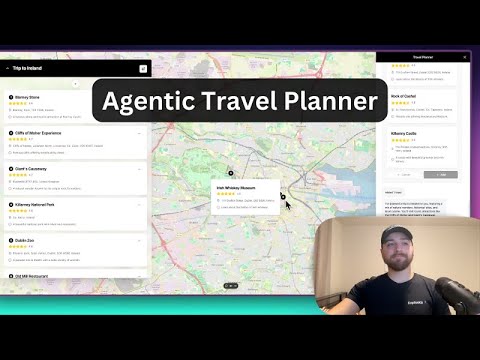
Plan your next trip with an AI-powered travel planner. This demo showcases a travel application where an AI assistant helps you create, manage, and explore trips with real-time map visualization and Google Maps integration.
[Click here for a running example](https://copilotkit.ai/examples/travel-planner)
## Tutorial Video
 ## Overview
This application demonstrates the power of CopilotKit working with an Agent Framework (LangGraph in this case), where the agent shares state with your React frontend, enabling seamless AI-human collaboration. Key features include:
- **Interactive Map** - Visualize your trips and places on a Leaflet-powered map
- **Google Maps Search** - The AI agent can search for real places using Google Maps API
- **Human-in-the-Loop** - Review and approve AI-suggested changes before they're applied
- **Shared State** - The AI agent and UI share the same state, keeping everything in sync
- **Smart Suggestions** - Context-aware chat suggestions based on your current trips
## Getting Started
### Prerequisites
- Node.js 18+
- Python 3.11+ with [uv](https://docs.astral.sh/uv/) package manager
- npm, yarn, or pnpm
### Installation
1. Clone the repository:
```bash
git clone https://github.com/CopilotKit/CopilotKit.git
cd CopilotKit/examples/v1/travel
```
2. Install frontend dependencies:
```bash
pnpm install
```
## Overview
This application demonstrates the power of CopilotKit working with an Agent Framework (LangGraph in this case), where the agent shares state with your React frontend, enabling seamless AI-human collaboration. Key features include:
- **Interactive Map** - Visualize your trips and places on a Leaflet-powered map
- **Google Maps Search** - The AI agent can search for real places using Google Maps API
- **Human-in-the-Loop** - Review and approve AI-suggested changes before they're applied
- **Shared State** - The AI agent and UI share the same state, keeping everything in sync
- **Smart Suggestions** - Context-aware chat suggestions based on your current trips
## Getting Started
### Prerequisites
- Node.js 18+
- Python 3.11+ with [uv](https://docs.astral.sh/uv/) package manager
- npm, yarn, or pnpm
### Installation
1. Clone the repository:
```bash
git clone https://github.com/CopilotKit/CopilotKit.git
cd CopilotKit/examples/v1/travel
```
2. Install frontend dependencies:
```bash
pnpm install
```
Using other package managers
```bash
# Using yarn
yarn install
# Using npm
npm install
```
3. Install agent dependencies:
```bash
pnpm install:agent
```
4. Create a `.env` file in the project root:
```
OPENAI_API_KEY=your_openai_api_key
GOOGLE_MAPS_API_KEY=your_google_maps_api_key
```
Alternatively, use [Copilot Cloud](https://dashboard.operations.copilotkit.ai) by setting:
```
NEXT_PUBLIC_CPK_PUBLIC_API_KEY=your_copilotkit_api_key
```
5. Start the development server (runs both frontend and agent):
```bash
pnpm dev
```
Using other package managers
```bash
# Using yarn
yarn dev
# Using npm
npm run dev
```
6. Open [http://localhost:3000](http://localhost:3000) in your browser to see the application.



